
The age of showpiece restaurants anchoring sleek Downtown high-rises is fully upon us. Āya – which since February has been drawing well-heeled audiences to the Ascent MKE building for its lofty take on Middle Eastern cuisine – came on the heels of the Third Ward’s gallant French bistro Cassis in another skyscraper, 333 Water. The two biggest openings so far this year, these new arrivals embody a Milwaukee campaign-ready for the national stage.
RELATED READS: A NEW MEDITERRANEAN RESTAURANT IS OPENING IN MILWAUKEE THIS MONTH

Celebrate this year’s winners of the Betty Awards!
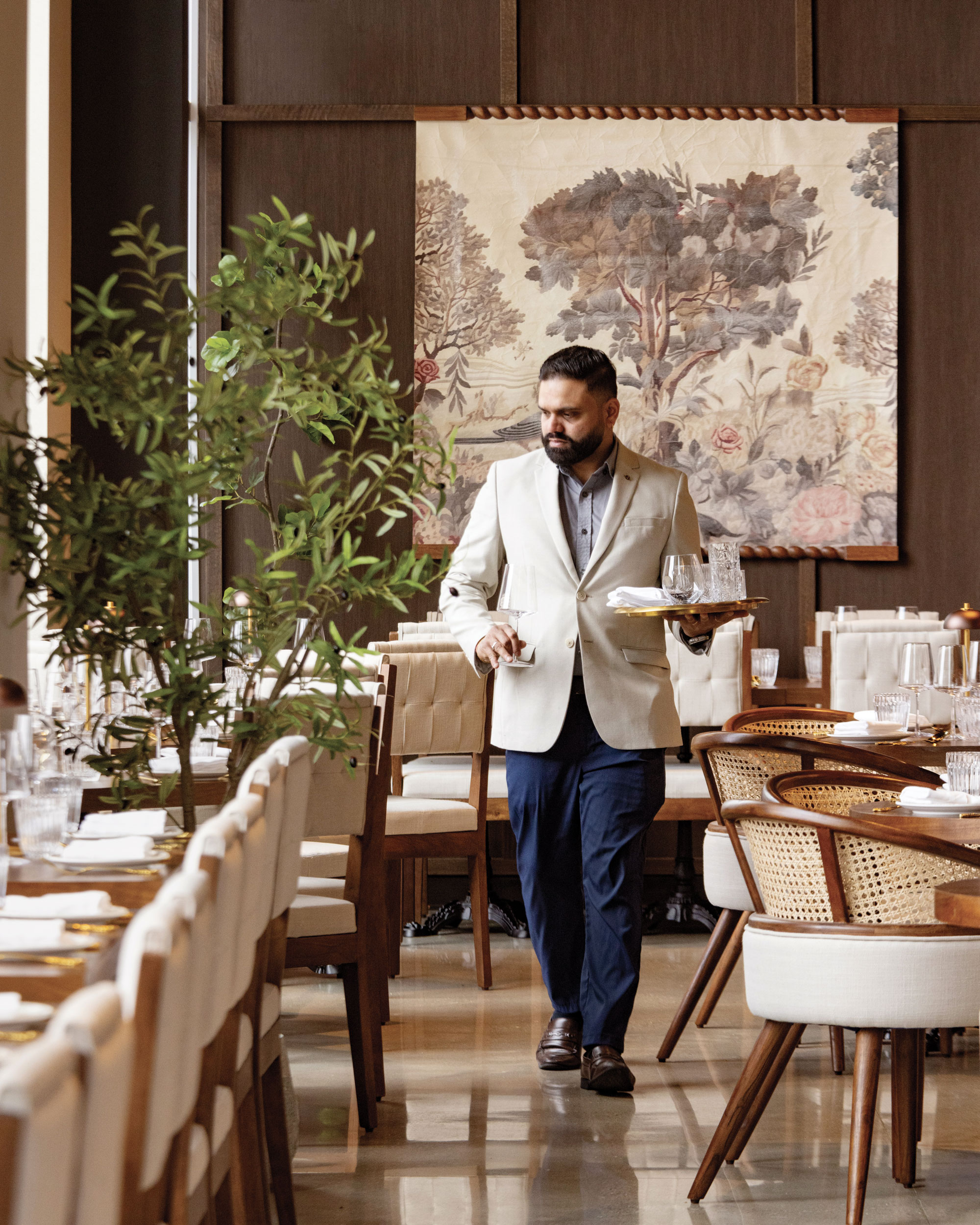
Through its 8-foot front door, Āya makes a dramatic entrance. The 120-seat, L-shaped room is warm, elegant and glitzy, from its polished concrete floors and glowing glass chandeliers down to its whole char-grilled branzino and Ossetra caviar service.
When Fatima and Hanish Kumar opened Saffron restaurant in the Third Ward, they sought to take Indian dining to an elevated, unexpected and creative place. With their second effort, Āya, they aimed even higher. The owners have said they wanted to transport diners to the shores of the Mediterranean. Their vision is sophisticated and dramatic. Nothing is pedestrian – not the veined Italian porcelain panels behind the bar, not the serving dishes and flatware, not the exuberant plating.
Dining in the first few weeks of a restaurant’s life requires some concessions. The sizable, sharply dressed front-of-house staff did not seem experienced, but they scored points for trying. Both of my dinners were flawed in the service flow (the pace was too fast, glitchy) – very understandable in the first weeks.
I liked some of the dishes, but the prices of almost everything, even by today’s standards, seemed high. I didn’t order the $180 Australian Wagyu strip steak because there’s no way I could justify spending that on any dish. But the cost of that actually didn’t bother me as much as the prices for simple, classic Middle Eastern fare – the skewers ($18-$32), hummus ($16-$23), falafel ($16) and other mezze – whose only apparent elevated attribute was to look attractive on the plate.
The first two thirds of the menu include salads and those mezze and skewers, which are all shareable size, the servers told me. The most interesting was the fattoush smash ($18), which arrived as a crisp pillow puff. The server tapped it sharply with a spoon and it shattered open, revealing the salad inside the pita shell.
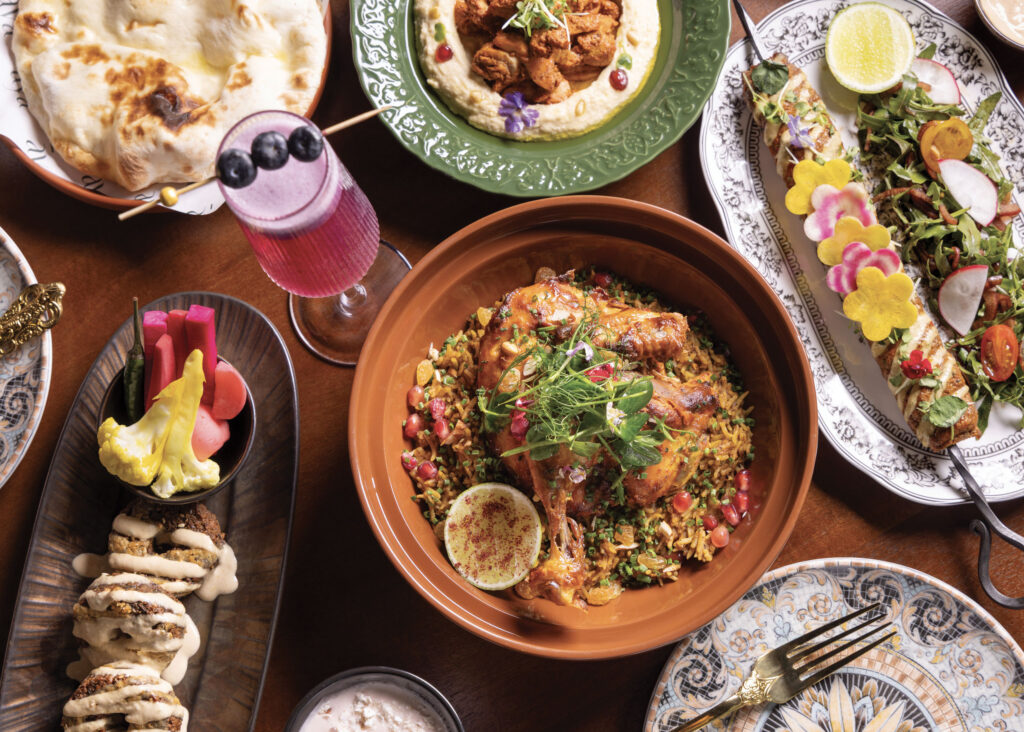
Clever, and the sumac dressing is good, but there was so little of the best parts of this salad – the cucumber, romaine, tomatoes and candied pecans – and too many kalamata olives. I liked the tender harissa-seasoned chicken skewer ($21) – it reminded me of a spicier tandoori chicken – but not the single minced lamb shish kebab ($23) and its mushy, not fully cooked center. The falafel with pickled vegetables and tahini ($16) tasted homemade, and it had a spicy bite that built up over time. (The carafe of water on the table was very necessary.)
Served over a layer of bright-red shatta sauce (made from a fermented Palestinian chile paste), the grilled oyster mushrooms ($18) carried both the heat of that sauce and the assertive smokiness of the char-grill. I’m happy I’d ordered both plain pita – which is airy, puffy and chewy ($5) – and the Manakeesh za’atar pita ($6), because I needed something to soften the intensity of that sauce, of which there was an amount disproportionate to the six mushrooms on the skewer.
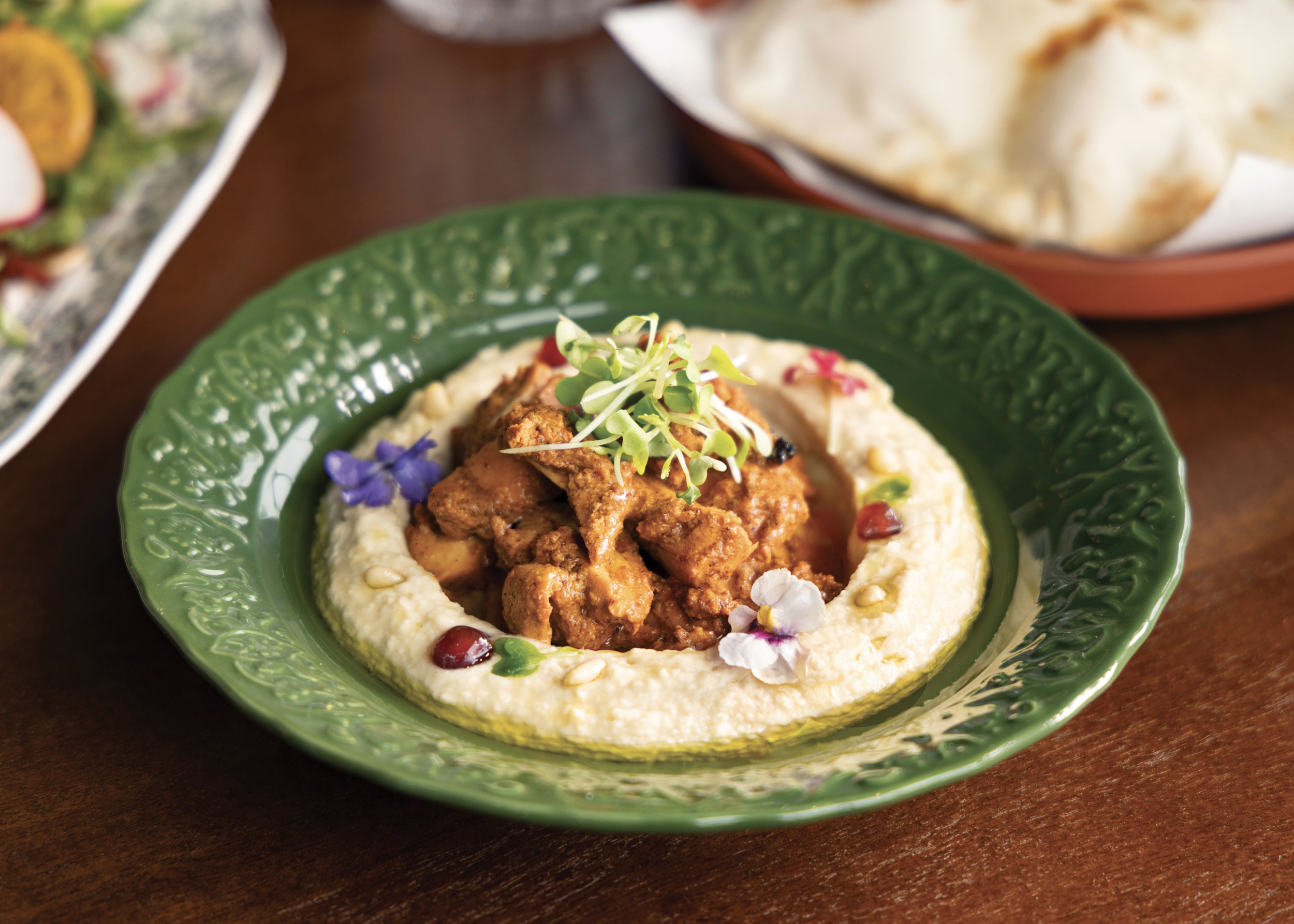
Hummus – the now omnipresent American chickpea dip – is slightly dressed up at Āya. The dajaj hummus ($18), with sumac-marinated roasted chicken, tasted good, but I expected more nuance and sophistication.
In the end, the two best dishes were entrées, though it was really only one that I’d order again, chicken kabsa tagine ($36). This slow-cooked meat and vegetable dish is a spectacular Moroccan specialty cooked in a traditional clay pot with a conical lid. The flavors are characteristically warm cinnamon-cumin with bright preserved lemon and sweet, chewy dried fruit. The Āya version intrigued me because of its crossover with biryani.
Toasted nuts and golden raisins popped through the rice – glossy grains steamed and infused with spice – the seasoned half-chicken laid on top. The meat fell off the bone in the best way and contributed greatly to this casserole of multiple delectable influences. I’m not sure how to talk about the branzino ($48) without it paling by comparison.
Though served as a whole fish with the head, the filet had been deboned and skinned so it was just the milky-white flesh, stained red from the sumac. It was delicious – herby and lemony, too – but I wished for a vegetable or starch to accompany it.
I haven’t sampled the desserts yet but saw elegant slices of pistachio tiramisu and Biscoff cheesecake ($14-$16) making their way to other diners’ tables.
I’m giving Aya time to settle in before venturing back. From a visual standpoint, this stunning restaurant has accomplished what it set out to achieve. The cuisine attempts to tell a refined story, too. It’s layered and at times sophisticated. I hope at some point to say it’s also great.
Āya
700 E. Kilbourn Ave., 414-231-9995
Hours: D Sun-Thurs 5-9:30 p.m.; Fri-Sat 5-10 p.m. (lunch, cocktail hour pending at press time)
Prices: Raw bar $22-$32; caviar, seafood tower $130-$150; salads, skewers, mezze $16-$32; entrées $24-$52; steaks $60-$200
Service: Attentive, courteous
Reservations: Recommended