
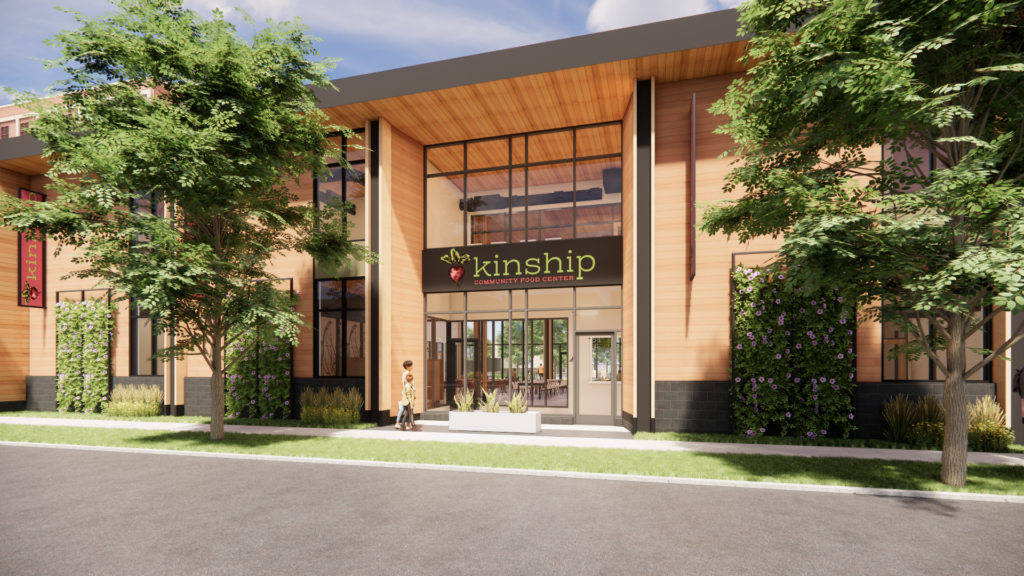
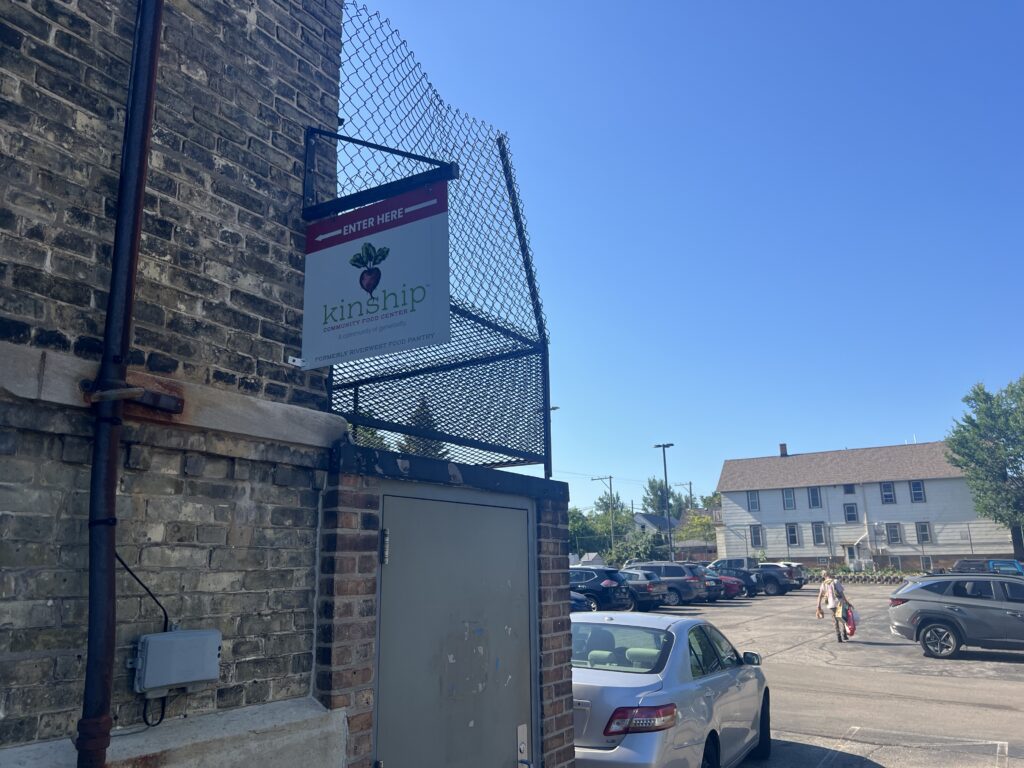
Kinship Community Food Center has announced a new building that will support the expansion of their mission to end hunger and poverty in Milwaukee. The 28,000 square foot Community Food Center will open in the summer of 2027 at 2851 N. Holton St.
Formerly known as the Riverwest Food Pantry and established in 1979, the center’s model is built around three things: nourishment, belonging and prosperity. Kinship is able to provide for over 19,000 shoppers each year, including families that have an average income below $1,300 a month, according to a press release from the organization. After 16 months of fundraising with the goal of gathering $18 million, the organization raised $15.5 million.
Kinship’s dreams go beyond solving hunger: the space will include a courtyard, chapel and community space. They will also launch a social enterprise business to expand their workforce development program and offer private consultations for neighbors in need of support. The organization is focused on welcoming residents into a community that shows up for them again and again.

Celebrate this year’s winners of the Betty Awards!
Madelinne Grey, Kinship’s communications manager, presents the organization’s five year plan with the new site: They expect to double the number of days they’re open (with their location at St Casimir Church now open on Tuesdays from 4-6:00 p.m. and Saturdays from 8:30-10:30 a.m.), employ 80 trainees in their Workforce program, distribute 2.8 million pounds of healthy food and prevent 500 households from eviction or homelessness by providing financial planning and assistance.
“Kinship has long outgrown the basement that we currently sublease,” Grey said. “Our current space is not accessible, it’s cramped and we don’t have the storage space to accept additional donations – this new food center will allow us to fulfill more of our potential.”
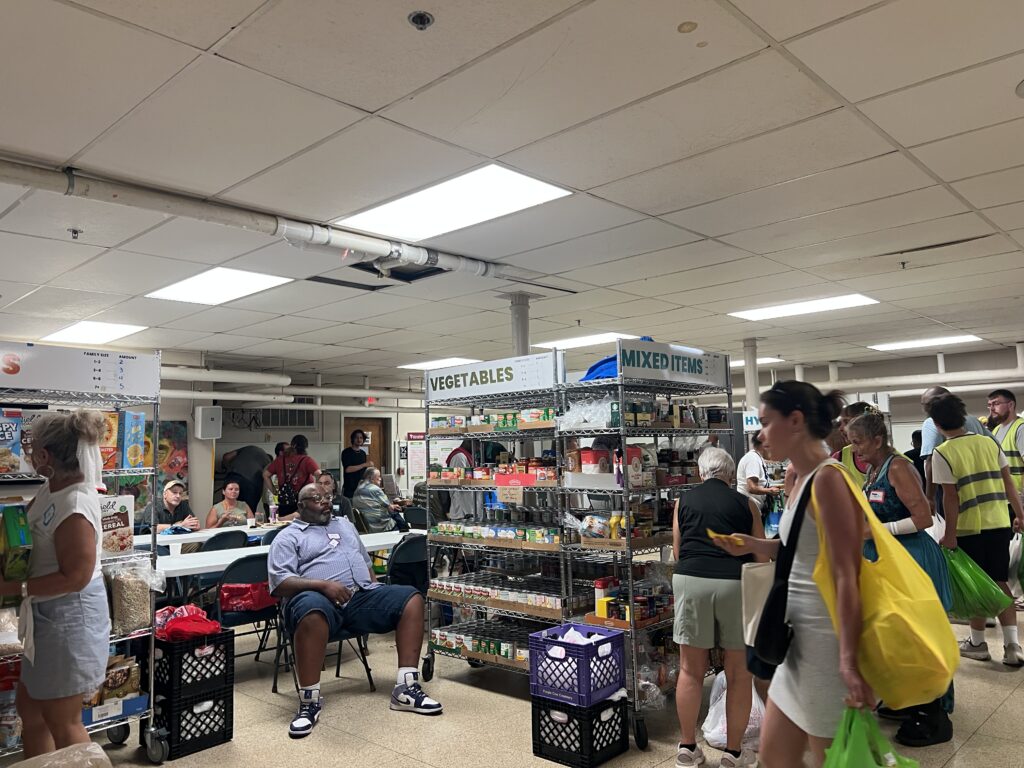
Kinship’s new building will not be far from its original food distribution location at St Casimir Church on Clarke St., being under a mile away. At the intersection of Riverwest and Harambee neighborhoods, Kinship is focusing on an area of Milwaukee that is a food desert, which has historically had less access to fresh foods.
“Our food center currently serves as a way to access fresh produce for neighbors who would otherwise face long trips or higher prices to find it,” says Grey. “Riverwest and Harambee sit in an area where full-service grocery options are limited, so a reliable, welcoming place to get healthy food matters enormously.”
Instagram user Sharaka Berry (@thejackedtavist) documented the North Side of Milwaukee’s food desert through a video posted on July 12. He first walked through Milwaukee’s East Side, an area of Milwaukee generally considered more affluent and showed how he was able to find four grocery stores all within a mile of each other, with each walk lasting under ten minutes. When he traveled to Harambee and Riverwest, Berry found three closed grocery stores, with the closest open grocery store being a Pick n’ Save two and a half miles away.
“Now I just gotta run back to my car which will make it a five-mile round trip all together,” Berry said in the video, “This is why I support the Feed the Change initiative, getting groceries shouldn’t be an endurance event.”
Feed the Change MKE, launched in May of 2026, is a campaign led by the African American Roundtable, which has been campaigning for greater food access in North Milwaukee. The campaign is aiming to secure a $1 million investment from the City of Milwaukee in the Healthy Food Establishment Fund. While they work towards their goal, they are holding several events to garner support for the campaign.
Food deserts don’t just appear: they require years of deep systemic issues, and Milwaukee’s high segregation rates provide a breeding ground for inequality. Initiatives like Kinship Community Food Center and Feed the Change MKE provide necessary support for underprivileged communities.
“When people don’t have dependable access to fresh affordable food, it touches everything from health, to how kids do in school, how adults show up at work, financial stability and even a basic sense of belonging,” said Grey. “A center like ours meets that need without stigma: a dignified, welcoming place where neighbors can find nourishing food and support with whatever else they’re facing.”
While Kinship has reached over 85% of their $18 million goal with the help of private fundraising, they are now turning towards the larger Milwaukee community to help raise the remaining $2.5 million in order to bring the new Community Center to fulfillment.
“When you talk about Kinship’s future and the new building, I hope you see that it’s more than square footage,” Kinship Cafe Operations Manager, Nikki Danielson said. “To me it means more room for people not simply to receive services, but to recognize their own gifts and contribute them – that is what Kinship made possible for me.”