
Last April, when Michelin, the tire/restaurant guide company, announced its new American Great Lakes edition with Milwaukee as one of six featured cities, the news was delivered with fanfare befitting the company’s elite reputation.
RELATED READS: MILWAUKEE RESTAURANTS BUZZ IN WAKE OF MICHELIN NEWS
The tourism bureaus of Milwaukee, Minneapolis, Detroit, Indianapolis, Cleveland and Pittsburgh kicked in funds (Visit Milwaukee’s total spend is $450,000) to bring Michelin to the Great Lakes.
Whatever level of foodie you are, you’re likely at least vaguely familiar with this intensely curated 126-year-old guide to culinary excellence. Here’s how this prestigious award system works.

Celebrate this year’s winners of the Betty Awards!
The Inspectors’ Mysterious Process
Michelin restaurant reviewers – “inspectors,” they’re called – work on the q.t., behaving “like any other customers to ensure that their experience is the same that readers will have,” per Michelin, which also deems anonymity and independence as inspectors’ “most useful tools.” At the press announcement, Michelin brass said the professional eaters – all of whom have restaurant industry experience – had their “boots on the ground” in MKE, packing in some of the over 250 restaurant meals they evaluate each year. Inspectors’ “rigorous” six-month training program ranges from shadowing senior inspectors to “palate calibration” to ensure their tasting corresponds with Michelin Guide standards. And tasting is what it all boils down to; Michelin literature repeats the claim that its coveted star awards are based solely on the food. Some are dubious of that, pointing to the abundance of starred restaurants with top-tier service and décor.
“Taste” is rather elegantly and somewhat vaguely outlined by Michelin in its five “universal criteria” as quality of ingredients, harmony of flavors, mastery of technique, personality of the chef as conveyed through the food, and consistency of the food between multiple visits by different inspectors.

Stars, Bibs and Beyond
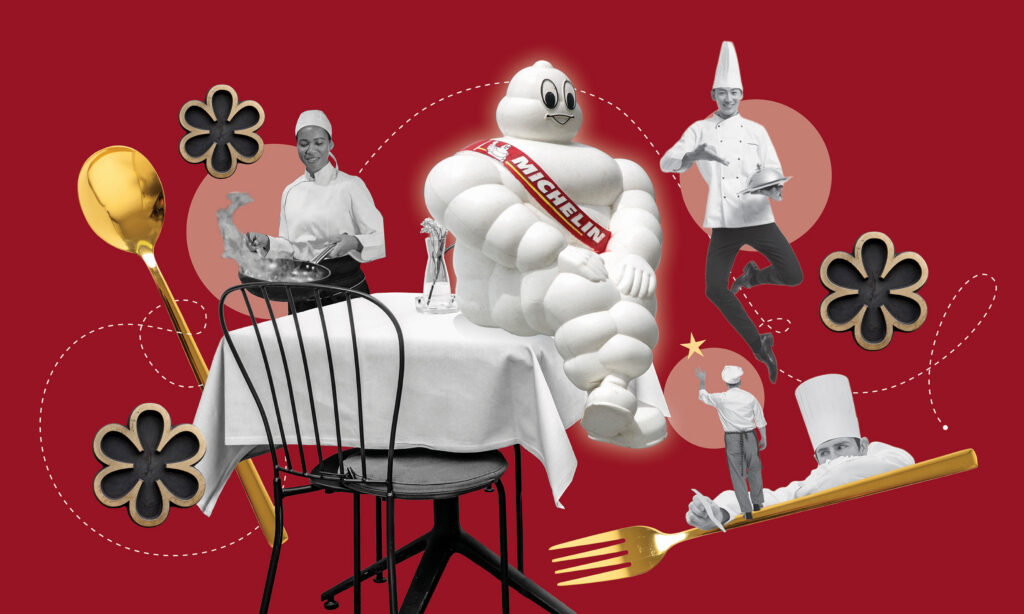
The Michelin Guide’s most coveted symbols are stars; up to three can be earned. One star signifies “high-quality cooking, worth a stop”; two “excellent cooking, worth a detour”; and three put a restaurant among the world’s best with “exceptional cuisine, worth a special journey.” The guide became a little more accessible when it added Bib Gourmand in 1997. This honor – named for Bibendum, aka the Michelin Man – is given to “friendly” restaurants serving “good food at moderate prices.” Further down the hierarchy, “Selected” establishments feature “high-quality food.”
What to Expect?
Chicago, which joined the Michelin Guide in 2011, has 20 starred restaurants, a total of 26 stars among them. Only one, Smyth, has three stars. Chicago also has 32 Bib Gourmands and 51 Selected. Not to slight our city, but with a restaurant scene a fraction of Chicago’s size, Milwaukee will likely also see a fraction of its Michelin nods – if any at all. In any case, we have to wait for 2027, when Michelin will release its MKE selections. Until then, restaurateurs say they are buttoning things up – or simply doing as they’ve always done – in anticipation of the industry’s mystery inspectors.