

I used to joke that fall was a four letter “f” word – which I am assured does not make Wisconsinites laugh – because it led to winter. I grew up in Canada and still get phantom frostbite when the temp dips below 32 degrees. My broad spectrum Happylite brand light is already poised by my desk to head off Seasonal Affective Disorder. I must start glowing up now, when the days are already noticeably shorter, because I am already in a sunlight deficit.
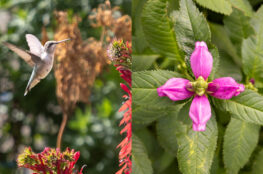
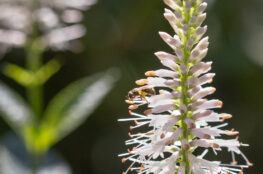
Gardening has changed my attitude to the colder months though, so I hereby declare September and October not as “shoulder” months but as part of my full-on gardening season. (Same goes for March and April, more on that next year.) To support my new-found lease on cold-weather life, I have been planting more (mostly) native species for fall blooming. This year’s new gems include a glorious purple-pink anemone, several shining goldenrods, two sweet sneezeweeds, an adorable white Aster and a flaming red Cardinal flower. My Prairie Dock sent up an eight-foot green flagpole with yellow flowers on top. The Leopard Plant hid its buds under enormous leaves until its flowers shouted a great yellow “surprise!” These join the other blooming plants – giant Mexican sunflowers, zinnias, coneflowers, Anise hyssops, a purple Turtlehead, a Black Eyed Susan, several yarrows, Coreopsis, butterfly bushes, all types of sunflowers and the occasional Veronica – that give my yard zing in September.

If someone has inspired you through their service, leadership or dedication, the Unity Awards are your opportunity to recognize them!
And this is the year I jump into the deep end of fall gardening, so I can stay active and happy with my hands in the dirt. I started with a Fall Gardening class from Joe Gardener who extolled the advantages of fall planting: better temperatures and lower humidity, fewer insects and diseases, and plant growth rates are more manageable. The first step is to establish your first frost date (try the Farmer’s Almanac) and then count backwards four to six weeks to target your planting week. Milwaukee’s estimated first frost date is Oct. 24, which means I will transplant my indoor starts of lettuce, chard and kale into the ground by mid-September. I’ll cover my precious greens with row covers and enjoy another few months of healthy eating.
I am also thinking about producing food during the winter particularly in light of rising food costs and possible labor shortages in the agricultural fields in the southwest. Kevin bought me a small, 24×31-inch, homemade cold frame (for more information on making your own winter cold frame, see Joe Gardener’s video). We’ll reinforce the slender construction to prevent a snow-laden collapse. If this works, I will be able to claim year-round gardening in Wisconsin! In any case, I’m ready to test my limits for gardening with a coat and boots on.

Just as you think your garden is winding down because your flower heads are going to seed – time to jump back in and save those seeds. Dill the easiest to capture, given the heft and openness of the heads. I have been collecting Rock Harlequin pods and have some rolly polly Rue pods tucked away too. I’m hoarding green beans, Early Girl and heirloom yellow tomato seeds with some lettuce tops to start my farm indoors next March.
But make sure you leave some native perennial seed heads, like Black Eyed Susan and coneflowers, in place for energy snacks for the birds and free new plants for you. Leaving the tall stems give you “winter interest” when you gaze at your beds with sparkles of sun in your eyes and provide shelter for bugs who like that kind of thing.

Fall is a good time to measure my spring garden dreams against nature’s reality. Based on experience, this year I did all the tricks to have a good cantaloupe crop: fewer plants sown in the sunniest of my raised beds, I trellised my vines, and did some heavy leaf pruning for better air circulation. I even bought melon hammocks to keep the fleshy gourds off the ground. But I turned around one day and boom – the dreaded powdery mildew had arrived
I pulled out my notes from my UW–Madison Extension class last year, “Plant Diagnostics: The Step-by-Step Approach to Identifying Plant Problems,” and made up a batch of their anti-powdery mildew formula: pour 1 ½ tablespoons baking soda and 3 tablespoons light weight horticultural oil (I use Neem oil) into one gallon of water and spray the leaves both top and bottom. I’ve already applied this a few times, but it hasn’t stopped the spread. I know I can’t cut out all the leaves (diseased leaves go into your yard waste, not compost), so my lesson for next year is starting the liquid application before the problem appears. Other plants in my garden are susceptible to mildew – I am dousing them now with my new concoction in the hopes they stay clean.
From the vegetable beds I can report that I removed two wilting tomato plants – no hornworm but perhaps not enough sun? My first four Barbie-sized plants hardly produce a meal – arrested development because of the May frost. The second set of four plants have been shaded by Mexican sunflowers, proving “location location location” is key to garden success. This is the toughest part about rotating crops – they can’t always get what they want, but I try to give them what they need.

Now is the time to transplant from wrong to right locations to find a better match for my light eater’s light needs. Moving plants in the next few weeks allows them time to settle in and use their energy for roots, not leaves or flowers. I have one pink coneflower that hardly blooms – time to give this loyal charmer a place of honor in the sun. Other participants in my plant musical chairs include the lupines I started from seed, liatris, plus Prairie Smoke, Rock Harlequin, and a Tall Cinquefoil that I plopped into pots in my spring planting rush. They deserve more room and insulation for their life-giving roots.
This season’s most extreme example of “wrong plant, wrong place” are the Sun Balls. After three years of buying seeds and coddling them ‘til they move outside, I have just one elegant but marble-sized sunny ball out of three pots of green. Hmph. I’ll add the seeds to my compost pile to feed a future all-star.
I will keep playing psychological garden chicken as the days grow shorter, but with my now eight-month outdoor garden season I can continue planting, petting and pruning for a few more months. Jump into fall gardening with me – they’ll pry the clippers out of our cold, cold hands when the ground is white.
A Few Gardening Resources
EVENTS
- Multiple Dates: The 15th annual Tosa Green Summit is an opportunity to “build awareness and take action” on all things green and sustainable! This year’s activities include:
- Saturday, Sept. 13, from 8 a.m. to 2 p.m.: Recycling for MMSD Household Hazardous Waste (sorry, no electronic waste collection this year, Milwaukee County residents only); Wauwatosa Public Works Yard (enter off Watertown Plank and 113th Street)
- Saturday, Sept. 20, 9 a.m. to Noon: Recycling for paper shredding, meds, textiles, bikes, empty toothpaste tubes and used toothbrushes, scrap metal, and donations to Tosa Cares. Wauwatosa City Hall Parking Lot, located at the corner of 76th Street and North Avenue, south side of the building, entrances off North Avenue and 76th Street
- Saturday, Sept. 20, 10 a.m. to 1 p.m.: Exhibits highlighting initiatives in energy, water, land, transit and wildlife habitat restoration. This is my volunteer group, come visit me at our table!Wauwatosa City Hall, Lower Civic Center, located at the corner of 76th Street and North Avenue
- Saturday, Sept. 20, 10 a.m. to 1 p.m.: Speaker Series featuring Save Our Songbirds and Plastic Free MKE. Firefly Room at the Wauwatosa Public Library, located at the corner of 76th Street and North Avenue
- Monday, Sept. 29: I recently came across the International Day of Awareness of Food Loss and Waste – part of the United Nations’ attempt to combat food insecurity and encourage sustainable consumption and production of food globally. The group states that 60% of global food waste happens in households – which means we don’t have to wait for a top-down solution, we can all do our best to reduce or eliminate food waste. IADFLW promotes reducing food loss and waste to protect natural resources and biodiversity, reduce pollution and greenhouse gas emissions, and maximize the use of food produced. It is therefore central to securing efficient, inclusive, resilient and sustainable agrifood systems, and to improving food security, nutrition and health. I try not to waste food – can I do better? Certainly, my composting habit helps me keep wilted lettuce, eggplant bottoms, tomato seeds and cantaloupe rinds on site and providing rich organic material for next year’s garden.
BUYING PLANTS
- Prairie Moon Nursery: Native plants and seeds for fall planting
- Prairie Nursery: Native plants and seeds for more fall planting
- Johnny’s Selected Seeds: Seasonal seeds
- Keene Garlic: For your 2026 haul
EDUCATION
- University of Wisconsin Horticulture, Division of Extension has free online garden programs
- Mother Earth News online videos, tutorials etc
- Joe Gardener
- Another on-line gardener I like – partially because he laughs about his failures, partially because he has taken over his entire suburban lawn and transformed it into a living, working system – is Epic Gardener
SUSTAINABLE GARDEN INFORMATION
- National Wildlife Federation: How to create and certify gardens for wildlife
- Wild Ones Milwaukee: Specific plans for climate resilient, native gardening by Danielle Bell, Native Roots