
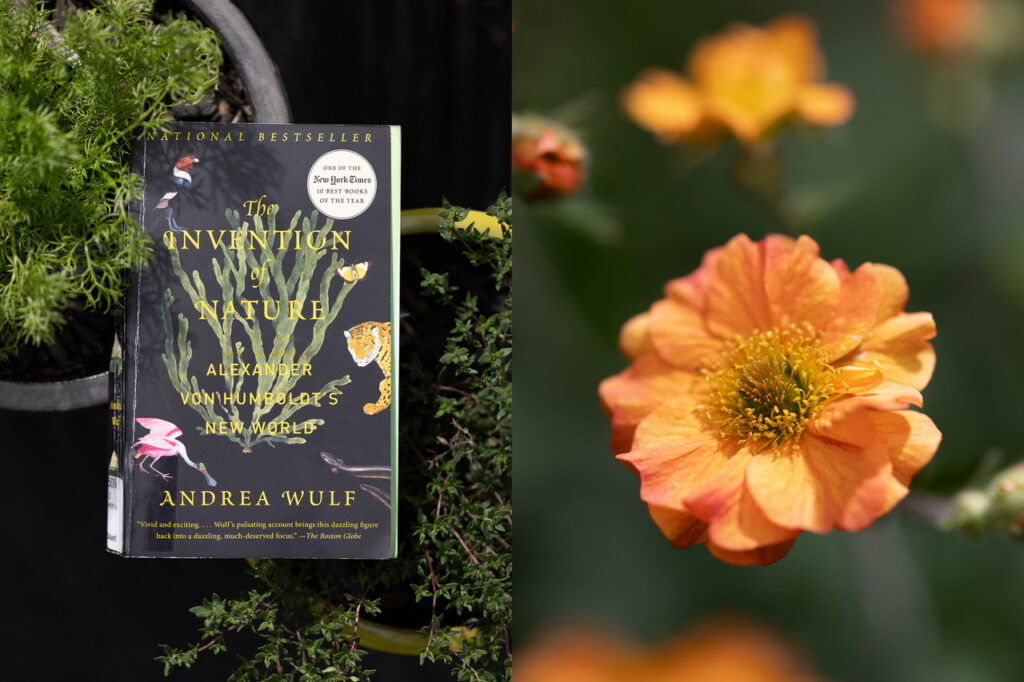
I am reading Andrea Wulf’s 2015 book The Invention of Nature: Alexander von Humboldt’s New World (thanks to artist/gardener pal Lindsay for the recommendation). I see Humboldt’s name around—a street here, a sculpture there, a museum exhibition beyond that. Who was he and why should we care?
Humboldt (that’s Baron von Humboldt, 1769-1859, whose family fortune allowed him to spend down his inheritance wandering but forced his later reliance on the Prussian King for a stipend) was a brilliant polymath who got his unlimited energy out by traveling the world, climbing mountains, forging rivers and crossing arid plains. By studying the earth, sky and sea, Humboldt was the first Western Enlightenment scientist to see nature as an intertwined ecosystem, not as an unchanging, math-driven machine to be exploited (an idea that justified European colonial exploitation of landscapes and peoples around the globe). Humboldt explained nature’s systems analytically but with poetry, making his work accessible, and thus impactful, to audiences across the globe.

Celebrate this year’s winners of the Betty Awards!
Humboldt influenced many generations of scientists, including Charles Darwin, whose theory of natural evolution helps us understand how easily (not very) nature will adapt to the climate changes around us. Of greatest relevance to Americans is Humboldt’s influence on David Henry Thoreau (for more on Thoreau, check out Ken Burn’s three-part series on PBS). Because of Thoreau’s social introversion and love of nature, a friend suggested Thoreau go live in nature, alone. He built a tiny cabin on Walden Pond, living there for two years while still engaging with family and social concerns of the day. Thoreau kept detailed journals during his cabin sojourn, but it wasn’t until he read the first few volumes of Humboldt’s Cosmos, 1845-1862, that Thoreau released Walden; Or Life in the Woods, in 1864. Under Humboldt’s tutelage, Thoreau wrote about nature and science in a poetic way, defending nature against industrialization’s stealing, stripping and shipping our common natural resources away to benefit the few.
Wulf traces Humboldt’s influence on others, including George Perkins Marsh, whose Man and Nature, also 1864, was seen as the first natural science book to influence American politics. Marsh bemoaned the loss of forests and the degradation of America’s soil, saying that our agricultural and industrial processes would turn our sponge-like earth into a dust heap. Many early environmentalists, like John Muir, “father of the National Parks”, and Gifford Pinchot, the first chief of the US Forestry Service, promoted the protection and restoration of our country’s great forests under Marsh (and Humboldt’s) sway.
Humboldt was heroic in instilling a sense of wonder and responsibility while trying to halt the spreading destruction of our earth, heavens and waterways. He planted the seed for the now-international call to restore nature before it’s too late. Humboldt’s clarion call is getting louder every day – and through my little yard, I’ll contribute to his legacy wherever I can.
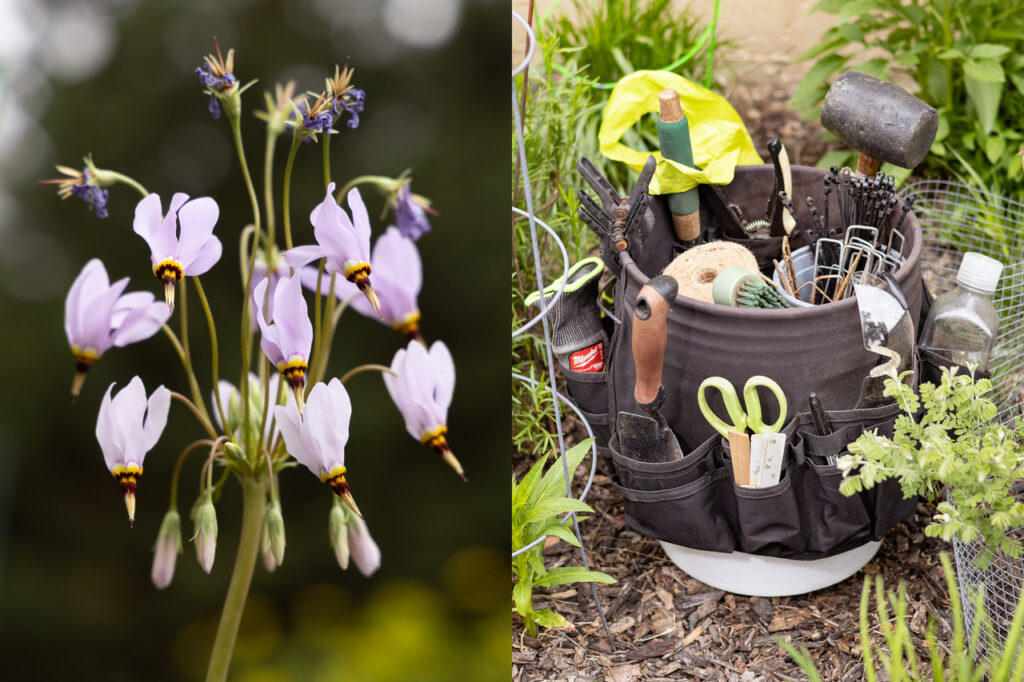
Enough of reading, let’s get outside! Gardens are 24-hour performance spaces. Plants are up and at ‘em, vegetables are showing some moxie, the bugs, bees and butterflies are dancing with abandon. My own garden performance starts with my tool-filled five-gallon bucket.
My bucket is to me what a medical bag is to a doctor: it allows me to respond to emergencies or conduct my regular rounds. In my bucket I carry clippers, scissors, landscape fabric pins; a weeder and trowel; a pair of Milwaukee Tool cut-resistant gloves (thanks to pal Ben!) and clear protective goggles. I also carry a water bottle and bird bath scrub brush; a small pot of clips; twine; zip ties, green twist ties, colorful Velcro ties and rubber bands; a plastic bag to gather garbage; and a baggie with a Sharpie and plant markers. I sometimes haul around a rubber-headed mallet for extra muscle – those pins need to stay in place.
I’ve got seven active buckets: for indoor composting, for my treasured tools; a “clean” bucket into which I shift compost ready for the garden, one filled with clean yard waste for composting and another with dirty yard waste for the city. I have a bucket with clips and another with empty plastic pots. Last year my partner Kevin bought me a sturdy Gorilla cart so I can haul my garden field hospital around with me. What’s in your tool bucket?
Despite being so organized, I occasionally misplace my clippers. I interrupt myself, doing one task while noticing another that needs to be done. That’s the fun of gardening – you veer and swerve where your mind and clippers take you.
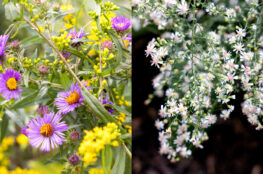
I am partway into my 2026 “to do” list and have been slowly removing landscape fabric. I bought a palette of mulch to spread around instead. I took out two big grasses and created a larger, almost full-sun area for zinnias, Mexican sunflowers, milkweed, bee balm and asters. I am ready for the fashion show Vitamin Nature puts on every year.
Many of my native plants are bigger this year with gangbuster blooms, although according to my “Giant Plant Plan” (on a 25 x 30-inch Post It note that allows me to read my challenging handwriting), I lost a few. Did that 70-degree day in February cause too much thaw? I bought five replacement Joe Pye Weeds from Heritage Flower Farm, and my hopes are high for those sky-high beauties to thrive.
As you know, I was determined to try the three-layer planting method for my raised beds. I put out some cold season seeds first but few of these seeds came up so I resowed. And I finally – finally – planted my indoor starts. I water every day until I see bursts of green, but I keep them covered to protect the seeds from the birds spying on my beds. One future goal will be to find seeds with shorter grow times – if I can reduce my harvesting from 70 days to 60, I’ll get to eat sooner from the garden! I supplemented my vegetables with plants from area farmer’s markets and believe I accomplished that “full bed” feel!
Alexander von Humboldt said that everything in nature is connected to everything in human civilization. It was Humboldt’s early friendship with cultural giant Johann Wolfgang von Goethe that gave Humboldt permission to write about nature with heart as well as science, because the two are linked. Every gardener knows this because we are all Humboldt’s students.
Gardening isn’t just about the contact high you get from digging outside all day, it’s also about hearing birds tweep, tracking bees as they snap, crackle and pop, about sniffing sweet fragrance, feeling your hair tussle with the wind and seeing pretty, pretty things around you. It’s about being part of a community much bigger than you, your house, your ecozone, even your country. We are Humboldt’s army; join me as I go forth and propagate nature’s reconquest of the land.
A Few Gardening Resources
Education
- 5th Annual Backyard Compost Bin Sale: City of Milwaukee Department of Public Works, June 6, 9 a.m. – 4 p.m. | DPW Sanitation, 4031 S. 6th Street, Milwaukee
- Lake Michigan Bird Observatory Nature Journaling: June 13 and August 22, 9 – 11 a.m., fee, registration required | Afterglow Farm, 790 Lake Drive, Port Washington
- Visit Milwaukee’s list of area Farmer’s Markets to pick up vegetables to plant.
- Pollinator Partnerships Pollinator Week: June 22 – 28 | Celebrate pollinators and the essential work they do to keep food flowing. Plant native plants, eliminate chemical use, install yellow light bulbs to let bugs do their nightly thing.
- Want to start a garden? Check out Let’s Grow Stuff on PBS. Designed for beginning gardeners, this show will help you create a successful, delicious and beautiful garden.
Buying Plants
June is Wisconsin Native Plant Appreciation Month – what gems will you bring back to your yard from one of these sales?
- Johnson’s Nursery Native Plant Sale benefitting area Wild Ones chapters: June 1 – 30, Mon-Fri: 8 a.m. – 6 p.m.; Saturday: 8 a.m. – 5 p.m.; Sun: Closed | Johnson’s retail location, W180N6275 Marcy Road, Menomonee Falls.
All active Wild Ones Members must present their valid membership card to receive a 30% discount off standard retail pricing on Wisconsin native, container-grown, plants.
- Native Plant Sale, Root Down Wisconsin: June 6, 8 a.m. – 3 p.m. | 2578 N. 62nd Street, Wauwatosa
Join Root Down Wisconsin for their annual native plant sale on June 6 from 8 a.m. – 3 p.m. Root Down is a Wauwatosa-based native plant nursery committed to restoring biodiversity and wildlife habitat in urban and suburban landscapes. Over 80 species of native flowers, grasses, and shrubs will be available for purchase.
- Schlitz Audubon Nature Center: June 7, 9 a.m. – 1 p.m., online pre-ordering available from Prairie Future Seed Company, Wednesday May 27, noon, Wednesday June 3, noon | 1111 E. Brown Deer Road, Bayside
- Wild Birds Unlimited: Mequon: June 13, 10:00 am – 1:00 pm, online pre-ordering available from Prairie Future Seed Company, Thursday June 4, noon – Thursday June 11, noon | 11004 N. Port Washington Road, Mequon
- Plant Sale List, Wisconsin Department of Natural Resources
- Prairie Moon Nursery for native plants and seeds.
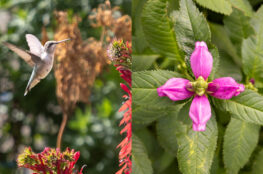
My favorite plants include all milkweeds, sunflowers (there are a lot of perennial types!), coneflowers, cardinal flowers, columbine, anemones, turtlehead, and prairie dock (watch out, this one gets big), to name a few. I planted the rare Queen of the Prairie last year – what a tall and beautiful pink plant! I will let this one go to seed for more blooms in 2027.
Sustainable Garden Information
- I am part of a volunteer group, Tosa Wildlife Habitat, that needs 250 gardeners to certify their gardens through the National Wildlife Federation that is promoting the restoration of native landscapes to attract the birds, bees and butterflies central to what Alexander von Humboldt might call “whole nature”. Check out NWF’s guidelines, and join your neighbors who are creating adaptive landscapes, and enjoy their educational materials for fun in the garden.
- Not sure where to start with rewilding your yard or which plants to use? Download a Milwaukee-specific, free garden design, by Danielle Bell of Native Roots, commissioned by Wild Ones. (If you didn’t know this, the very first Wild Ones was started in Milwaukee – another way our state has led the country in ecological thinking!)
- Another local way to join me in my “rewilding for nature” journey is the Lake Michigan Bird Observatory’s, designed to support folks adding native plants to their yards. LMBO offers webinars, yard consultations, community events and model gardens to inspire you.
- Groundwork Milwaukee is part of a national network dedicated to protecting, developing and maintaining green spaces in our area. Their pillars are addressing climate resilience, environmental remediation, habitat support and food sovereignty. I am donating to help them amend their raised bed soil, the foundation of everyone’s gardening life.
- Plant Baby Plant is a grassroots movement founded by botanist and author Robin Wall Kimmerer in support of Mother Earth. Check out her resources for ways to raise a garden or raise a ruckus!
- Join this year’s Less Lawn More Life 12-Week Challenge. Sign up for weekly doable steps and expert suggestions. Join a national movement by reducing or eliminating your lawn.
More Garden Resources
- Want to know about birds in our area? Check out Xceret Nunez’s Chirp Chat on WUWM.
- Check out Pollinator Partner’s ecoregion planting guides to help you put the right plant in the right place.
- UW-Madison Extension soil testing, your plants will thank you!
- Want to give the fireflies a chance? Put in orange bulbs instead of white and use motion detectors and timers rather than blasting light to outer space. For more information on supporting this lovely native bug, try the Xerces Society for Invertebrate Conservation.
- Fresh Coast Guardians helps everyday people protect Lake Michigan, join their efforts by installing a rain barrel or rain garden.
- Wisconsin Wildlife Action Plan for information on our changing landscapes