
I may love spring the most for nature’s willingness to overlook my gaffes and live to sprout another day, but July is when my garden pulsates with life visible and invisible. In her book “The Light Eaters: How the Unseen World of Plant Intelligence Offers a New Understanding of Life on Earth”, Zoë Schlanger shares astounding new scientific discoveries on how plants use chemicals to control the air waves around them. Did you know tomatoes can turn two caterpillars dining on their leaves against one another? That tomatoes release chemicals to attract predatory bugs to deal with the chomping caterpillars? Reading just one of these incredible stories is a reminder of the diversity in our world.
Even if I can only identify bugs in general categories, such as, what differentiates a bee and a wasp. I can identify the flying beauties that spread their wings in my yard. So far this season I’ve seen monarch butterflies (not as many as last year though), black swallowtails (I plant fennel just for their slinking, chomping babies), lots of cabbage white moths and red admirals. Some bug names are quite descriptive – yes, the black swallowtail is black and has a forked “tail” like a swallow, but red admiral? Why would a Lepidoptera (butterfly) be given a pre-revolutionary war naval name?
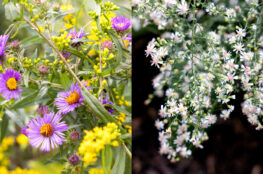
I am getting better at noticing the bug activities around me though. I found foam on a calico aster; it killed half of my plant! Who’s the culprit, was it the Isabella tiger moth? I saw one of their woolly caterpillars last fall and asters are one of their host plants. Was it the pearl crescent, whose spiky brown baby I also saw last year? Sorry, it was the spittlebug nymphs, who release bubbles (that don’t come out of their mouths, by the way) to protect themselves from predators and provide insulation while they feed on plant sap. Now that’s an accurate bug name.

Celebrate this year’s winners of the Betty Awards!
I don’t blame bugs for their names, but I confess, I do hold prejudice against some of them like mosquitoes. I got five bites in one day despite there being no stagnant water in my yard. I don’t love tobacco hornworms all that much either. If your tomatoes are looking inexplicably wan and slowly start to crumble, look carefully for one of these creepers. Wasps to the tomato rescue; the hornworm is a delicious spread for their larva. The cycle of life is not always pretty, but it is efficient.
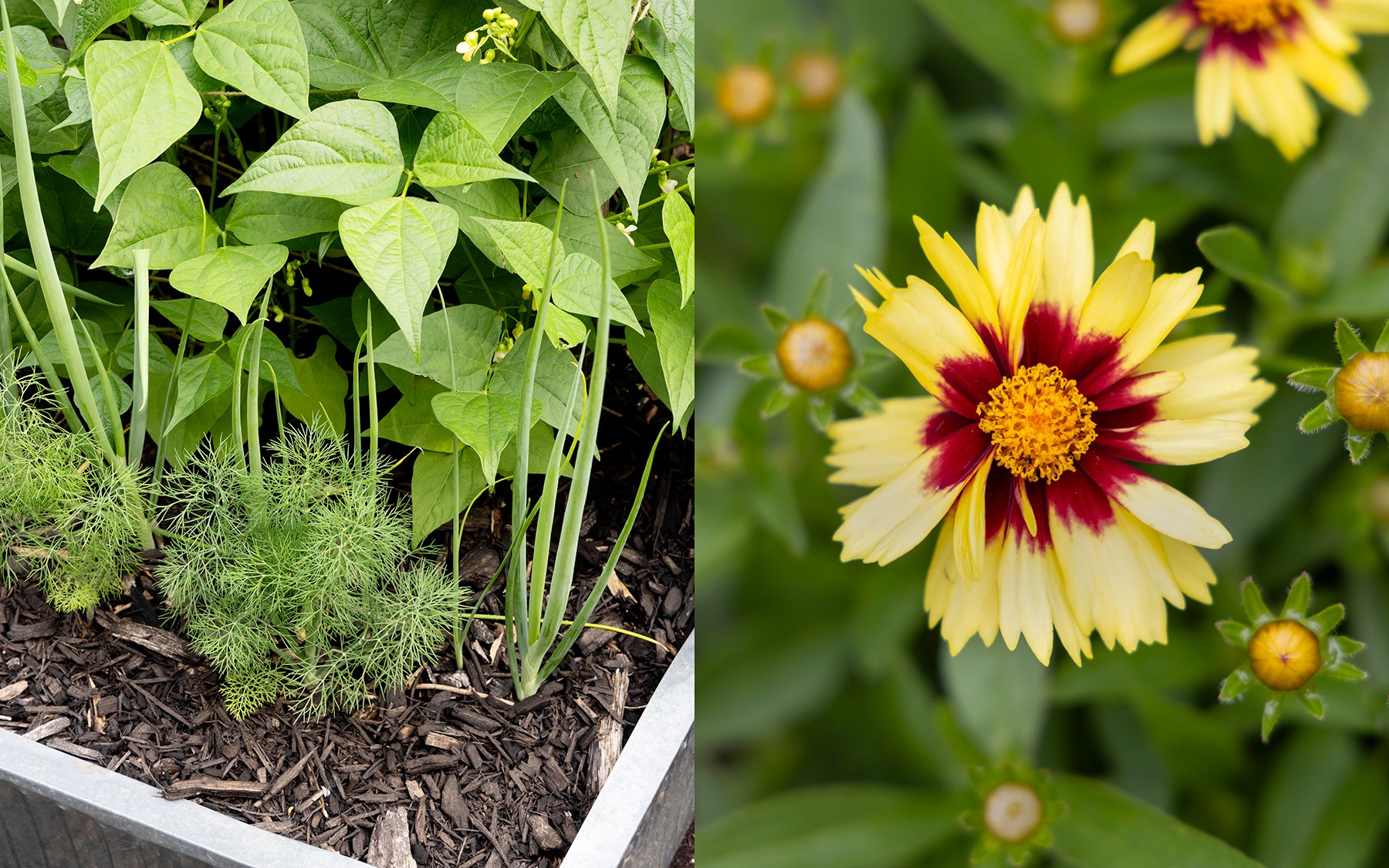
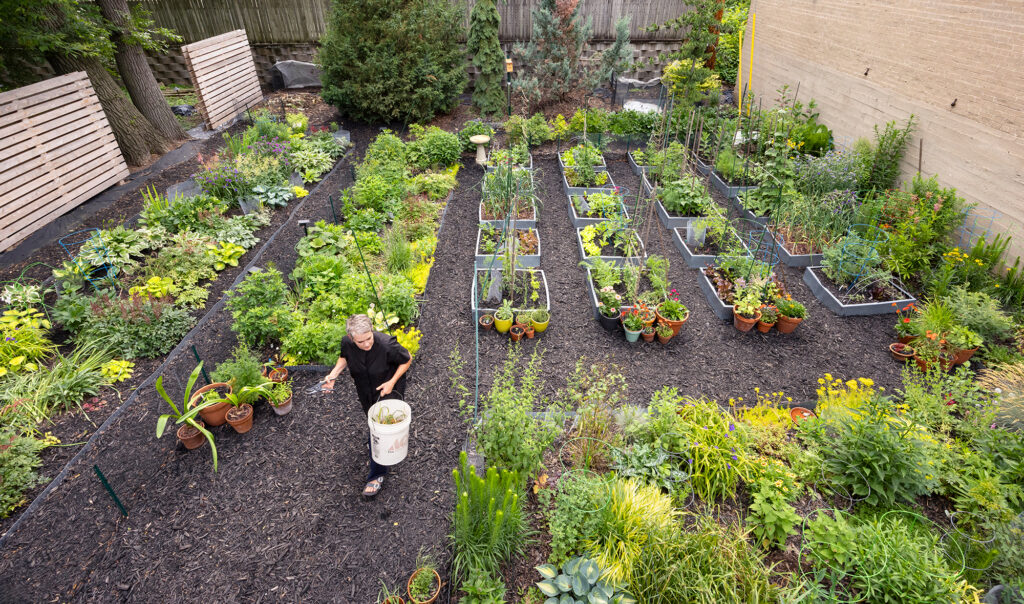
I am most excited to report on my three-layered planting style to maximize nutrients, space for roots, food and ensures a nice aesthetic pyramid. The middle row of taller plants also shades more delicate vegetables, like lettuce and basil, behind them. So, how is my garden growing?
My favorite, prettiest and most successful of my three-layered raised beds is 13, where I planted dill, lettuce and arugula on the outside (leaves), a row of sentinel straight onions (roots) and a twined ladder of green beans (fruit) in the middle. Coming in second, is bed five, with chard, zinnias and peas. I couldn’t create an elegant pyramid in each bed, but still, I’m expecting combinations of eggplant, lettuce and basil; turnips, peas and carrots; arugula, basil, beans and lettuce; fennel, soybeans and zinnias to bring me harvesting joy.
One bed has tomatoes and cayenne pepper plants, plus beets. I don’t love root vegetables, but I overcame my aversion and bought a pack of beet seedlings to fill in my middle “roots” layer. I appreciate their red colored stems that have seen less bug damage than my chard. I’ve been making a list of patsies, I mean family, friends and neighbors, who like beets, so no food will go to waste. Squished alongside last year’s kale, I planted tomatoes, lettuce and a row of miniature sunflowers. I trenched two of my skinny-as-pencils tomatoes, laying their spindly stems in a trough angling upwards, giving them extra strength through contact with the soil. Both have righted themselves and are fruiting. Whew!
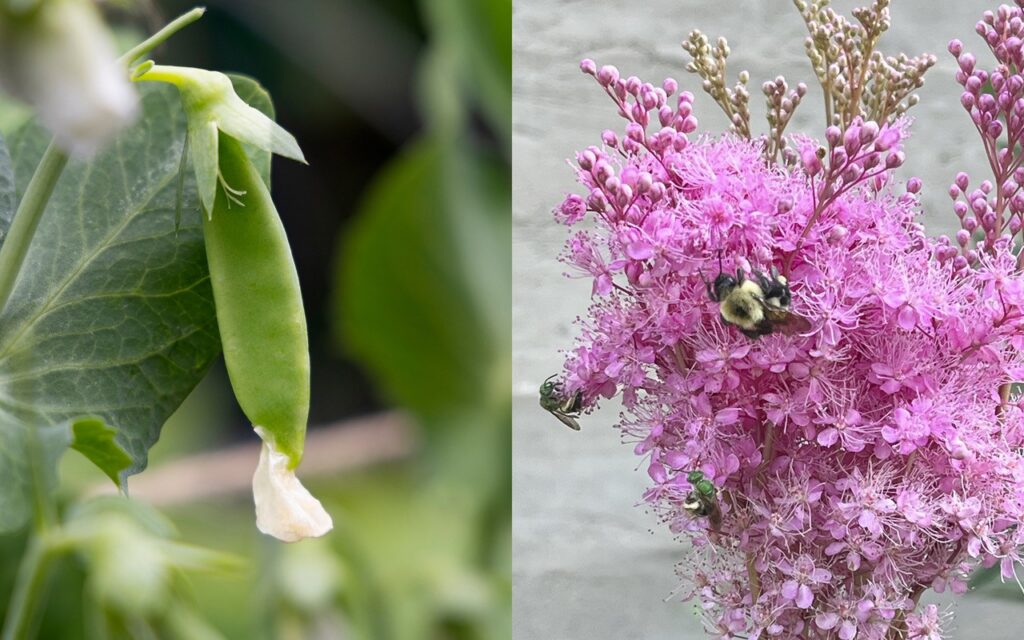
In retrospect, there was mostly nothing wrong with how I was planting my three-by-three foot raised beds although some would call them “monoculture.” I don’t love all the plants listed in companion planting schedules, but the three-layer aesthetic has helped me overcome an aversion to even beets. Given my vaguely random plant combinations, how am I going to rotate plants next year? That’s a 2027 problem.
It’s been a busy summer elsewhere. I’ve tied, twisted and twined. I’ve covered and hovered up the weeds. I’ve pinched and cinched and even Chelsea chopped a few of my milkweeds, so the monarchs have some tender greens in August. I finally harvested my garlic as the leaves crinkled to brown. My harvest last year was puny in both head size and volume. Thanks to my pal Margaret who, out of sympathy, gave me some big heads, which I supplemented with strategic buying at the Tosa Farmer’s Market. It’s been a great garlic haul! I’ve hung these up in my back hallway and will start eating them immediately, with other things of course to temper the spicy-hot-flavor of fresh garlic.
I spend an inordinate amount of time in the garden during the day. So, what is my nighttime garden economy like? Last fall I attended a talk at the Wild Ones North Chapter on moths by Randy Powers, founder of Prairie Future Seed Company. Not only do moths outnumber butterflies 25 to one, but Powers noted that many moths and butterflies are active at night. I bought a u.v. flashlight and will try to catch everyone in the act. Try planting a Moon Garden, featuring plants with glowing, silvery foliage that shimmers in the night. Give those creatures performing the ancient rites of nature during their third shift something to enjoy during their disco nights!
We gardeners are always in a rush as we try to focus on each detailed task in front of us. But don’t lose the forest for the trees! Our Wisconsin summer is fleet of foot; do make sure you take time to look up and smell the milkweed this month. Recharge your spiritual battery and enjoy the green you have fostered around you.
A Few Gardening Resources
Education
- It’s National Moth Week, join in the fun from July 19-27
For Gardeners With Kids
Gardening parents, want to pass along your love of Nature to your kids? Give them fun things to do! Below are lists of fun activities to keep the family eating light and digging in the dirt together.
- Check out your soil health with the Soil Your Undies Challenge from the USDA Natural Resources Conservation Service
- You can’t have too much info on monarchs—check out the World Wildlife Fund Monarch Butterflies Tool Kit
- Want to know more about caterpillar parts? Download this pdf from The Caterpillar Lab. What about the butterflies and moths in your backyard? Try this link!
- Download this Mother Earth News Coloring Book to encourage your kids to be natural fashionistas
- Sign your kids up for Schlitz Audubon Summer Camp
- Check out Pollinator Partnership’s Five Things Kids Can Do to Help Pollinators
- How about the University of Wisconsin’s’ Bee Identification guide for a buzzing good time?
- Pollinator Partnership has recipes for Pollinator Friendly Cooking. What better to entice your kiddos to support wildlife than drawing a direct line between plants, insects and their tummies?
- Check out Bookshop’s 15+ Reads for Young Explorers
- How about the Nature Action Guide crossword puzzle, Supporting Biodiversity
- Is your child already interested in native plants? Look at Nurture Natives, an organization started by high school student Esther Bonney to link youths together through native plants.
- The World Wildlife Fund has resources for educators and caregivers, giving them tools to help kids explore and understand the natural world around them. Sign up for the Wild Classroom newsletter and find fun activities with their toolkits and learning guides in English and Spanish.
- Want to see these lessons extend year-round? Get involved with the Wisconsin School Garden Initiative so your kids and their friends learn about the world that sustains them.
Sustainable Garden Information
- Be part of the national movement to create sustainable, natural environments to protect your family and the wildlife around you by following the National Wildlife Federation’s simple guidelines to become a wildlife habitat yard. The City of Wauwatosa is working towards certification. The City of Elm Grove is already there; Brookfield, Greenfield, Menomonee Falls, New Berlin, Oconomowoc and Pewaukee are working on certifying as well. What can your yard add to this crucial activity?
- Want to add more natives to your yard but don’t know what to put where? Landscape architect Danielle Bell, founder of Native Roots, was commissioned by Wild Ones to design a seven-page, Milwaukee-specific landscape plan that color codes which plants go in which soil and light conditions. This is a surefire way to start your journey to greater green.
- For inspiration on re-wilding your yard, check out Homegrown National Park, co-founded by Doug Tallamy, who says “If half of American lawns were replaced with native plants, we would create the equivalent of a 20-million-acre national park, nine times bigger than Yellowstone.” Let’s create our own Yellowstone!