
Here’s a Wisconsin-specific fact: Our very own Dr. Increase Lapham founded the National Weather Service that predicts our first “frost-by” date, which this year is October 16. I bet Increase Lapham would say to us, “get busy gardeners, you’ve got work to do!”
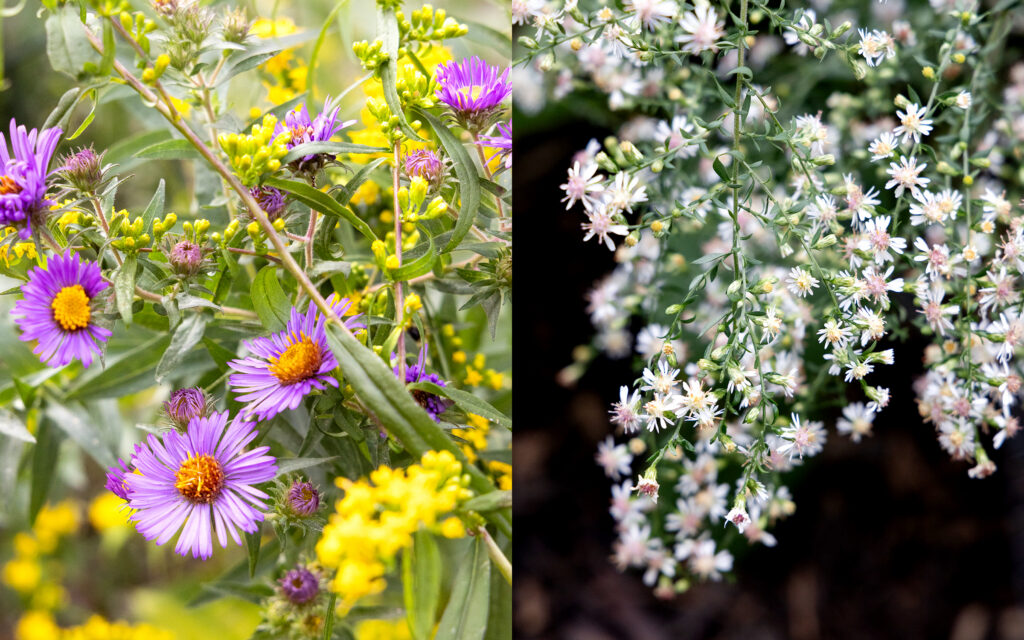
To get ahead of the frost, remove any powdery mildew-damaged plant material and don’t add these cuttings to your compost pile; you’ll only spread the disease. Leave your seed-producing native plant heads for the birds passing through or preparing for the coming cold. You’ll have some “winter interest” too, although I think this is code for “don’t get depressed when your garden is covered in snow”! Blanket your flower and vegetable beds with mulch or compost to protect the precious nutrients you’ve built up all summer. Try sowing some nitrogen fixing seeds to recharge your nutrients — I am planting crimson prairie clover this year.
Protect your tools so they are ready for spring too. Clean metal implements with isopropyl alcohol, a nice steel wool scrub and coat them with 3-in-1 multipurpose oil. Give them a final sharpening if you can and then store with pots, clips, landscape pins and rolled up hoses. If you have a garage or basement, lucky you!

Celebrate this year’s winners of the Betty Awards!
It’s time for me to treat the chlorosis that plagues the western side of my yard. My biggest button bush has succumbed two years in a row, but this year I noticed my peonies and Joe Pye weeds are suffering too. Chlorosis manifests with yellow leaves while the veins stay green, a result of too much pH, highly compacted soil and not enough drainage. I tested soil from these stricken areas by sending six cups to the University of Wisconsin-Madison’s Soil and Forage Lab. To get soil tested, download the instructions from the lab’s website, scoop up two cups of soil from each area you’d like tested and off your brown package goes. My emailed results were clear: add nitrogen, and now! I bought blood meal to water in and will make a note in my 2027 calendar to start up again in the spring.
This reminds me: Pick up an extra bag (or four) of your favorite soil nutrients because many smaller garden and hardware stores won’t have them in stock when you brave spring weather to plant. I’ve got extra bags of organic fertilizer, mulch and vermiculite so I don’t scramble in April. Always looking ahead!
Gardening is ever evolving, so it’s important to keep up to date with the science behind it.
For example, gardeners have been told to remove fall leaves because it might spread fungus. Turns out those cushy leaf comforters are made for overwintering bugs. Leaves protect soil moisture, provide free nutrients, reduce erosion, prevent stormwater run-off and create incubators for the over 50 species of caterpillars and other bugs who overwinter in our yards, like a bug-friendly winter cabin. You want bird food in the spring? Don’t mulch leaves, that kills bugs and cocoons. You want bees in the spring? Leave the leaves for the sake of the bees, please!
Another gardening fallacy: worms are good for the soil. Nope!
No earthworms have existed in Wisconsin since the last ice age, so technically all earthworms in Wisconsin are invasive. I first heard of the scourge of jumping worms at the Mother Earth weekend in West Bend in 2023 (thanks to sister-in-law Ruth and nephew Zenya for that perfect birthday gift!), and a recent story in the New York Times’ real estate section brought it back to me. Turns out jumping worms are banned in Wisconsin under the Invasive Species Rule (ch. NR 40, Wis. Adm. Code) because they destroy the nutrients in compost piles. Given how much I harangue you all about composting, was I destroying my own piles?
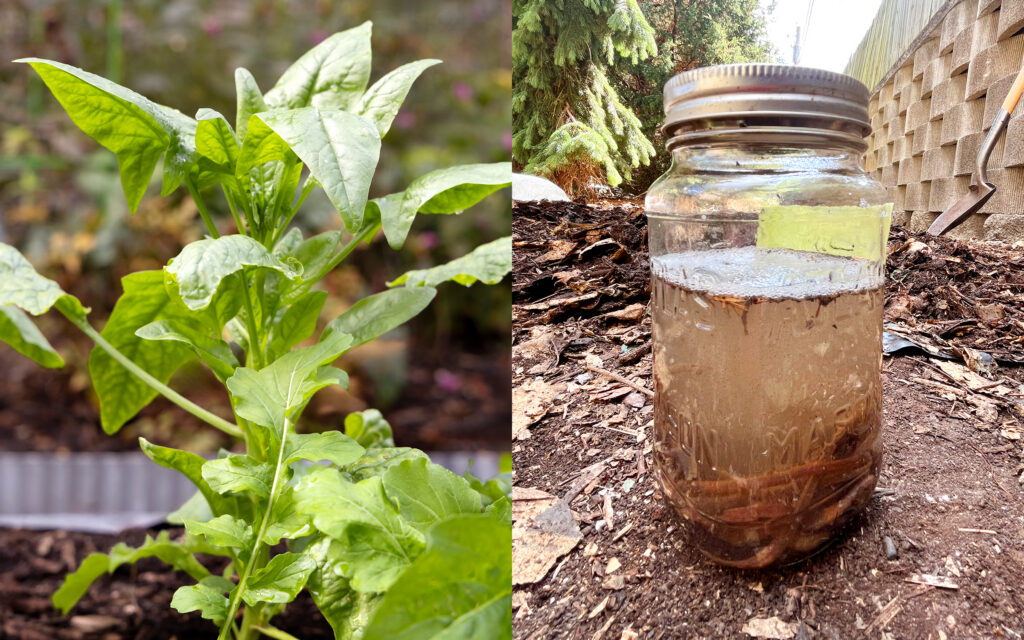
I scooped the first batch of the squiggly slimy lines from my compost piles and put them in a jar with soapy dish water to put them out of their misery, before they went into the garbage. Or you can use a baggy, as the Wisconsin Department of Natural Resources recommends, and solarize them for fifteen minutes before you remove them permanently. Do not put the soil in your yard waste bin—you risk spreading the worms. Solarize the compost from which the worms came from to prevent spreading.
I find this kind of removal difficult, just as I have a hard time thinning my seedlings. This is the crux of the native vs. the plants we have conflict: who are we to have disturbed the North American landscape so dramatically, and who are we to work to dispose of those creatures we brought with us when we landed? I carry my worm guilt alongside my plant passion in the hopes I am adding more to nature than I am subtracting from it.
Come on, try one last planting! Get your garlic cloves into the ground, protecting them against the squirrels with metal fencing and row covers. Squirrels are getting ready to hibernate too and need to get some stealing mischief out! If you haven’t already, sow some cool weather seeds, like spinach, arugula and chard. I’ll continue to coddle mine but am prepared to drape them when the temps dip low. I will double my row covers at our first “feels like” 32-degree day; cloth row covers provide four to eight degrees of additional warmth. I’ve started some seeds inside that I’ll eventually transfer to my rickety cold frame.
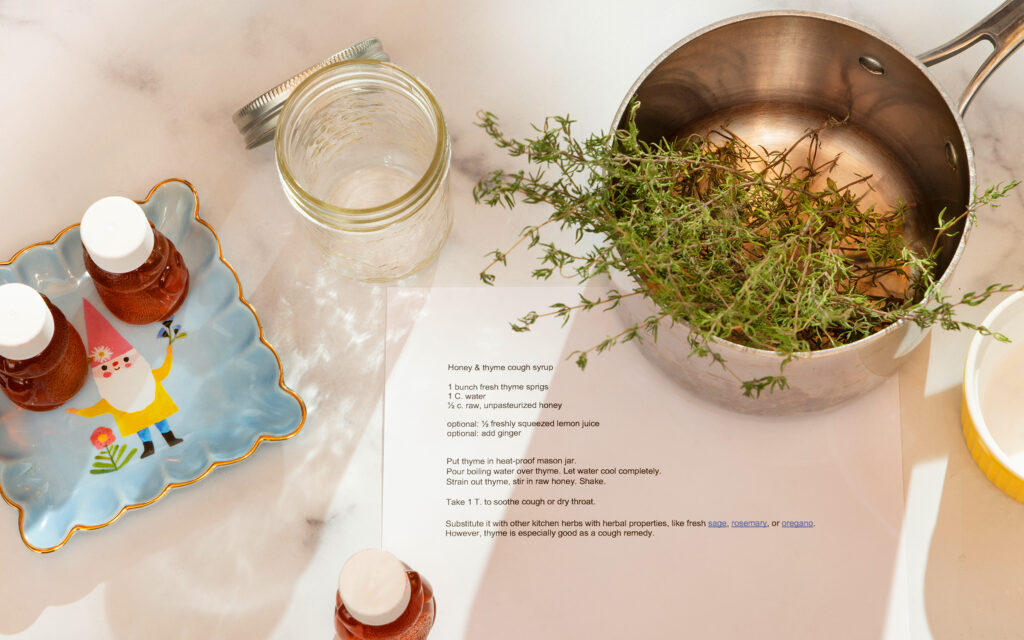
What about trying new ways to use herbs? I’ve made a homemade sore throat recipe using a bunch of my garden thyme boiled in one cup of water, cooled, strained and poured into one half cup of unpasteurized honey (thanks to newlyweds Molly and Tony for this gooey golden goodness!) Shake the jar to get the two integrated and now you are armed against fall sniffles. What other tricks and treats can I coax from my late season herbs? Try freezing them to jeuje up a winter meal.
Of course, I’ll sow some native seeds into a few raised beds. This includes seeds I’ve gathered—rue, hellebore, columbine, golden Alexander—as well as ones I’ve bought—Virginia bluebells, tall green milkweed, tall sunflower, lupine, smooth yellow violet, early sunflower, black cohosh and path rush. Think my eyes are bigger than my beds? You bet, but garden hope springs eternal.
Fall signals the end of some things but the beginning of new ones. It’s the end of most farmer’s markets, the end of garden harvesting, certainly the end of long nights on the deck. I hope the birds that lived, loved and dined in our yard are on their way to warmer climes, and that the bugs are making for the hills, mounds and holes they’ve dug. To quote from Rogers and Hammerstein’s Sound of Music, “…So long, farewell, auf wiedersehen adieu, to you and you and you!” My garden is putting itself to bed while I am shifting into garden education time so I’ll have some new lessons under my belt when I start up again in the spring. Good job to you all for your efforts on behalf of nature this year!
A Few Gardening Resources
EVENTS
- Caterpillars Aren’t Just for the Birds
October 14, 11:00 am-12:30 pm central, on-line, free or paid tickets
Learn more about caterpillars and their foundational support role in our ecosystem in this panel discussion with Homegrown National Park’s co-founder Dr. Douglas Tallamy, The Caterpillar Lab’s director Sam Jaffe, botanist Laura Reeves, founder of Prairie Shore Botanicals, and moderated by New York Times garden columnist Margaret Roach. The discussion uses The Extraordinary Caterpillar film as a jumping-off point. If you haven’t seen the film already, be prepared to be flabbergasted by these flamboyant divas!
- Margaret Roach Community Class series Garden 2.0: A Diversity of Design Inspiration
October 15, noon-1:30 pm central
I’ve signed up for the class by Richard Hayden, Senior Director of Horticulture at the High Line New York, who will explore the key principles of keeping gardens vibrant across the seasons.
- North American Pollinator Protection Campaign International Conference
October 20-22, $120 for full program, virtual
Are you interested in knowing more about the folks who are protecting and promoting pollinator health and safety? Get some direction on steps you can take to help our flitting, flying friends. This set of panels is an inspiring end cap to your gardening work this year.
- International Bat Week
October 24-31
Bats are part of your garden’s nighttime economy—learn how to protect these Pokémon-inspiring creatures who live in our yards. You can also attend the Bats of Wisconsin talk on Tuesday, October 13, 6:30-7:45 am (late night bat time!) at the Plymouth Intergenerational Center, 1500 Douglas Drive, Plymouth, WI, (one-hour due north of Milwaukee).
BUYING PLANTS
- Prairie Moon Nursery: Native plants and seeds for fall planting
- Prairie Nursery: Native plants and seeds for more fall planting
- Johnny’s Selected Seeds: Seasonal seeds
- Keene Garlic: For your 2027 haul! Download a free garlic growing guide from Nicole Burke of Gardenary.
- I’ve never purchased plants from Direct Native Plants but their name is an attraction. Try them out, report back!
EDUCATION
- If you have a subscription to PBS (shouldn’t you?), there is an old series called the Wisconsin Gardener you might want to check out. Season 21 (the last), episode 4 is on Climate Change for Gardeners. This might be a great way to reflect on how gardeners can help protect and reserve climate change.
- For more information on Leaving the Leaves, see the Xerces Society for Invertebrate Conservation.
- Mother Earth News online offers videos and tutorials.
- Joe Gardener provides all kinds of information on his website and check out his podcast.
- Another on-line gardener I like – partially because he laughs about his failures, partially because he has taken over his entire suburban lawn and transformed it into a living, working system – is Epic Gardener.
- University of Wisconsin Horticulture, Division of Extension has online garden programs.
SUSTAINABLE GARDEN INFORMATION
- Wild Ones Milwaukee has a free, seven-page garden plan for the Milwaukee region, designed by Danielle Bell of Native Roots. The plant list is pure gold!
- Want more technical advice from an expert on fall planting? Check out Joe Gardener’s free, downloadable Fall Vegetable Gardening pdf to keep your garden producing.
- Fresh Coast Guardians are dedicated to loving and protecting Lake Michigan, and they have all kinds of programs so you can too. What about a rain garden or rain barrel to prevent leakage into the lake?
- Be part of the national movement to create sustainable, natural environments to protect your family and the wildlife around you by following the National Wildlife Federation’s simple guidelines to become a wildlife habitat yard. The City of Tosa is working towards certification. The City of Elm Grove is already there; Brookfield, Greenfield, Menomonee Falls, New Berlin, Oconomowoc and Pewaukee are working on certifying as well. What can your yard add to this crucial activity?
- For inspiration on rewilding your yard, check out Homegrown National Park, co-founded by Doug Tallamy, who says, “If half of American lawns were replaced with native plants, we would create the equivalent of a 20-million-acre national park, nine times bigger than Yellowstone.” Let’s create our Wisconsin Yellowstone together!