
At this time of year, I don’t have FOMO or a fear of missing out, I have FONG: the fear of not gardening. What’s to replace my daily green habit? Have no fear; our fourth season of learning is just beginning, with some small green projects to continue the wonder of it all.
My first summer wind-down class was a Wild Ones talk by Dr. Shaun McCoshum titled, The Ecology of Home: Creating Habitat That Works. McCoshum is a fast talker, so my scribbled notes are harder to decipher than usual, but a few things stuck to me, like a spittle bugs cocoon on an aster leaf. The first big takeaway was that animals have always actively shaped our landscapes as they went about their business of surviving and thriving. When creatures disturb the landscape — a little “exterior decorating,” it also reduces the chance for perpetual diseases that affect plant and animal life.

Celebrate this year’s winners of the Betty Awards!
For example, buffalo, an animal close to my western Canadian-born heart, plop down in the snow and make half-moon angels. Their massive brown bodies trample the blanket of white, giving birds access to the seeds and critters in the soil (given how interwoven buffalo are to our landscape, check out the First Nations Development Institute’s story about grassland restoration efforts). McCoshum’s message was “be the buffalo” by rotating your plants. Okay Doc, I’m no buffalo (I only dress like one during winter), but I can surely play plant musical chairs.
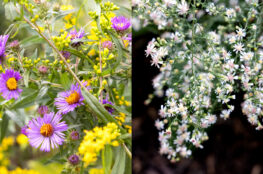
I removed my red bee balm because every year it suffered from a ferocious case of powdery mildew. This should dissipate whatever spores are popping up in that shady corner of the yard. I pulled out two carts worth of non-native plants, giving two hydrangeas to my pal Cornelia for her daughter’s yard, with hostas and astilbes going to a rummage sale, and my compost pile. What’s going in? I added six new Joe Pye weed plants to create a more dynamic garden edge of tall pollinator targets, with several more columbine, asters and the ever-incandescent queen of the prairie, to fill in some bug food gaps. My final bare root plants to go in were Virginia waterleaf, Virginia bluebell, Ridell’s goldenrod, rudbeckia and bellwort. Why bare roots? I find them easier to grow than seeds, and more successful this time of year than a plant.
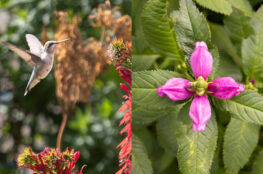
Okay, I’ll admit, I did add a few non-natives, like anemone “robustissima,” or Japanese anemone, whose tall wands with pink stars conjure fall garden magic. I also bought a checker bloom, a charming pink mallow that resembles hollyhock, something I’ve always yearned to plant. Anyone care to ask my partner Kevin why he prohibits hollyhocks in the garden?
A few more takeaways from McCoshum included adding sand to give the ground-nesting bees softer soil, throwing down some brush for nesting sites and burying the top half of a plastic doghouse in the ground to create a snake shelter. I’m sure I won’t do this last one, but something is burrowing inside a dead tree stump, so hidden habitat accomplished. My brain kept blooming with each new piece of scientific information that was paired with practical tasks. It was a perfect start to my season of learning!
How are my fall plantings doing? I sowed unplanted raised beds with crimson clover, and boom!, they rewarded me with a pom-pom parade of leaves within a week. I still have chard, arugula, kale and spinach bedded down under row covers, but the kale will likely be the only one to survive the winter. I moved my cold frame back onto the deck and will start vegetable seeds in January or February. I recommend Joe Gardener as a guide to your winter sowing work, but remember, he lives in Georgia. His planting dates may trick you into doing something you shouldn’t do.
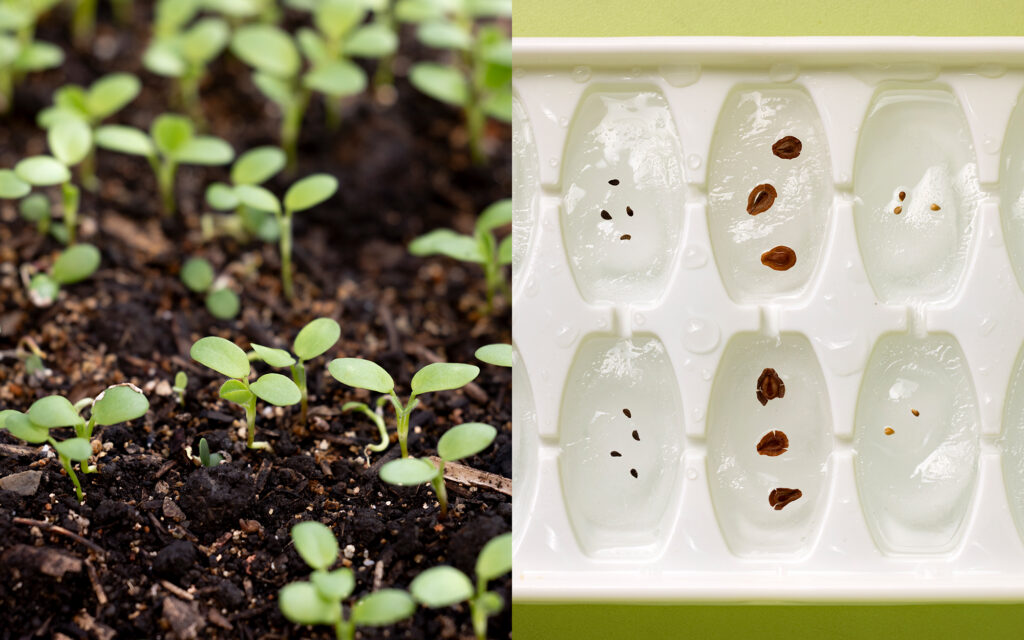
Dots, dots, dots. This is what my great-aunt Frank used to say when we would play dominoes with her (she always won!). I haven’t played dominoes for decades, but dots are still part of my life, because they mean seeds. I sowed native seeds like rue, tall sunflower, early sunflower, lupine, black cohosh and path rush in my covered raised beds again, but this year I’ll try cold stratifying some precious black dots of Virginia bluebells, smooth yellow violets and tall green milkweed in ice cube trays. I’ll label the ice cubes very clearly—no-one needs milkweed seeds in their smoothie—and will move them outdoors in 2027.
A word of advice borne of a past mistake: don’t forget to update your garden map. I never remember all the treasures and treats I plant in the fall, even though I have plant tags. The ink will fade, or the squirrels and heaving earth will rearrange (or disappear) them. I don’t want to damage any new residents as I start tickling the soil in the spring.
As part of my fourth season of learning, I just read Ian Bogost’s lovely article in The Atlantic, The Missing Ingredient of Modern Life: Why We Need Wonder. Bogost writes about our current obsession with maxxing out our bodies, airline miles and work hours while we lose our sense of wonder through small things. Gardens have all of Bogost’s elements of wonder, like serendipity, such as when you step outside to do a few things and come back hours later, your brain buzzing with life. Sound is part of wonder, and each garden is an orchestra. Smelling too is a wonder, and who doesn’t love the smell of chlorophyll?
Wonder arrives in the form of small furry caterpillars that visit because you planted food for them, or a firm, round head of garlic that grew because you gave it what it asked for. Plants have wondrous ways of conjuring resources and collaborators, and they force us to be present. I garden maxx all right, but as a “plant pupil” (thanks to Heritage Flower Farm founder Betty Adelman who called me this), not a plant overlord, I watch these geniuses for life with bated breath.
If you too already miss your plants, watch this story about the London Vegetable Orchestra that uses vegetables as instruments (thanks to garden pal Jane for this delicious tidbit). Now is the time to start your own performing vegetable group and write a Milwaukee “ground to sound” playlist. Invite me to your first winter concert, won’t you?
A Few Gardening Resources
EDUCATION
- Keep America Beautiful’s America Recycles Day is November 15. Learn more strategies on how to reduce, reuse and recycle.
- Check out Joe Gardener’s Gardening Academy and sign up for his newsletter for your fourth season fix.
- Read the Almanac for gardening tips, download a free guide on how to start a garden, and get weather predictions, moon phases, sunrise and sunset times. Learn a veritable buffet of the things that interest gardeners.
- University of Wisconsin Horticulture, Division of Extension has online garden programs to help you make it through winter.
BUYING PLANTS
- Prairie Moon Nursery: Find native plants and seeds for fall planting.
- Prairie Nursery: Find more native plants and seeds for more fall planting.
- Johnny’s Selected Seeds: Try Johnny’s for seasonal seed varieties.
- Root Down Wisconsin, based in Wauwatosa, is as local as local can be. Most of my fall plants are from less than a mile away!
- Heritage Flower Farm in Mukwonago has a great selection of native and heirloom plants.
- I’ve never purchased plants from Direct Native Plants but their name is an attraction. Try them out, report back!
SUSTAINABLE GARDEN INFORMATION
- Wild Ones Milwaukee has a free, seven-page garden plan for the Milwaukee region, designed by Danielle Bell of Native Roots. The plant list is pure gold!
- For inspiration on rewilding your yard, check out Homegrown National Park, co-founded by Doug Tallamy, who says, “If half of American lawns were replaced with native plants, we would create the equivalent of a 20-million-acre national park, nine times bigger than Yellowstone.” Let’s create our Wisconsin Yellowstone together!
- Be part of the national movement to create sustainable, natural environments to protect your family and the wildlife around you by following the National Wildlife Federation’s simple guidelines to become a wildlife habitat yard. The City of Tosa is working towards certification. The City of Elm Grove is already there; Brookfield, Greenfield, Menomonee Falls, New Berlin, Oconomowoc and Pewaukee are working on certifying as well. What can your yard add to this crucial activity?
- Milwaukee Metropolitan Sewer District, in partnership with Fresh Coast Guardians, provides resources and references for anyone wanting to help protect our waterways, create a livelier landscape and entertain the bees, bugs and other creatures that co-evolved in our region. Download their natural landscaping plan.
- Fresh Coast Guardians is dedicated to loving and protecting Lake Michigan, and they have all kinds of programs so you can too. Start planning for a 2027 rain garden or rain barrel now!
- See the Wisconsin Wildlife Action Plan, from the Wisconsin Department of Natural Resources, for information on conservation and protection of species and their habitats. I’ve planted a few rare native species from this list; won’t you join me?