
Mitchell Park has always been a place for growing things. When the city bought the property in 1890, it was already “studded with many giant oaks in a fine state of preservation,” wrote a local reporter. The park board promptly planted more trees, including 1,500 in 1895 alone.
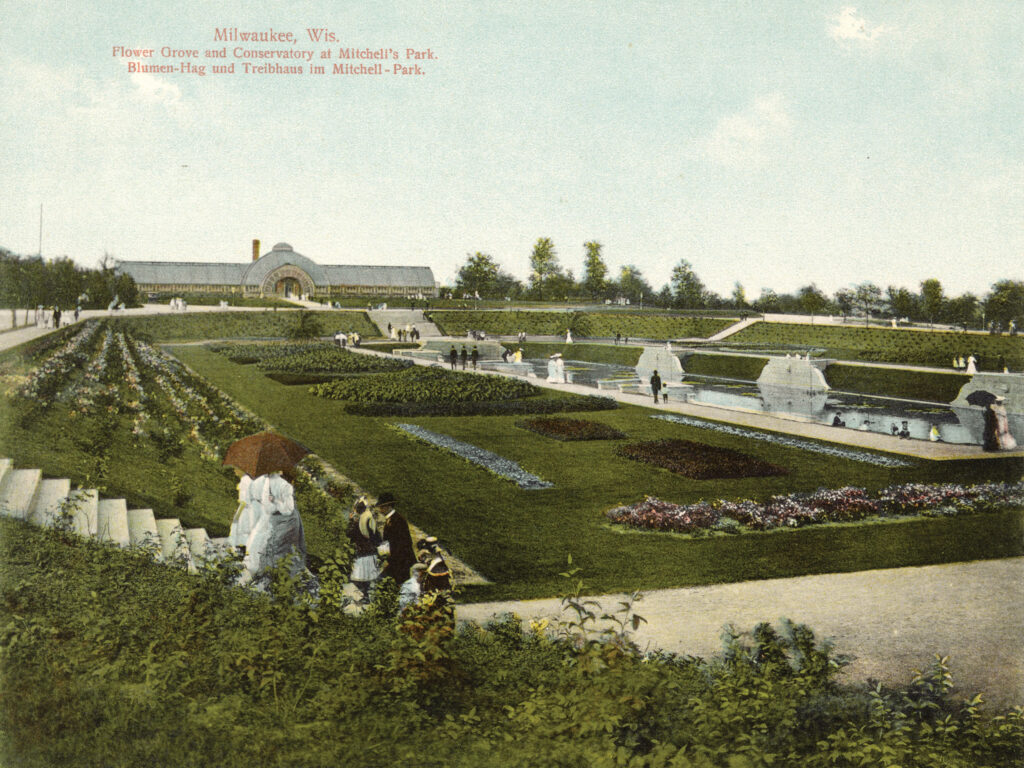
The site’s low spots were converted to water features, including the sunken garden pictured here on a penny postcard from the early 1900s. The garden’s reflecting pool was planted with water lilies, and long banks of roses adorned the adjacent slopes, creating what our ancestors clearly considered a great spot for a summertime stroll.

Celebrate this year’s winners of the Betty Awards!
The park also had a year-round attraction. In 1899, the city dedicated the horticultural conservatory that crowns this view of the sunken garden. Designed by Henry Koch, whose other commissions included City Hall, it was a crystal palace as long as a football field and filled with 75,000 plants – both permanent residents like banana trees, ferns, cacti, palms and figs, and seasonal stars like mums, azaleas and lilies.
After a half-century of winter winds and summer hailstorms, the conservatory reached the end of its useful life. Riding a wave of postwar prosperity, Milwaukee County replaced the landmark with a futuristic trio of glass beehives, one each for tropical plants, desert specimens and seasonal shows. Dedicated between 1964 and 1967, the Mitchell Park Domes quickly became one of Milwaukee’s premier tourist attractions.
Decades of deferred maintenance and shrinking budgets spelled trouble for Mitchell Park. The sunken garden was abandoned in 1990, and the beloved Domes sank to endangered status. But Mitchell Park’s tradition of growing things has sprouted fresh shoots. A new $115 million public-private initiative – The Domes: Reimagined – is now under way to restore the Domes, reclaim the sunken garden and reactivate Mitchell Park, creating a green amenity for Milwaukee’s next generation.