
Happy New Year, I hope you survived the holidays and are ready to set the course for a new green year!
I’m already laying out my goals for 2026, which includes removing the landscape fabric that helped me wrestle our feral yard away from the weeds, and replace it with mulch. I just hope I don’t step on any ground nesting bees next fall! I will remove some non-native perennials and sell them at a spring rummage sale to recharge my plant budget. I’ll replace these perennials with shade-loving native perennials, especially spring ephemerals, that emerge early to feed queen bees as they start their hives.

Check out the MilMag Mini!
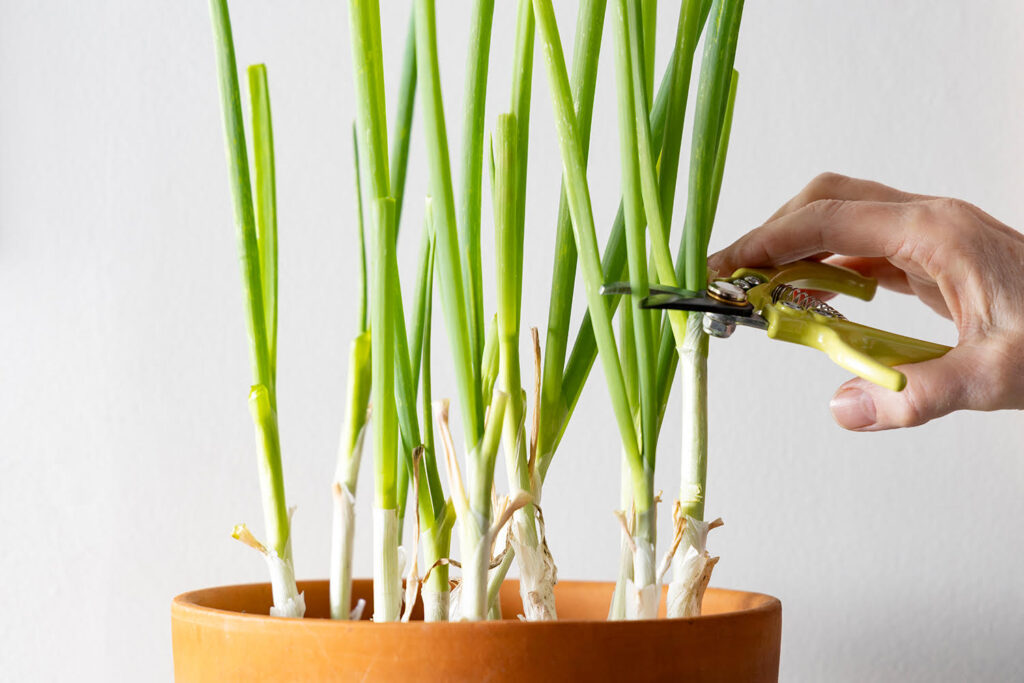
I will also take out two giant non-native miscanthus grasses meant to block a utility pole, and create more space for bird and bug-feeding annuals and perennials. I hope I’ll have good luck with refrigerated seeds from my second cold stratification effort – the first try didn’t work but gardening hope always springs eternal! I’ll also put in one last batch of metal edging, so the green mulch doesn’t take over my beds. It will be another big year of good garden exercise, but for now, I take a bit of comfort in snipping basil and green onions from two indoor plants.
We all have our own gardening origin stories—what threw me into my garden mindset? It was Frances Hodgson Burnett’s 1911 novel The Secret Garden, with lessons about the miracle of life in the cycles of nature. I read this book as a sixth grader in my birthplace of Calgary, Canada. Imagining bulbs pushing up through the dirt into the light was a lifesaver for me. But it was not until decades later, when I moved to Southern California from New York in 1988, that I was able to discover my love of dirt.
In my Long Beach backyard, I eked out space for tomatoes and Brussels sprouts (my first novelty plant), but the naval orange tree, pineapple guava bush and purple and orange bougainvillea, my yard’s spiny protectors, were the stars. My efforts at growing food were valiant but rather haphazard.
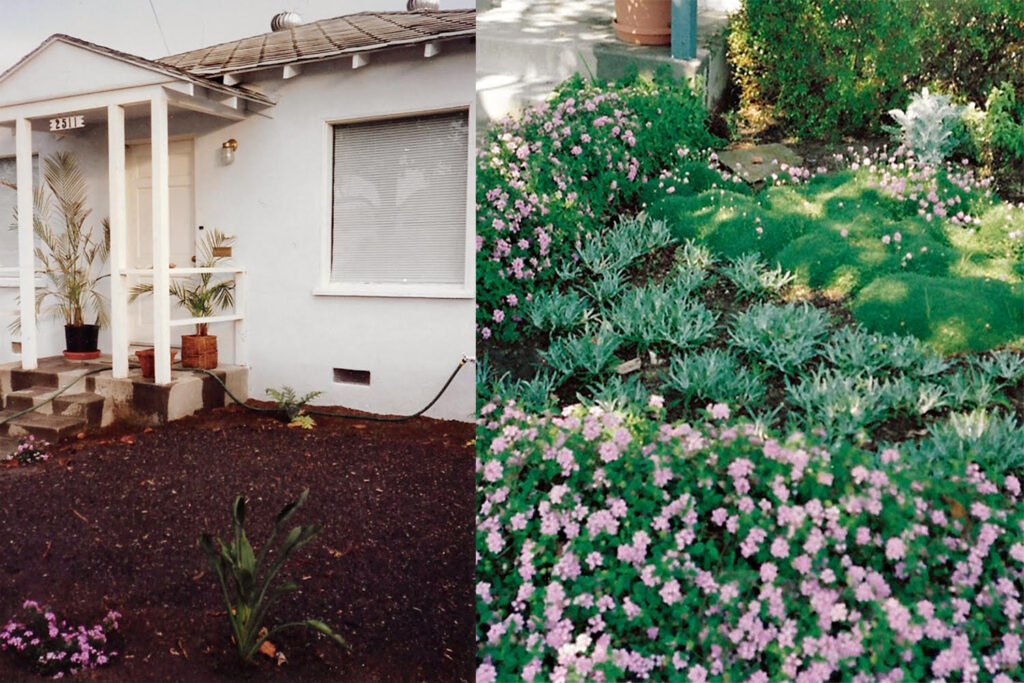
My micro-chip sized front yard was a bigger success. I removed all the grass and put in a border of flowering lantana, with low-growing grasses, two Bird of Paradise plants, blooming Armeria, palm trees and other (mostly) drought-tolerant plants in the middle. The park strip was turned into a rich tumble of vinca with charming purple flowers. It was a haven for snails; my neighbor’s pet pig Bubba loved those. Friends joked about the unusual (read: sloppy) aesthetic, but sadly, no one tried it themselves.
In California my grass-free yard meant I only used 25% of the water the utility company allotted for such a small home, proving that I saved time and money by removing turf. I call that a success. It was not until decades later that I read Marc Reisner’s 1986 book Cadillac Desert: The American West and Its Disappearing Water. It turns out that explorer and naturalist John Wesley Powel observed that the west was already out of water – by the mid-19th century. The west coast’s drought and fires demonstrate we need to be good stewards of our water – and that it’s not that hard to do.
I love being back in Milwaukee, for family and friends first, but also for our proximity to water, that most precious substance. I am not a panic monger, but are hostile water grabs from the Great Lakes’ supply inconceivable? I have kept my water conservation mind-set, which drives my “food, flowers or get out” garden mantra. I am rabid for native perennials and making food to share. As in Burnett’s book, where gardening is a metaphor for the growth of her two young characters, like you, I am using nature to write a new narrative for me and my patch of land.
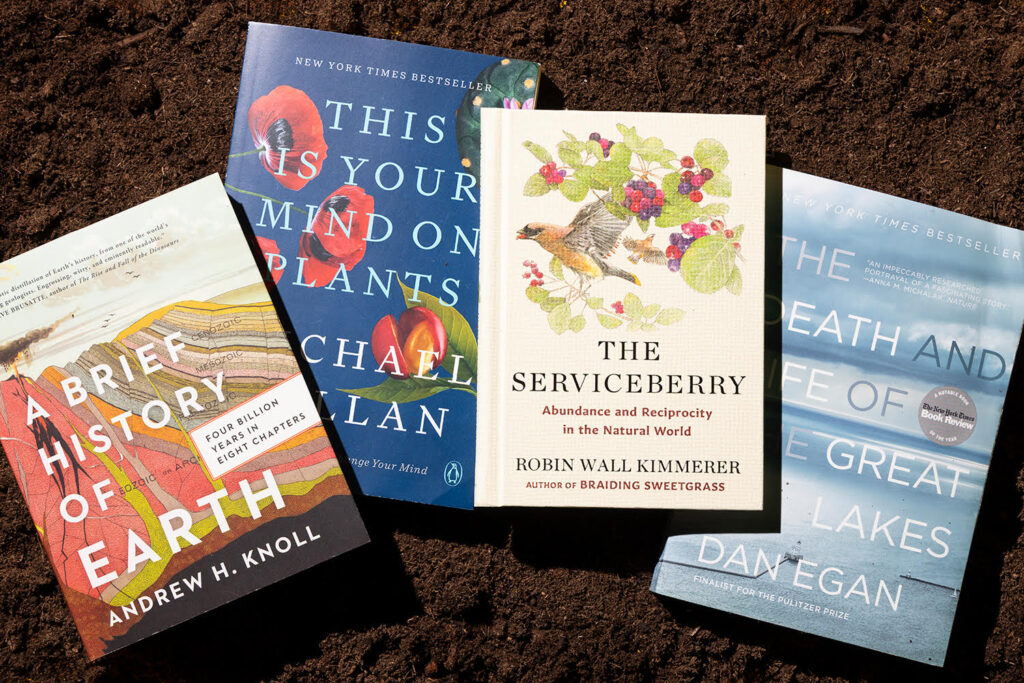
Since we have more time inside right now, I wonder, why do we need soul-nourishing hobbies like gardening? In a November 2025 article in the New Yorker, writer Jonathan Rothman talks about how our perception of hobbies has evolved. Rothman asks if hobbies as a “good” are now being pre-packaged to us, and if passive hobbies (reading, scrolling, petting the cat, watching videos) are even hobbies. Rothman mentions the commodification of hobbies, their “pricification” based the rising costs of hobby supplies. He uses the word “grindification” to describe when your emotional support hobby becomes a business.
By writing about gardening have I turned my hobby, the one that gives me deep personal pleasure and lots of scrapes, into a grind?
No!
I maintain the line between being “…proficient but not professional, creative but not productive, ambitious without being anxious.” It is writing that has been part of my professional life, not putting my hands in dirt. Writing requires learning and reading, experimentation and pivoting, just like gardening. I remain an amateur explorer, making mistakes on my own dime and reporting back to you on my journey.
Rothman also says if you have to do something to survive, it isn’t a hobby. I joke with my partner Kevin that if we tried to live off what I can grow, we’d be skinny bags of bones, reaffirming my garden’s hobby status. Whew!
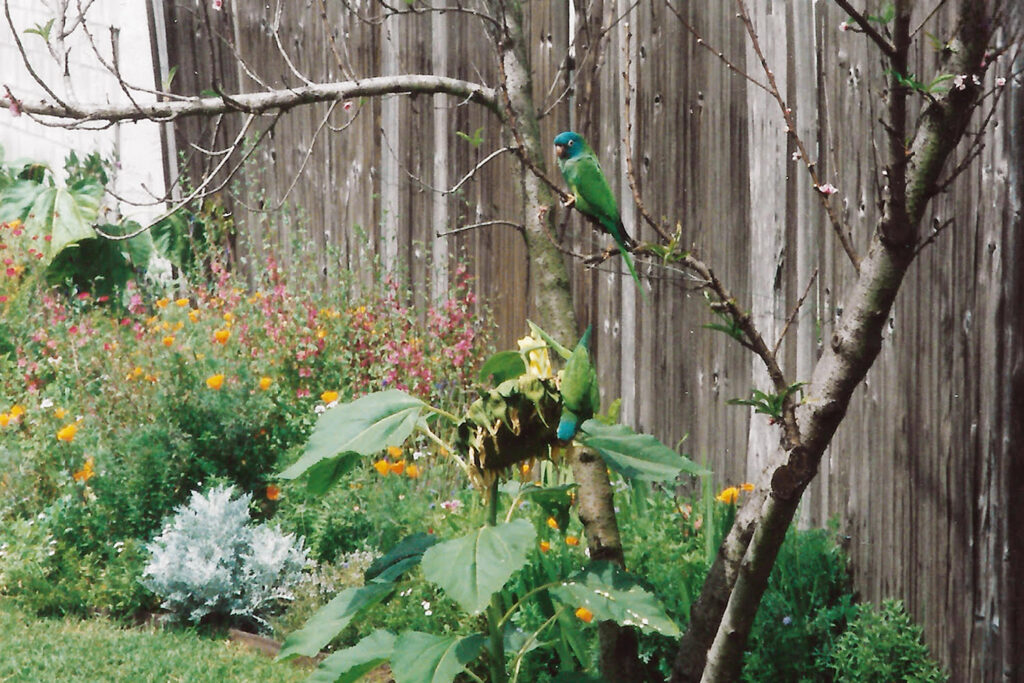
To cheer you up in our non-gardening January, I leave you with a picture of my second-ever garden, in Redondo Beach, California, about 10 blocks from the ocean. I carved out beds from the sandy soil for vegetables and as many blooming flowers as I could grow, like giant Mexican bush sage, calla lilies and native flowers. My sunflowers were particularly fun: the wild parrots (look carefully, there are two!) loved them as snacks. This image seems improbably exotic in Wisconsin’s January weather, but just looking at these creatures reminds me green will return, I just need to keep busy.
Gardening is a learning journey. I’ve earned a few F’s in the past (apologies to the plant-digging woodchucks for removing them) but I will work towards A’s & B’s this year.
A Few Gardening Resources
Education
Now that winter’s icy grip has taken hold of our yards, what’s a gardener to do with their time? You can take on-line classes! I like classes that give big picture ideas, just don’t force me back into high school biology (that chemistry just won’t stick!)
- Last winter I took UW-Madison’s Plant Diagnostics class, which outlined the various steps for identifying problems – is the damage biotic (from a bug) or abiotic (from a fungus?) They recommend send images to UW-Madison for diagnosis, or try a second opinion, but do not try home-grown fixes before you correctly identify the problem. Despite one professor talking about chemicals, they generally preferred you use homeopathic solutions for an Integrated Pest Management [IPM] process to help nature heal herself. All faculty members Insisted that we civilians use .org, .edu or .gov extensions to avoid the sale of services. Sign up for UW-Madison’s winter 2026 series using this link.
- Want some good reading on how to get started in creating your own “homegrown national park”? Look at the different resources available on the Homegrown National Park’s website.
- Check out Wild Ones’s recorded webinars. Lecture topics include “Turn That Patch into a Plan” and “Next Steps for Nature” with Doug Tallamy.
- Wild Ones’ Fox Valley Area chapter is hosting their 29th annual day-long conference “Toward Harmony with Nature: Native Plants, Natural Landscapes”, on January 24 in Oshkosh. You can attend in person or virtually,
Sustainable Garden Information
- National Wildlife Federation: How to create and certify gardens for wildlife
- Wild Ones Milwaukee: Specific plans for climate resilient, native gardening by Danielle Bell, Native Roots