The Big Decision
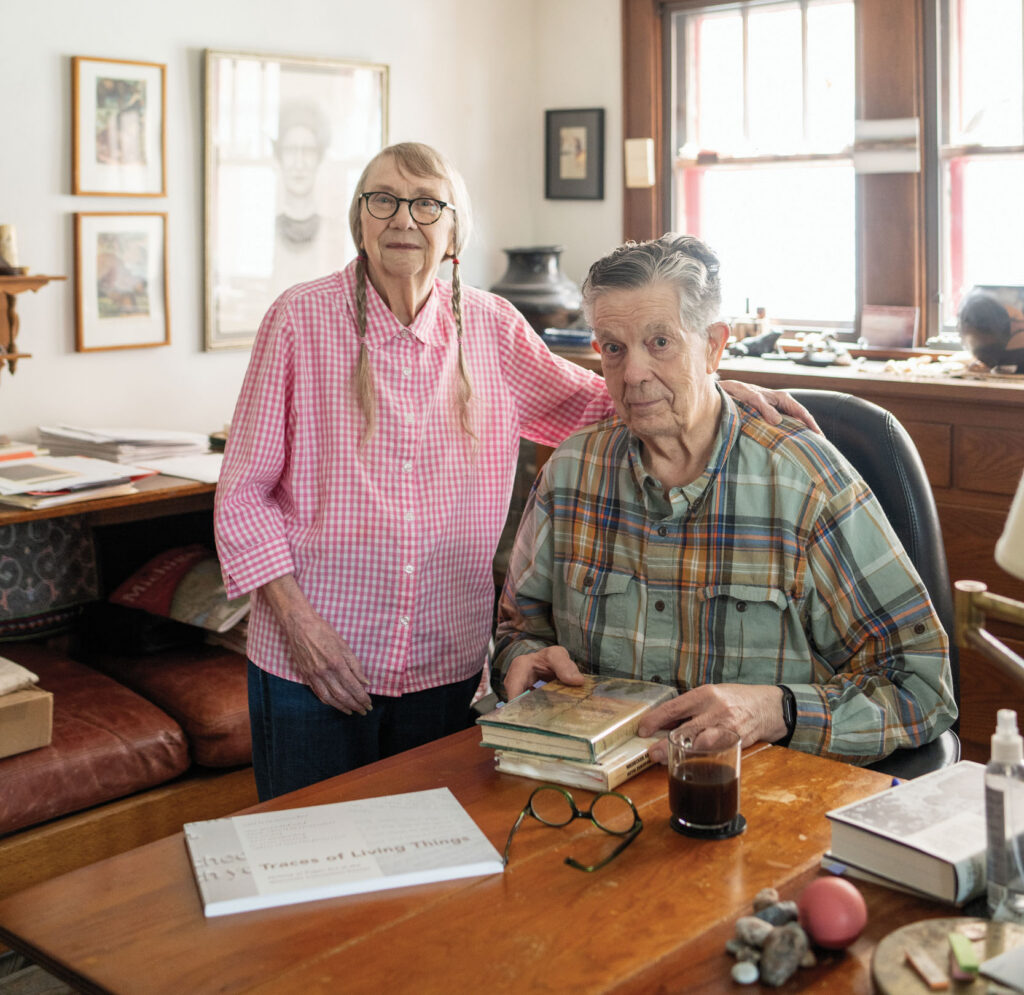
In 1977, visual artist Anne Kingsbury and her husband, Karl Gartung, a poet, faced a crossroads: She had been denied tenure in UW-Milwaukee’s art department. Should she look for another teaching job? The couple had planned to put down deep roots in Milwaukee, having recently bought a home on the East Side, where Kingsbury also worked on her art.
“Leaving Milwaukee was an option we weren’t wild about,” recalls Kingsbury, now 83. “It’s much easier to stay where you are and work than to have to recreate a new studio situation.” And while she enjoyed the students, Kingsbury was tired of the many politics in the department, and she wasn’t playing them right. “I didn’t fit in there,” she says.
Gartung didn’t want to relocate, either. He was working a job he loved at a small-press bookstore Downtown. “I thought I had found my purpose in life,” says Gartung, 79. “It was the beginning of my serious apprenticeship to contemporary literature.”
So a few years later, in 1980, the couple, along with their friend Karl Young, took a leap and opened Woodland Pattern Book Center in Riverwest.

If someone has inspired you through their service, leadership or dedication, the Unity Awards are your opportunity to recognize them!
Their goal: to offer programming to people in Milwaukee that they otherwise would have to leave town to find. And to promote poetry. “There has been a lot of false information about what poetry is and how to read it,” Gartung says. “All it takes to understand poetry is attention and patience.”
They were only vaguely aware of the big risk they were taking. “I think we had a sense of it, but you don’t realize how large a risk is while you’re in the middle of doing it,” Kingsbury says.
In the 46 years since its inception, Woodland Pattern evolved into a wonderland of carefully curated, esoteric titles, eventually growing to more than 25,000 volumes of poetry, small-press literature, chapbooks, limited-run broadsides and other handmade items. Woodland Pattern also is home to the largest collection of haiku in North America and the largest Native American section in Wisconsin. It has become a significant hub of performance and exhibitions, with a reputation that extends far beyond Milwaukee.
And during those same years, Kingsbury and Gartung each continued their own work.
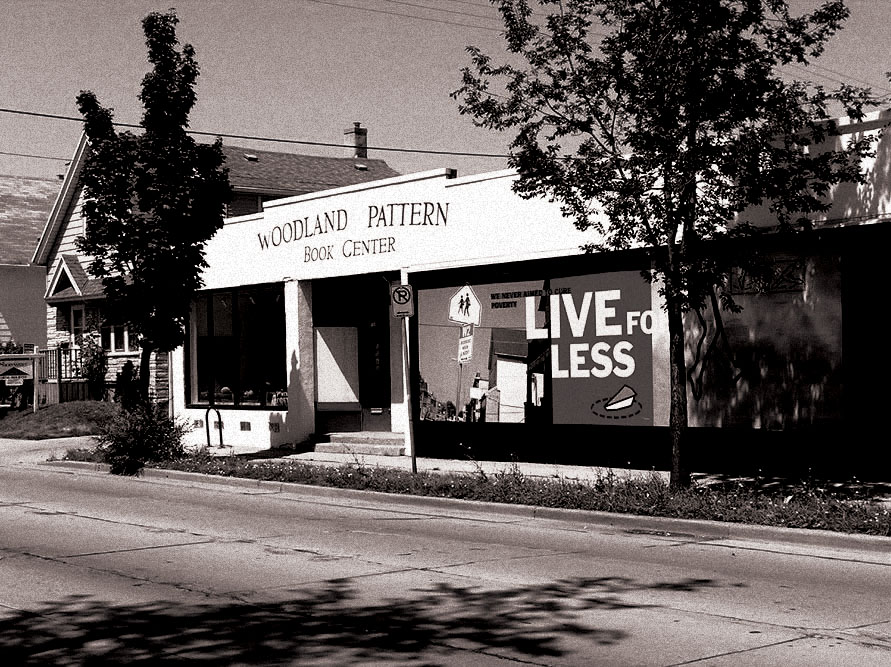
In 2018, the couple retired, leaving Woodland Pattern in the capable hands of Laura Solomon and Jenny Gropp. The original location closed in May, with a compelling exhibition of Kingsbury’s art. This fall, Woodland Pattern will reopen in a much larger space in Bay View, expanding its programming as well as its footprint.
As this long-standing, influential cultural institution prepares for a new chapter, we take a close look at the couple who started it all.
More Than Just a Bookstore
The concept for Woodland Pattern grew out of the cultural scene in the 1970s at Milwaukee’s Water Street Arts Center, which housed two experimental theater troupes (Friends Mime Theatre and Theater X) and the bookstore Boox Inc., of which Gartung was the sole employee. When the building was sold and the tenants left, Kingsbury, Gartung and Young decided to fill the void.
“It was easy to make a commitment to that neighborhood because we knew it would support the kind of literature we wanted to carry,” Kingsbury recalls, noting that Riverwest had and has a strong counterculture, bohemian vibe – social activism, a vibrant arts scene and robust community spirit.
Kingsbury took savings from her retirement account to purchase a building on Locust Street. The trio settled on a name derived from a line of a poem by Paul Metcalf (great-grandson of Herman Melville), Apalache: “South of Lake Superior, a culture center, the Woodland Pattern, with pottery but without agriculture.”
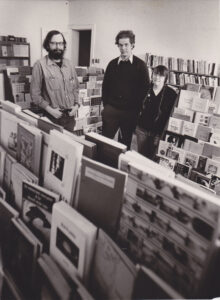
Young’s involvement was short-lived; within a few years, he stepped back from Woodland Pattern and went on to found several literary magazines and a small press. Kingsbury took on the role of executive director of the enterprise. Meanwhile, Gartung held a full-time job as a delivery driver to cover the couple’s health insurance. “Thank God we have our minds to work with as well as our hands,” Gartung says. “As a delivery driver, I had a lot of free time in my head.” After completing his shifts, he often put in hours at the store to help out.
The space quickly became a hub for culturally conscious folks. Customers were encouraged to browse and read in cozy chairs for as long as they liked. A back room served as a space for art exhibitions, musical concerts (often improvisational), screenings of experimental films, workshops and craft talks for adults and children, writing critique groups, book groups and, of course, readings: poetry, fiction, nonfiction. Woodland Pattern eventually presented over 400 programs and events each year.
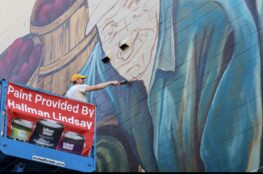
The artistic spirit extended to the exterior of the building, where there was almost always a colorful mural, typically depicting social justice themes. The final one had a variety of faces celebrating the Puerto Rican arts and diasporic experience, painted by artist Erick “CK” Ledesma Borrero.
Paths That Intertwined
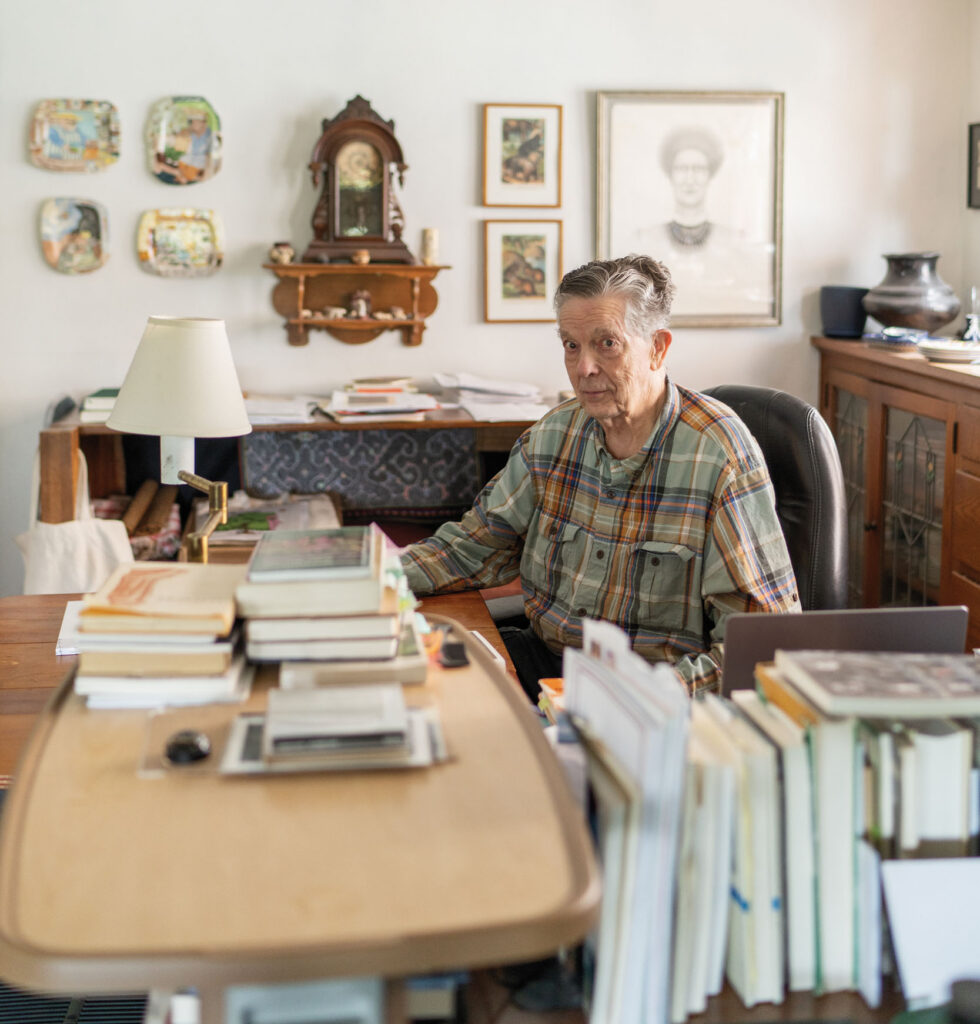
Kingsbury, the daughter of two schoolteachers, grew up in Turtle Lake, Wisconsin (pop. 600), 80 miles northeast of the Twin Cities, with a school system so small it did not have an art program. But from an early age, she could draw, so if the teachers needed an illustration, she was excused from other homework.
Compared to Turtle Lake, Gartung’s hometown of Liberal, Kansas, was huge, with a population of about 7,000 in 1950 – but by most standards, it too was a small town. “Liberal” was a bit of a misnomer for such a conservative place, recalls Gartung, who describes it as “a place and a contradiction.” From the sixth grade on, he spent several hours a day in his refuge, the public library, because he loved the books and the quiet. He was an avid reader of fiction, history and politics. “My politics at that time were, not surprisingly, pretty conservative, though liberal in civil rights, more so as time went on,” he recalls.
No stranger to hard work, including manual labor, Gartung held a wide variety of jobs over the years: hospital orderly, orchard equipment salesman, theater stage manager and “gandy dancer” on the Soo Line Railroad, building and fixing rail lines by hand. “My dad was a working-class guy, so these [jobs] seemed familiar to me,” he says.
After earning a B.A. in art and education from UW-River Falls and an MFA from Claremont Graduate School in California, Kingsbury got a job teaching at Hastings College in Hastings, Nebraska. Gartung was a theater and English major there and enrolled in an undergraduate art appreciation class taught by Kingsbury.
Fittingly, it was an art exhibition that brought them together. Kingsbury’s first show left Gartung smitten. “I fell in love with Anne’s artwork before I fell in love with her,” he recalls. But the subject matter – hearts coming out of crotches – upset the administration, not to mention local benefactors, and the show was closed. Subsequently, Kingsbury was “politely encouraged” to leave the college. “The president told me I was too sophisticated to be there, that I’d be happy somewhere else,” she recalls.
The couple married in 1970. Kingsbury took a teaching assignment at Flint Community College in Michigan. They came to Milwaukee a few years later, when Kingsbury got the teaching job at UWM. “Better job, status, money, the works,” she says.
“What we liked about Milwaukee in 1974 was the lake, a city that seemed to work and wonderful parks,” Gartung says. “This was in a hopeful political time [Nixon had just resigned], and Anne had ready access to the art scene and programming at the Center for 20th Century Studies at UWM.”
Plus, they soon connected with Milwaukee’s vibrant and varied literary community, which enabled them to work with a small but tight circle of writers, visual artists, musicians and filmmakers.
Lowlights and Highlights
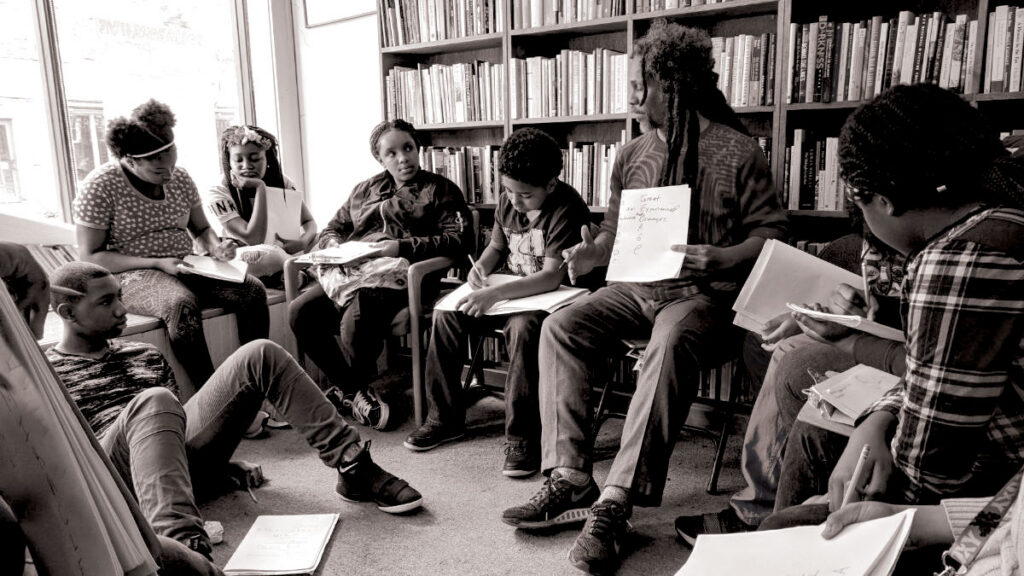
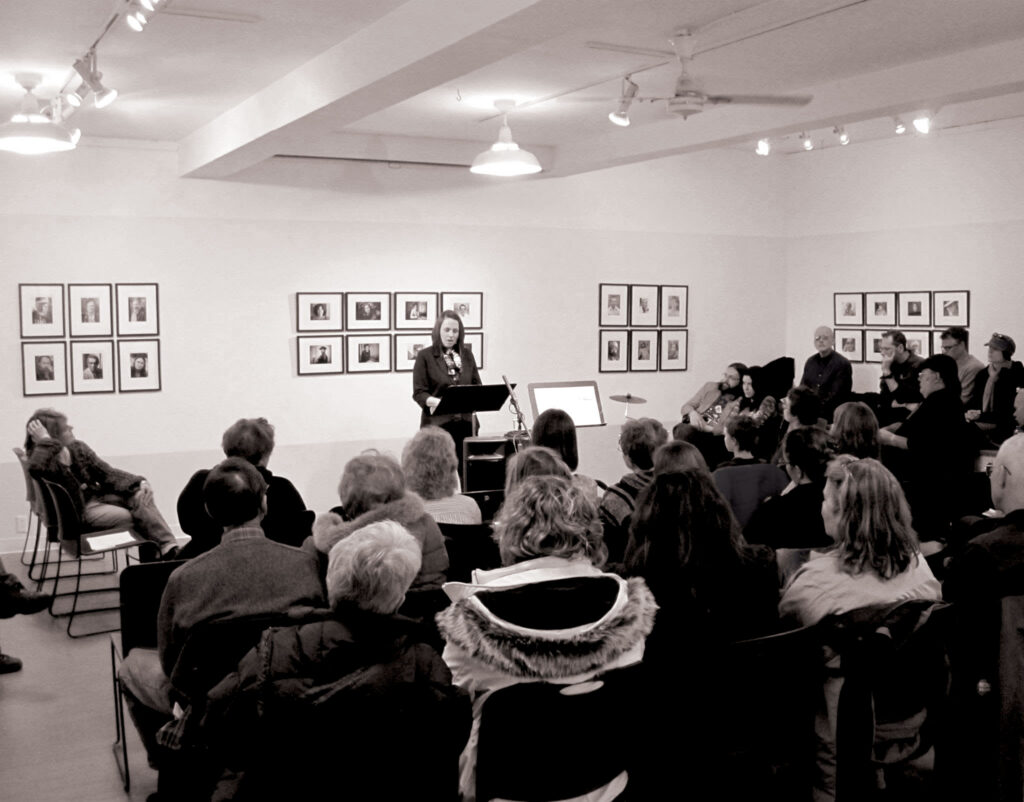
It took a while for Woodland Pattern to develop a following. “I had been discouraged and worried about the small size of our audiences and equally convinced in the value of the programs we were presenting,” Gartung says. But on a trip to New York City, he saw posters all over the Lower East Side and SoHo for an upcoming performance of poet and performing artist Jackson Mac Low. When he arrived, the “crowd” numbered a meager 25 or so, including the performers.
“I never again spent much time worrying about Milwaukee and crowd sizes,” Gartung says, “although they have gradually and slowly grown over the years.”
As with any endeavor, there have been obstacles, starting with getting the building in good enough shape to open to the public. “Because it had no windows at the time, people thought it was a porn shop,” Kingsbury recalls. Built in the 1930s, the structure had been a restaurant, so the couple and their friends spent weeks scrubbing away grease and chipping up filthy tile to reveal the floor below. It took them several years to raise enough money to haul away the fridges and vats (complete with fat inside) that had been left in the basement. The single, decrepit bathroom was in the basement, too, a space they describe as “soggy” and “unusable.”
Once, during a multi-hour poetry reading, the bathroom broke down, sending attendees to nearby bars for relief. “Most of them came back,” Kingsbury jokes.
The couple quickly realized that selling volumes of obscure poetry was not going to generate enough revenue to keep the lights on. They made the wise move to acquire 501(c)(3) status, which grants nonprofits federal tax exemption. This means that not more than 30% of its budget can come from book sales; the rest has to come from foundation grants (both local and national) and donations.
Early funding came from the National Endowment for the Arts and eventually the Academy of American Poets. More recent funders have been local, including the Greater Milwaukee Foundation, Wisconsin Arts Board and the MPS Partnership for the Arts & Humanities.
“We did receive larger grants from time to time,” Gartung says, “but they were too insufficient and irregular to count on.” So the couple made sure to keep their growth slow and sustainable to make sure they could pay visiting artists and their staff. They worked very hard to avoid fiscal debt, and only committed to artist programs after they had secured the funds to pay for them. They took the same fiscally conservative approach to adding staff, and they relied extensively on volunteers.
During those times when they were in the red, they simply spent less. “Where I grew up, if you had less money, you spent less money,” Kingsbury says.
Despite having limited funds, Kingsbury and Gartung were able to lure artists from across the country to Woodland Pattern, fulfilling their original goal of bringing compelling programming to Milwaukee. Since the organization could not afford to put them up at hotels, most stayed at the couple’s modest, one-bathroom bungalow.
“That meant coffee and chitchat in the morning in our bathrobes,” Kingsbury recalls. “It’s surprising how informal you can be and yet make someone feel valued and treated like a person rather than a commodity.” Staying at the couple’s home also meant delicious home-cooked dinners, concluding with one of Kingsbury’s famous pies.
Visitors were always asked what they’d like to see and do in Milwaukee, and Kingsbury or Gartung frequently accompanied them. Kingsbury often took writers – such as Palestinian American poet, editor, songwriter and novelist Naomi Shihab Nye – to nearby Pierce Street School, where they would work with the elementary school students. Poet Robert Creeley was impressed with Milwaukee’s clean and accessible lakefront. “A wonderful legacy of the socialists,” he commented.
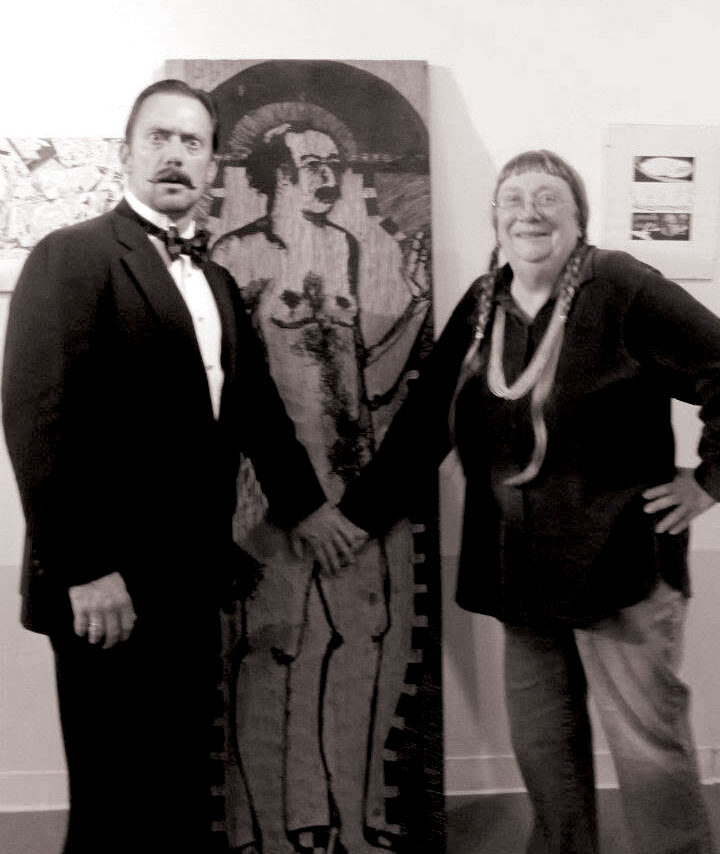
When Gartung and Kingsbury were busy setting up an event, they often called upon their neighbor, Thomas Gaudynski, a visual and musical artist, to take the guests around before their reading or performance. He recalls making meals and roller skating in Lake Park with people like Fluxus musician Philip Corner and multidisciplinary artist Laurie Anderson.
“Because Woodland Pattern is on such a human scale, both physical and organizational, you can speak to the artist,” says Gaudynski. “It has been my great pleasure to spend time with many of them.”
Workshops have been a big part of Woodland Pattern almost from the start. In addition to their teaching value, they also build community. “I love that Woodland Pattern has always been so welcoming to so many people across the board,” says Brenda Cárdenas, a professor emerita of English at UW-Milwaukee and the current Wisconsin poet laureate, who has led readings and workshops at Woodland Pattern. “No single aesthetic, no single style, is privileged.”
Bringing Artists & the Literati to Milwaukee
The list of artists who have appeared at Woodland Pattern reads like a who’s who of the counterculture and avant-garde scene of the past five decades: Allen Ginsberg, Margaret Atwood, Laurie Anderson, William S. Burroughs, Michael Ondaatje, Walter Mosley, Wendell Berry, Stan Brakhage, Pauline Oliveros, Naomi Shihab Nye and Leslie Marmon Silko. At least two, Juan Felipe Herrera and Joy Harjo, became U.S. poet laureates. Derek Walcott went on to win the Nobel Prize in Literature. Amiri Baraka became a key voice in Black experimental poetry.
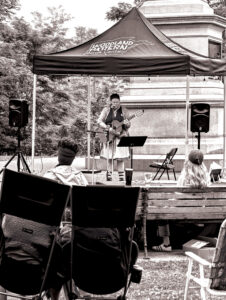
Woodland Patten welcomed diversity before diversity was cool, inviting a variety of Black, Indigenous, feminist and LGBTQ+ artists. In addition to reading or performing, many of these artists would conduct classes at the bookstore or visit local schools.
For the Marathon and other poetry programs, Woodland Pattern has hosted the greatest poets of the past 60 years. “Karl had an instinct for the best in poetry, an instinct for promise in young writers,” says Jenny Penberthy, faculty emeritus of English at Capilano University in British Columbia and longtime associate of Woodland Pattern. “Talk to any important poet, and they’ve all been to Woodland Pattern. They all know and love Karl.”
Woodland Pattern’s biggest fundraiser, the Poetry Marathon (modeled after the St. Mark’s Poetry Project in New York City), started in 1994 as a 14-hour, one-day potluck, with perhaps 40 spectators. It has evolved into two days, often with food donated from restaurants. From 10 a.m. to 10 p.m. on a Saturday and Sunday in January, 10 poets split up reading during an hour, each segment sponsored by a group or individual. By 2025, the event had grown so large that it had to be moved to Saint Kate – The Arts Hotel Downtown.
The Poetry Marathon, although a lot of fun for the poets and their audiences and generating good publicity for Woodland Pattern, was not a financial lifesaver. “The only lifesaver in terms of revenues was my straight job as a truck driver,” Gartung says.
Finding Balance
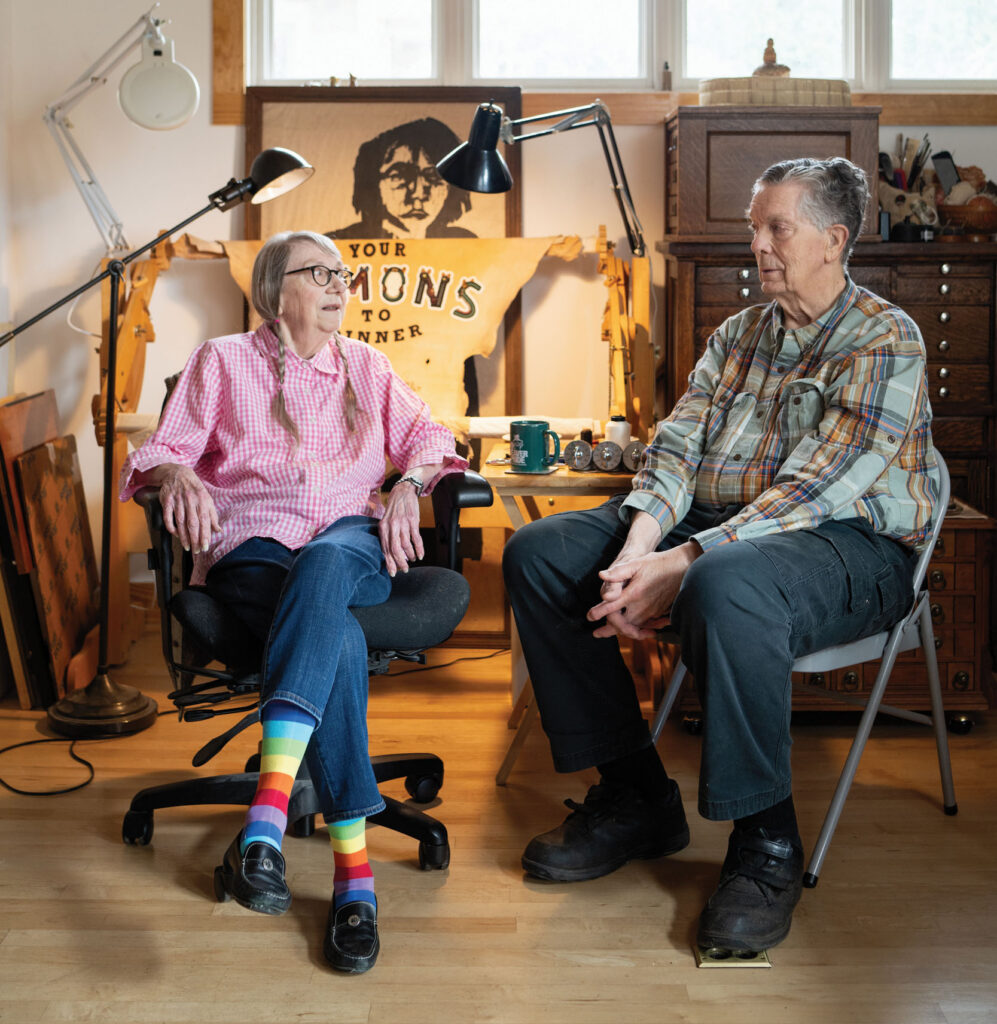
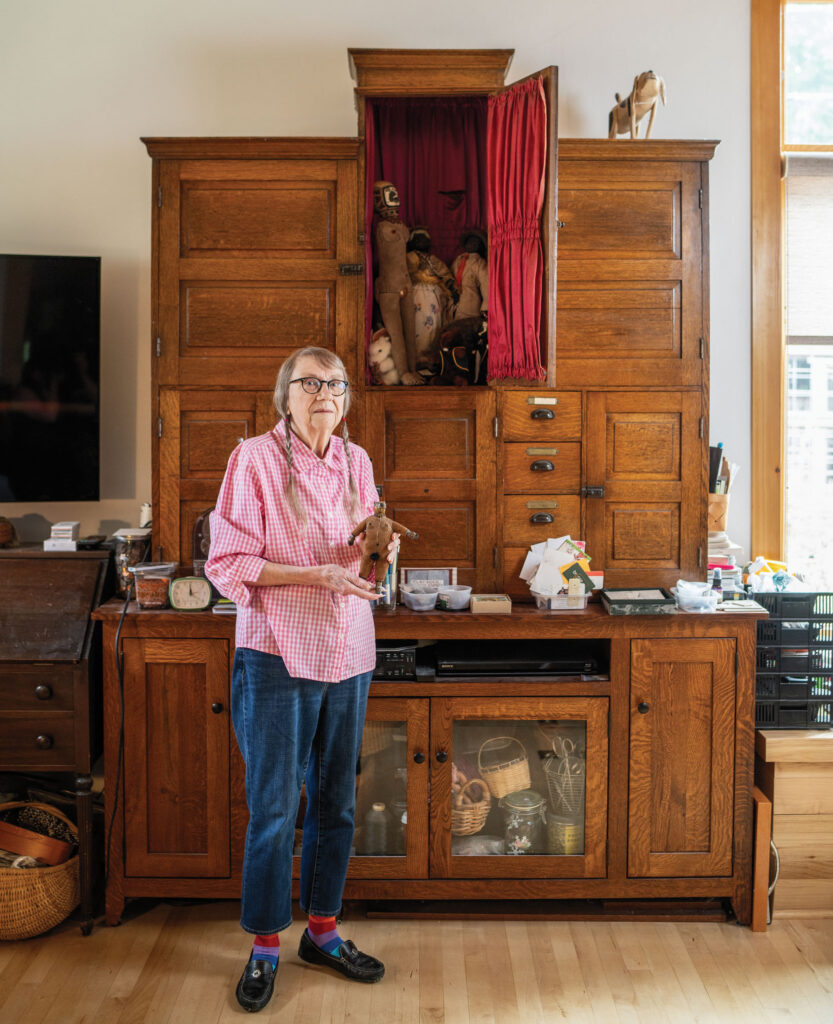
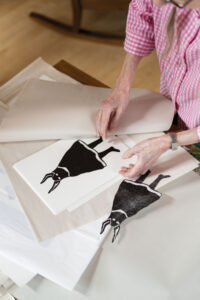
While running Woodland Pattern, both Kingsbury and Gartung continued and developed their individual artistic practices. Kingsbury works in a variety of media: woodcuts, clay, leather, feathers, silk, tiles, beads and deer hides, sometimes combining them. Many of her pieces are highly labor-intensive and take years to complete. She often expresses herself through objects traditionally linked to femininity: dolls, potholders, tea cozies, pincushions and quilts.
Kingsbury has participated in more than 60 major national exhibitions, and her work has been purchased by a variety of institutions, including the Beinecke Rare Book & Manuscript Library at Yale, the North Dakota Museum of Art, the John Michael Kohler Arts Center and the Milwaukee Art Museum. In 2014, she was awarded the Mary L. Nohl Fellowship as an Established Artist, which allowed her and Gartung to build a studio addition to the back of their house.
Gartung is a prolific poet, although hardly a self-aggrandizing one. “They’re very selfless people,” says Bruce Pepich, founding director emeritus of the Racine Art Museum and the Charles A. Wustum Museum of Fine Arts in Racine. “They perform quietly and purposefully to support other artists. That’s very much a gift of affection you give to colleagues in your field.” In 2008, Gartung published a collection of his poems, “Now That Memory Has Become So Important.” He explores different things at different times, sometimes structural, sometimes subject matter, ranging from the Sandy Lake Massacre in 1850s Minnesota to baseball to the changing nature of language.
For a couple that married in 1970, when gender roles in marriage were still pretty rigid, Kingsbury and Gartung’s relationship has been surprisingly egalitarian. For starters, she kept her own name. “We didn’t feel like we were being particularly radical,” Gartung says. “Anne already had an art career, so it didn’t make sense to change her name.”
At an artist’s talk earlier this year, Kingsbury shared an anecdote about needing some fabric to finish a piece she was working on. The couple went to Marshall Field’s in Chicago, where Kingsbury found very beautiful but very pricey silk. They sat down together in the furniture department, ran some numbers, and decided that buying the material was the right thing to do, even if it meant scrimping on other things. Looking back, they agree that their money always belonged to both of them, not one or the other’s to spend alone.
Ed Krishok, a retired corporate attorney and former Woodland Pattern board chair, has observed the couple operating over the years. “They’re an interesting team. They bring different strengths and perspectives but also share strengths and perspectives,” he says. Gartung is the more creative voice of the organization, according to Krishok, while Kingsbury is more practical. “Yet Anne is also an artist, and deeply connected to her creative side. And Karl, for all of his dreaming, has a strong practical side,” Krishok says.
“We happen to have a relationship where there is equality between partners,” says Kingsbury. “We value each other’s contribution.”
Looking Back, Looking Ahead
It’s no small feat keeping a cultural organization going for four-plus decades. When asked what they’re most proud of, “The flip answer is survival,” says Kingsbury. “I thought we’d be lucky to make it for five years.”
When the couple decided to retire, Woodland Pattern’s board conducted a nationwide search for their successors. For the past eight years, Solomon and Gropp, also a couple, have continued Woodland Pattern’s work with respect and admiration for what Kingsbury and Gartung have accomplished. In 2023, the organization received a $50,000 grant from the Ruth Arts Foundation. “When we met Jenny and Laura, we recognized that we shared the same values,” Kingsbury says. “Plus, they’re younger, more informed, and better at fundraising and networking.”
In “retirement,” Gartung continues to write poetry and also heads up Readshop, a hybrid (in-person and virtual) biweekly reading group where participants read challenging poetry texts out loud to each other.
“There has been a brilliant generational turnover at Woodland Pattern,” Gartung says, “so I continue to be supplied with artistic and literary inspiration.”
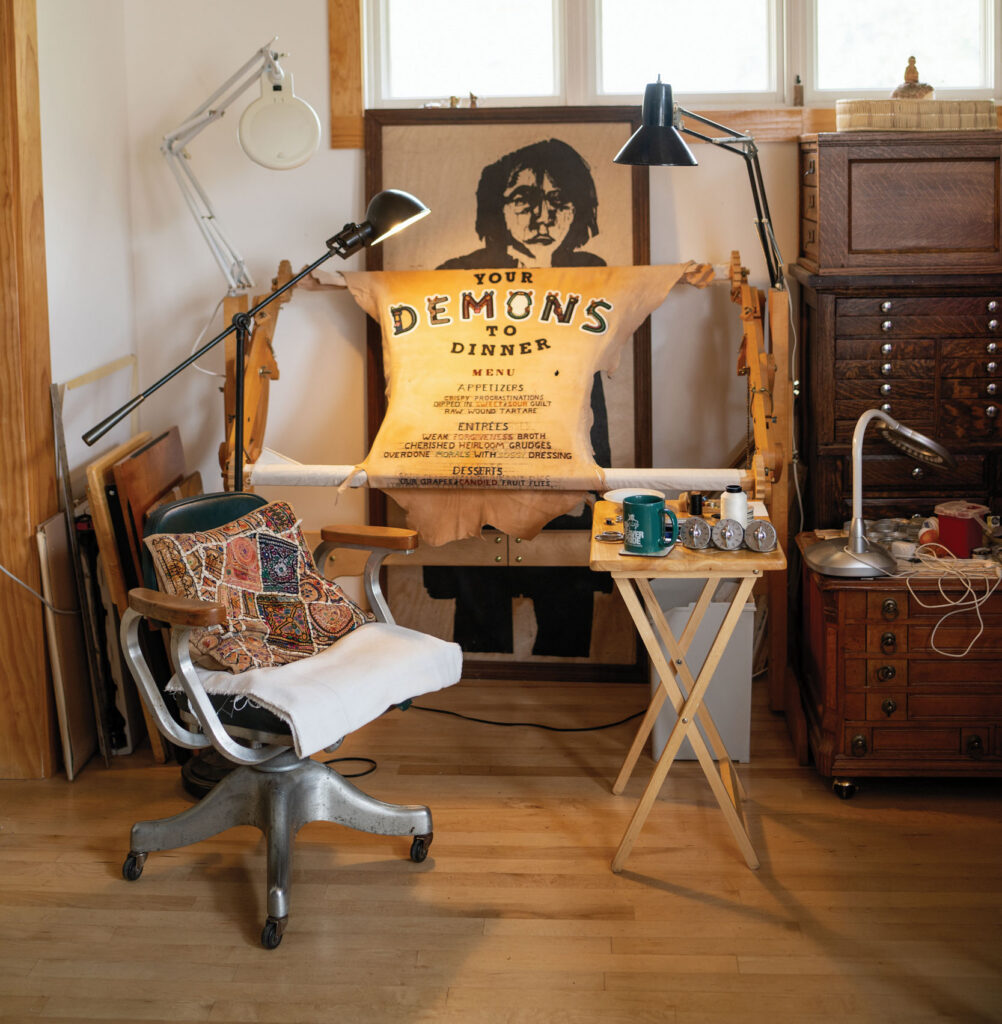
Kingsbury continues to make art and is currently working on a beaded deer hide titled “Invite Your Demons to Dinner.” The appetizers, for example: “Crispy Procrastinations Dipped in Sweet & Sour Guilt; Raw Wound Tartare.”
“I’m blessed with being able to retire to something rather than away from something,” she says.
Today Kingsbury and Gartung look much like they did 40 years ago: She is petite with long braids and dark-rimmed glasses; he is two or three heads taller, broad-shouldered, with a big shock of dark hair. Despite some gray hair and a few other signs of age, they appear almost timeless, essentially themselves. Perhaps having lived a meaningful life, steeped in the rich creative environment that is their passion, has led to their professional and artistic longevity.
FREELANCE WRITER CAROLYN KOTT WASHBURNE HAS PROFILED DAVID GRUBER, REUBEN HARPOLE AND JOHN GURDA FOR MILWAUKEE MAGAZINE.