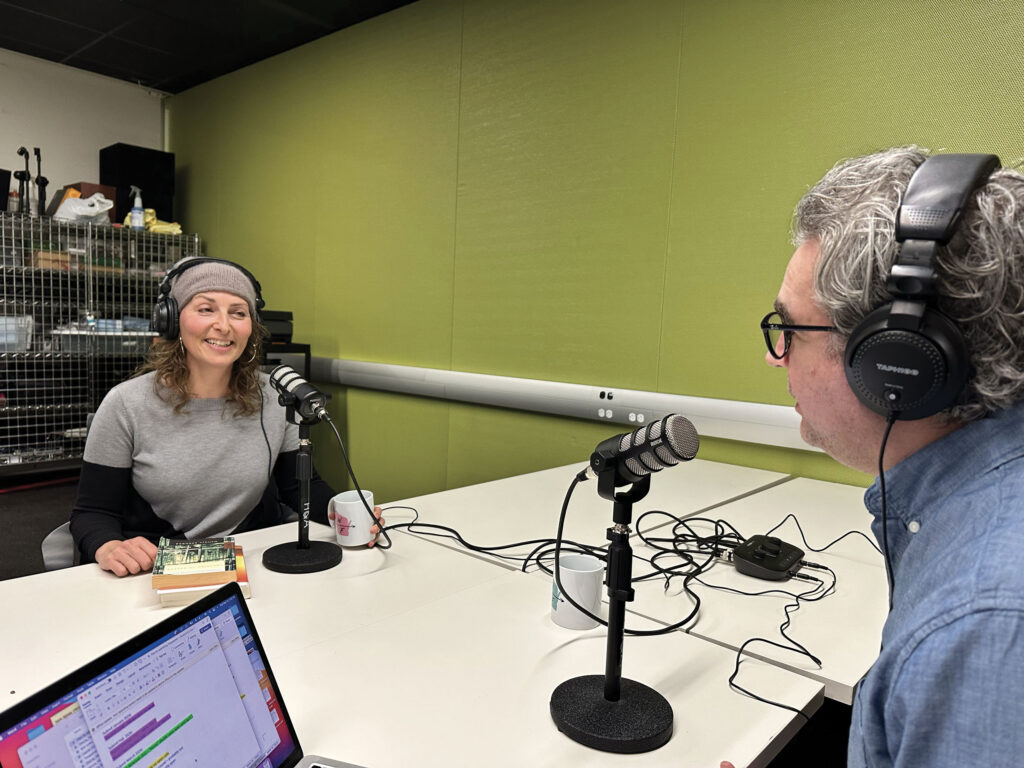
Invigorating writing doesn’t only come from literary capitals like New York. Wisconsin is full of sharp scribes, as the new weekly podcast “Writing Forward” makes clear.
In it, Brookfield native Jeff Oloizia (an occasional contributor to this magazine) holds probing conversations with his fellow wordsmiths in fiction, nonfiction, poetry and more. Guests on the first season included bestselling Wisconsin authors Liam Callanan and Christina Clancy.
The show returns for its second season on Sept. 30, opening with author Nickolas Butler, best known for his novel “Shotgun Lovesongs.” Another star-studded lineup is slated, featuring writers such as Lorrie Moore, Carol Dunbar, Michael Perry and Pulitzer Prize-winner Ayad Akhtar.

If someone has inspired you through their service, leadership or dedication, the Unity Awards are your opportunity to recognize them!
This time around, Oloizia is taking the show offline and across his home base in Madison. A season launch party will take over the city’s Leopold’s Books Bar Caffè on Oct. 6, and on Oct. 28, Oloizia will record an episode live with Chad Harbach at the Madison Central Library as part of the Wisconsin Book Festival. “Writing Forward” is also hitting the airwaves: Milwaukee’s WUWM 89.7 FM will air abridged versions of the first season this winter.
Oloizia spoke to MilMag about the podcast’s beginnings and his own literary journey.
What inspired this podcast?
It came out of looking for something myself and realizing that I couldn’t find it. I didn’t set out to be a podcaster, which, I think, comes with some mild embarrassment when you’re a dude in 2026. I wanted conversations with the rigor of, say, Paris Review interviews or “The New Yorker Radio Hour” but that felt more accessible. I had sort of committed to being in Wisconsin at that point and was probably in a downstream with my writing, and I often find it inspiring just to hear people have gotten to the place that I want to be. It felt like there was a space for that.
What’s your story as a writer? Why did you come back to Wisconsin and pursue writing here?
My background is in magazine journalism. I was an editor for a couple of years at Interview Magazine, and then I worked at T, which is the New York Times style magazine, and did that for several years and really enjoyed it. But I was feeling an itch to write fiction, and the wonderful thing about New York City and places like it – you have access to the publishing power centers but not always the time to take advantage of it. So, I was taking fiction classes at like 10 at night that would go to midnight, and I really enjoyed them. But I was like, I can’t keep doing this. I want to write a novel.
I went from New York to Wilmington, North Carolina, to do an MFA at UNC-Wilmington. That was a three-year program; it was great. Then I stayed for a year after that to teach in the program that I had graduated from, and then the pandemic hit. I had been teaching just as an adjunct, so we finished online, and that ended. I was simultaneously writing for an old alt-weekly, but all their ad clients were bars and restaurants. Within I’d say a month, that shut down. So I was out of work, across the country from my family. In fall of 2020, I moved back to Wisconsin. I made a list of criteria, and when I was looking for a new home, Madison checked a lot of boxes, including having a great literary scene and great bookstores and that sort of thing. I sort of promised myself that I didn’t have to stay if I didn’t want to. It just felt really good, to be close to family. It felt good to be in this place where you can make real inroads with community.
As I got older, I was also looking at examples of people in my life who had made an impact by really just embedding themselves in a community, and so that became more appealing. Especially like the work that I do for Madison Magazine, it feels good to be writing about my local community. I would say my life was very wide for a while, and now I’m just trying to go a little deeper.
How did you decide the authors for the first season?
Genre diversity, so fiction writers, nonfiction writers, journalists, poets. People that I knew would have something to say about the writing life, or writing from Wisconsin, specifically. I’m looking for great conversationalists, but also people that could touch on different themes that I’m interested in. The idea always, when I start putting together an interview, is: “What can this person say that is unique to their career?”
You start every episode by asking the writer their favorite passage about Wisconsin. Why?
I wanted listeners to hear about Wisconsin in someone else’s voice before we got into that person’s work. It reinforces the idea that if you are a writer in a place, you are part of a tradition and a community. It’s also interesting to get a sense of someone’s aesthetics of what they are reading and what lights them up.
When you think of the audience for this podcast, are you gearing it for readers or fellow writers?
I’m wary of when you try to make something for everybody, you end up making something for nobody. But I want both readers and writers to get value out of it. It’s helpful that my producer, Anya [van Wagtendonk], is a very smart person but not a writer herself in the traditional sense, – she works in radio. She’s really good at thinking about, “Are we being accessible? Is this too craft-focused?” I have a tendency to nerd out on my craft conversations. But the hope is that if you’re a person with a creative practice, this will be valuable to you.
What have you gleaned from your conversations?
What I’ve come to realize is, especially with these people who are wildly successful doing this in Wisconsin, the center of the literary world is just wherever you do the work. The most important thing is doing the work and finding other people who can buoy you in doing that.
You say anyone can write from where they are. But have you found any benefits to writing in Wisconsin?
I think having perspective and a sense of place in writing is always a very powerful tool. There are two things that I think of immediately when I think about your question: One is that there is a pace of life and just a general space that you can have in your life here that is not always available in other places. There’s more physical space, and there’s more emotional space. Also, being in a slightly smaller community makes it easier to become part of that community. We have many writers here in Madison, but we have get-togethers. There’s a way in which to quickly become part of the literary community that might not be as easy somewhere else that is either siloed or a little more gate-kept. The fact that we have writers like Nickolas Butler or Christina Clancy or Liam Callanan, who are so open and welcoming to new writers and young writers – that is so valuable, to have people like that leading the way.