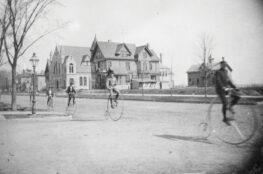


When this photograph was taken in about 1888, Milwaukee had nearly 200,000 residents, making it the 16th-largest city in America. Only 50 years earlier, the community had been a ragtag frontier town, and the Downtown business district of 1888 reflected Milwaukee’s phenomenal growth. Taking full advantage of the city’s famously angled bridges – a relic of pioneer rivalries – the photographer aligned his camera with the streetcar tracks on Grand Avenue, today’s West Wisconsin Avenue, to create a detailed panorama of Downtown’s west side in its Victorian heyday.

If someone has inspired you through their service, leadership or dedication, the Unity Awards are your opportunity to recognize them!
The business district was just as lively on the east side of the bridge, but the Milwaukee River was a sharp line of demarcation. East Wisconsin Avenue became the city’s legal and financial center, a favored address for its largest law firms, banks, brokerages and insurance companies, notably Northwestern Mutual Life. West Wisconsin Avenue, on the other hand, developed as the city’s retail and entertainment district, the home of its major department stores and theaters. The Gimbels store that dominates the left side of this photograph was the first full-sized link in a retail chain that would become a national giant.
Remarkably, every building in this scene has been gone for decades, vanished from the memories of all but the oldest Milwaukeeans. One by one, all of these landmarks, substantial as they were, gave way to newer, larger structures that better met the growing needs of a major city. Whether you consider that wholesale replacement a mark of urban dynamism or just American prodigality, this image is photographic evidence that cities, like the people they serve, are constantly changing.
TAKE A CLOSER LOOK
- The busy Wisconsin Avenue bridge has had several incarnations, including this metal-truss version from 1882.
- The Gimbel brothers moved from Indiana to Milwaukee in 1887 and started their retail empire in this building.
- Completed in 1880, the Plankinton House was Milwaukee’s finest hotel until the Pfister opened across the river 13 years later.
- Grand Avenue Methodist Church stood on the southwest corner of Grand and North Fifth Street, a site now occupied by the Milwaukee Hilton City Center.
- The second floor of the Library Block, an 1880 landmark, was the home of the Milwaukee Public Library for nearly two decades before being demolished in 1935.
- Best’s Corner sold products from a brewery that would change its name to Pabst in 1889.
- Carbolic smoke balls were inhalers that promised to cure all pulmonary ills. The “smoke” was actually toxic.
IN COLLABORATION WITH MILWAUKEE COUNTY HISTORICAL SOCIETY