
The northern leopard frog (Lithobates pipiens) grows to be just over 4 inches long and gets its name from the brown spots dotting its green back. In spring, the frogs puff up their throats and release a staccato croak, a sound the Wisconsin Department of Natural Resources describes as “a loud, broken snore, somewhat like dragging your finger over a well-inflated balloon.”
Now, imagine that sound multiplied by about 175 million.

If someone has inspired you through their service, leadership or dedication, the Unity Awards are your opportunity to recognize them!
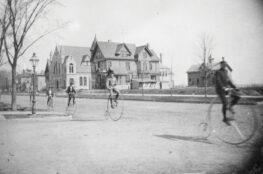
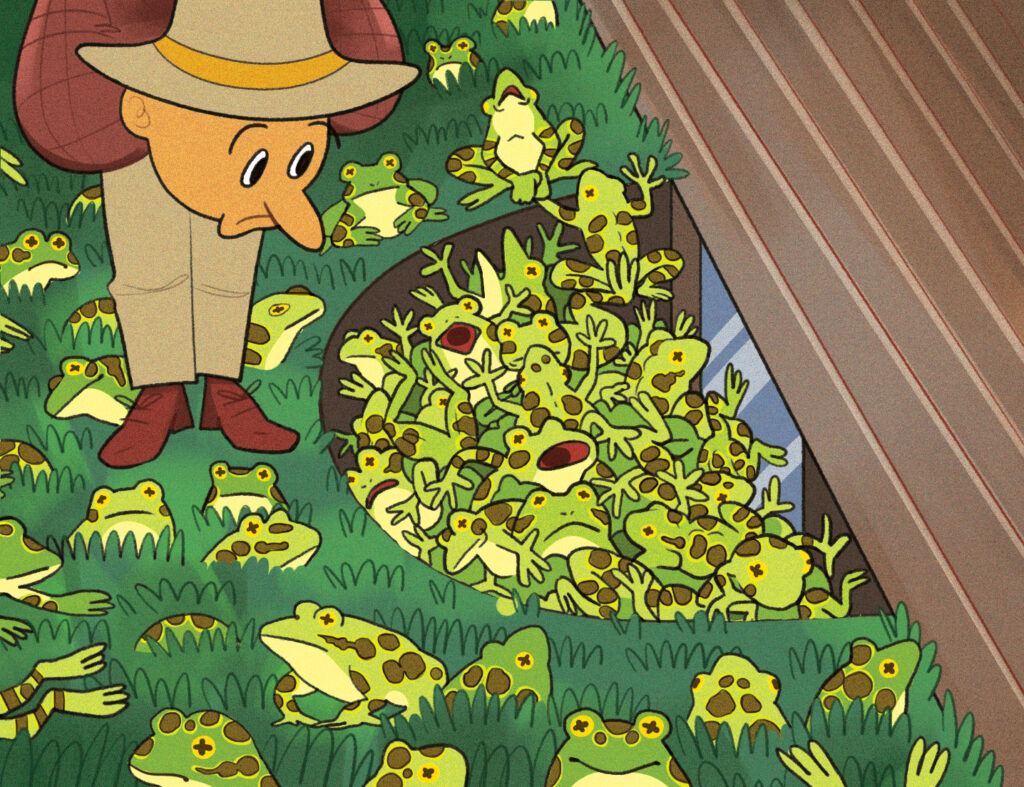
That’s what happened when mating season got out of control in the wetlands surrounding Oconto (located near the shores of Green Bay) in July of 1952. Like something out of the Old Testament or a Hitchcock film, hungry frogs filled the streets of the former lumber town, outnumbering people about 35,000 to 1.
One resident, hearing the air full of chirping, looked out in his backyard with a flashlight and got a chill down his spine when he was “confronted by a million shining little eyes” looking back at him, according to a 1953 account of the occurrence published in The New Yorker, written by Eli Waldron, a native of nearby Oconto Falls. Another resident showed a reporter for the Green Bay Press-Gazette hundreds of frogs stuck in his window wells.
Many of the frogs found grisly fates from car tires, lawnmowers and feasting birds, but their numbers continued to flood the town. “At night, you could hear frogs swishing and skittering through the grass and hear them croaking everywhere,” Waldron wrote. After a couple of days, the frogs began to hop back to the ponds.
Is it really possible that 175 million frogs emerged at once, as the New Yorker reported? Maybe, says Joshua M. Kapfer, UW-Whitewater professor and co-editor of Amphibians and Reptiles of Wisconsin, who’s loath to speculate on the summer of ’52 without better data. (He notes that population info on reptiles and amphibians has historically been less of a priority than that for birds, mammals and fish.)
Kapfer says amphibians are sometimes referred to as “boom or bust” creatures. Predators and environmental uncertainties cause them to produce thousands of eggs, but generally only a fraction of their offspring will survive. “There is work that suggests that in the Upper Midwest, only 5-6% of fertilized eggs produced larvae that survived to metamorphosis” – or frog adulthood, Kapfer says. But the high water in ponds reported in 1952 could have caused “more persistent wetlands” that led to more tadpoles surviving.
Kapfer notes that a frog army like the one in Oconto would be highly unlikely to muster nowadays because of a sharp decline in their populations starting in the 1960s. Habitat destruction, as well as disease, invasive species and pollution, have continued to make life tough for frogs. But in 1952, the population might have still been big enough to reach that magnitude.
In Oconto, the frog plague is mostly forgotten, though the story gets unearthed periodically. Teresa Bake of the Oconto County Historical Society says there is one lasting legacy: a country lane named Frog Pond Road was inspired by that strange summer.