
Wearable medical tech can help your real doctor, but there are limits to its usefulness.
Wearable health tech – smart rings, watches and even clothing with built-in sensors – can monitor vital signs, count steps and calories burned, track sleep and offer real-time insights that help people understand and manage their health.
But how accurate are these devices, and is knowing so much about your body actually helpful? Data – and doctors – say it depends. “Some patients are more intentional with health when they’re measuring metrics” such as steps or overall physical activity, says Dr. Seema Afsari, a family medicine physician and owner of Vibrance Integrative Primary Care in Whitefish Bay. For others, she says, too much info can have the opposite effect, triggering stress or anxiety.

Check It Out!
That nuance is exactly what doctors want patients to understand before they start tracking everything. Oura Ring, Apple Watch or Fitbit curious? Here’s the fine print:
Sleep Tracking
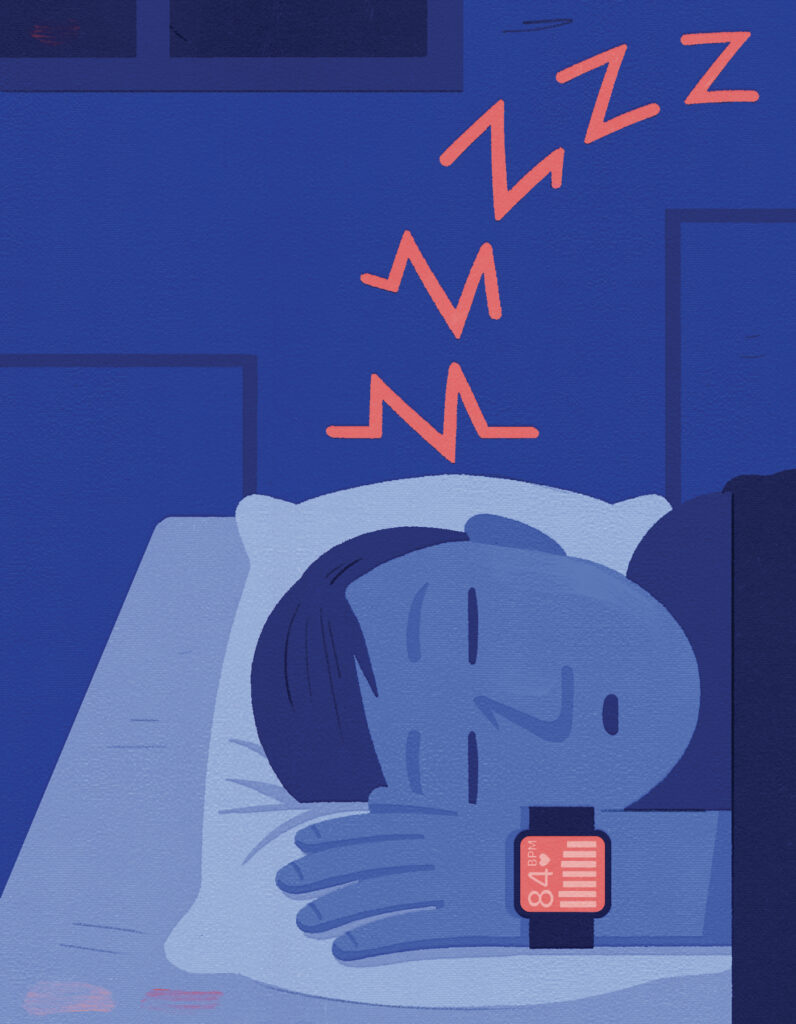
Wearables that track sleep duration and quality can promote awareness of sleep problems – and drive habits that help improve them. “People are coming to see me much more aware of their sleep, which can lead to more engagement in what they can do to improve their habits,” says Dr. Jay Balachandran, a pulmonologist and sleep medicine physician with Ascension Wisconsin.
While the technology is fairly accurate, Balachandran says, it’s no replacement for a lab-based sleep study – and focusing too much on sleep can cause performance anxiety that keeps people awake. “At the end of the day, it’s useful data to guide conversations with your doctor.”
Activity Insights
Fitness trackers tally steps and estimate calories burned, giving you a rough gauge for fitness goals. Many devices nudge you to hit step or fitness targets, adding a little extra motivation to keep moving. “We see in studies that over the course of a couple months, people can lose a few extra pounds when they increase their steps,” says Dr. Christopher Weber, an internal medicine physician with Ascension Wisconsin.
Some research, however, associates wearables with weight gain – maybe, Weber says, because people relied too much on the device instead of forming positive habits. So while they can help kick-start routines, they aren’t a panacea. “Long-term change happens when you dial in several lifestyle factors, like exercise, diet, sleep and stress reduction.”
Vital Sign Monitoring
Along with tracking heart rate for fitness purposes, many wearables can detect irregular heartbeats called arrhythmias. Some – like the Apple Watch – can even run simple ECG tests, which can flag potentially serious heart issues and give users data they can share with their doctor.
The technology isn’t perfect. An alert doesn’t always mean there’s a real problem, and it can miss serious issues you may expect these often remarkable devices to catch. “I’ve had a patient walk in wearing an Apple Watch with active atrial fibrillation – an irregular, often rapid heart rhythm that can increase the risk of stroke,” says Dr. Charles Lanzarotti, a cardiac electrophysiologist with Ascension Wisconsin.
Still, Lanzarotti says wearables can be a helpful addition to medical care for people with existing arrhythmias or those at risk for them. “If it drives people to engage with or see a doctor who can screen them, that’s a good thing.”