

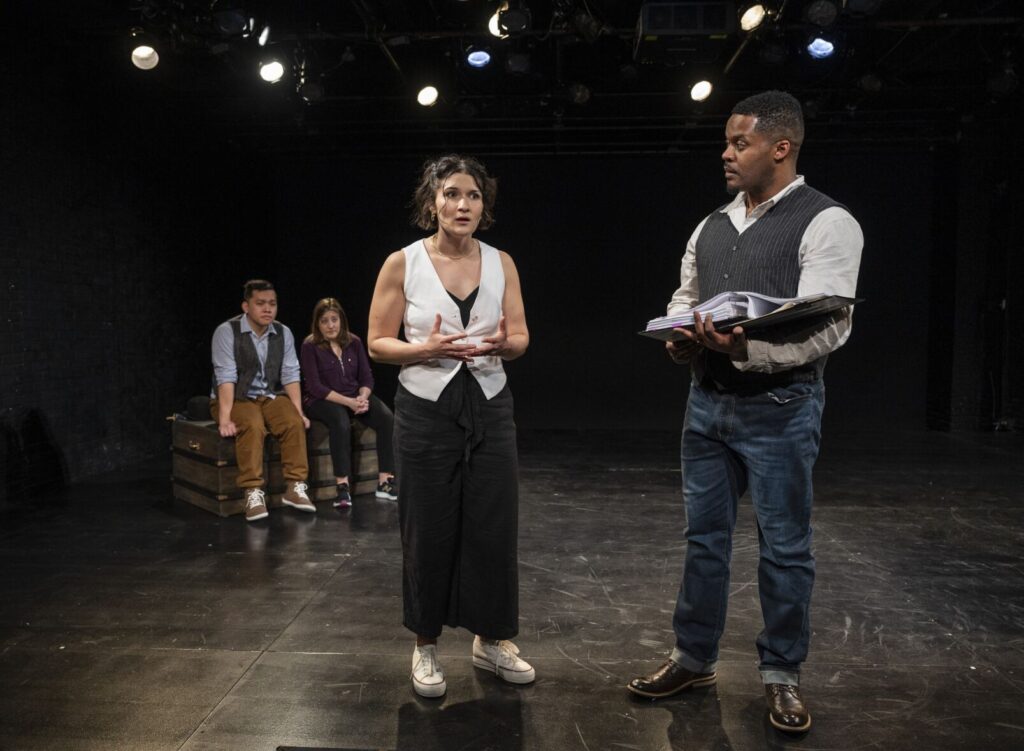
The first thing you have to know about The Not-so-Accidental Conviction of Eleven Milwaukee Anarchists is that it’s not a straightforward narrative. Nearly a decade ago, Martín Zimmerman, a playwright and television writer (Ozark) was commissioned by the Milwaukee Rep to parse through books and historical documents about a Milwaukee police station bombing in 1917.

Celebrate this year’s winners of the Betty Awards!
The bombing is a fascinating story. Eleven Italian immigrants were put on trial and convicted as a group, though they were already in prison during the time of the bombing (for conspiracy to kill police officers – yes, this story is a doozy). An Italian minister who helped to put them in jail in the first place served as their interpreter. The same District Attorney who condemned the 11 later advocated to free them. Until the September 11 attacks in 2001, it remained the most deadly single event in national law enforcement history. All elements that can create a compelling play. But Zimmerman struggled with how to tackle such a large and complex subject matter.
“As I began trying to write the play, I realized just how challenging it would be to tell this story,” Zimmerman writes in the playbook. “I found myself asking the same questions over and over: How do you make an audience emotionally invest in a past that, even with its similarities to our present, still feels so foreign? How do you bring order and focus to such a sprawling, complex story? How do you make sense of people about whom we have such fragmented, contradictory information? How do you handle the gaps in the historical record? Who even is the ‘protagonist’ of the story?”
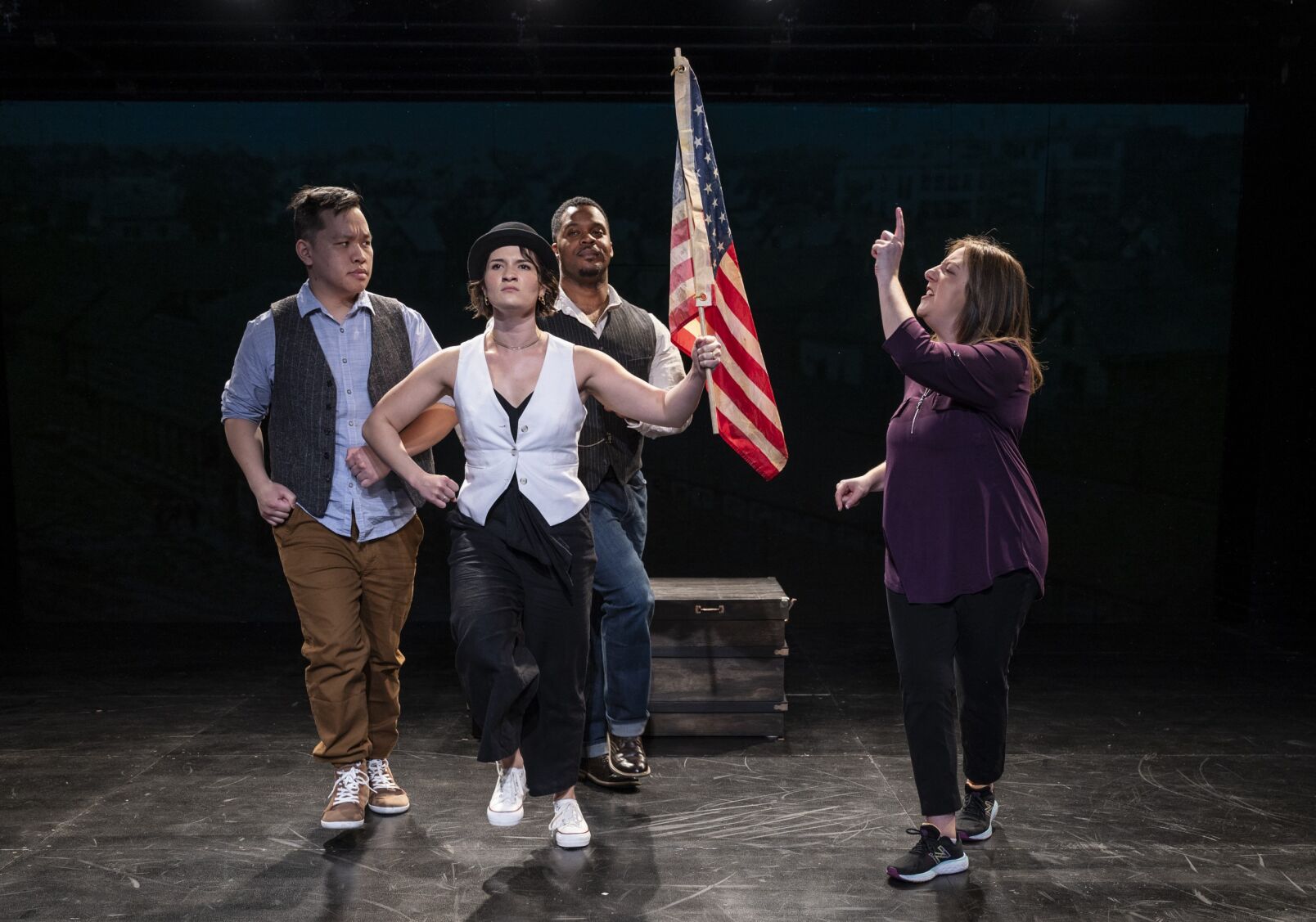
There’s an old (and oft miscited) quote that states “history is written by the winners,” that came to mind when watching this play. When there are only certain perspectives to be shared, or not enough context, or data, interpretations can run wild. When there’s only so much information to work with, how can you be a responsible storyteller? Zimmerman decided to bring that creation process to the stage.
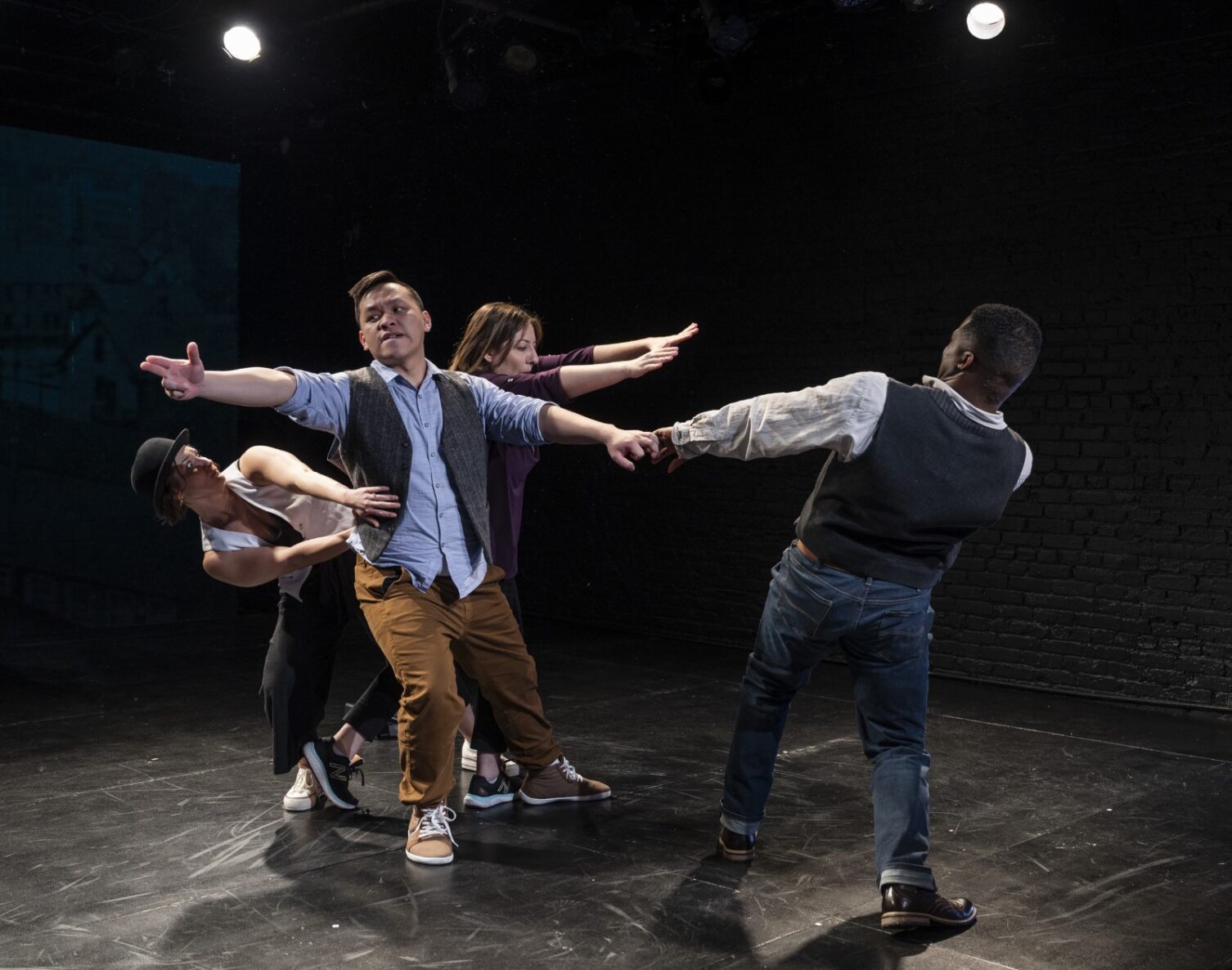
The play uses fun, fourth-wall breaking devices, including each actor sharing what they think the story is missing, to bring the viewer into and out of the story. Through a slew of bell rings (this is to stop the acting and pivot), costume changes and cuss words, the four-person cast walks the audience through several theories on the events that lead up to the bombing and the strange series of events that happen afterward.
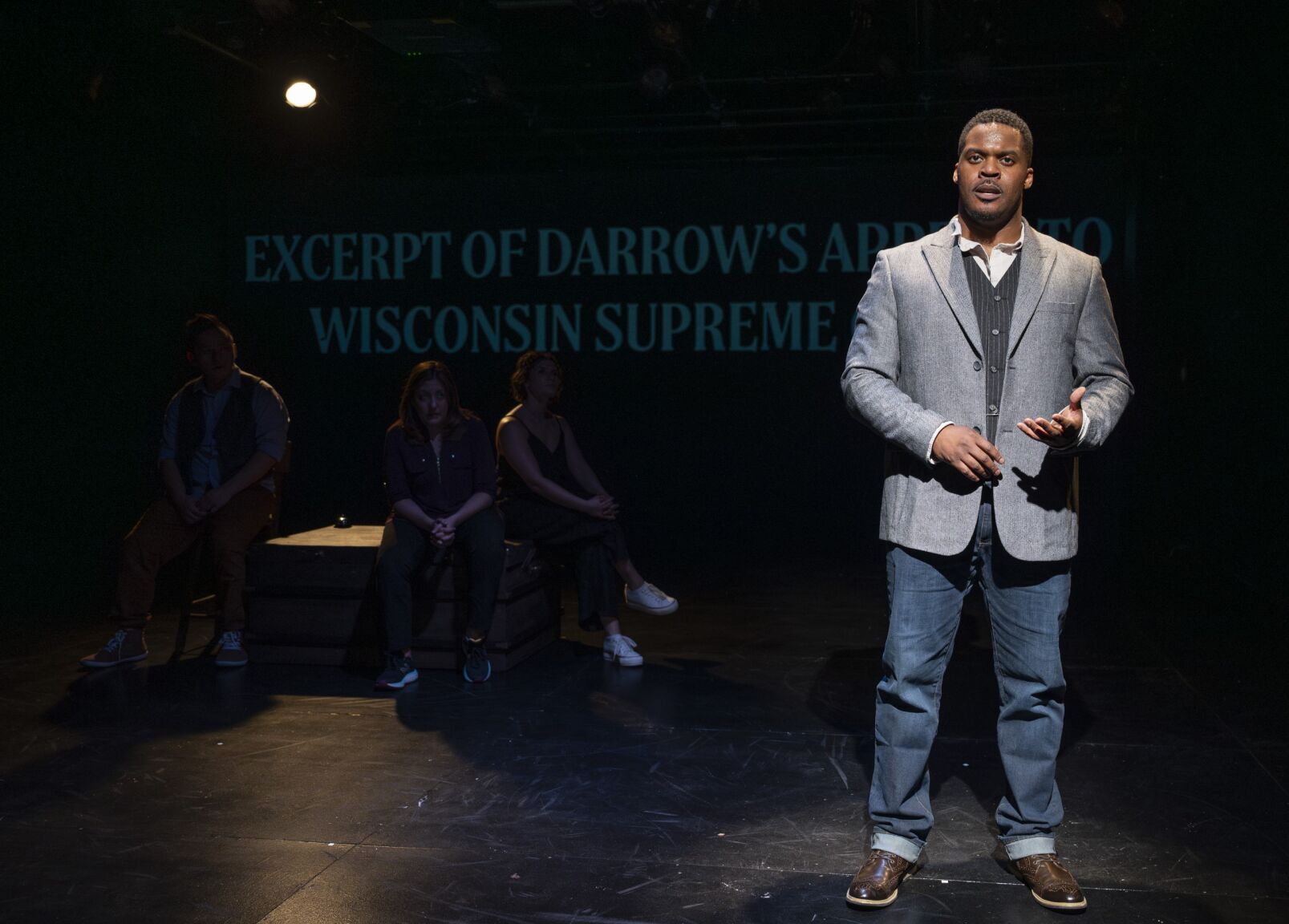
The talented cast is responsible for far more than one role. They each play multiple figures, and even “themselves,” as they work with the audience to figure out what happened that fateful day over 100 years ago.
Kelsey Elyse Rodriguez (One), Dimonte Henning (Two) King Hang (Three) and Elyse Edelman (Four) are start-to-finish fabulous, each weaving in-and-out of character play and tangential conversation to help put these many, disparate pieces together. There are some costume changes, a few physical gags, but it really just relies on these four and their dedication for translating the complex into something entertaining.
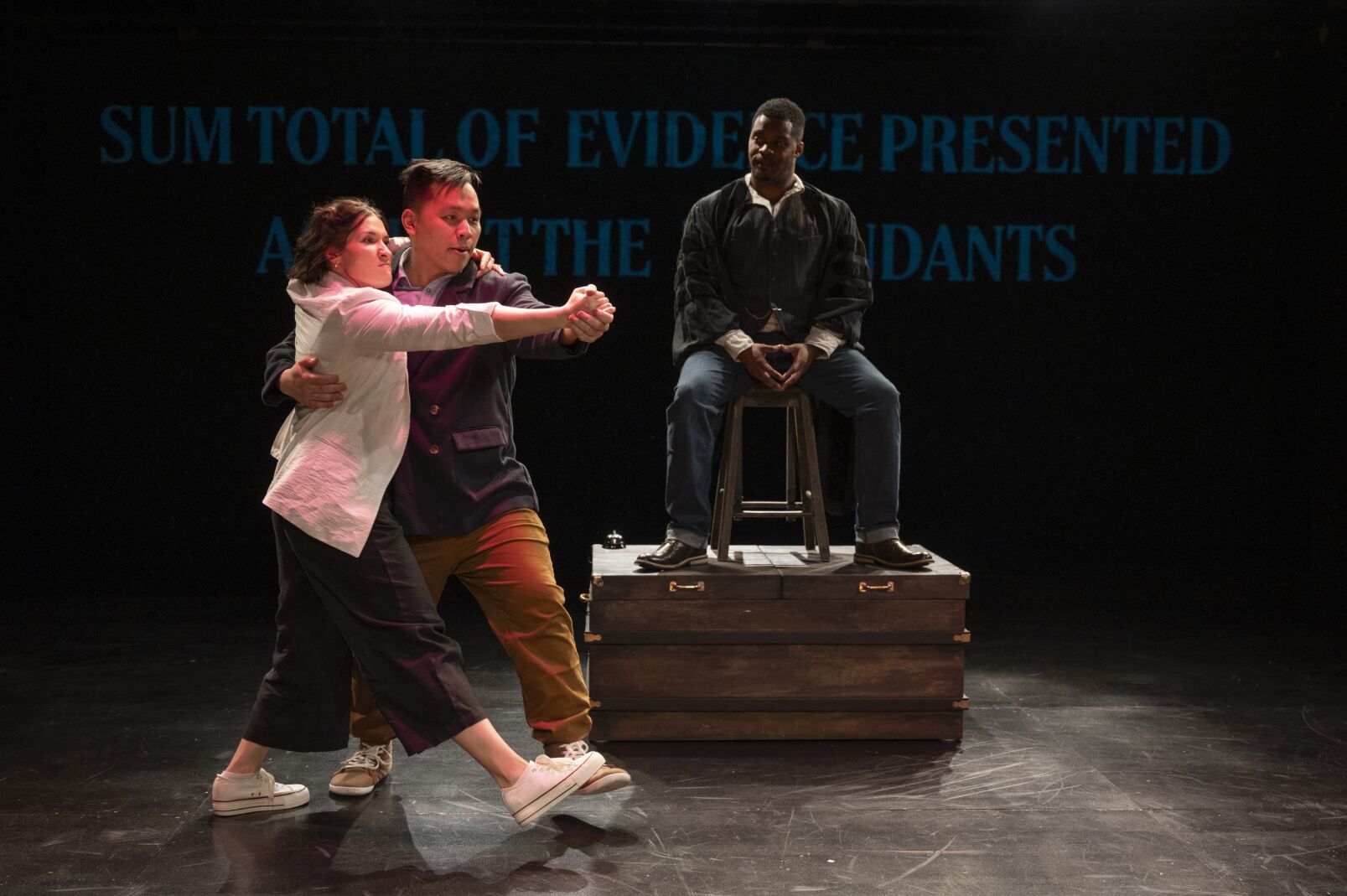
Director Brent Hazelton really put his all on the stage. Because it’s a story about dozens of people told by only four people, the play relies on some very unique devices to keep the story understandable. The pacing and blocking were great– the actors used the stage to the fullest, utilizing all the space to run, dance, set up scenes to the left while a speech was finishing on the right. There’s even a Matrix-esque slow-motion shootout scene that brings a ton of levity to an overall despondent story.
The Not-so-Accidental Conviction of Eleven Milwaukee Anarchists is not just about what we learn, though we learn a lot. It brings these same cultural challenges to the present. How do we treat those who our society deem as “other?” Do we approach situations with judgment or compassion? When people do things that seem unimaginable to us, must they lose their humanity? What don’t we know about a complex situation?
Through this little slice of Milwaukee history, Zimmerman compels us to question our biases because he believes we can “all better understand where such scapegoating and dehumanization leads if we don’t do something to stop it.”
The Not-so-Accidental Conviction of Eleven Milwaukee Anarchists runs at the Milwaukee Chamber Theatre until Sunday, May 19.