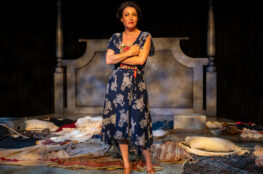

“When you make art, you don’t know whether it will outlast you – and does it even have to?” That’s one of the central questions of Marie Kohler’s newest play, Maybe We’ll Fly, in the playwright’s own words. Does it matter if our art outlives us? What if the act of creating is enough? What if the people we affect in the moment are enough to be remembered in some small way?
Maybe We’ll Fly made its world premiere at Milwaukee Chamber Theatre last weekend, running through Oct. 11 at the Broadway Theatre Center. It’s inspired by the late Mary Nohl, a Milwaukee-area artist who is best known for her eccentric house in Fox Point, dubbed “The Witch’s House” by many, with its brightly colored facade and lawn filled with cement statues.

If someone has inspired you through their service, leadership or dedication, the Unity Awards are your opportunity to recognize them!
“She was always, by nature, a collector, and then she put that stuff together,” Kohler says. “She had an unusual life for a woman of that era. She never married, which is, I think, the reason she was called ‘the witch.’ She also never had children and was an artist, and all of that was very unusual at the time (the 1940s-’80s).”
Kohler began writing the play in 2014, and her fascination with Mary Nohl existed long before. She studied her work and even met her in the ’90s. “What appeals to me about her has always been her persistence, self-direction, solo efforts and unconventionality,” she says. “Her commitment to her unconventional life is something, in my mind, pretty admirable.”
In 2020, Kohler worked with composer Josh Schmidt to score the play. It is a “play with music,” though, not a musical, she notes. “I always felt it had musical components because [the house] is down there on the lake with the waves, with the wind through the pine trees, and the mobiles clinking.”
Then, in 2025, Milwaukee Opera Theatre hosted a staged reading of the play. It continued to evolve up until opening night, Kohler notes, saying even during tech rehearsals she and the director, Elizabeth Margolius, were making minor tweaks to lines.
While the play is based on Mary Nohl’s life and art, Kohler notes that it is not a documentary of her life. “A play is a piece of fiction,” she says. “We’re not following it absolutely to the letter. … And I think I ended up incorporating more of my own story in it than I had originally expected, just in terms of an artist aging, wondering what they’re leaving behind, whether it’s worth it, whether it has anything to say, whether it even needs to outlast you.”
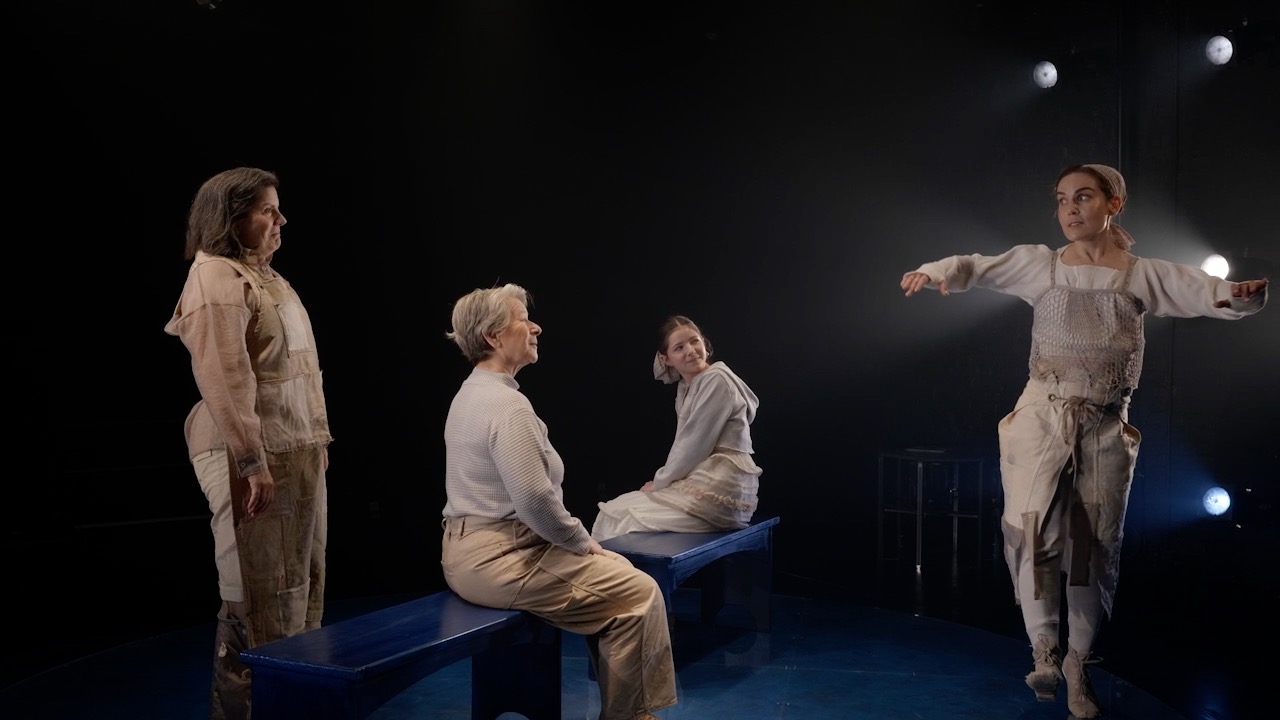
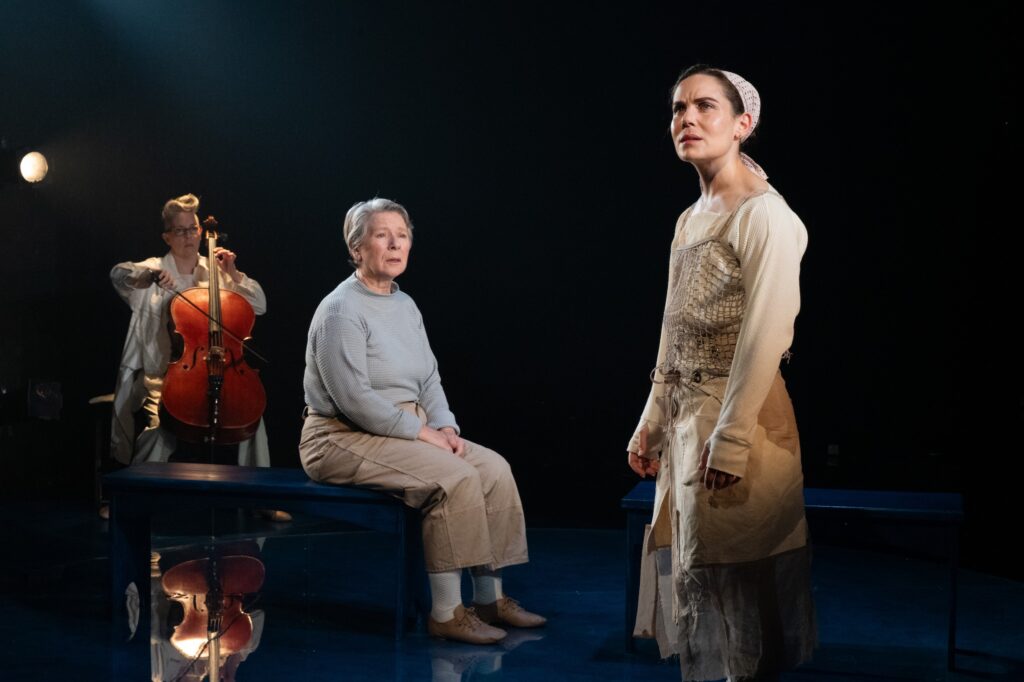
The play depicts the artist in various stages of her life, using four actors playing the seasons: Winter (late in life), Spring (a young girl), Summer (an early adult) and Autumn (middle aged). They are individual but share the stage, all living in the mind of Winter reflecting on the life she lived.
Maybe We’ll Fly opens with Winter (Leslie Fitzwater), toward the end of her life as she’s faced with figures flying outside in the wind along with her rattling martini glass wind chimes. She’s writing a letter to her friends, whom she wrote twice a year. As she reminisces, we see her life seeming to flash before her eyes.
Suddenly, we see her as a young girl, and it is spring. With her young Spring self (Amelia Sajdak; Lainey Techtmann), we see her full of life, wonder and amusement at everything. Sajdak performed at the Sunday matinee I attended. She brought the artist to life with whimsy and glee, while also depicting tense moments with fortitude and grace.
It is the first time we hear the titular song, a welcome and powerful melody that shows up throughout the play and continues to stick in my mind after leaving the theater. “Maybe we’ll fly high together,” I hummed on my way back to my car after the show’s end.
It is also quite early on that we hear the stunning cello from Alicia K. Storin, which acts as the accompaniment not only to the vocal pieces but the rain, the wind, the environment around the artist and her home throughout her life. It was brilliant and beautiful.
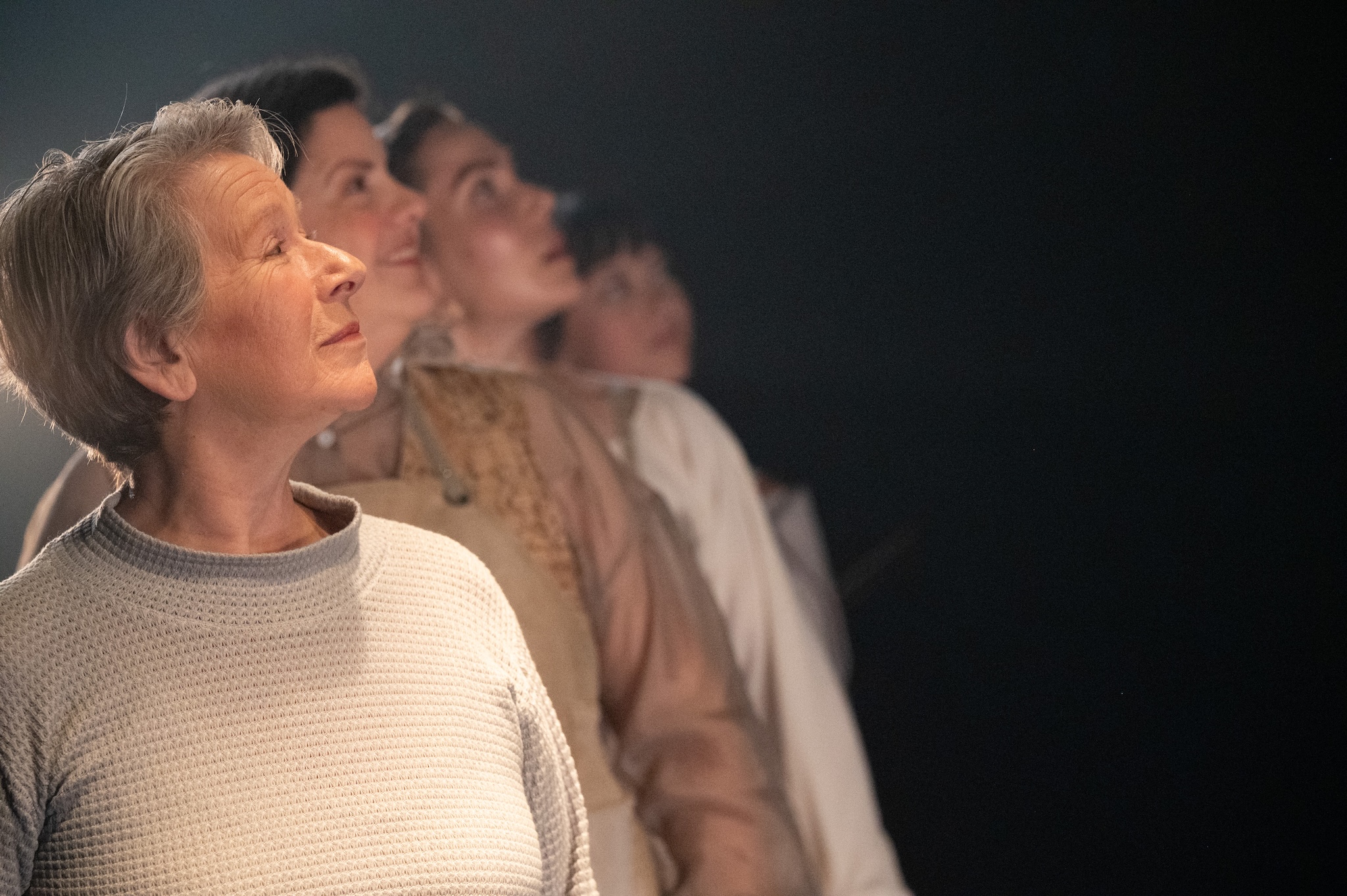
We see Spring turn to Summer (Emma Rosenbaum), and the early adult version of her takes the stage. We see her go to art school, try – and fail – to teach, and start a pottery business that also ultimately doesn’t take off. There’s a tension between her desire to create and the pressures from her father to make money. Rosenbaum moves across the stage with intention, effortlessly portraying the artist’s creative force and unwillingness to conform to the world trying to tame her.
And as we come to Autumn (Karen Estrada), a lightness comes back to the artist. She falls into a routine, a rhythm, spending her days creating and living her life exactly how she wants to. Estrada floated around the stage with a pep in her step that reflected the artist’s ease and sureness of herself, contrasted with moments of doubt and uncertainty amid backlash from her critics.
The staging, the movement, the intention behind every aspect of the production brought the story to life. And the beige yet whimsical costumes were a beautiful choice, pieced together like Nohl’s collections themselves: straps made of tape measures, a shirt of fish net, a skirt pieced together out of cloth. Against the bright blue stage, they felt like the beach meeting the water, a part of the landscape that Nohl surrounded herself with.
“I thought she was an extraordinary figure,” Kohler says. The play shows us exactly that: It is extraordinary to be a woman who does what she wants, who forges on despite criticism and tragedy and heartbreak, who creates endlessly. It is extraordinary to fly so freely through life – and to be remembered as someone who lived so unapologetically as herself.