
From his seat at the scorer’s table, Johnny Watson plays a vital role for the Milwaukee Bucks. As executive producer of broadcast and live events, it’s his job to keep the energy high, even when there are breaks in the action. Every in-game break, interactive game, music cue and halftime show are carefully coordinated and produced for every fan watching along on the court, on the jumbotron and on TV.
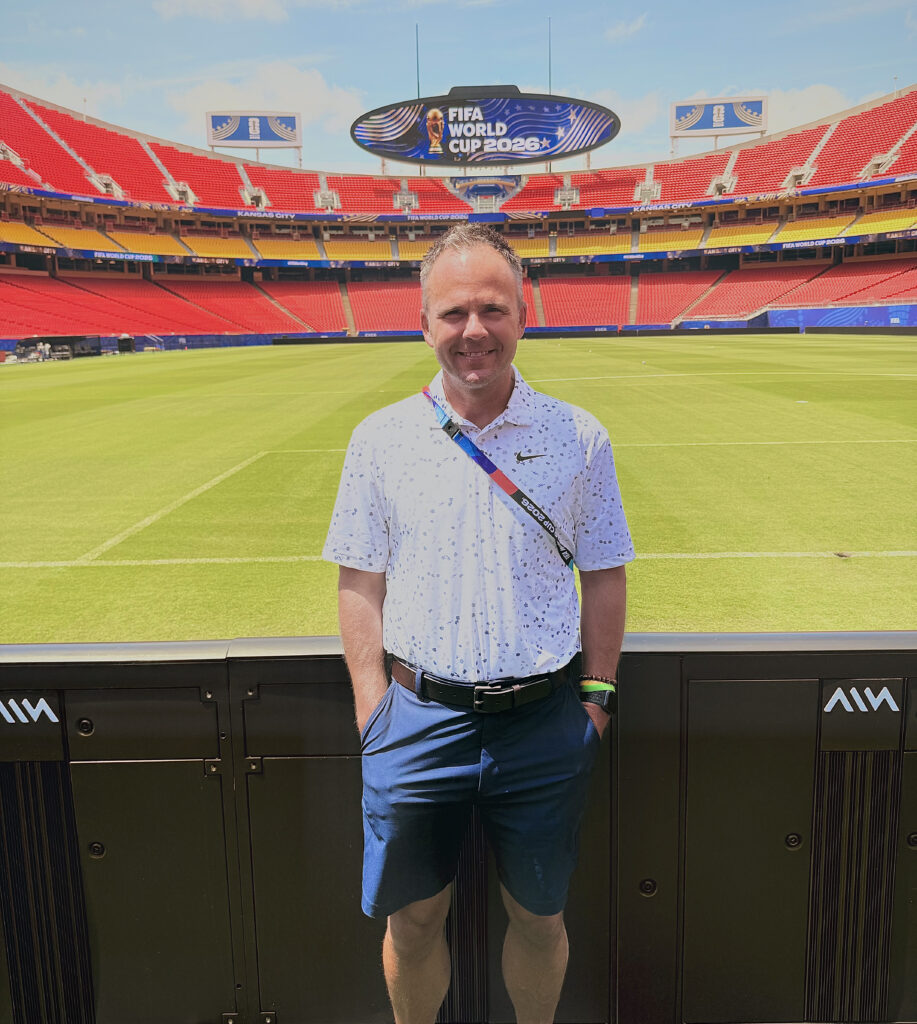
Starting this week, though, Watson is trading in the basketball court for the soccer pitch when the 2026 FIFA World Cup kicks off. Watson is in Kansas City to shape the World Cup the best way he knows how: by putting on a great show for the fans in the stadium. Watson talked with Milwaukee Magazine about his upcoming role as the in-game producer for Kansas City’s slate of six matches, including a quarterfinal.
First off, how have the last few weeks and months been in the lead up to the start of the World Cup?
It’s been a super exciting time. Being able to work for one of the largest sporting events is incredibly special. To be able to do it with some of my co-workers from the Bucks here in Kansas City makes it even more special. And being able to work at the same site where Lionel Messi and the Argentinian national team will be based is a cool perk.

Celebrate this year’s winners of the Betty Awards!
A lot of the focus for the World Cup sites in this country has largely been on the coastal cities or the massive, state of the art stadiums that will host games. What does it mean to be able to work the World Cup while honoring your Midwestern roots by working in Kansas City?
It’s such a thrill. Seeing the scope of the event through the people that live here and that are excited about the World Cup being played at Arrowhead Stadium where the Chiefs play gives it extra meaning, honestly. I grew up in Iowa and I work in Milwaukee, so I know what something like this means to cities like Kansas City. In fact, when the opportunity came up to work at the World Cup, I requested to work here. This week, I’ve been able to work with the Chiefs staff, and they’ve been super helpful and knowledgeable as we get this whole thing going.
You’ve worked primarily in basketball through your role with the Bucks. In recent years, you’ve worked NBA Finals games, the FIBA World Cup, the 2024 Olympic Games in Paris as well as the 2024 U.S. Open in New York in tennis. What are the challenges that are unique to staging in-game production for soccer compared to the other sports you’ve worked on?
The game itself is almost non-stop action. There are more breaks in basketball and in tennis. A soccer match just barely goes over the two-hour mark. You’re really paying attention to the game in soccer. There are yellow cards, red cards, goals, substitutions, and all of that requires a lot of communication in and around the stadium and in production.The pre-match ceremonies are the pinnacle. The walk-on introductions – there is such a huge pageantry in that. Pre-match is very busy. There’s a lot of stuff going on between the 200 volunteers on the field to the players walking on the field from the locker room. And then there is capturing the atmosphere inside the stadium itself. With that said, sports presentation is universal. You take a lot of different things from different sports and how they are presented. It’s a different challenge, that’s for sure, but an exciting one at the same time.
From your perspective, what are the key elements that go into a successful live, in-game production that we, as fans, might not know or take for granted?
What’s unique to working the World Cup is that it’s been a crash course in the lead up to this. You’re getting to meet all sorts of different people from many different countries and the roles that they serve in such a short amount of time. There’s not a lot of time between now and when the on-air production staff come in. And then the national teams will come in after that. But it’s all fun, and there are certain checks and balances that will develop over time. It keeps me motivated and your eye on the ball, so to speak.
Lastly, your role with the Bucks keeps you busy already for much of the year, but now you’ve branched into working almost all year round. What keeps you motivated and what does it mean to you to be able to work at an event like the World Cup?
For me, I have been extremely fortunate in my professional development and I never take it for granted. I’ve been able to travel the world, work different events beyond basketball and the Bucks have been supportive of me all throughout. It’s a balancing act, for sure, and while it may be the offseason, I am doing work for the upcoming Bucks season while here in Kansas City. They really trust me to figure it out and allow me to take advantage of these kinds of opportunities when they come my way.
Ultimately, what motivates me is the love for what I do. I am beyond thankful for what I do in Milwaukee. If I had my control, I would never leave the Bucks and Milwaukee. Everything I am today is because of the Bucks. Working an event like the World Cup keeps me sharp and benefits my job with the Bucks. I’ve worked with the Bucks for 13 years and so much has changed in that time. What we did in 2021 and winning an NBA title, that is the pinnacle of anything I will have experienced. And working a World Cup is just one of the things that you aspire to do in my line of work, so I’m very grateful and fortunate to be able to do what I do.