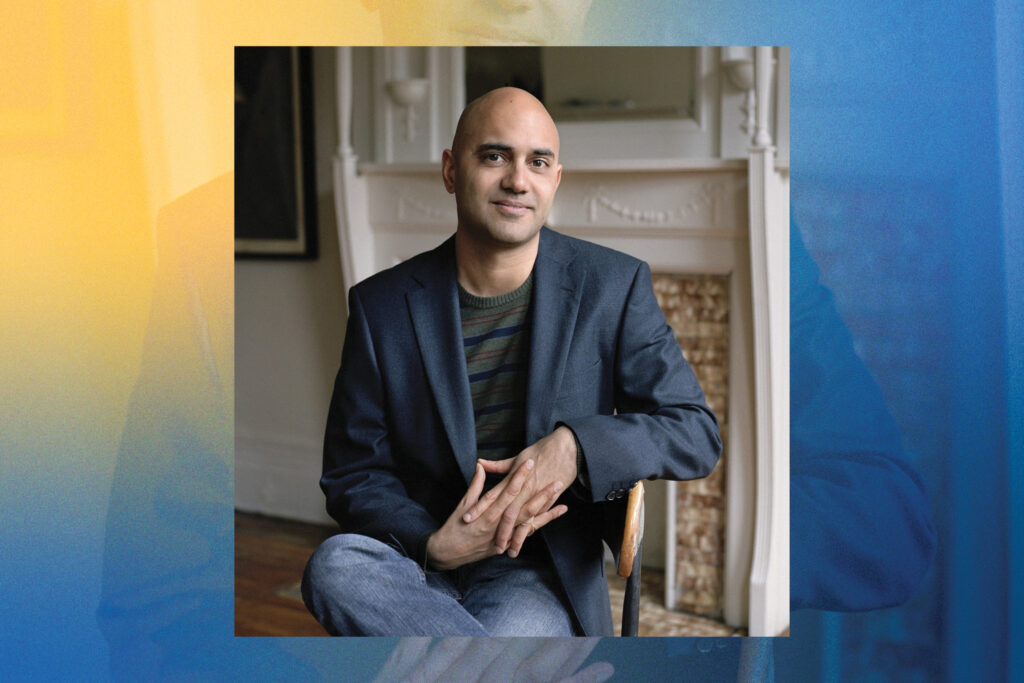
Ayad Akhtar doggedly revises his own work, to such an extent that he tweaked his play Disgraced weeks after it won the 2013 Pulitzer Prize for drama. But the Milwaukee-raised writer felt no need to change 2024’s AI-centric McNeal before it arrives in February at the Milwaukee Rep. Instead, “it sounds weird, but I feel the play’s ahead of its time,” he says.

If someone has inspired you through their service, leadership or dedication, the Unity Awards are your opportunity to recognize them!
McNeal follows the cantankerous novelist Jacob McNeal (originated by Robert Downey Jr. on Broadway, played at the Rep by his understudy Peter Bradbury), whose fascination with artificial intelligence comes amidst crumbling relationships and an occupational crossroads. At its core, McNeal strikes at the tension surrounding AI in the artistic world and examines the difference between machine creativity and human creativity.
READ MORE FROM OUR ‘SPRING ARTS 2026’ ISSUE HERE
Akhtar argues that much like AI, humans create by synthesizing what came before. This comparison is explored in McNeal, but Akhtar also cites himself writing the flawed titular character as an example: “Barry Goldwater, Ronald Reagan, Norman Mailer and Saul Bellow – [McNeal] is all of those people composited.”
The metaphor is taken further as the play – and McNeal himself – unravels. “We are watching a play that we think is about a writer, and then we start wondering if the writer himself is an AI concoction,” he says.
The key difference that Akhtar concluded is that AI models lack experience, meaning their “thinking” isn’t rooted in real-world observations like ours. Knowing this limitation makes him less worried about AI creating truly great art that resonates. Rather, he’s concerned that, with the ease and simplification of info, people won’t bother to seek out that great art.
“It’s not that the machines will replace us,” he says. “It’s that the machines will transform us.” McNeal asks: Is that the machine’s fault, or our own? Unlike a chatbot, it offers no simple answer.
McNeal: Feb. 10-March 22 at the Milwaukee Rep