
ADDITIONAL REPORTING BY TEA KRULOS
It was not the life Jing Wang had envisioned for herself.
She had left a career as a sales dynamo at Shanghai No. 1 Department Store to help manage the high-end wholesale/retail lighting business her husband, Jack, had started. Life was moving at a frenetic pace, amplified by the radical transformation that Shanghai was undergoing in the 1990s – from a tired, decaying city to a modern megalopolis.
The Wangs’ business was profitable and with Jing’s involvement, they were able to add four more stores. But it required endless hours of schmoozing. At the time, Jing spent days and nights entertaining people “in positions of power,” wining and dining officials in order to build the relationships and status necessary to run a successful business in China. The couple spent very little time together.

Gift An Issue For $12 Today!
“I said to Jack, ‘This is not [the] marriage I’m looking for. I need another part of life – I want a peaceful life with you.”
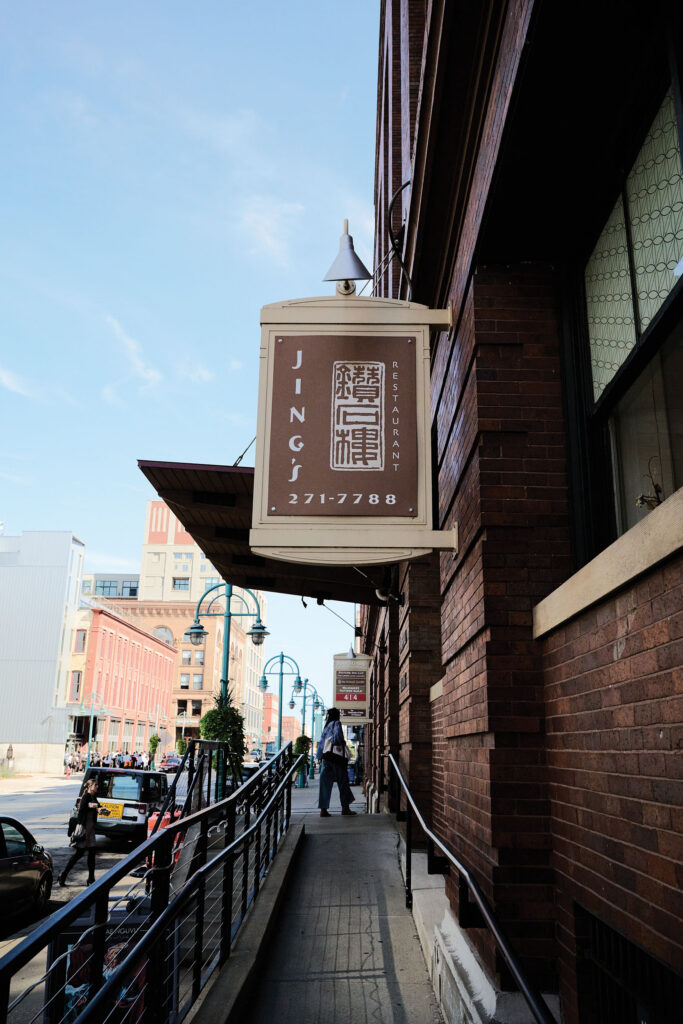
Using the grit that has come to define her, Jing continued to press for a change, and eventually the couple’s path led them to Milwaukee, where they opened a restaurant that has become an institution. Tucked into a quiet corner of the Third Ward’s Marshall Building, Jing’s Chinese American Restaurant will celebrate its 20th anniversary next year. Accessible only through the lobby, with merely a discreet sign on the building’s facade to announce its existence, the restaurant has nonetheless built a loyal following.
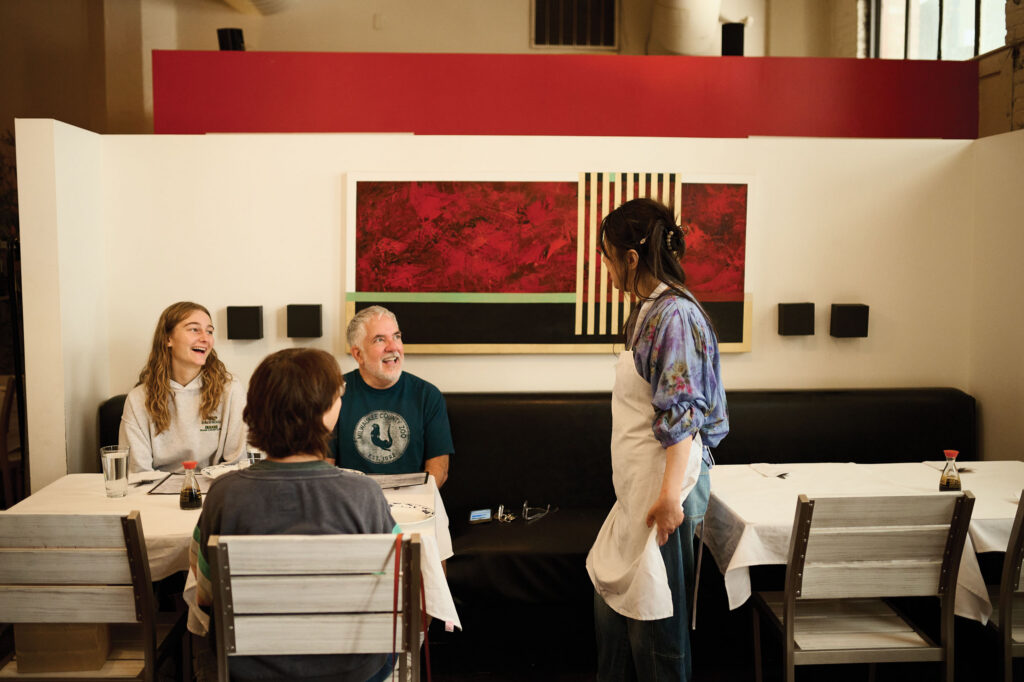
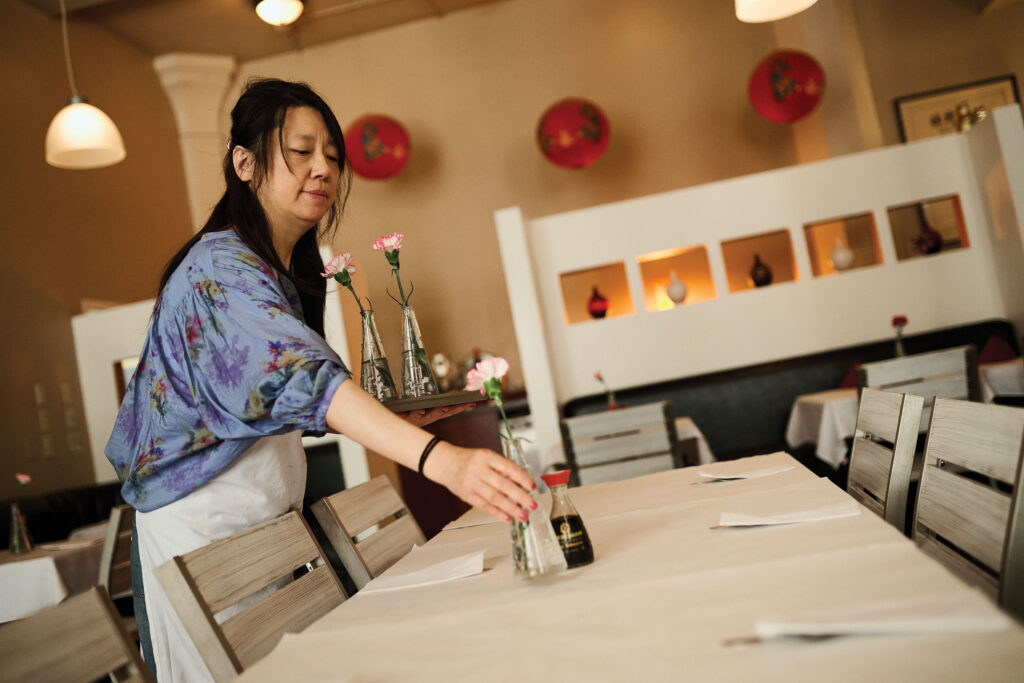
Jack’s vibrant cooking, incorporating many dishes that are popular in Shanghai, is half of the recipe. But the secret sauce is the extroverted namesake of the business. Jing is the face of the restaurant and often its only server. But the energy that radiates from this woman in the oval-framed glasses creates a kinetic hum that electrifies this zen room. She rolls out the red carpet for guests, learning their names, laughing with them, and often surprising them with a little something extra (an appetizer, a noodle dish) from the kitchen.
For Jing, hospitality seems to come naturally. She calls the restaurant “my social place. I don’t need to go out to find friends. They come here.”
Coming to America
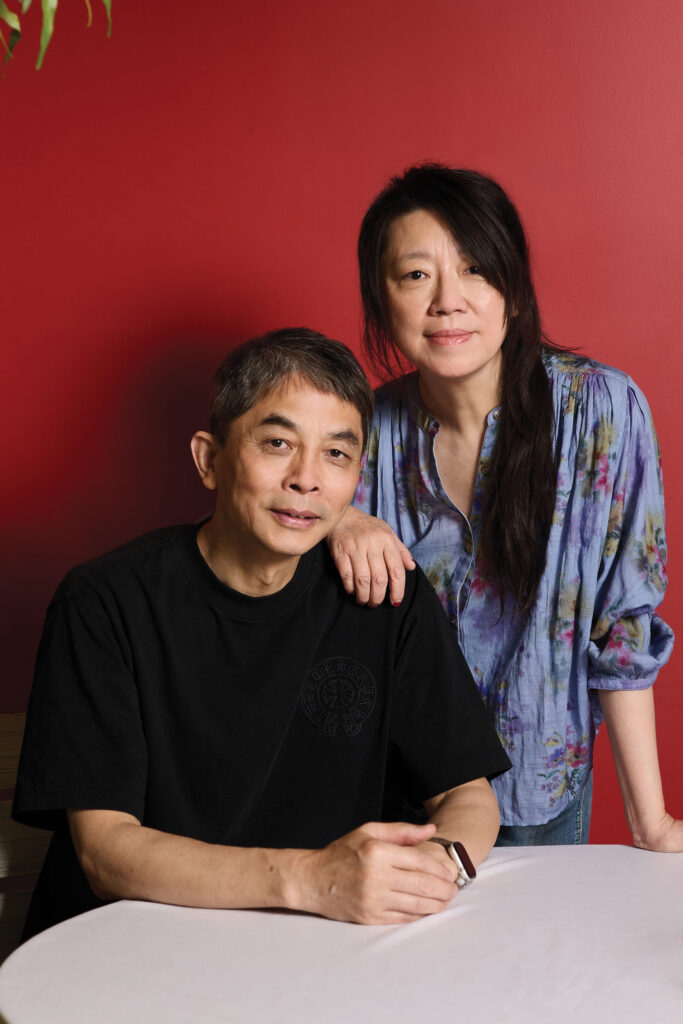
Jack’s initial response to Jing’s plea for change was not exactly what she had hoped for. This is just “the way it is,” he said. She became depressed “for years, because I just see my life as, that’s it – just entertain people,” she says.
Growing up in China, Jing was accustomed to the societal and familial expectations around work. When she had conflicts that threatened to undermine her position at the department store, her stepfather told her she needed to “fight back,” she says. “Because Chinese culture is that way. They usually push you hard and always criticize you to make you do [a] better job.” The message became ingrained. “I never planned or dreamed to be a businesswoman,” Jing says. “But I am brave and very determined.”
Jack’s resignation to the way things were in China triggered Jing’s tenacity. She became obsessed with leaving for a new life in the States, which she saw as the “biggest, strongest country in the world.”
In 2000, Jing and Jack – then in their mid- to late 30s – finally made the move, leaving behind a successful business for an uncertain future. They faced numerous obstacles, including a language barrier. But a cousin of Jack’s was studying at UW-Milwaukee, so at least they had a spot to land.
Their first impression of their new home? “The weather [was] so, so cold,” Jing says, “but the people are very warm.” Milwaukee’s early-to-bed tendency agreed with her, too. “At 8 p.m., there is almost no one on the street,” she says. “But in Shanghai, 8 p.m. is when nightlife starts.”
Just as she had gathered her inner resolve to fuel her success back in Shanghai, Jing motored through all the necessary steps to make a go of it in their new home. Learning English was the priority. Once she completed her classes, Jing suggested to Jack that they open a restaurant to tap an education in cooking he received before opening the lighting business.
At the time, Jing was working a front desk job in Kaplan’s test prep office, then located inside the Third Ward’s Landmark Building.
She was reading a lot of books to help her with English and discovered the spiritual writings of Milwaukeean George Bockl. Jing, herself an explorer of mystical topics, devoured his books.
Writing was just a sideline for Bockl, who was a commercial real estate developer and owned properties in the Third Ward, including the Landmark and Marshall buildings. Jing became fixated on the Marshall Building, which had become an incubator for artists and other creatives, as the perfect location for her and Jack’s new restaurant.
Bockl, who was well into his 90s, learned of Jing’s interest both in his books and in the Marshall Building. A failed café had just left a back-corner space on the first floor and, according to Jing, Bockl told his assistant, “We must rent the space to that Chinese woman.”
Jing’s opened in 2007.
Open For Business
Bob DeToro, Bockl’s grandson and the current owner of the Marshall Building, describes Jing as focused and driven. She had “plans and drawings” of how she wanted her space to look, he says. “The process can be so tough. She just breezed through it.”
For the interior, Jing worked with a well-established local designer, the late Tom Hoffman, who advised her, “Don’t hang any extra things anywhere like other Chinese restaurants do. Stay away from clutter. You must keep it neat and simple because you and Jack are simple and clean.” She followed his advice. The dining room is minimal with a few dramatic elements: Guests are greeted by a crimson red wall and a large, imposing terracotta statue of a Chinese warrior.
Despite its unobtrusive location, business was brisk from the very beginning, Jing says, which is not surprising since it was the only Chinese restaurant in the Third Ward. (Not until 2016 was it joined by one other, DanDan.) The lunch buffet – laid out with staples like egg rolls, crab Rangoon, sesame chicken – was a big draw, too. Then, the media coverage hit and “customers came from everywhere,” she says.
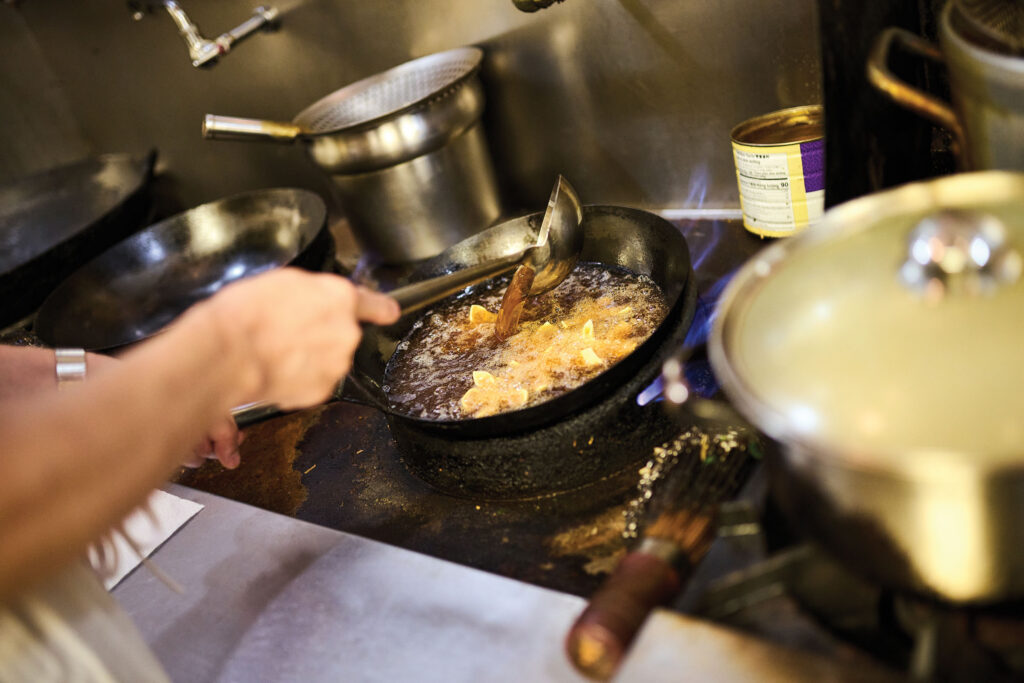
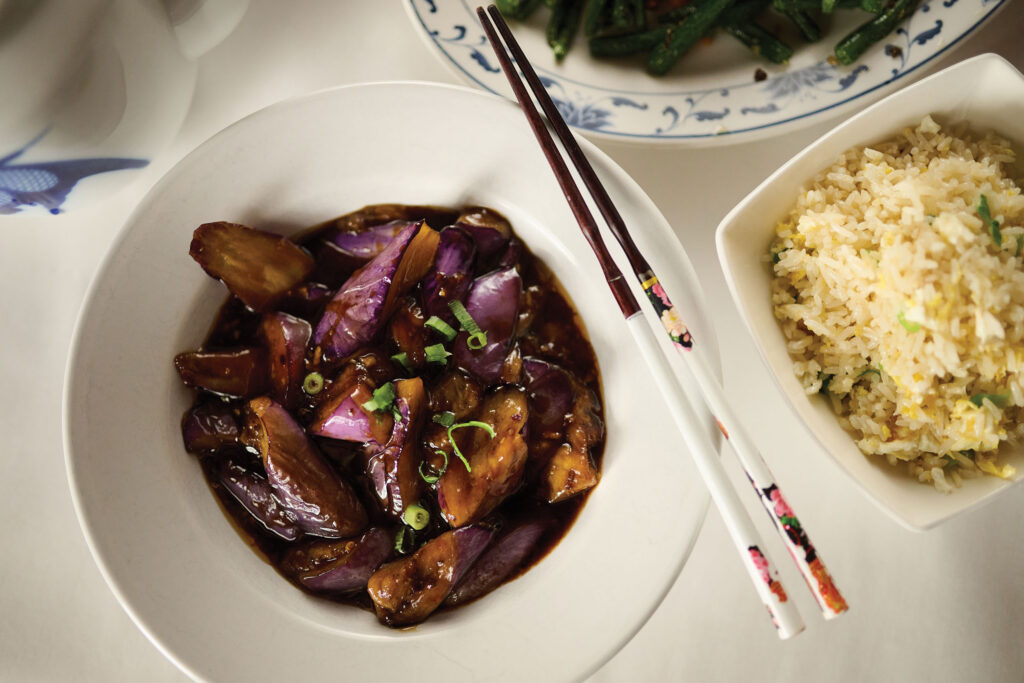
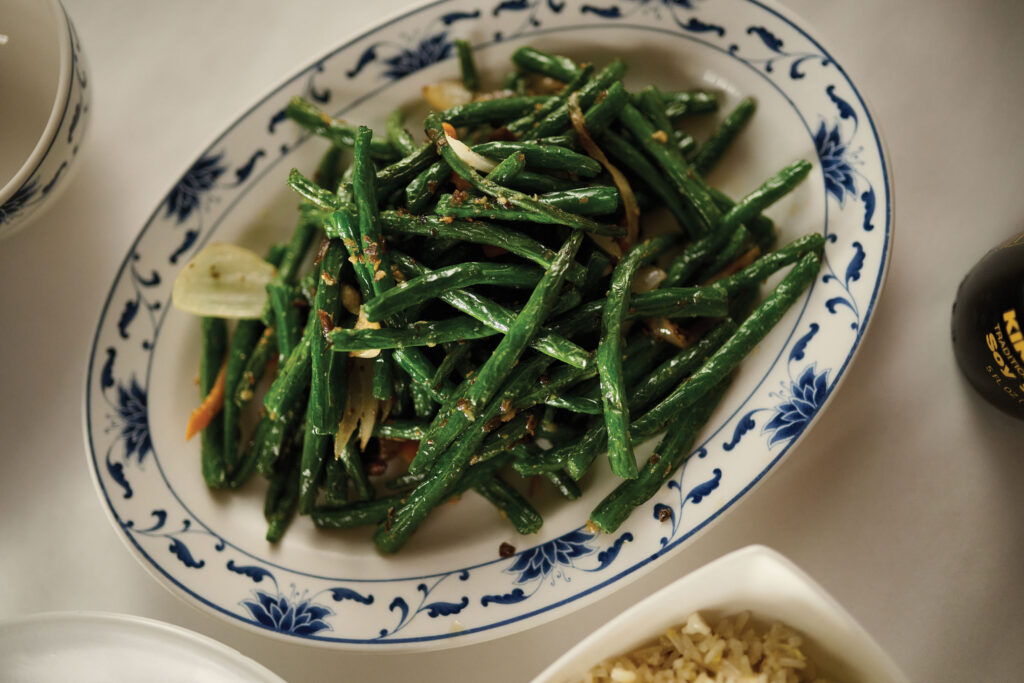
What wasn’t on the lunch buffet were more nuanced specialties from Shanghai – with their characteristic light, sweet flavors – that Jack only made as specials. The restaurant’s most popular dishes now are a mix of Shanghai (some of which is not on the printed menu) and conventional Chinese American. The big sellers are dishes such as steamed fish in ginger broth (made with either sole or swai), Shanghai fried rice, hot chili fish, baby bok choy and Chinese eggplant. A meal that includes scallion pancakes, salt pepper shrimp and steamed fish shows off the very best of Jack’s cooking.
Delighting customers by bringing them an authentic Shanghai dish to try during the meal they’d ordered became Jing’s trademark. “Something [extra] just to cheer them up,” she says. “I want to see they are happy.” The restaurant’s regulars soon wanted to order the dishes that they’d tasted as “gifts” from the kitchen, but they were not on the menu. That’s how the “hush-hush” secret menu was born.
The restaurant became a regular spot for political leaders and businesspeople. Some of them wanted to do business in China and sought out a side dish of advice from Jing, says Bob Anderson, a retired business executive who met the Wangs through the SCORE program, which matches entrepreneurs with experienced professional mentors.
“I bet I’ve seen [former Mayor] Tom Barrett in her place 10 times. She knew everybody in the local government, which is really unusual for somebody who owns a restaurant,” Anderson says. “She had a lot of contacts in China still at that point in time. There would be groups that would come over from China, which she would host, all while running the restaurant.”
Overcoming Obstacles
Most mornings, Jing starts the day with a walk along the Milwaukee River in the Third Ward, where she and Jack also live. She also meditates daily, a practice she learned at a Buddhist meditation center. Those two outlets became key pieces of Jing’s self-care routine as her restaurant took off. During the pandemic, the routine gained even more significance.
Her practice has helped her “learn to relax” while also remaining focused: “I do it very frequently during my day, whenever I remember. Just a couple minutes to center myself and breathe in and breathe out.”
In addition to the hardships that the entire hospitality industry faced during that period, Jing was dealing with the additional stress of worrying about her parents back in Shanghai. With China’s doors closed to international travel for almost three years, Jing couldn’t visit her father, who passed away in 2021. Plus, for the first months of shutdown, she had to navigate the business here alone while Jack was stuck in China.
DeToro recalls his tenant rushing into his office one of those days during shutdown, visibly anxious. “No one will work!” Jing lamented. “I said, look, my son just got his driver’s license and can help out,” DeToro says. “Jing said, bring him in.” The teen helped deliver carryout orders, then a vital means of support.
“I was too hard on myself,” Jing says of that time. “But I learned how to take care of myself and also keep working. I learned to face uncertainties.”
DeToro witnessed the benefits of meditation in action and has discussed with Jing starting a group practice in the Third Ward. “We talk about meditation all the time. It’s really important to her,” he says. Like sharing beloved dishes from back home, Jing wants to share her passion for meditation. “It’s my dream to bring high-educated instructors here to teach [meditation],” she says.
Twenty Years In
Jing describes the dynamic between her and Jack as similar to the opposing forces in Chinese philosophy – the yin (Jack), and the yang (Jing). A balance of the two energies is to be in a state of harmony, which Jing, who turns 60 in January, thinks they have achieved.
“Jack and I enjoy living a simple life,” she says. Jack, 64, doesn’t have the command of English that his wife does and generally lets her be the communicator. However, he says he loves living in Milwaukee and that’s partly because he finds the people to be friendlier here than in Shanghai.
For many years, part of the couple’s routine had been to close the restaurant during Summerfest (when it was 10 straight days) and visit family in Shanghai. They still take those summer vacations, but after the pandemic have added a second annual trip home, during Chinese New Year in January or February.
Jing knew that a restaurant would be a different sort of commitment from running the lighting business in China – taxing on the body – but she says she doesn’t mind. “I work as a server. I clean the bathroom. I do everything. This is my baby.”
Being perpetually in the dining room suits Jing’s gregarious personality, while the kitchen fits her husband’s natural shyness. But she insists they are “both low-key.”
Thoughtful when she speaks, Jing is also very forthright in expressing herself, often accompanied by her warm, playful laugh. Representing the restaurant that bears her name, she has come to know many of her diners, remembering what they like to eat and details they have shared with her on previous visits.
Longtime restaurant regular Peter Lee met Jing 25 years ago when she was enrolled in the intensive ESL program at UW-Milwaukee, where he was her instructor. He describes his former student as “a wonderful live wire to have in class, always making sure she understood what was going on.” To this day, when he dines at Jing’s, he experiences that same vivacity: “She’ll greet me and launch into something [speaking Chinese] just because she knows that I’ve got a little bit of it, and it’s always great fun.”
The Wangs discontinued the lunch buffet following the pandemic, allowing them a bit more leisure time. The buffet was popular and brought in business, Jing says, but it was “low profit. It’s like advertising to let people know the place because we were tucked in the corner and in the alley. So more people know about us. Then we were very successful. But now the reason we hesitate [to bring it back] is Jack and I, we were nonstop working from morning until night.”
Their Shanghai work ethic runs deep. “We are not hungry for money,” says Jing. They have some part-time help, but they are hesitant to rely too much on others. “Jack, he wants to do everything himself, and he has his way [of doing things].”
Jing does, too, in her command of the dining room and singular ability to make the people who come to her restaurant feel special. DeToro mentions the couple’s “generosity” of spirit – giving without expecting anything in return. Dan Jacobs remembers that on the day his restaurant, DanDan, opened in 2016, Jing sent an orchid plant. “It was one of the sweetest things in the world,” he says, adding that Jack’s twice-cooked pork belly “is the best in town.”
Jing sees her working of the room – her room – as very different from the entertaining she sought to escape in Shanghai. There, it was a requirement for them to get connections and contracts for work. Now, taking care of customers is something that she enjoys because, she says, it’s not an expectation or requirement placed on her. It is a choice.
When the couple moved to Milwaukee, they didn’t know what they would find, but they have tried to focus on the journey. Jing’s favorite book is The Alchemist, the novel by Paulo Coelho that follows a shepherd boy on a mythical quest for treasure. He travels very far, overcoming obstacles, but eventually discovers that the treasure, which is really wisdom, is just under the trees around his home. It’s not far-fetched to think Jing and Jack, confronting challenges like the book’s protagonist, have found their version of gold here in their chosen hometown.
Senior Editor Ann Christenson has eaten countless scallion pancakes and orders of General Tso’s from Jing’s over the last 20 years.