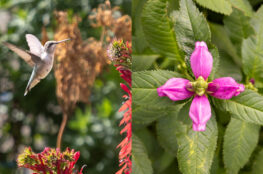
I am borrowing “Vitamin N for Nature” from wildlife ecologist Doug Tallamy’s 2019 book Nature’s Best Hope: A New Approach to Conservation That Starts in Your Yard. Science has proven the health benefits from our microbe-rich environment, even an electrical charge when your feet connect with dirt. I prefer keeping my shoes on outside to avoid stepping on sharp things, but I generally eschew gloves to slip out those pesky weeds while getting that natural garden high. Our adaption to indoor life is, evolutionarily speaking, a blip in time; sitting inside looking at screens is unnatural. We are like all the other earth-bound species: we need the outdoors, sunlight and life-giving soil to thrive. (I am solar powered, and each short winter day confirms it.) The science around gardening is very well documented: Nature is our best vitamin for a healthy life.
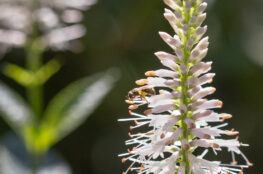
Vitamin Nature is also a great connector. Tallamy writes that, as gardeners, we can link across multiple yards to create an “ecological corridor” to support the food chain around us. I see this in my own yard. With all the buzzing life in my garden I know I am supplying the bee hives in nearby Washington Highlands since bees can travel up to three miles to gather pollen. We saw a bee-suited beekeeper tending some hives there a few years ago; turns out they are artist friends who had been “voluntold” to rescue some distressed hives. I took our bee-supporting friends cucumbers and got some honey in return. Pollen is the glue that connects us.


If someone has inspired you through their service, leadership or dedication, the Unity Awards are your opportunity to recognize them!
Vitamin N is not all fun and food though – it throws curveballs. I am still dealing with the tree limbs downed during that gully washer of a storm on May 15 – the very day I finished another round of planting seeds and seedlings. After we removed the final, biggest limb, I ran across the Wisconsin/Midwest Bumble Bee Observer group on Facebook and downloaded their “Build a Brush Pile” hand-out. I’ve taken this latest compost “contribution” and added it to my existing pile beneath tree #3, partially to support its one sagging arm, mostly to provide hiding places for bees and birds. The rest of the logs and brush will be scattered beneath our other trees, preserving organic matter on site while giving the trees little extra insulation during our colder months. Our yard, surrounded on three sides by walls of various heights, must create a wind vortex. This spring batch of branches is far from the first; we removed a tree that slumped against our house during a year of weird freeze-thaw cycles. I am sorry to take away bird hiding places, but I don’t want to be crushed in my house while sleeping.

Did you also sneak some early tomatoes in early only to be hit with that “feels like” 30-degree weather last month? I warned us both but it’s hard to hold back. The more sober-minded folks at the Metropolitan Milwaukee Sewer District native plantapalooza sale set their pick-up date to June 7. I am adding Calico Aster, New England Aster, Rattlesnake Master, Purple Prairie Clover, and Red and Showy Milkweeds into newly dug beds, expanding my offerings to the food chain building in my yard.
My existing plants really put on a show in June. The blue, purple and fuchsia Spiderworts seem slower to bloom this year – was it the lack of rain or those 40-degree nights? Those many species of milkweed are moving towards bloom time. One of my Prairie Smoke plants is going to seed in a puff of candy cotton pink, and the heavy-bottomed bees are loving it. I particularly cherish my Butterfly Weed and Geum because of their bright orange cheer. I have red, blue and raspberry Bee Balm; pink, purple and white 84-year-old peonies from my partner Kevin’s childhood home nearby; several different colors of coneflowers; iris of different shapes and vintages; and three purple-pink hydrangeas. That’s an “A+” for Vitamin N’s color sense.
But I’m not done yet! I moved my Anise Hyssop seedlings into a raised bed and transplanted some Sun Ball seedlings into a pot – let’s see if I get those darling little dots this year. Into my other two new in-ground beds I spread zinnias, cosmos, milkweed and sunflower seeds with abandon – some for me, some for those greedy robins that follow me around. I replanted some of the seeds that did not come up (kale, lettuce, Mexican Sunflowers) – maybe they were too old or perhaps the birds got them. Seeds are an inexpensive way to garden; I did some panic buying for a second planting in July, just in case there is room.

Does this sound like too many plants? Nature hates a vacuum, and I do too. My excuse is that I am a “species” planter, a phrase I heard at the family’s rummage sale a few years ago. Perhaps as an art historian, I like to see plant growth habits and leaf textures in the classic “compare and contrast” painting analysis from college. I let my plants cuddle in the yard, shading the soil for root protection and keeping out weeds, but I apply tough love if anyone tries to take over. (Bee Balm and milkweed, I’m looking at you.) I gave some divided plants to neighbors and will sell some at this year’s rummage sale later this month, which is the perfect way to recharge my plant budget. It’s a circle of life moment.
Don’t have your own garden? Vitamin Nature is all around us, and in particular concentrations at our bounteous farmers markets. (I like to ask farmers how many acres or greenhouses they have – that makes me feel proportionate about the output of my yard.) Visit any of the area farmers markets to get your green vitamins on. If gardening isn’t your thing, doing a mud run might be – Vitamin N is messy, not just pretty.
A Few Gardening Resources
BUYING PLANTS
- Prairie Moon Nursery: Native plants and seeds
- Johnson’s Nursery gives discounts to Wild Ones members in their June native plant sale
- Prairie Future Seed promotes area native plant sales
- NWF native plant finder
EDUCATION
- My home-made flower extender juice for cut flowers is adapted from an on-line blog I found years ago, these measurements are for a mid-size Ball jar:
3 c. water
4 ½ tsp. lemon or lime juice (this will make the water a bit cloudy)
.75 tsp. sugar
.375 tsp. bleach (you read me right—bleach)
Mix and add about 1 tbsp to the water for each cut flower batch
- How to Support Pollinators: Wisconsin Department of Natural Resources
- Joe Gardener: It’s not just cat videos I follow on social media, it’s also gardening folks. I like the California guys who have a schtick “You know you’re a gardener if….” (For example, …buy way too many plants at the store, …don’t thin out your seeds…) Check out Joe Gardener’s podcast and sign up for courses here.
WATER MANAGEMENT RESOURCES
- Fresh Coast Guardians helps everyday people protect Lake Michigan, join their efforts by installing a rain barrel or rain garden:
SUSTAINABLE GARDEN INFORMATION
- Pollinator week is June 16-22, 2025
- Wisconsin Wildlife action plan, for information on our changing landscapes
- National Wildlife Federation: How to create and certify gardens for wildlife
- Wild Ones Milwaukee: Specific plans for climate resilient, native gardening by Danielle Bell, Native Roots