
Leaders are made, not born. Sometimes it takes just one teacher to encourage a misunderstood teen, or a single coach to spot a diamond in the rough: other times it takes a whole organization to provide a safe space for youth to socialize, to learn, to listen and be listened to.
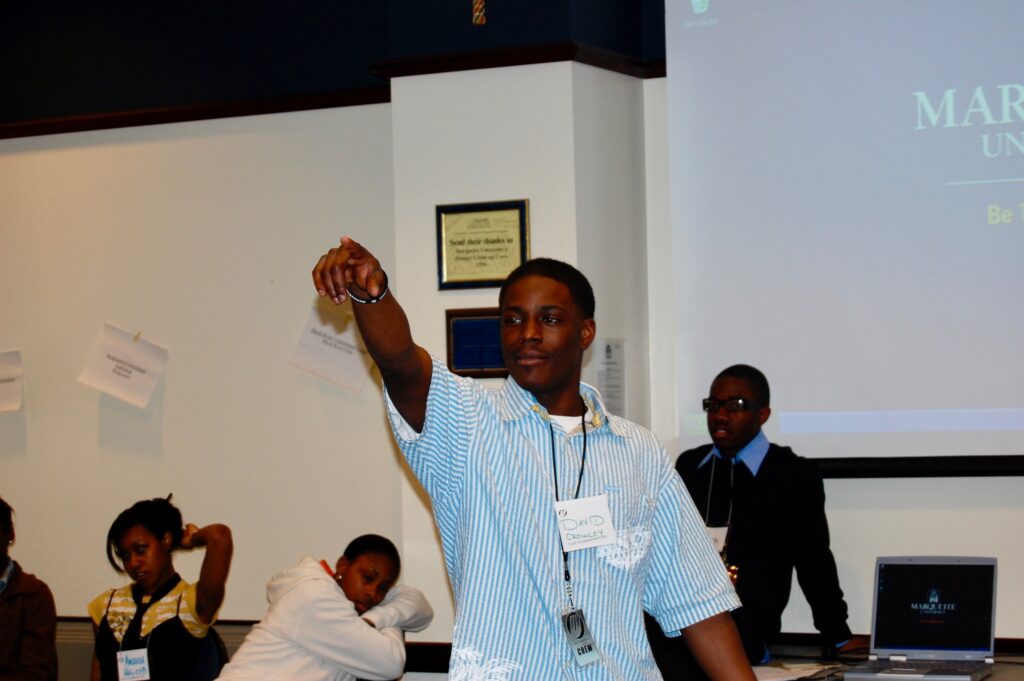
For Governor-elect David Crowley, such an organization was Urban Underground, created in the year 2000 by Reggie and Sharlen Moore. Several local leaders of today, including Wisconsin’s next governor, found community, inspiration and opportunity during their time at Urban Underground.
Sharlen Moore, a mentor to many Milwaukee leaders, has continued her life in public service as our city’s current District 10 Alderwoman. During our long conversation over coffee and pastries at Vennture on North Avenue, Moore deflected credit for discovering Crowley and other future leaders of our city and state.
“It wasn’t about breaking into politics, it was the young people directing their own path,” she said.
In the afterglow of David Crowley’s historic victory, Moore took time to share some of her reflections on Urban Underground’s impact, how Crowley took “big initiative” from the start, and how Milwaukee might improve its services for the youth.

Gift An Issue For $12 Today!
For readers who might be unaware, tell us how Urban Underground got started.
Urban Underground was formed back in 2000, co-founded by Reggie and myself. We were young people ourselves, so the connection of understanding youth issues was there. We always had a saying ‘for us, by us,’ meaning the people closest to the problems were closest to the solutions. At that point, there were very few places where young people were welcomed, kids were meeting up at gas stations, because so many community spaces were closing. We had to have something better.
We wanted social activities for the youth to be social. It was an opportunity to talk about changing the conditions of your environment, your school, your neighborhood and your community. Young people have the power to do that – look at the context of the Civil Rights movement, a lot of it was led by young people. Urban Underground was born out of this established work.
How did you get the word about Urban Underground out to young people in Milwaukee?
We did heavy recruitment at high schools. A lot of it was very informal, like during lunch. Then, the youth had to go through an info session, a one on one interview, a group interview – it wasn’t about grades or what school they went to, that’s how David came to be in the organization. We recruited him and he took the next step, the big initiative was on his part. Maybe because we were young, he might have thought, these folks look like me. It was inspiring.
When you were running Urban Underground, did you imagine you would have a future governor in the organization, among other key leaders in Milwaukee and Wisconsin?
One of the things we wanted was for young people to understand the power they possessed. Whatever career path they went into, it was about having this sense of power, how to treat people and how to change your current conditions in their community. If the youth could harness this power, they’ll be able to change the world.
We provided, in a sense, the pathways for young people to achieve their goals. And David Crowley did through Public Allies, then came back to do work for Urban Underground. He was like many other young people in our community – when we provide, when we nurture, this is what you get. There are lots of people like him living in Milwaukee, looking for someone to guide them, to show them what they already have within them. We didn’t give it to him, we allowed it to be birthed from the experiences that he had.
You invest in their beginning, you get people like, Rep. Darrin Madison Jr. and Rep. Kalan Haywood, and more Urban Underground members that we supported. That’s the most beautiful thing about all of this.
What do you think Milwaukee can do now to support the leaders of tomorrow?
Instead of investing into our criminal ecosystem, we need to invest in young people. Nearly half our city budget is centered around policing. Now is public safety important? Absolutely. But when you invest in a young person, in organizations that work with them during that critical phase when they become teenagers they can move into a successful direction. We need a better strategy in investing more heavily into our youth.
David Crowley has touted servant leadership as being a guiding light for his path in government. How do you see it helping to steer Wisconsin’s, and Milwaukee’s future?
I would say this more than anything, David has had so many adverse experiences, it puts him in the heart of being a servant leader. He’s able to understand other people and how to translate these issues. So much of the work we do in the city is from the bottom up and I think we really need to change that trajectory, because the folks at the top should be setting that example for respecting people. The reason David was elected was because of people who impacted the trajectory of his life. This makes him a really great person for governor, because David understands people. There’s another level of sensitivity and gratitude that comes from understanding it from a different perspective, and that can be embedded in policy. To me it’s that simple, because of his lived experiences, he’s better equipped to support great policy.
Were you at all surprised that he won?
What’s interesting, when I look at this generation of young people, aged 18 to 25, they just don’t believe the same thing as their grandparents. So young people are like yeah, why can’t we have a Black governor. That’s why experiences and being exposed to so many diverse backgrounds, like they do at Highland Community School is important.
With David being the first Black governor in this state, he’s ready to be governor for all, not just some. We look ahead now to this new era, David is the first but he won’t be the last. People are saying we want something different, we want people to really represent us.