No matter the size of one’s budget, the compounding challenges to fund the arts are cause for concern for Milwaukee’s arts groups. Pared-down seasons and scaled-back productions are on the table. But for the smallest of the groups, the threat is existential.
That’s why in 2020, while in the throes of a pandemic that disrupted the world and shut down its biggest stages and galleries, a seed was planted among the leaders of Milwaukee’s smallest.

If someone has inspired you through their service, leadership or dedication, the Unity Awards are your opportunity to recognize them!
They started meeting monthly on Zoom to talk about the unprecedented times, of course, but also the unique challenges smaller groups share. Funding from donors is often tied to budget size, which limits growth if you’re working with a tiny budget. Access to bigger grants is often restricted by minimum budget criteria. Few small groups have decent reserves, if any. And continual support is slim – most grants for these groups work on an annual basis, so they’re unreliable and a challenge to long-term planning.
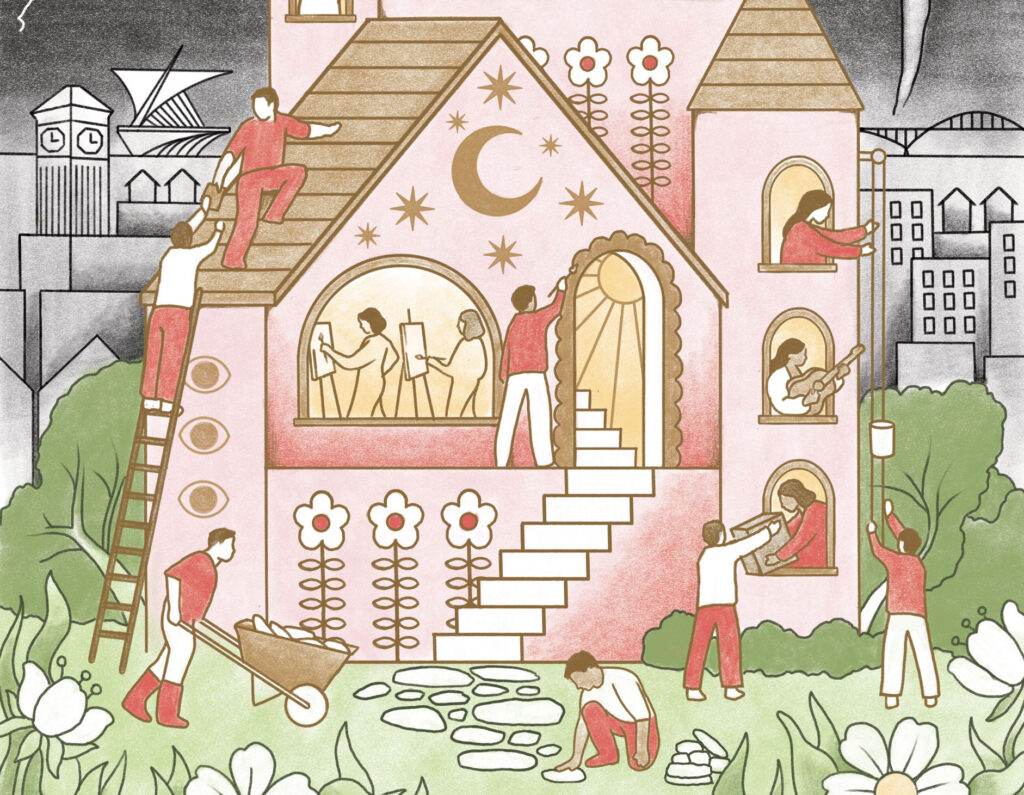
“But by banding together, we can apply for grants that none of us could apply for as individuals,” says Jill Anna Ponasik, artistic director of Milwaukee Opera Theatre. Over several years, a dozen of these groups – including MOT, Ko-Thi Dance Company and Ex Fabula – organically coalesced with that framework in mind. At the start of 2024, they launched the Small Arts & Culture Cohort (SMAC) – a three-year fundraising campaign where the work and the money raised are split equally between members.
The target was to raise $945,000. After battling skepticism and exhaustion in the first two years, members revised the goal to $500,000 in January. As of late March, SMAC has raised $285,000 in its total existence, much of which came from individual donors and just a few foundations. (To put it in perspective, Ponasik estimates the average SMAC member’s annual budget is $135,000.)
Perhaps the cohort’s biggest achievement has been its monthly meetings. Members answer one another’s administrative questions – which ticketing platform do you use? – and share theater and rehearsals spaces by subleasing off-days. They problem-solve together and collaborate on productions. They grow a deeper appreciation of different art forms. “Tiny things like that become so much more possible because you know what the other people are doing, and the only way to know is to talk with them regularly,” Ponasik says.
SMAC’s close communication has been a boon for its members, but the work hasn’t been painless. Meetings, paperwork and ever-present fundraising tasks are still a time commitment. Collaboration “can’t replace the need for funding,” Ponasik says. “Maintaining these groups takes a lot of energy and support, and what organizations need most is financial support.”
Ultimately, the ambitious project has been a qualified success. Despite falling short of the initial goal, the dollars raised have proved vital to covering funding losses elsewhere, Ponasik says. The first check SMAC cut in 2026 – the largest in the cohort’s history, she says – was about $7,000 for each member. That’s more operational support than what any member received in 2025 from the United Performing Arts Fund’s Affiliate program or the county’s fluctuating CAMPAC grants.
Influential donors and board members have called upon the sector to think creatively and boldly about solutions. So far, SMAC has managed to put to practice ideas that these leaders have suggested might alleviate woes: collaboration, resource sharing and broadening engagement.
In some ways, these practices have already been modus operandi for Milwaukee’s smaller arts groups. Next Act Theatre and Renaissance Theaterworks have shared a performance space since 2021. Skylight Music Theatre leases its black-box theater to Milwaukee Chamber Theatre and, as of recently, The Constructivists, a tiny theater group specializing in darker subject matter.
Susan Varela, executive director of Skylight Music Theatre, says Skylight found success last season partnering with Marquette University’s and UW-Milwaukee’s theater departments, whose students joined the cast and assisted with set-building for several shows. “[It] gave them real-world professional experience before they graduated, and it made it possible for us to do a huge show like Fiddler on the Roof with many age-appropriate actors.”
But collaborative efforts don’t erase the biggest variable: that it’s simply expensive to produce shows. Rent, performers, costuming, lighting, sound and even considerations like liability insurance need to be paid for. With bigger productions and sizable staffs, companies like the Rep and the MSO have much greater overhead costs, to the tune of millions. Smaller groups have lower costs partly due to smaller productions, but part of what keeps costs low is that much of the labor goes unpaid.
“I think there’s a general lack of understanding of how many hours we work for free,” says Constructivists founder Jaimelyn Gray. “How, essentially, our love for the art is the only reason why we continue.” When Gray recruits actors and crew, she makes clear the meager stipend she can offer. Gray doesn’t pay herself anything – not uncommon for the head of a small arts group.
One extreme solution that’s been floated is the consolidation or shuttering of smaller groups, to funnel more funding to the larger ones that are thought to have a wider reach. But financial struggles don’t necessarily reflect popularity. Ko-Thi, a 57-year-old African dance company that has received accolades locally and nationally, continuously receives bookings, according to founder Ferne Caulker. But still, that barely covers pay for its artists.
Small groups also argue that their position is vital in the arts ecosystem – that they cover interests that larger groups don’t offer or specialize in. “No one can be everything for everyone,” Ponasik says.
Many leaders spoken to for this story noted that more opportunities for grants on a three- or five-year basis would reduce uncertainty and cut down on administrative time. Present Music has been able to find more long-term support in part by leveraging its position as a leader in contemporary classical music, securing stable backing from national foundations like the Aaron Copland Fund for Music.
While not a sustainable solution, sweeping projects like Violins of Hope Wisconsin, which brought Holocaust-era instruments to performances and gallery spaces across the region, can invigorate the whole scene and boost awareness of all of its offerings. “Many people had never been to these groups before, but they came because of this story,” says Linda Edelstein of Milwaukee Youth Symphony Orchestra, which organized the program.
The solution with perhaps the most longevity – one that gets to the heart of the arts’ purpose – is building relationships with the community. Some groups achieve that with events for donors that grant insider access into how the work is done, such as Skylight’s Behind the Curtain series. Joel Cencius, executive director of Arts @ Large, says these peeks into the process can bring in new audiences. And maintaining existing relationships with donors has been a guiding light for Arts @ Large. “Relationships at their core is what’s most important always, and we have a responsibility to steward that.” They may not fix greater systemic issues, but they may provide security.
Financial challenges are nothing new to the arts world, and there is no ideal example to aspire to. Successful models like Cincinnati’s wider ArtsWave umbrella fund, which is similar to UPAF but includes visual arts and three-year grants, may offer insights but isn’t a one-size-fits-all solution. But it’s possible that a certain combination, or any combination, of these ideas might be enough to keep smaller groups going. “It’s never been perfect, and it probably never will be perfect,” Ponasik says. “You’re just working towards something better.”
How Can I Support the Arts?
The pressures facing Milwaukee’s art scene are manifold: tenuous ticket sales, scarce public funding and a climbing reliance on contributions from donors feeling strain. Underfunded endowments and reserves make the situation less stable; not to mention increased costs due to tariffs and inflation and the recent loss of NEA funding. Solutions are hard to come by, and however the picture develops may answer the question: “How important are the arts to us?” Arts leaders say if they matter to you, here’s how you can help.
→Buy tickets early. “We’re finding that people aren’t really buying tickets until the last week,” says Present Music’s Daniel Petry. Snagging stubs ahead of time, or subscribing to a season, helps groups better understand demand and avoid uncertainty.
→Tell your friends. If you enjoyed an exhibition or show, sharing that experience with others spreads the word and makes you a part of the cultural conversation.
→Buy local art. And you don’t necessarily need deep pockets. Art Bar, Scout Gallery, the Milwaukee Institute of Art & Design, and Var’s Small Works Gallery all sell works by local artists for less than $200.
→Donate. Contribute to a fund like UPAF for broad support, or directly to a group that you love. “Small gifts can go a long way,” says Petry, especially for small- and medium-sized groups.
→Volunteer. Many groups offer opportunities, whether that’s being an usher, helping with financial or administrative tasks, or acting as an assistant. “You kind of see how the sausage is made, then you have been transformed into an advocate,” Skylight’s Susan Varela says.
→Call your state rep. Jaimelyn Gray of The Constructivists says vocal support for the arts tells lawmakers that they hold importance for local communities.
ARTS FUNDING: In the past year, MilMag has reported on the funding challenges facing arts groups in Milwaukee. This is its fourth installment.