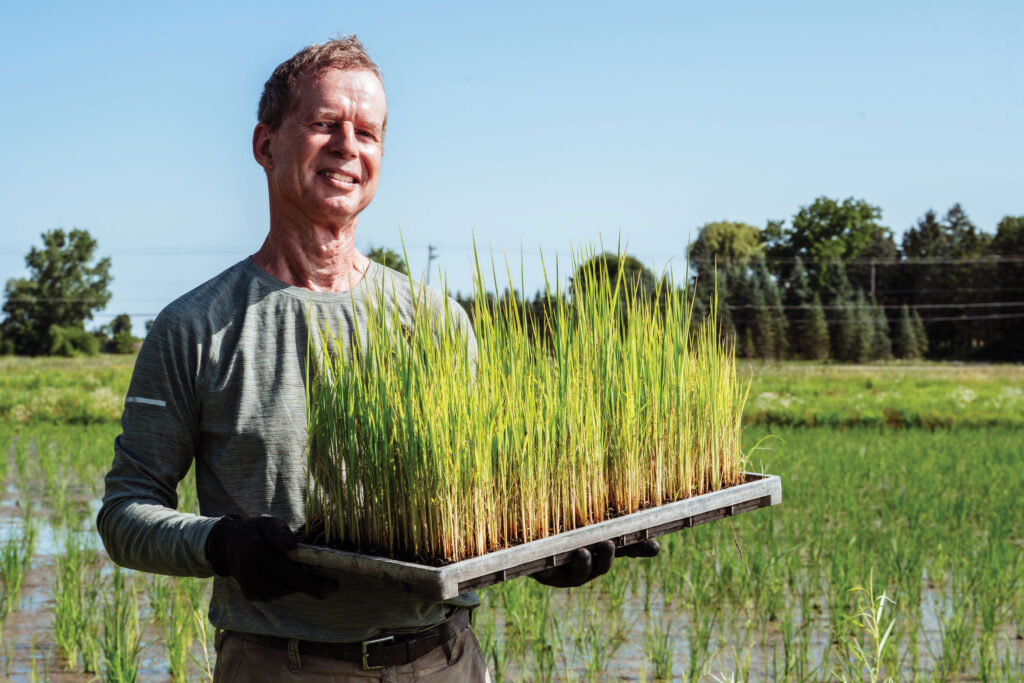
Few things expose the vulnerability of farming like weather. It’s an axiom Michael Schläppi learned early in his nearly 10 years of blazing the trail of growing rice in Wisconsin. It reared its head again this year, with an unusually cold May setting back the growing season by weeks. But it’s why the Marquette University biology professor-cum-farmer so carefully chose his crop, a short-grain varietal native to southern Russia and resilient to our unpredictable temperature shifts.
The project he runs, Red Stone Rice, is weathering the seasonal ups and downs on a small parcel of wetland inside the Mequon Nature Preserve. And while it’s far from a profitable endeavor, Schläppi now believes that Wisconsin rice is no pipe dream. Rice is grown year-round in hot, humid climates, but specialized cold-tolerant varietals are thriving in northern China, North Korea and northern Japan. “Why not try this here?” Schläppi wondered.

If someone has inspired you through their service, leadership or dedication, the Unity Awards are your opportunity to recognize them!
He took on the crop as a research project in 2010, studying its cold tolerance traits in hopes of ascertaining whether rice growing is commercially viable in Wisconsin. Sifting through more than 200 varieties, he eventually landed on Krasnodarskij 3352 and made an attempt to grow it on the rooftop outside his lab at Marquette.
For the next phase, Schläppi forged an alliance with Fondy Food Center and its farm, which occupies 25 acres of the preserve. Fondy supports producers that have historically been disadvantaged such as the Hmong people, for whom rice-growing is a symbol of their heritage. Many were excited and eager to help, Schläppi says. He got a startup grant from Marquette but relies on borrowed farm equipment and volunteers, though he still does most of the work himself.
In their first season, Red Stone’s paddies produced enough rice to sell at the Fondy Farmers Market. But after 2018, invasive weeds emerged and the “honeymoon was over,” Schläppi says. Red Stone’s growing methods are completely organic, and that doesn’t put up much of a fight against noxious plants and hungry wildlife. And yet, every year he’s producing hundreds of pounds of rice, enough to sell in Outpost Natural Foods stores.
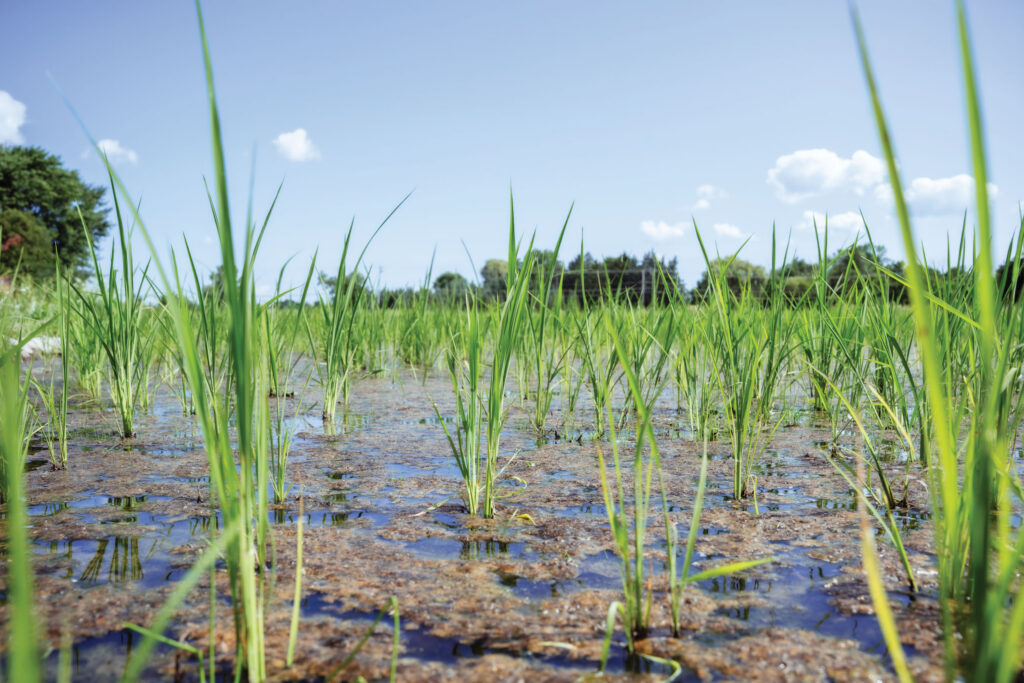
Schläppi’s rice begins indoors, the seeds being heated before they’re moved outdoors to nursery beds, then transplanted to the paddies, which are then flooded. Harvest usually comes in late October, when the rice is then dried and hulled. He compares the flavor of the cooked brown grains to walnuts – “really distinct and different from [other] brown rice.”
The project “has proven yes, this is agronomically possible,” says Stephen Petro, Fondy’s farm director. “Now the question is, how do we get rice into the hands of more growers?”
Red Stone Rice’s lease at Mequon Nature Preserve will be up next year, and Schläppi’s unsure what will happen next. He’s considering whether he could transplant the paddies. “There’s times when I’ve said, why do I do this? I’m a professor, I have a lab to run,” Schläppi says. “But it’s also, for me, a fascinating project. The fact that it actually works – I’m hoping this will catch on. That’s the ultimate hope.”