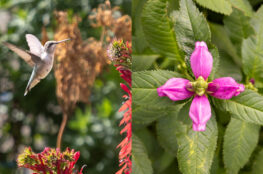
You might think gardening is all fun and games, but it’s also list-keeping. I started a bloom schedule spreadsheet last year to help me expand my cut flower addiction, but also to provide food for other creatures during the shoulder months (spring and fall). I have a list for the new native plants I bought, outlining their preferred light conditions, water needs and dates planted. The map of my four perennial beds is a work-in-progress, I’ll flesh that out as soon as everything comes up. I have a spring to-do list, a fall to-buy list, and a list of what to put into my pots.

Consider making your own vegetable bed grid list that notes what was planted in each bed the previous two years because you need to rotate your crops every three years. Look at UW-Madison’s Extension list, showing vegetable “families” for rotation. Rotation is an easy way to allow your soil to recover from anything the plants leave behind.

If someone has inspired you through their service, leadership or dedication, the Unity Awards are your opportunity to recognize them!
Lists seem antithetical to the groove of smudgy hands, but they capture best practices for more food and flowers. Gardening isn’t just about dirt under your nails, it’s also about managing your inputs for maximum fun outputs.
Early May is the time to throw the dice on the last-frost-date craps table. According to the Farmer’s Almanac, Milwaukee’s last frost date is May 2ndish, with a 30% probability that we’ll have a frost after that. (Great.) Plug in your zip code to see what your last frost date might be: www.almanac.com. If, like me, you have already started planting, just be prepared to cover your tender wards at the drop of the temperature.
I love all the data that scientists produce to help me steward my yard, but sometimes the information can be overwhelming. In 2023, the U.S. Department of Agricultural Service downgraded (or upgraded?) the Milwaukee area from zone 5b to zone 6a. The zone maps are based on temperature averages over a 30-year period, among other calculations—check out a more complete and technical explanation of 6a here to help guide your plant purchases. This speaks volumes about how our earth’s conditions are changing. This might be the year to adapt to this new reality by modifying the dates you plant and introducing new green natives into your world.
And to make matters more complicated, in my winter class with the New Directions in the American Landscape group, I learned these USDA zones are a guide, but perhaps not the most accurate way to understand our environmental conditions. (Yikes!) The Environmental Protection Agency has created maps for each of the country’s Ecoregions.
We in Milwaukee are 53b, the Kettle Moraine Ecoregion area, with a soupçon of 53d, Lake Michigan Lacustrine Clay. Most of my planting soil comes from area garden stores, including four yards delivered via dump truck, or my compost piles, so I mostly understand what is in my beds. If you have a big property, or are wanting to take out compacted sod for a more aesthetic and tastier (vegetables) yard, check out the EPA’s site for granular (too much?) information on your area.
I love learning all these things—but really, I just want to get my hands in the dirt, so let’s go!

In my raised beds, I have seeded two full squares of kale, green beans saved from last year’s batch gifted by a neighbor, chard, dill, fennel, lettuces, basil, spinach and arugula, with some tomatoes started indoors—in other words, plants that provide food consistently and in bulk. I learned last year I can get a jump on my garden eating by adding a few store-bought plants like kale, tomatoes and eggplant. A way to protect your seeds from birds and tender shoots from squirrels is to use fabric row covers or wire mesh as you can see in my garden pic from last year. My garlic is still growing, at least there is one thing up and out of the ground to cheer on the rest!
There will be bugs.
My more sensitive greens, like chard and lettuce, are particularly susceptible to chewing insects, so covering them has allowed me to keep them for our dinners, not just theirs. You can also try companion planting as a natural pest repellent—certain plants to attract or repel bugs away from your food plants. This densifies your garden space while providing shade for roots, and with the right plant combination, you can protect your vegetables from unwanted bugs. Check out the Farmer’s Almanac guide to companion planting for natural pest control. I planted nasturtiums one year but they bloomed in the fall just as my vegetables hung it up for the season. I’m skeptical but will try companion nasturtiums again this year.
Every year I sow a few raised beds with flowers (sorry peppers, you got bumped!). My favorites are Mexican Sunflowers, with a sprinkling of zinnias, cosmos and short sunflowers. I will direct sow one bed of native perennial seeds like Anise Hyssop, which is a cheaper way to grow plants with microscopically small seeds, and some dahlias, a gift from farmer friend Cindy Johnson at Blue Haus Blooms.
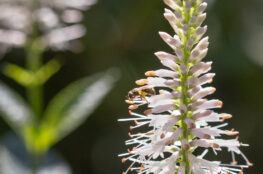
The new native perennials I am putting in this year include Culver’s Root, Little Bluestem, Smooth Yellow Violet, Golden Alexanders, Orange Coneflower, Forked Asters, Blue-stemmed Goldenrod, Tall Sunflowers, Tall Green Milkweed, and Sneezeweed. Will these attract too many bees to be safe for humans, you ask? In his 2019 book Nature’s Best Hope: A New Approach to Conservation That Starts in Your Yard, Douglas Tallamy writes that of the 4,000 species of American bees, only females sting, and only when protecting their hives. Since only 46 bees have hives, I feel safe in my yard—it’s probably the wasps you want to watch out for. I’ll put wire cages around my new plants—the bunnies are gourmands and prefer this type of tender shoots.
May is when I really roll up my sleeves and do the biggest round of heavy lifting—heavy lifting of mulch to prevent evaporation around my flowers, heavy lifting by planting all the raised beds over one weekend, heavy lifting by turning over compost soggy with rain. When I tried to roll out my wheelbarrow I found the tire split from all those years living outside. I’ll add to my general “to do” list the task of buying a new wheelbarrow, maybe one that folds up and into the shed for the winter.
My inspiration for this column title is the first garden-forward stanza of Beer Barrel Polka, originally by Czech musician Jaromir Vejvoda, 1927, and jazzed up in 1934 by Tin Pan Alley publisher Shapiro Bernstein and Lew Brown, after the repeal of Prohibition:
There’s a garden, what a garden
Only happy faces bloom there
And there’s never any room there
For a worry or a gloom there
That’s right—beer and gardening are a true Milwaukee tradition! Check out the full lyrics of Beer Barrel Polka here or attend a Brewer’s game to get your (wheel)barrel polka on!
Upcoming Local Plant Events
Milwaukee Public Market Festival of Flowers
MAY 3, 11 A.M. TO 3 P.M. | 400 N WATER ST, MILWAUKEE ON THE RIVERWALK COMMONS.
The inaugural Festival of Flowers is happening this weekend at the Milwaukee Public Market. There will be live music, a flower market, seasonal beverages and fun for all. The event is free and open to the public.
World Migratory Bird Celebration
MAY 17, 7:30-9 A.M. | FOREST EXPLORATION CENTER, 1800 FOREST EXPLORATION DR, WAUWATOSA, WI.
Wauwatosa has achieved “High Flyer” Bird City status due to its importance along the Mississippi Flyway, a migratory route that billions of birds travel each spring to their breeding grounds. The FEC provides critical habitat to over 158 observed bird species throughout the year. Come stroll along the one-mile accessible nature trail to discover spring migrants and a few of our favorite year-round residents who depend on this urban woodland to feed, rest, and nest. Some migrants we hope to see or hear include Black and White Warblers, Yellow Rumped Warblers, Brown Creepers, and more. Event is free but registration is required.
A Few Gardening Resources
BUYING PLANTS
- Prairie Moon Nursery: Native plants and seeds
- National Wildlife Federation’s Plant Finder/Butterfly host plants
- Schlitz Audubon Native Plant Sale: Plants are from Prairie Future Seed Company. Order due by June 5, noon, for pick-up Sunday, June 9, 9 a.m.-1 p.m.
- Lady Bird Johnson Wildflower center, native plants of North America
MORE INFORMATION ON THE OTHER SPECIES IN YOUR YARD
- Pollinator Partnerships
- American Bird Conservancy Strategies to Prevent Bird Strikes on Buildings
- Wisconsin Wildlife action plan, for information on our changing landscapes
EDUCATION
I can’t give up virtual learning experiences since it broadens our horizons:
- UW-Madison Extension Ask Your Gardening Questions Live monthly program
- Larry Meiller is a Wisconsin gardening treasure, check out his show on Wisconsin Public Radio, Weekdays, 11 a.m.-1 p.m.
- New Directions in the American Landscape
- Lawn to Meadow: Transition with a “Light Touch,” Friday May 9, 6-7:15 p.m., fee $28. Register here.
More resources:
- National Wildlife Federation: How to create and certify gardens for wildlife
- Wild Ones Milwaukee: Specific plans for climate resilient, native gardening by Danielle Bell, Native Roots
JUST GET OUTSIDE!
No matter your gardening interest, just get outside (thank to gardening friend Frankie for letting me use her catch phrase!)