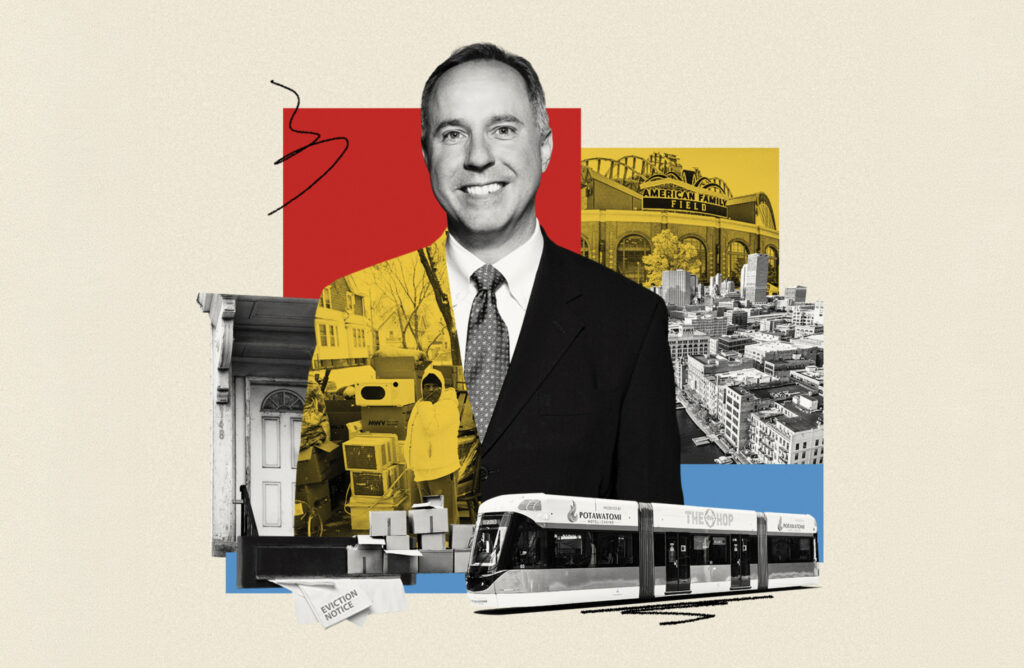
When this speaker spoke, his words were heard across Wisconsin – even if many in Milwaukee didn’t like what he had to say.
Reactions were mixed when Robin Vos announced in February that he would retire from the Assembly after 22 years, with a record 14 as its powerful leader. Friends and foes agree the Republican from Rochester, in western Racine County, has been extraordinarily effective in achieving his goals under both GOP and Democratic governors.
RELATED READS: ROBIN VOS’ GOAT PANEL CHANNELS TRUMP’S DOGE BUT PLAYS BY WISCONSIN RULES

If someone has inspired you through their service, leadership or dedication, the Unity Awards are your opportunity to recognize them!
But Vos has had a complex and frequently contentious relationship with Wisconsin’s largest city. He was often at odds with local leaders as he thwarted transit plans, preempted home rule and catered to conservative public safety unions. Yet Mayor Cavalier Johnson and County Executive David Crowley hailed his role in overhauling local government finances and in a separate deal to renovate American Family Field, ensuring the Brewers would stay.
Vos sees himself as Milwaukee’s benefactor. “We saved them from bankruptcy,” Vos says. “We made sure they had a strong police force” and improved education through vouchers for private schools.
RELATED READS: ROBIN VOS’ GOAT PANEL CHANNELS TRUMP’S DOGE BUT PLAYS BY WISCONSIN RULES
The 2023 legislation known as Act 12 epitomized how Vos dealt with the city, says UW-Milwaukee professor emeritus and longtime Wisconsin political observer Mordecai Lee. Faced with rising costs and limited revenue options, city and county officials had long pleaded for financial help, but those calls went unheeded while Tom Barrett was mayor, says Marquette University political science professor Phil Rocco. Vos didn’t act until Johnson replaced Barrett, as the city and county teetered on the edge of a disastrous fiscal cliff and Milwaukee prepared to host the 2024 Republican National Convention, Lee and Rocco say.
Then Vos negotiated to expand city and county sales tax authority, phase out their costly pension systems and boost shared revenue to local governments statewide – but proportionately far more to Republican-leaning small towns than big blue cities. That same deal imposed staffing minimums for police and firefighters, ordered officers back into Milwaukee Public Schools over School Board objections, disempowered the Fire and Police Commission, and curtailed spending on diversity, culture and streetcars. The Common Council, County Board and Democratic lawmakers hope eventually to undo those restrictions.
Vos says he generally supports local control but believes the state should have a say when state money is involved. He argues the “fairly minor” trade-offs improved “the overall health of the city,” reversing what he considers poor decisions that advanced liberal priorities such as the streetcar and diversity initiatives over public safety. He praised Johnson and Crowley for their willingness to negotiate.
State Rep. Bob Donovan (R-Greenfield) and Milwaukee County Supervisor Steve Taylor agree the deal was beneficial, while Rep. Ryan Clancy (D-Milwaukee) attacks what he calls “frankly racist, horrific policy cuts.” Clancy, Taylor and Supervisor Justin Bielinski say the city and county should have received more shared revenue, not higher sales taxes.
In a post-Vos Capitol, the outgoing speaker expects Republicans to remain “pro-business and anti-tax” and opposed to rail transit. He says “time will tell” on other issues.
Donovan sees little chance his Assembly GOP colleagues will change course in any way after Vos leaves. Most others interviewed agreed Democrats would have to capture both houses of the Legislature and retain the governorship this fall to force major changes. However, Rocco says a new Republican speaker might be open to a different relationship with Milwaukee.
“Any time you have new leadership, it creates the possibility for a new conversation,” Rocco says.
The Vos Shadow
Transit
Vos led efforts to abolish regional transit authorities, killing the one planning Kenosha-Racine-Milwaukee commuter rail. He moved to constrain The Hop and discouraged plans for passenger trains to Madison. He says rail requires too much public subsidy compared with buses. Vos points to modest increases in state aid to the Milwaukee County Transit System, which still faces a fiscal cliff. He blames the system for letting passengers evade fares, although officials say that’s a minor factor in budget woes.
Sports Venues
Vos rejected GOP Gov. Scott Walker’s plan for the state to pay half the cost of Fiserv Forum, calling it too expensive, leading to a deal that sliced county shared revenue for 20 years. He also demanded the city and county share baseball stadium upgrade costs, but their contributions were offset by cutting sales tax administrative fees – a windfall to every other county with a sales tax. He says it was appropriate for local taxpayers to help keep the Bucks and Brewers contributing to the regional economy.
Landlords
Along with other landlords in the Legislature, Vos – whose properties are mostly in Whitewater – helped weaken tenant rights, ease evictions and limit building code enforcement, which a Journal Sentinel investigation linked to electrical fires in Milwaukee apartments. He says inspectors can still respond to tenant complaints. He contends that sprinkler systems would push up housing costs at a time when many are struggling to afford rent.