
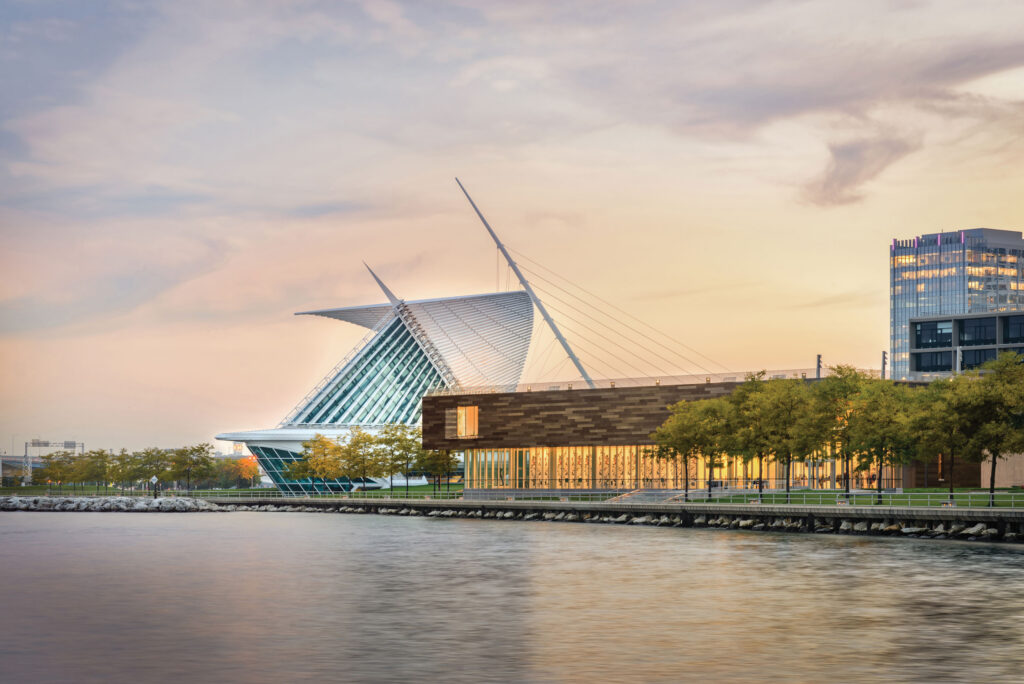
Today, it’s difficult to imagine Milwaukee without Santiago Calatrava’s Quadracci Pavilion. In the 25 years since it was built, the soaring Burke Brise Soleil has become a visual shorthand for the city itself. But its creation was hardly a foregone conclusion.
The idea first took shape in the early 1990s, when museum trustees began discussing an expansion that would better connect the museum to Milwaukee’s lakefront while creating much-needed gallery and public space. At the time, they had no way of knowing whether they’d be able to raise enough money to cover its cost – initially estimated to be $20 million – or how the general public would react to a major change to the city’s skyline.
“It took real chutzpah,” says current Milwaukee Art Museum director Kim Sajet. “Not just to have the idea, but then to get it built.”

Celebrate this year’s winners of the Betty Awards!
By 1993, the museum had already established itself as one of the country’s leading regional art institutions, anchored by the Eero Saarinen-designed War Memorial Center. But museum leaders wanted something more than additional gallery space. They envisioned a civic landmark that would reconnect Milwaukee with its lakefront while elevating the museum’s national profile. As the museum’s then-director Russell Bowman wrote, the goal was to create a “gathering place” that would literally and symbolically bridge the city and Lake Michigan.
Finding the right architect became one of the museum’s most consequential decisions. A search committee led by Bowman reviewed the work of 70 architects from around the world. Santiago Calatrava wasn’t initially on the list, but Bowman had him added after he saw his work displayed in the library of architect David Kahler.

In some ways, Calatrava was a risky choice. He had not yet completed a project in the United States, but Bowman and the other board members – including the late philanthropist Donald Baumgartner, who became one of Calatrava’s staunchest advocates – believed his ability to seamlessly blend architecture, engineering and sculpture made him uniquely suited to create the civic landmark they envisioned. They appreciated that he cited Saarinen as a major source of inspiration and planned to expand the museum’s existing footprint in a way that enhanced, rather than competed with, the design of the original structure. For those reasons, they offered him the job in late 1994.
“It was a great experience for him,” says Robertina Calatrava, speaking on behalf of her husband. He began to travel to Milwaukee almost monthly to meet with museum leaders, trustees and donors – including Donald and Donna Baumgartner, Sheldon Lubar, the former Christopher Goldsmith, who now goes by Muhammad Isa Sadlon, and Harry and Betty Quadracci (the late founders of Quad Graphics, which owns Milwaukee Magazine) – hoping to recruit support for an increasingly ambitious vision.
Those fundraising efforts helped fuel what many came to call “Calatrava fever.” By the late 1990s, the architect became something of a local celebrity, receiving an honorary doctorate from MSOE and inspiring proposals for four additional projects, from bridges to university expansions. None was ultimately built; Calatrava eventually went on to build the Oculus World Trade Center, which resembles his Milwaukee project. But the enthusiasm reflected how thoroughly the city embraced its adopted architect before the Quadracci Pavilion even opened. That growing support proved essential as the project’s scope expanded.

By the time the Quadracci Pavilion opened in 2001, its cost had grown from an initial estimate of about $20 million to roughly $130 million. Along the way, engineers overcame several unprecedented construction challenges. Preparing the site, for example – which sat on reclaimed lakefront – required a continuous concrete pour for more than 13 hours, something local engineers had never attempted at that scale.
“Probably Milwaukee was one of the few museum communities that could actually do it because we have such a strong manufacturing and engineering history,” says Sajet, explaining that the expansion team had no trouble finding engineers and construction professionals capable of completing the project to Calatrava’s specifications.
The work didn’t end after construction, either. An engineering team still conducts regular maintenance checks on the moveable wings, and a board committee is tasked with overseeing the long-term preservation of the structure.
Today, museum employees think of the pavilion as “our largest work of art,” says MAM curator Shoshana Resnikoff – a sculpture that, like the collection it houses, requires continual care and invites visitors to experience Milwaukee in a new way.
“It’s become part of who Milwaukee is,” Sajet adds. “People see it, and they immediately know where they are.”
Honoring 25 Years
A Celebration of life
Sept. 8
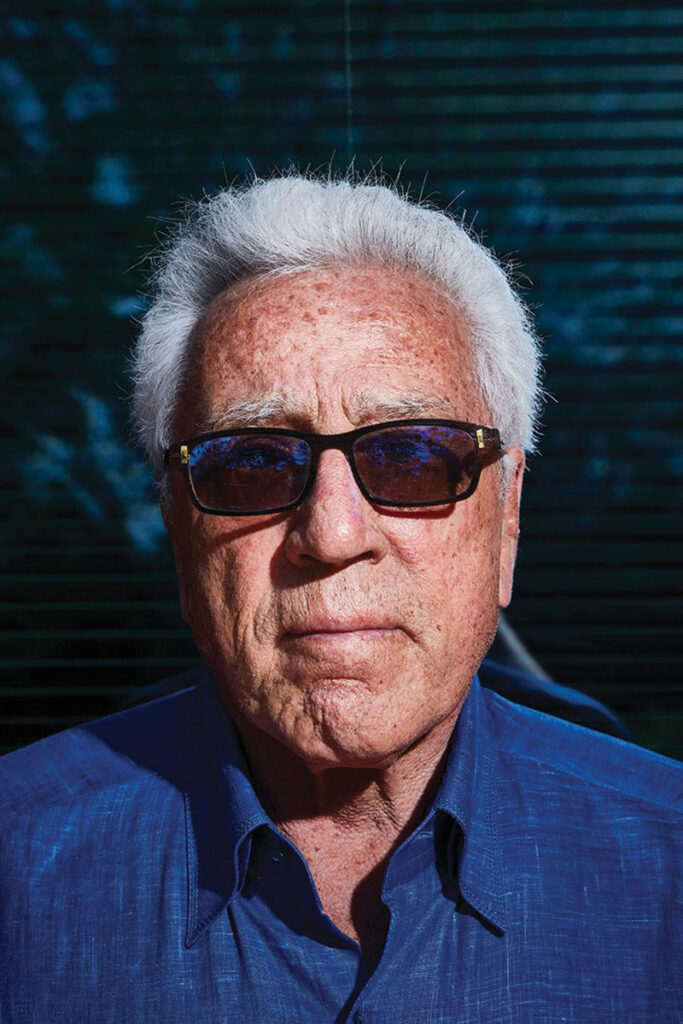
Donald Baumgartner, a major driving force behind the Quadracci Pavilion, died in July, and in honor of his dedication to the arts, the museum is hosting a celebration of life for the beloved businessman and philanthropist.
Art: Forward Gala
Sept. 19

This year, MAM’s signature fundraising event marks 25 years of the pavilion – and helps support the art, education and community programs at the museum.
Winter Break Fun: Built to Inspire!
Dec. 19-Jan. 3

Visitors of all ages can celebrate the anniversary through family-friendly programs and activities.