

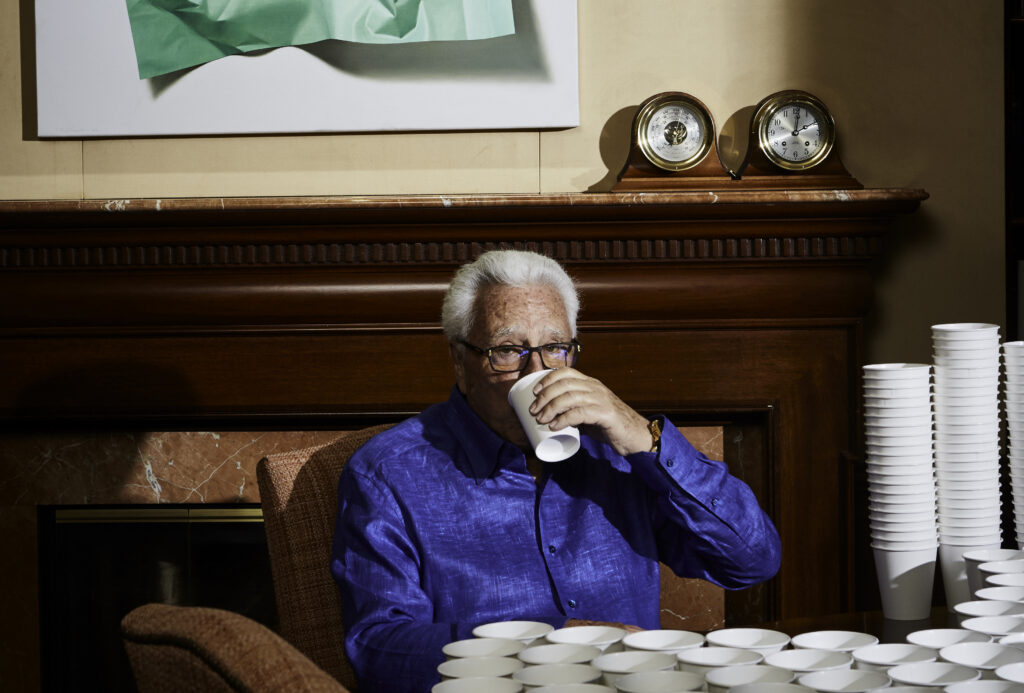
Donald Baumgartner – the globetrotting Milwaukee businessman who built the world’s leading manufacturer of machines to make paper cups, used its success to fund widely impactful civic and cultural philanthropic efforts and then gave the company to its employees – died July 11 at his River Hills home. He was 95.
A decade ago, the aging Baumgartner and his son, John, turned control of their Paper Machinery Corp. over to its employees through an employee stock ownership plan. It was an act of generosity that would be the headline of an obituary but for so many others throughout his life.
In the monumental pinnacle of his philanthropy, Baumgartner was a major driving force behind the 2001 addition to the Milwaukee Art Museum that redefined the city’s skyline. As a member of the architectural selection committee, he pushed for the hiring of Santiago Calatrava to design what would become the famed Spanish architect’s first project in the United States: MAM’s Quadracci Pavilion.

Experience an unforgettable evening celebrating great design!
Baumgartner spoke of developing a true friendship with the architect during his 40 or so visits to Milwaukee. “I became very close with Calatrava,” Baumgartner says in his 2018 biography With the Wind at His Back, written by former Milwaukee Magazine editor Kurt Chandler. “I was goddamned determined to build it the way he wanted it built to fulfill what he saw as a vision for this museum. I wanted every part of it to be there.”
Baumgartner and his wife, Donna, donated $4 million to the museum project, and Betty and Harry Quadracci, founders of Quad, the printing and marketing company that also owns Milwaukee Magazine, put up a $10 million matching donation that gave the project its name.
“The bond between Donald and Santiago was automatic, with Donald’s background as a CEO and manufacturer meshing perfectly with his eventual role as president of the MAM’s board of trustees,” Chandler tells MilMag. The Baumgartners also gifted the museum $8 million in 2016 to support a new director position.
The Baumgartners’ ties to the local arts and civic community extended well beyond MAM, though. They were also longtime supporters of the Milwaukee Ballet and Milwaukee Film, and Donald Baumgartner was a life director of Florentine Opera and a member of the Greater Milwaukee Committee. They also supported Next Door’s early childhood efforts.

A Life Lived Fully
When he wasn’t in a business office, art gallery or auditorium, Baumgartner was on the move, Chandler says. He visited all seven continents, trying out things he had never tried before – sailing the Atlantic through a gale-force storm, riding in a hot-air balloon above the Namibian desert, handing out Green Bay Packers jerseys to children in an Amazon village – and, Chandler says, “appreciating the world around him and the people he met along the way.
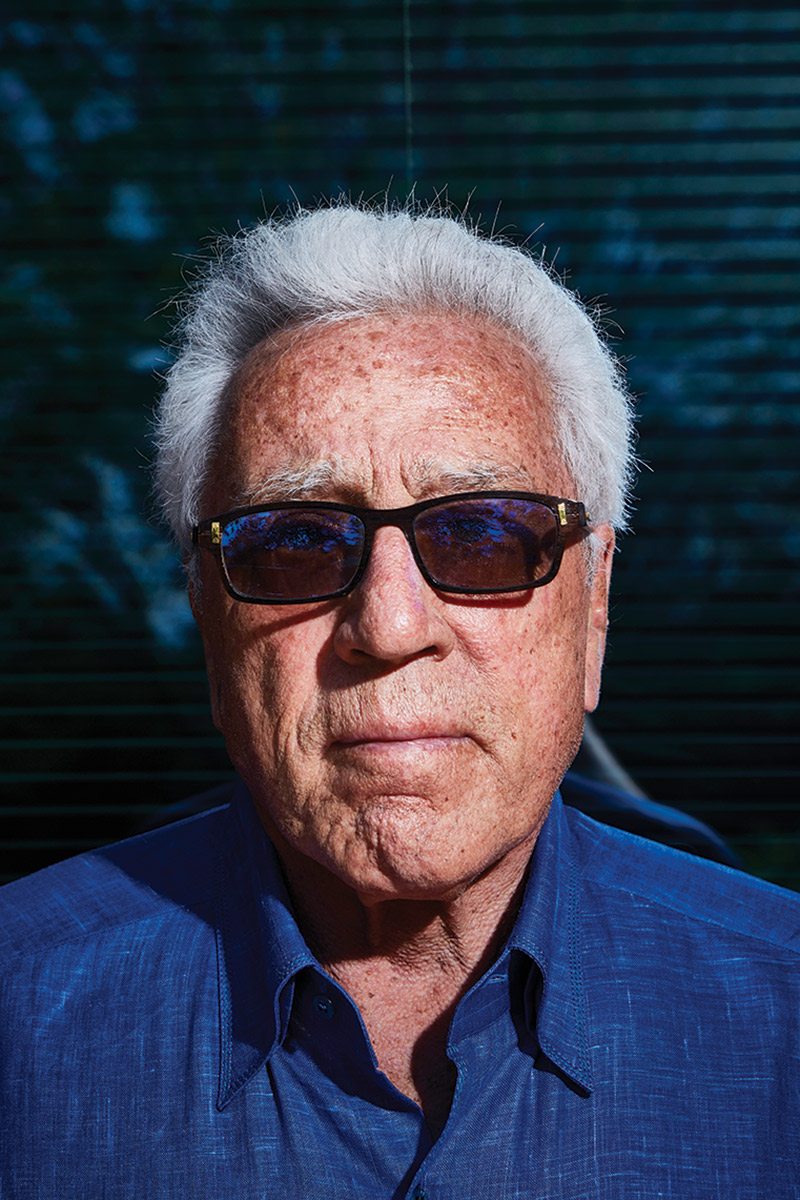
“Listening to him talk about his life was an exercise in living vicariously,” he says. “He would spin tales with panache and loads of detail that would make me and many others wish we had been with him on his lifetime of worldwide adventures. He told with bemusement of living at age 3 in a tent with his parents along the beach of Lake Michigan, of hopping a freight train from Montana home to Milwaukee when he was a teenager, of accepting a business award from President Ronald Reagan in the White House Rose Garden, of driving a McLaren race car on the mountain switchbacks of British Columbia at 130 mph, of tracking with a long-lens camera a family of lowland gorillas in the rainforest of central Africa, of being moved to tears while watching an opera at Italy’s majestic Arena di Verona.”
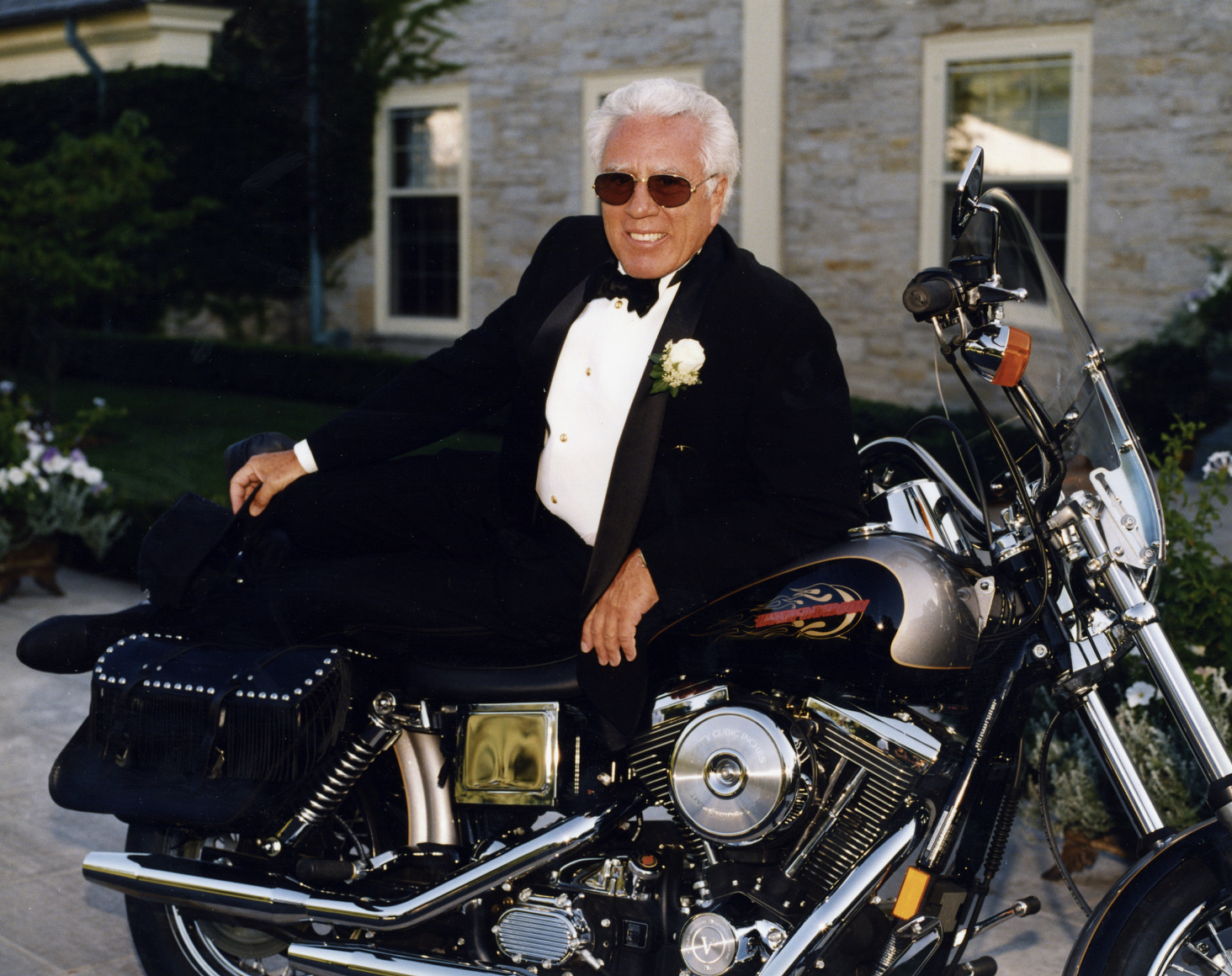
Despite rubbing elbows with the city’s elite, Baumgartner insisted he wasn’t a social climber, which made him effective in shaking out contributions from all levels, Chandler says. “The goal, he said, was to inspire generosity by raising the bar of giving, which lifted Donald and Donna into the upper tier of philanthropy in Milwaukee.”
Baumgartner’s death leaves “a giant hole in Milwaukee,” Milwaukee Film Executive Director Susan Kerns wrote in a message to supporters.
“To know Donald was to be enveloped by his tremendous joie de vivre,” Kerns wrote. “People are often described as brightening a room, but Donald took this to the next level. It’s like the sun traveled with him, offering everyone around him an energy glow-up. We, not just Milwaukee Film but truly the whole of Milwaukee, are so lucky to have experienced that warmth throughout his life.”
Everyone who has attended a Milwaukee Film event has benefitted from the Baumgartners’ generosity, she said. During renovations to the Oriental Theatre, they became major supporters with name recognition in the lobby and on a donor movie poster with a James Bond theme. “If anyone could match James Bond’s style and suaveness, it was Donald,” Kerns wrote.
She noted that the Baumgartners attended the opening night of the Milwaukee Film Festival in April for the world premiere of Ueck, a documentary about beloved Milwaukee Brewers broadcaster Bob Uecker. “We are so touched that he shared his final film festival experience with us,” Kerns added.
First, a Business Magnate
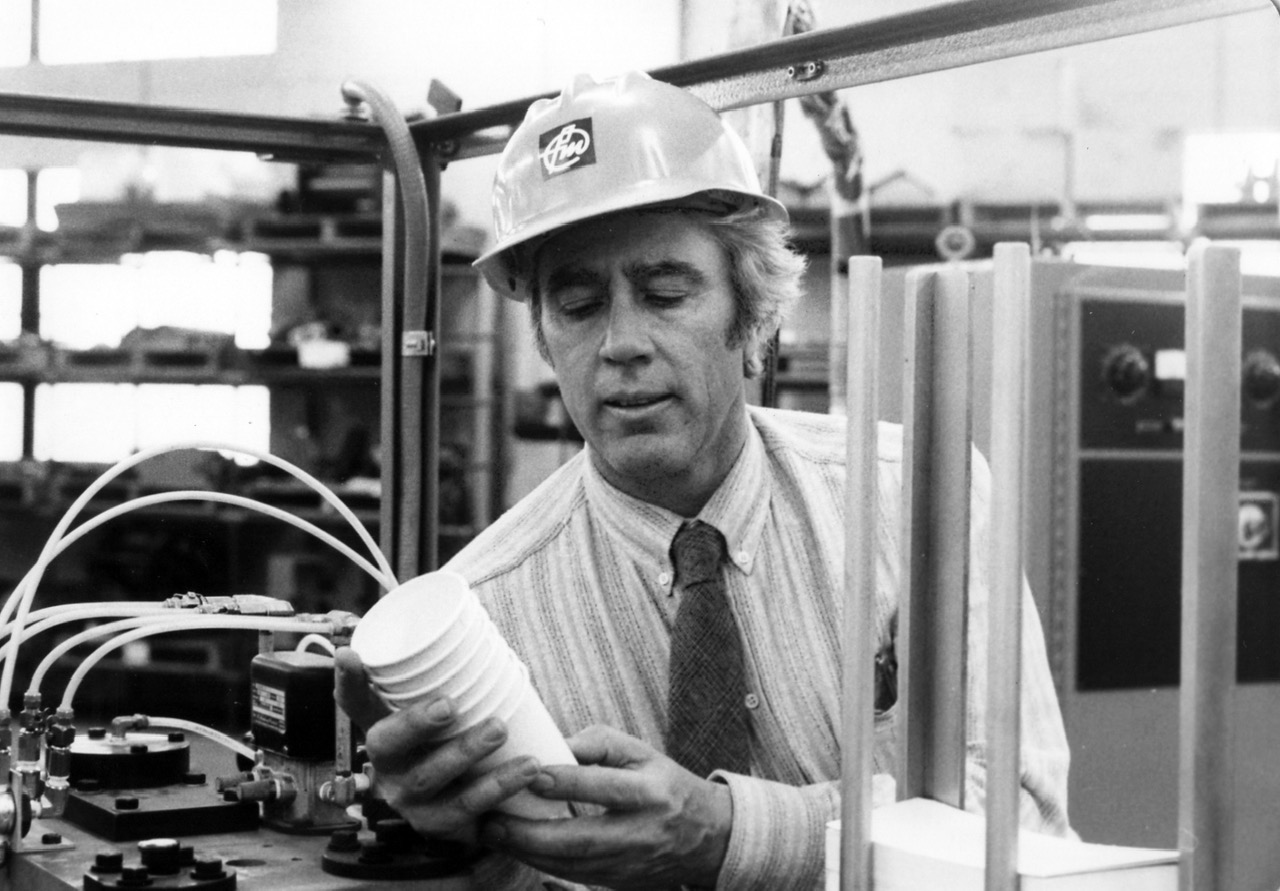
Baumgartner’s family founded Milwaukee Shipbuilding Corp. in 1951, which performed defense work during the Korean War. Donald Baumgartner took over leadership in 1956, renaming the business Paper Machinery Corp. and growing it into the world’s leading manufacturer of converting machinery for paper cups, paperboard containers and custom packages.
He personally held patents on machines for manufacturing cups, and President Ronald Reagan personally presented Baumgartner with an “E” Award from the U.S. Department of Commerce for his contribution to the U.S. export expansion.
As Baumgartner and his son, John, a co-owner of Paper Machinery Corp., neared retirement, some feared that a new owner would move or shutter the facility. Instead, in 2016, through an employee stock ownership plan, they handed control of the company over to its 250-some employees through. The move left as much as $100 million on the table vs. if they’d sold the company at market value. Donald Baumgartner served as chairman of the board following the transition, a role he held until his death.
“Donald was a visionary leader who led Paper Machinery Corp., first as president and chief executive officer and later as chairman of the board, for 75 years,” company CEO Scott Koehler said in a statement to Milwaukee Magazine. “He had a tremendous impact on the entire Milwaukee area through the support he and his wife Donna provided to a variety of fine arts organizations, especially the Milwaukee Art Museum. Donald’s warmth and generosity to all with whom he came in contact will be deeply missed.”
Funeral arrangements are pending.