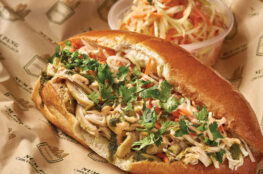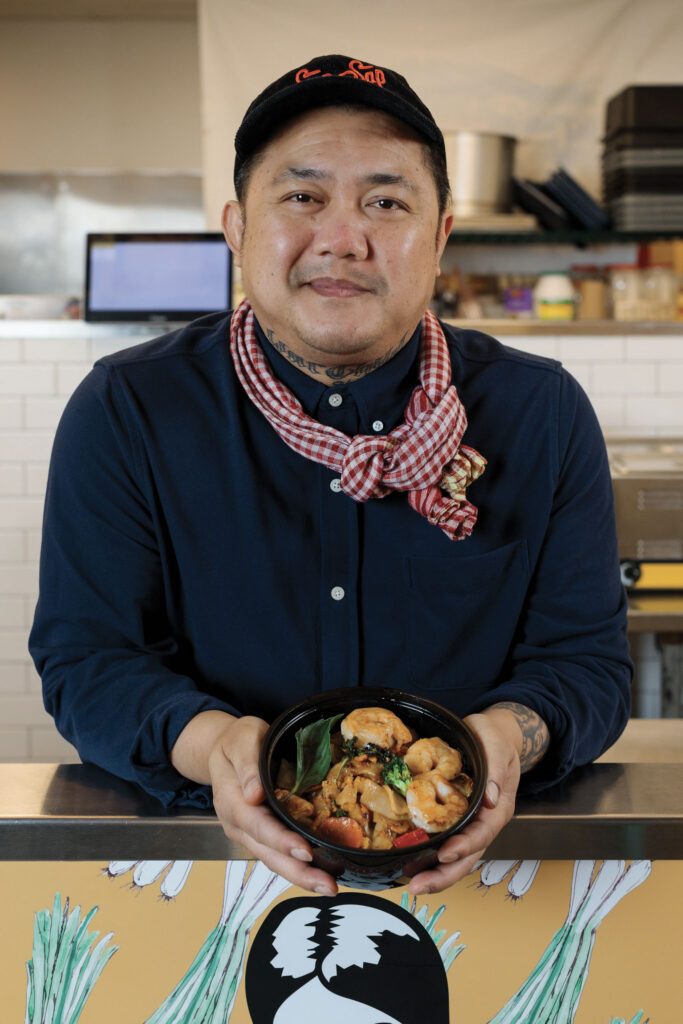
Alex Hanesakda doesn’t see himself as an activist, per se. After winning a contest at Milwaukee Asian Fest in 2010 for his Lao-style egg rolls, Hanesakda started catering, later launching a retail food line and doing pop-ups to showcase the bold flavors that define his family’s native Laos – flavors overshadowed, historically, by the cuisine of neighboring Thailand.
Hanesakda, who now operates his SapSap Lao American concept at Zócalo Food Park and 3rd St. Market Hall (and has a cocktail/noodle bar in the works), was born in a Thai refugee camp to parents who fled Laos during the Secret/Vietnam War. That heritage is fundamental to his cooking and the stories his dishes tell. He talks about the cultural culinary lens, his influences and Rivers Run Deep, a Lao American food-culture event he hosted last year, with a second installment in the works.

If someone has inspired you through their service, leadership or dedication, the Unity Awards are your opportunity to recognize them!
With many Asian cuisines becoming mainstream, do you think that has helped spread Lao food traditions to a wider audience?
It might have gotten a little better now, [but] people still think we’re a Chinese restaurant and that we serve orange chicken. We get that every day. I think orange chicken’s delicious, but it just shows, once you lump all Asians under the umbrella of [Asian cuisine], everyone eats and makes orange chicken at that point. So if I have the power to speak out on that, I do it.
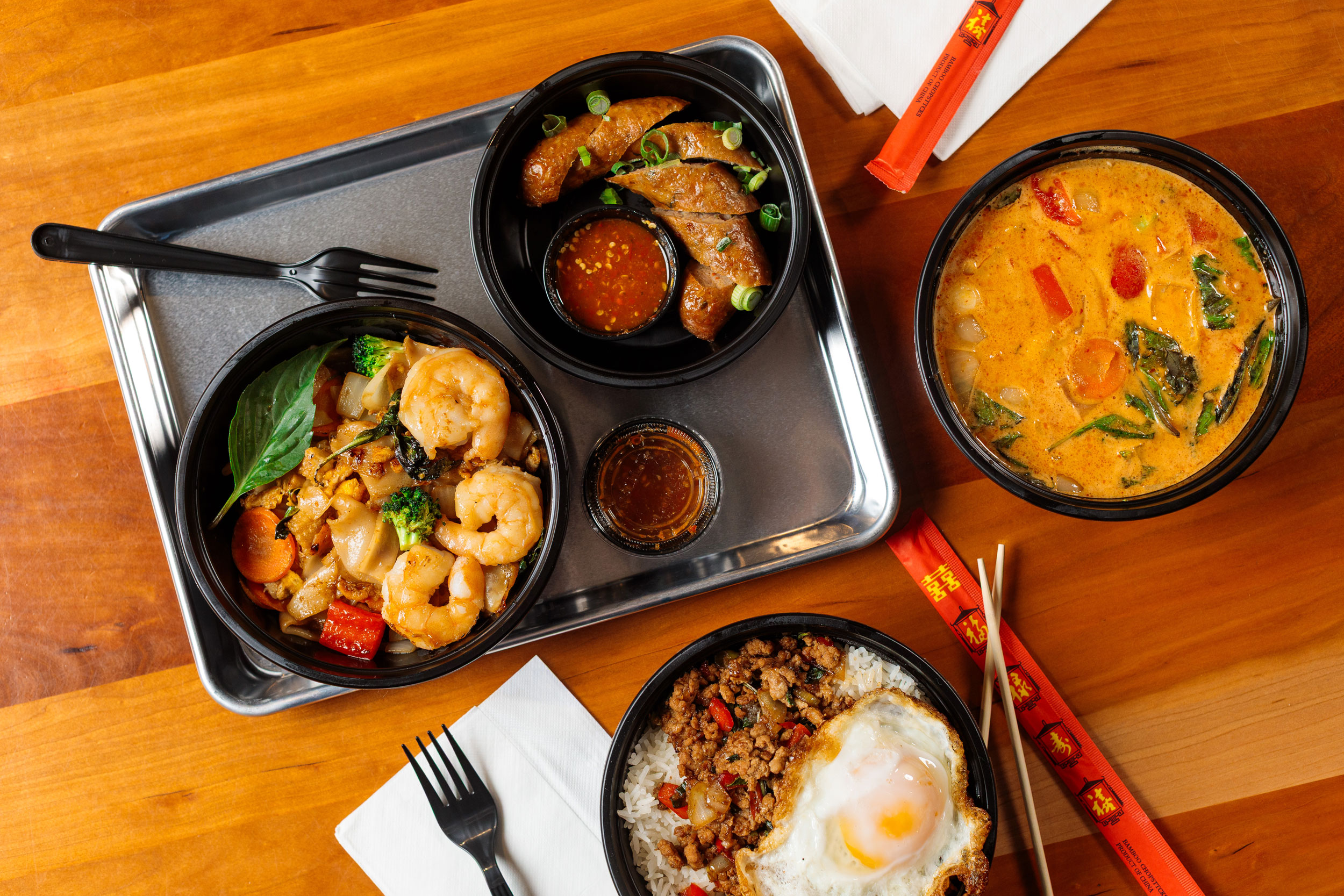
You’re known for creative interpretations of Lao cuisine (like smoked brisket fried rice). But your second location, at 3rd St. Market Hall, is more Thai than I expected.
I’ve been trying to avoid Thai dishes for so long. Everyone is doing them. But I was like, I think I can make some good Thai food as well. I figured this gives me a chance to showcase more of the dishes I grew up eating. People pigeonhole me as “traditional” food, however, my whole menu is not traditional!
Asian Restaurant Week
May 17-23: Celebrate Milwaukee’s Asian American and Pacific Islander community at this annual week, organized by ElevAsian. Restaurants offer discounts and special deals.
At the first Rivers Run Deep last year at Cactus Club, there were breakdancing battles. How is breaking woven into Lao American identity?
It was a vehicle to really just help us find our identity as kids. Hip-hop culture and breaking culture was developed by Black and brown kids in inner-city communities. Since we were the new wave of color, a lot of Lao refugees, Hmong refugees, Cambodian refugees, got put in the lower parts of society, the ghettos. And we grew up with that culture, and we also contributed to that culture – in the ’90s, Hmong and Lao breakers were very important in the scene. And fast forward, the dances were in the [2024 Summer] Olympics.
You’ve mentioned your parents as role models for your cooking. Are there chefs who have influenced you?
I was really inspired by Tory Miller [co-owner of Madison’s L’Etoile] a lot – seeing him not just kick ass at classical cooking, but open up locations and really identify with, not traditional Asian food, but his own twist on things. And Tory was doing that a long time ago, before I was even on the radar. Watching him really inspired me to do certain dishes and kind of come into my own as a chef.
Does it ever feel like an overwhelming responsibility trying to not just cook but represent your culture?
In the very beginning, I leaned into it because I was sort of the ambassador for Lao food in Wisconsin. But over time, that pressure faded. For years I put a lot on myself, worrying about every Google review and everyone’s opinion. These days it’s different – I’m just focused on building and sustaining a healthy, profitable business instead of losing sleep over that stuff.