
by Leah Dobkin
photos by Peter DiAntoni
On the wall behind the cash register at Fein Brothers is a majestic, 9-foot-tall 150-year-old grandfather clock. It’s the sort of clock you might find in a train station or bank, probably hand-made in Germany with restrained-but-elegant geometric wood carvings. It has stood in the Fein Brothers store for decades, but hasn’t worked in years: The old clock repairman who used to service it passed away, and according to store owner Simie Fein, there’s no one else alive who knows how to fix it.
And so the clock’s hands are always set at 2:30. Time truly stands still at Fein Brothers. The restaurant and kitchen supply store has been around since 1929 and at this location since 1967. Simie, now 74, has worked here for 52 years, preceded by his father Sam, the store’s founder, who put in 55 years. Sam did have a brother who was also in the business, but he soon got out; yet the name stays fixed in place, not unlike the hands of that clock.
Fein Brothers’ oldest customer is Solly’s hamburger shop, which opened in 1936. Restaurants and dining styles have come and gone in Milwaukee, but Fein Brothers remains a staple, always adding the newest equipment while retaining classic items. And always accommodating the various ethnic styles: originally, lots of German restaurants, but later Serbian, Chinese, Italian, Mexican, Thai, Japanese, Irish, Greek, Cuban, organic and vegetarian. The city’s restaurant scene could not exist without the supplies, service and advice provided by Fein Brothers. Taverns, church fish fries, school cafeterias and workplace lunchrooms also buy equipment here. Fein Brothers has the largest inventory of new and used kitchen equipment in the state.
The store also sells to retail customers, some of whom stop by as much to enjoy the museum-like atmosphere as to find some item their kitchen lacks. It’s easy to linger for hours, examining all the baking sheets, metal bowls, wooden spoons, whisks, wine keys, plastic squeeze bottles, pizza ovens, steam tables, freezers and coolers. And when you’re finished, its still 2:30; you haven’t wasted a minute.
The original Fein Brothers was in a 35,000-square-foot building at Fourth and Juneau. Today, that’s a parking ramp for the Bradley Center. By 1967, the store had outgrown its space, and Fein Brothers moved to its current location at 2007 N. Martin Luther King Dr.
The timing was unusual. It was just three months after the race riots in Milwaukee. Rioters had broken storefront windows on the block, bullets and rocks had crisscrossed the street, a sniper had fired from atop a jewelry store on Third and North. Riot police arrived and fired tear gas and shot out streetlights to reduce visibility. Third Street, once upon a time the city’s second-busiest retail strip, had already declined. But after the riot, it became a commercial desert that businesses shunned.
But not Sam Fein. His original store opened in the Depression year of 1929 and survived nicely. And the new location was quite a deal. It was the old Gimbels Schusters building, boasting 60,000 square feet. New construction for that amount of space would have cost $600,000 back in 1967, but Sam and Simie purchased the building for only $75,000, a paltry $1.25 a square foot. For the next two decades, Simie says, the company paid only $900 a year in property taxes.
Yes, there were occasional fistfights and cars getting broken into, and the neighborhood took decades to recover. But it was a classic building with a central location and incredibly low overhead.
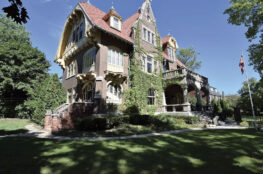
Built as a Schuster’s department store in 1892 (it would later get bought out by Gimbels), the building is an architectural treasure. The façade has an Italian Renaissance, almost Venetian look. According to Paul Jakubovich, the city planner for the Milwaukee Historic Preservation Commission, the building is a rare example of terra-cotta construction. It’s made of waterproof ceramic clay, a material used by ancient Romans, and has been popular in the United States since the 1870s. It’s decorated with colorful tiles of grapevines and fish and accented with cement spirals. Each tile had to be molded, dried, glazed and fired. Jakubovich says that most terra-cotta buildings are not as embellished as this one.
“It catches your eye and bucked the trends. Clearly the architect and builder wanted the building to stand out in its day and it still does,” Jakubovich says.
The entryway is an alcove with a large wooden door under arched leaded glass. An old door buzzer announces your arrival. The original wooden floors are warped, and they creak as you walk. At the back is an old wooden Remington cash register that broke a few years ago, joining the clock as a museum piece too old to be fixed by any living repairman.
The store’s inventory is irresistible, either because the items are so handy or because of their elegant, intrinsic beauty. Spacious rows feature stirring paddles and kettle whips the size of a toddler, pots large enough to bathe a golden retriever and can openers on steroids. There are garnishment sets that look like surgery instruments and gadgets with multiple functions. There’s the strainer/scraper/cutter, a relative of the slicer/dicer. It is used to drain liquids, scrape burned food or cut edges to prepare dough. The handy garlic press and slicer-in-one is indispensable for a serious amateur chef. The barbecue mop, like a witch’s broom, slops sauce on meat – say, a rack of ribs. It’s also used to wash large pots and pans.
The store is a treasure for people who like to cook ethnic foods. Gadgets like bamboo-handled noodle skimmers and Dragon Hibachi stoves, tostada baskets and paella and lasagna pans and cannoli forms can entice shoppers to try cooking new cuisines.
Pizza lovers can find every tool they could possibly need. There are pizza ovens that would make the devil sweat, and dangerous-looking dockers – rolling pins with spikes that punch holes in the pizza dough to prevent it from rising too much or bubbling up.
Then there’s the bartender paraphernalia: bar caddies to organize olives, cherries and limes. Jiggers, bar shakers and bar blenders. Muddlers to mash fruits, herbs or spices in the bottom of a glass for popular drinks like mojitos.
Dessert-making items include animal-shaped cookie cutters and cake-decorating kits, fluted crème brûlée dishes and pastry crimpers. But to make their cooking experience really authentic, many shoppers buy the chef hats and jackets, rib aprons, and chef pants printed with colorful chili peppers.
The store has two floors and dramatic, two-story pillars with crown molding. A gigantic staircase takes you to the second floor; the staircase has decorative wrought-iron railings and graceful wooden handrails with delicate curves smoothed over by years of use. Midway up the staircase is a small landing with an impressive crystal chandelier. On the landing, shoppers often turn to see the vista: a vast inventory of 60,000 pieces of sparkling new kitchen equipment and cooking gadgets.
If you venture even further up another, less-attractive staircase, you come to the second floor, which houses the restaurant equipment graveyard. It’s dark and dusty with the gloomy feel of Miss Havisham’s house in Dickens’ Great Expectations. But there are diamonds here in the rust and grease; used equipment that has helped many restaurants get their start.
Ninety percent ofFein Brothers’ customers are companies. In the old days, the store outfitted kitchens at many of the German-style restaurants in town, including survivors like Mader’s, Ratzsch’s and Ritter’s Inn. Many of Milwaukee’s most expensive restaurants were customers, like Frenchy’s on East North Avenue, which was known for its exotic entrées like bear and lion steaks.
Nowadays, the customers are more likely to be newer ethnic restaurants – Chinese, Mexican or a Japanese sushi bar. Fein Brothers helped Sandy D’Amato start both Sanford (often rated as one of the Midwest’s top restaurants) and Coquette Cafe. They’ve helped him understand and meet the health codes. They’ve also given him critical advice about designing his kitchens and buying the most appropriate equipment for the type of food he serves.
“They are very fair, very knowledgeable, and they know their equipment. They understand the craft of cooking,” says D’Amato. “They’d always get back to me within hours instead of days. It’s just been a good relationship over the years.”
The list of places that rely on Fein Brothers numbers more than 50: high-end dining spots like Bosley on Brady, Eagan’s and Sabor Brazilian Churrascaria; midpriced places like LuLu Cafe & Cocktails, Elsa’s and County Clare; Mexican restaurants like Conejito’s Place, Jalisco and La Fuente; pizza places like Calderone Club, Angelo’s Pizza and Zaffiro’s; franchises like Buffalo Wild Wings and Gold Rush Chicken; bars like Victor’s and Swingin’ Door; and coffeehouses or retail/restaurant places like Alterra, City Market and El Rey Mexican Market.
The store’s oldest client, Solly’s Grille, was started by Kenneth Salmon in 1936 and is now run by his stepson, Glenn Fieber. Known for its “butter burgers” and real malts served in steel cans, the restaurant has been outfitted by Fein Brothers after fires and relocations.
“New equipment for a restaurant can get very expensive,” says Fieber. “Simie said, ‘Just order what you want and pay for it as you can,’ and I’ll never forget the Fein Brothers for that.”
“If you got a fryer down, you need one real fast; you can get it from Simie,” Fieber marvels. “If he doesn’t have it, he’ll get it for you promptly, or if a bun door isn’t sliding properly, they’ll send their fix-it man, Ardell, to come to fix it right away. They bend over backwards to help the restaurateurs stay in business.”
D’Amato says Fein Brothers’ history and experience adds value to the dining scene, making Milwaukee a stronger restaurant town. “They’ve seen restaurants come and go. I think they can tell how places are doing just by walking in and seeing how they’re operated,” he says.
Besides new equipment, Fein Brothers sells reconditioned equipment that’s backed up with a 90-day warranty. At 69 years old, mechanical magician Ardell Williams refurbishes the used items. He’s been working at the store for more than 50 years.
When a restaurant upgrades, it may sell its old equipment to Fein Brothers. “Sometimes a restaurant goes out of business and then we might get the whole restaurant,” says Simie. Lower-cost, used equipment has given many young chefs in town a chance at starting a new restaurant with minimal capital. They upgrade their equipment as they build the business, with Fein Brothers right by their side.
But established businesses also take advantage of the equipment graveyard on the store’s second floor. D’Amato came by with a broken heat lamp to see if it was worth fixing. “A lot of times, salespeople from other kitchen supply stores will say, ‘Well, you need a new one,’ just to make the sale. But at Fein Brothers, you can bring some broken equipment and get an honest answer as to whether it is worth repairing,” D’Amato notes.
D’Amato was told he just needed a new switch on his heat lamp, and the staff proceeded, in Frankenstein fashion, to find a switch on an old heat lamp upstairs. They even offered to install the switch. D’Amato saved hundreds of dollars.
Beyond the restaurants, other businesses depend on the store’s vast inventory. Both Strauss Veal and Wixon Industries (a company that develops seasonings and spices) needed to build test kitchens. Fein Brothers sold them the equipment necessary to bring customers in to test their foods and recipes.
Then there was the odd request from a local nonprofit. “The most unusual request I had was for a slicer that could slice human tissue extremely thin so it could be examined through a microscope for medical research,” recalls Larry Corda, a salesperson, purchaser and kitchen designer at the store.
Then there are the funeral homes, who face a storage problem from auto accidents over long holiday weekends like Memorial Day and Labor Day. They come in to purchase large refrigerators for the “overflow” of bodies, Corda says.
Ironically, Fein Brothers was created because Sam Fein couldn’t hack it in the restaurant business. He was a young man running two restaurants in the 1920s and quickly discovered the hours were too long and the business too unstable. Yet he loved restaurants. So he sold his two places and plunged into a new business selling equipment.
Simie says his father took a brother into the business, but the brother moved to Florida. “We just never changed the name.”
Though 74, Simie doesn’t look it. He is slim, athletic and clean-cut. His office walls are adorned with framed newspaper clippings and photos from his championship handball days. Proudly displayed on the back wall are two 4-foot first-place trophies Simie and his partner won at the International Handball Championships in Ireland.
“He plays tennis and golf and loves to go out to eat with his friends,” says Karen Katz, a bookkeeper at the store. Simie says he likes to eat at good restaurants, such as Coquette, Bosley and La Merenda – all customers of the store.
As a kid, he started working for his father on the weekends. After he got out of the army and graduated college at age 22, he started working for Fein Brothers full-time. It was 1957. “I’ve never done anything but this and I like it. I’ll never retire,” says Simie.
In an age when most employees change jobs every three to five years, Fein Brothers grabs its employees when they’re young and holds on to them for good. Sam Fein set the tradition, working until he was 78 and got cancer. Many employees have worked well into their 80s. William Reinemenn, nicknamed Rinney, worked until his death at 87. Simie says Rinney rode his motorcycle until he was 86.
Simie’s friend and fellow Washington High School graduate Gil Minkin started working for Sam Fein in 1956. Gil started driving the delivery truck for the company. He eventually began ordering merchandise and became a salesperson and phone receptionist.
He’s been answering the phone for 53 years. “When the telephone rings, I pick it up and say, ‘It’s a beautiful morning, Fein Brothers.’ And, in the afternoon I say, ‘It’s a beautiful afternoon, Fein Brothers,’ ” Gil says. “If anybody says something like, ‘It’s raining outside, what are you talking about?’ I say, ‘If you want the weather report, call the weather bureau.’ ”
Gil’s son Todd has worked for Fein Brothers for more than 20 years. He is now the store manager, and his first cousin Ben works there, too.
There are only 12 employees at Fein Brothers; like Gil, everyone wears many hats out of necessity. There is a feeling of family among employees who’ve worked together so long. For decades, the patriarch was Sam Fein. Gil recalls that employees would “fabricate” various equipment on the second floor. “Then we’d need to bring it down. We had no way to do that but down those steep stairs, and Mr. Fein was always on the bottom. You know, so nobody would get hurt. That’s the kind of guy he was. If you respected him and worked hard, he’d give you anything you want.”
Now the patriarch is Simie, an even-tempered, soft-spoken man, typically clad in blue jeans and a neat sweater. His crystal-blue eyes observe all. “Simie is quiet, but he knows what is going on,” says Katz. “He soaks it all in.”
Simie is polite and thoughtful, says Corda. “Simie slips little notes recognizing my work when I am doing especially well.”
Simie is divorced. He has a son living in California who is in the moving business and a daughter who is a housewife in Maine. Both have no interest in Fein Brothers, so Todd and Ben are most likely to succeed Simie. “I’ve got two young fellows that are very active and they’ll probably wind up owning the place,” says Simie.
Says Todd: “I’m proud that my father and Simie have built this successful business and have allowed me to learn everything they know.”
Regular customers make up the other part of the Fein Brothers family, people like Ginger Moerschel, who has shopped there for years. She is a Mequon mom and a past PTA president with a junior in high school. She says she loves to entertain her daughter’s friends and their parents with “funky” things, like chocolate fountains, to make parties more fun. She also shops there when planning a large dinner party: She’s bought chafing dishes, a large coffeemaker and sheet pans. But her all-time favorite purchase was a pasta pot. “It was unique,” Moerschel recalls. “It had a cylinder attachment on the side of the pot so you could heat the pasta sauce with the pasta.”
Like many customers, Moerschel loves the knives sold at Fein Brothers. (Some customers say they hide them at home so others won’t use them.) Moerschel bought several paring knives she loves. You can feel the difference in quality, she says. “It’s like the difference, I guess, if you’re an artist and buying your art supplies at a big box store versus an art supply store.”
The salespeople really understand the equipment and the cook’s needs, she adds. “They know what you’re talking about, and they take time to show you the item, which is what I love.”
Leah Darling, from Glendale, is another longtime Fein Brothers customer. She’s a stay-at-home mom with a 5-year-old daughter and a 3-year-old son who love to jump on the store’s floor to make it creak. Darling calls herself a “foodie” who likes to cook and entertain. She shops at Fein Brothers before hosting big parties. “I bought a case of dishes, a case of soup bowls and a case of glasses. You can do that here and it’s a bargain.”
Just walking into the store cheers up Darling. “Sometimes I don’t really need anything, but I go to Fein Brothers anyway, just to hang out, just for a pick-me-up.”
The atmosphere is addictive, she says. “It still has that old-Milwaukee feel to it; people are yelling across the shop and there’s no pretension whatsoever. It makes me feel good to shop there, to be a part of Milwaukee’s history.”
Customers love the personalized service. “Whether you’re buying a $10,000 piece of equipment or you’re buying knives, you know they appreciate the business,” says Darling. “They’ll even carry your stuff out to your car.”
The shop has its share of celebrity customers. Many of Milwaukee’s top chefs frequent the place. Deceased former judges Christ Seraphim and Myron Gordon were regulars. Senators Russ Feingold and Herb Kohl stop by from time to time, as does baseball commissioner Bud Selig. Kohl and Selig were classmates with Simie and Gil at Washington High School; all grew up together in an old Jewish neighborhood on the West Side.
In fact, Simie still has a $5 check from Kohl on his office wall, along with those photos and news clippings of Simie’s handball days. He never cashed the check.
“Herb and I were good friends,” Simie recalls. “I said, ‘I bet you five dollars that within five years, I win the state [handball] championship.’ I started playing in 1957. The $5 check from Herb is made out in 1961 to the State Handball Champion. Decades later, Herb walks in one day, looks at the check on the wall and says, ‘No wonder I’ve never been able to balance my checkbook.’ ”
A 48-year-old uncashed check, a cash register that doesn’t ring, a grandfather clock that’s stopped – it’s all part of the timelessness of Fein Brothers. Melissa Zimdars, the company’s other bookkeeper, is supposed to leave at 2:30 every day. And so most days, aby Leah Dobkin t around 10 in the morning, she’ll look at the old grandfather clock and declare to everyone, “Look, it’s 2:30. Time for me to go.”
Leah Dobkin is a Milwaukee-based freelance writer who just bought a garlic press, a plastic funnel and a used garbage pail at Fein Brothers. Such a deal! Write to her at letters@milwaukeemagazine.com.