

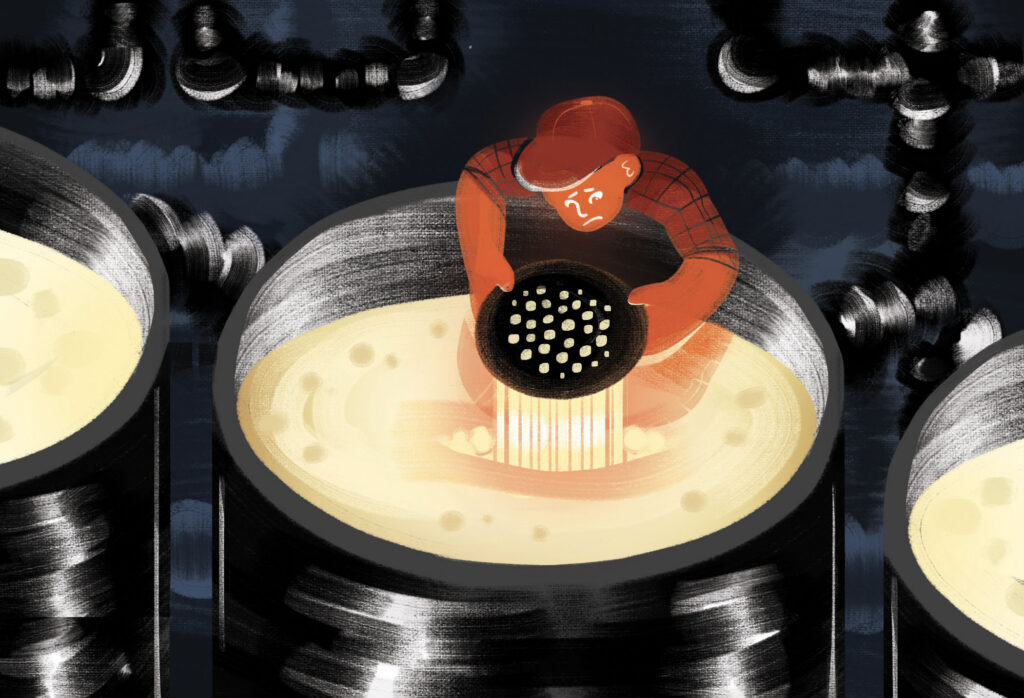
When Bob Mills’ whey separating machine broke down last fall, he was at a loss. For three decades, whey, the protein-rich liquid that separates from milk curds during cheese-making, had become a valuable asset. Now, Mills had to spend money just to dispose of it.
That’s difficult for any cheesemaker – producing one pound of cheese creates nine pounds of whey. It’s especially so for Mills’ Cedar Grove Cheese, just west of Madison, which produces 3.5 million pounds of cheese a year and, in turn, roughly 31.5 million pounds of whey.

Celebrate this year’s winners of the Betty Awards!
Cheese is still the primary driver for the business, but when the machine was down for nearly two months, Mills lost roughly 15% in revenue he would have made selling whey and cream during that period, including the cost of repairing the equipment.
“Cheese prices are barely higher than they were when I bought the business in 1989,” Mills says. “If we didn’t invest in whey, we probably wouldn’t have survived. When our machines went down, it really showed how important that market has become for our survival.”
That’s because whey isn’t considered just a byproduct of cheesemaking anymore. It’s become one of the most valuable commodities in the dairy industry. Decades ago, it was mostly given away, dumped on fields or used as pig feed, but now more than 95% of cheesemakers sell their whey, according to the Wisconsin Center for Dairy Research.
Once it was discovered to be loaded with amino acids, whey took off – first with weightlifters and fitness enthusiasts, and eventually as a staple in the average consumer’s diet. Bars, powders, shakes, baked goods and more foods often get a protein boost from whey.
That market grew even more in 2025 as GLP-1 medications used for diabetes and weight loss, such as Ozempic and Wegovy, continued their meteoric rise. These drugs cause loss of both fat and muscle, leading doctors to recommend increased protein intake to reduce muscle loss. The easiest solution? Whey-based supplements.
For the Dairy State, the overall impact has been positive. The demand boom has driven whey prices up, benefiting both farmers and cheesemakers. But the gains aren’t evenly distributed. In fact, some are being squeezed.
The issue begins at the farm level. Every month, the USDA sets the minimum price dairy farmers must be paid for their milk. That formula includes the value of fat, solids, protein, lactose, minerals and whey solids. When whey prices are high – as they are now – every cheesemaker, large or small, must pay that higher price for milk, their key raw ingredient.
Whey profits can become quite large, but only with major capital investment. Large cheesemakers can sink millions of dollars in equipment to process their own whey and sell higher-quality products. The USDA values whey at a baseline level: sweet whey with 12% protein. That’s the percentage that’s cooked into the price farmers are paid for milk. But state-of-the-art equipment that only bigger operations can afford can concentrate that into products with as much as 80%-90% protein, which sell for far more. Cedar Grove Cheese is a counterexample; Mills’ less expensive equipment only separates cream from the whey, merely reducing weight before it’s shipped off for sale.
“The little guys, whether they dispose of their whey or not, they’re taking a hit because they have to pay the dairy farmer for the high value of their whey components, whether or not the cheese plant gains value from it,” says Dean Sommer, cheese and food technologist for the Wisconsin Center for Dairy Research. “They’re losing money on the process big time.”
The Center for Dairy Research can’t predict the future of the market, but Sommer believes demand and prices are here to stay. “It will take time, definitely not overnight, but the little guys will figure out how they can tap into this to get value,” he says. “Maybe it’s banding together to purchase equipment and sharing the profits. The market, just like any, always adjusts.”
For Mills, he hopes to see those bigger profits soon. “The system should be fair across the industry,” he says. “The small and medium size, we need them to survive, so hopefully we can set up a system that works for everyone. Giving it all to the larger companies just isn’t sensible.”
Millions of pounds of whey
2021
U.S. Total: 870
Wisconsin Total: 290
2022
U.S. Total: 886
Wisconsin Total: 277
2023
U.S. Total: 885
Wisconsin Total: 254
2024 798 273
U.S. Total: 798
Wisconsin Total: 273
Source: USDA