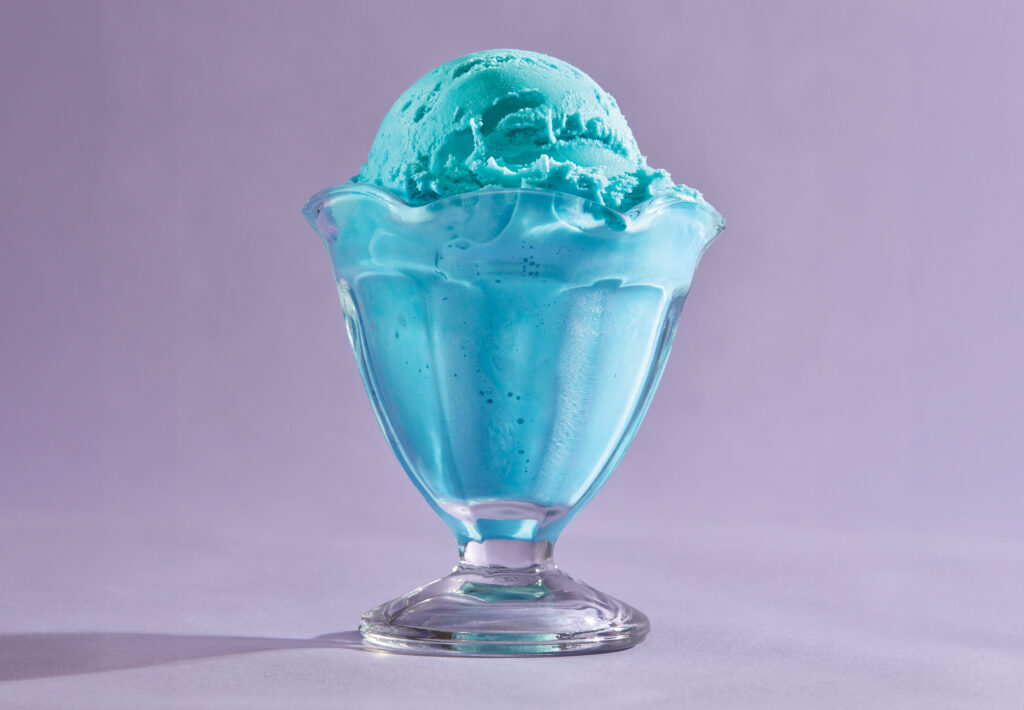
Leading with its bright hue, Blue Moon is one of the most enigmatic ice creams.
It’s particularly popular in – but not unique to – the Midwest, and was probably/maybe invented in Milwaukee.
But the question, what seems to confound everyone who has had a Blue Moon encounter, is its nebulous flavor. Never definitively one thing. You say citrus. I say almond. Somebody else says (the also tough-to-define) Froot Loops cereal. The flavor company that holds the trademark on Blue Moon as a food and beverage flavoring keeps its ingredients in a vault, at least figuratively speaking – but are not as protective about the usage of the name as you might expect.

If someone has inspired you through their service, leadership or dedication, the Unity Awards are your opportunity to recognize them!
I am not the first reporter to want to suss out the mystery of Blue Moon. On a July 4, 2025, segment on Michigan’s Interlochen Public Radio, a reporter considered sending a vial of Blue Moon flavor to a UW-Madison food scientist for testing. It sounded promising. “We could determine in broad strokes what the actual molecules are,” said UW’s Scott Rankin – but, he added, would you really want to do that? Some secrets, he argues, are best left a mystery.
Another puzzle: Just because the name is on the carton, that doesn’t mean it’s real, trademarked Blue Moon. I learn this as I’m talking with the spokesperson for the company that holds the Blue Moon trademark about the hardcore almond flavor in the version made by Manitowoc’s Cedar Crest. But that one isn’t official Blue Moon, says Melissa Healy of Weber Flavors, the Illinois company that bought Blue Moon from Milwaukee’s Petran Products in 1982. Further, “we’ve never gone after” companies that are passing off unofficial Blue Moon as the real deal, she adds.
Describing Blue Moon, not too helpfully, as “a citrus flavor,” Healy (naturally) won’t say what’s in it – but it’s intriguing to hear it tastes different depending on its application. It’s “more bright and citrusy, more defined” in Blue Moon-flavored beverages, she says.
Milwaukee’s Purple Door figured out how to make a pseudo Blue Moon with natural ingredients. Blueberries and raspberries give their version its color, and almond/citrus flavors keep it in the traditional flavor wheelhouse. “Purple Moon” is one of its bestsellers – balanced and “very approachable,” says co-owner Lauren Schultz.
I’m facing a Sendik’s deli counter when the manager notices the pint of locally made Scratch ice cream I’m hugging. “Which flavor is that?” she asks me. “Blue Moon,” I say. “Oh! We were just talking about that, weren’t we?” she says, looking at another employee behind the counter. “Like, what is Blue Moon?” she laughs. “I’ll let you know,” I tell her, holding my pint in the air.
I dig into my Scratch as soon as I’m home – it’s Smurf blue (thanks to “FD&C Blue #1”) and tastes very much like vanilla ice cream with a subtle almond presence. There’s also a sliver of citrus. I may make enemies for saying this: The most baffling thing about Blue Moon is not what it is but why it persists in our culture when there’s at least a hundred flavors more deserving of your spoon. But none of them are blue.