
Milwaukee drivers might want to ease off the gas – or at least get ready for a close-up. Metaphorically speaking, at least.
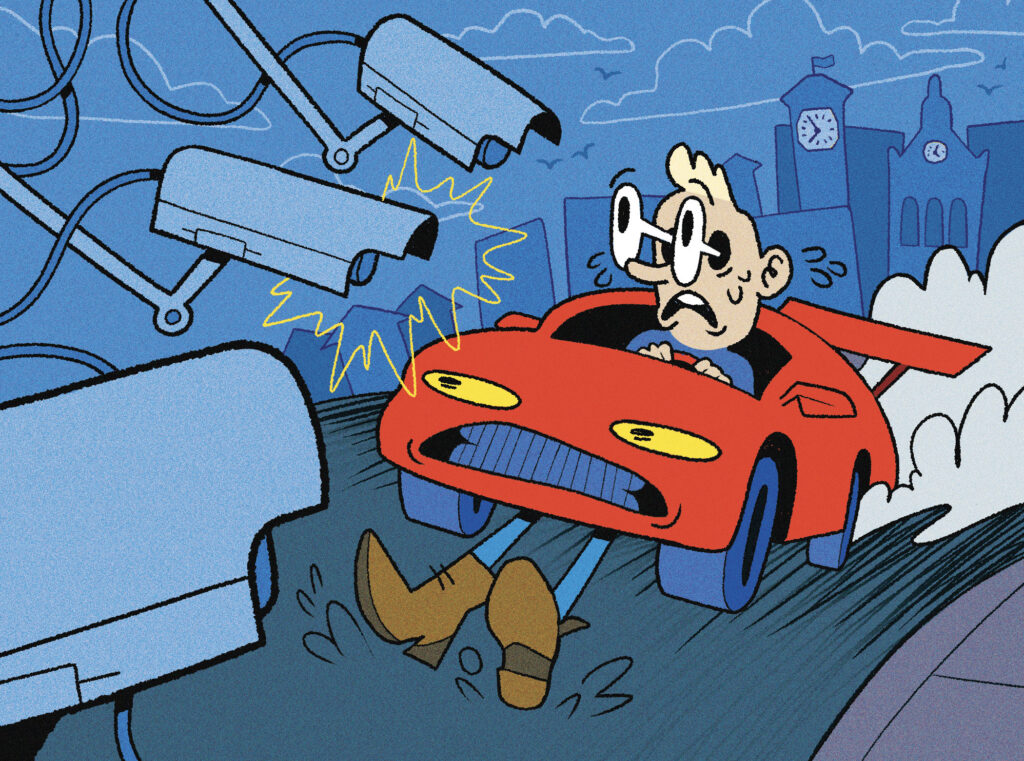
State legislators are considering a plan to allow cameras to monitor Milwaukee intersections for traffic violations – the first such use of “red-light cameras” in the state and the latest effort to combat reckless driving in the city.
The “Safe Roads Save Lives Act,” Senate Bill 375 would permit the installation of red-light traffic and speed cameras at five especially dangerous intersections in each of Milwaukee’s 15 aldermanic districts — up to 75 cameras total. The cameras would automatically issue tickets to speeders flying by at 15 mph or more over the speed limit, as well as drivers who run red lights.
Sen. Dora Drake (D-Milwaukee) says the bill is designed to reduce vehicle crashes and change reckless driving habits, noting that reckless driving is a top issue routinely brought to her attention. “People deserve to be safe,” Drake says, one of the bill’s primary co-authors with Sen. Cory Tomczyk (R-Mosinee). “It really is a quality-of-life issue when people are too scared to drive on certain roads in our own city because they’re nervous about drivers being reckless.”

Celebrate this year’s winners of the Betty Awards!
The bill would permit red-light camera systems to be placed at “high-frequency crash locations” for a pilot period of five years. Then, the camera program would be reassessed and could perhaps expand to other Wisconsin cities, Drake explains. Tickets issued during the pilot program would run between $20 and $40 for a driver’s first offense and $50 and $100 for subsequent offenses. Violations would not count toward the suspension or revocation of driving privileges, nor add demerit points to driving records.
Red-light camera legislation has been introduced multiple times before in Wisconsin. However, Drake says this is the first time a bill on the issue has made it to a public hearing, which was held in October. No further action has been taken on the bill to date.
Presently, red-light cameras are illegal across the state. SB 375 would only authorize their use in “first class” cities – presently just Milwaukee. According to a 2024 Wisconsin Policy Forum report, between 2002 and 2022, traffic deaths in Milwaukee County rose nearly 114% while declining just over 36% across all other Wisconsin counties. In 2024, 74 people lost their lives in fatal crashes in the city of Milwaukee.
What Lawmakers Are Saying
While the bill has bipartisan support, it also has bipartisan opposition.
Sen. Chris Larson (D-Milwaukee) says he’s been against it from day one. In singling out Milwaukee, he says, the bill targets “an already over-policed community” and “the only minority-majority city in the state.”
“There is speeding all over the state. You have people running red lights all over the state,” he points out. “I don’t know why we would open ourselves up to additional policing.” Larson adds that some cities have found red-light cameras to be ineffective in preventing reckless driving and to actually increase rear-end crashes.
Alternatively, Sen. Van Wanggaard (R-Racine), a former police officer, said at the hearing in Madison that reckless driving would be better deterred by patrol officers. Rather than cameras, he said, the focus should be on adequately staffing the police department.
Meanwhile, multiple organizations, including AARP and the Wisconsin Bike Fed, a nonprofit dedicated to the interests and protection of cyclists, have expressed support for the proposal. Bike Fed government affairs manager Mike Ridgeman says the bill is a cost-effective and relatively quick fix to save lives. “I just don’t see the downside in trying it for five years. What do we have to lose? Another 74 lives a year?”
Aiming to Head Off Concerns
Drake’s office sought to address worries about the bill in an online “fact sheet,” explaining that, in the first 90 days of operation, cameras would only issue warning notices, not fines. Cameras wouldn’t act as facial recognition technology, either; the bill requires they be positioned to only read rear license plates. Additionally, mandatory signs placed at each monitored intersection would alert drivers of upcoming cameras.
As for concerns from Wanggaard and others that the camera program would simply be a government “cash cow,” Drake says funds collected would only go toward maintaining the program, traffic enforcement, traffic safety programs and local infrastructure. She asserts that tickets would not unfairly burden under-resourced communities and people of color because a maximum of five cameras could be placed in each aldermanic district. “That way,” she says, “they’re not all concentrated on the North Side or South Side. They’re throughout the whole city.”
Possible Installation Locations
Drake’s fact sheet mentions specific intersections and street corridors determined to be among the most dangerous in the city. Here are some spots Milwaukeeans could expect to see red-light cameras:
Intersections:
- 91st and Bradley
- 76th and Good Hope
- 43rd and Good Hope
- Sherman and Florist
- 35th and Silver Spring
- Appleton and Silver Spring
- 91st and Appleton
- Fond du Lac and Hampton
- Hopkins and Hampton
Street Corridors:
- Silver Spring Drive
- Villard Avenue
- Hampton Avenue
- Capitol Drive
- 76th Street
- 60th Street
- Sherman Drive
- Hopkins Street
- Teutonia Avenue
- Appleton Avenue