

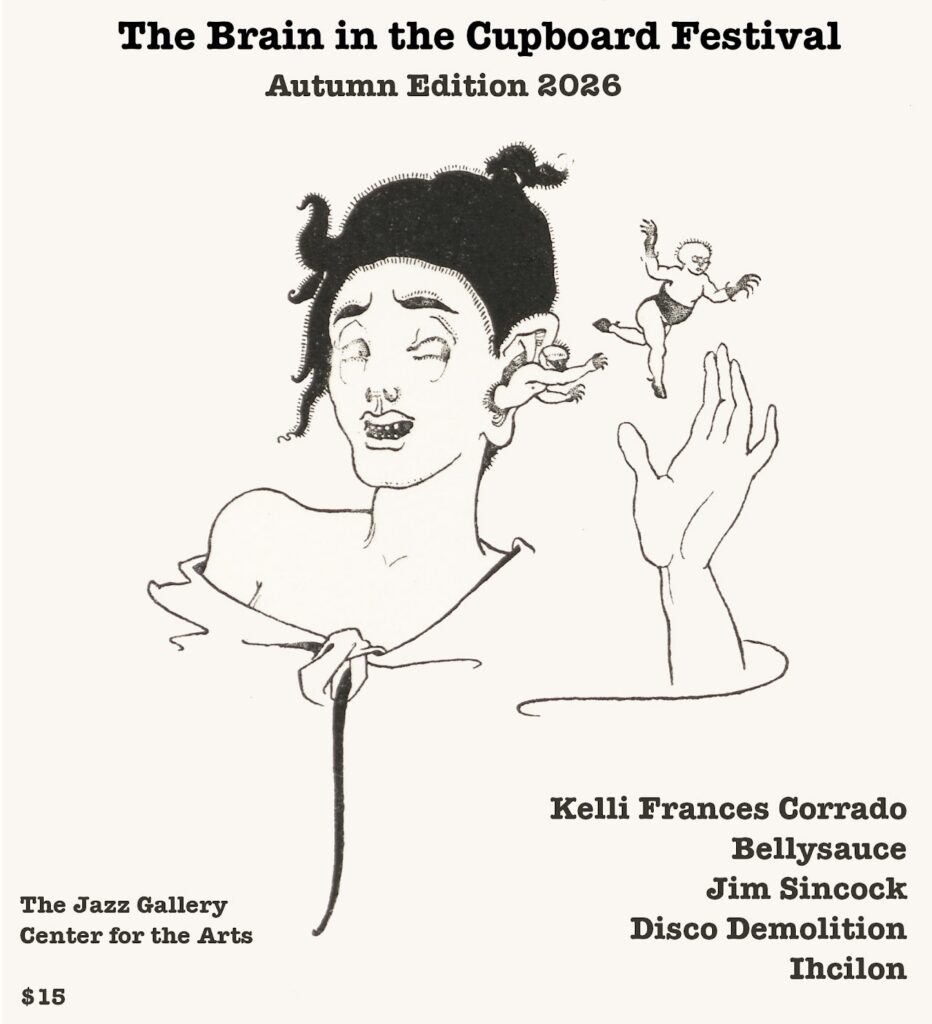
Along with the changing of the season, September promises weird sounds for Milwaukee: One of the weirdest and most wonderful will come from The Brain in The Cupboard, “a quarterly electronic, world fusion, and experimental sound festival”, hosted by The Milwaukee Jazz Gallery this Saturday, Sept. 19, at 6:30 P.M.

The Brain in The Cupboard is a music festival curated by Paul Maceri (AKA Ihcilon). In addition to the freak-folk operatic Kelli Frances Corrado and tuba-forward electronica of Bellysauce, this year’s lineup features Beliot’s Disco Demolition as well as MIAD grad Jim Sincock on dark ambient field recordings and soundscapes. The festival showcases experimental musicians from around the country.
To get ready for the show, I spoke to Maceri about his background in experimental music and why we’re both happy to add to the weirdness pool. Look for Milwaukee Music Notes’ full report from the live show sometime next week, including photos and descriptions of the Midwest’s weirdest musical festival.

Check It Out!
How did you curate this particular group of artists?
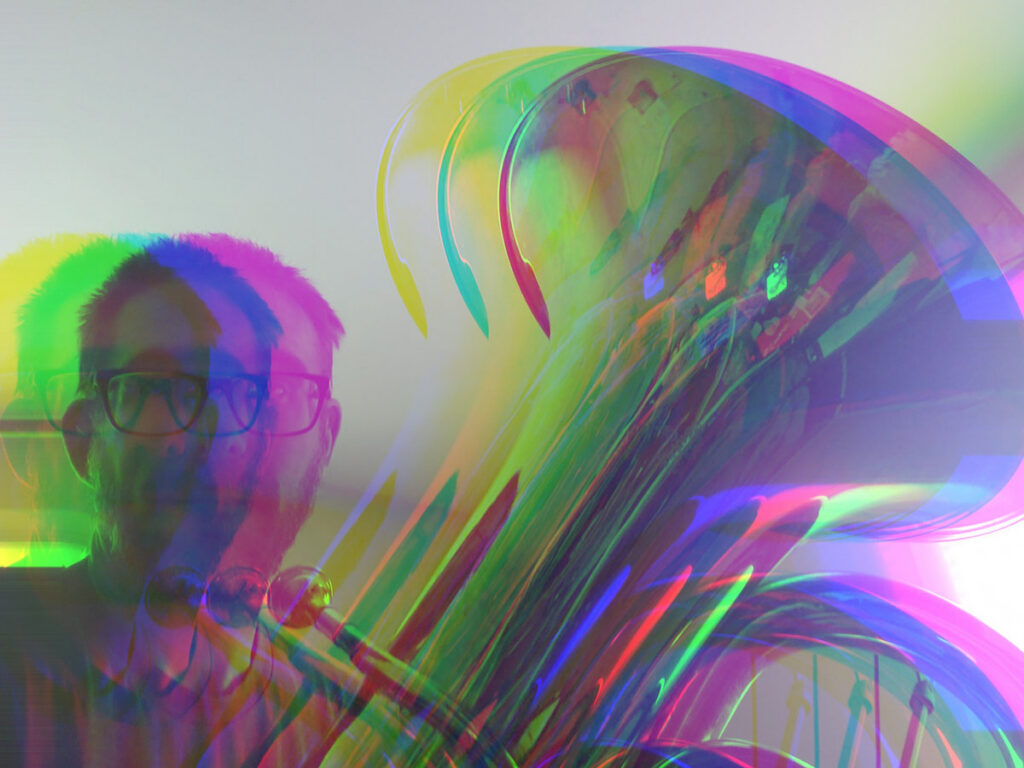
I go through my musical memory: who do I know and what do they sound like? How can we make an evening where nothing sounds exactly the same, but there’s a lot of parallels. My thought process comes from me making mixtapes back in the day. It’s always just stuff that I’ve listened to for a while. Jim Sencock is a Milwaukee-based musician. We’ve been talking back and forth, and he heard that I was putting on this festival, and said, “I’d like to be part of that.” Bellysauce played at a festival that I used to run with a friend back in Memphis, he came on with this giant tuba. It was just fantastic and Kelli Frances Corrado, she’s got a great vibe, with her whole weird thing going on. I’m happy to add to the weirdness pool, so to speak.
Which we desperately need. You mentioned before, the vibe of creating your own mixtape. Did you do that as a kid?
Yeah, when I was a kid, I had no money, like no money. So if I was going to buy music, it’d be out of the cutout bin. I’d go through, and find some interesting stuff in there. You’d be able to find weird experimental music. You could find classical stuff, but I think it’s interesting, kind of touring that wavelength. Since, I didn’t really have access, I would just make up my own. I’d go through and listen to all this weird stuff, I was really seeking it out. I always like to have an open ear, no matter where I am, and I’ll listen to anything. I think that’s just something I want to keep bringing out.
How did you get into the electronic musical realm?
In my early 20s, I was just kind of at home a lot. I was getting my head together, and people would just come by and drop off equipment. Which made me go “okay, what can I do with it?” You know, maybe I can record it backwards on the tape, see what that sounds like. I had a guitar with several effects, a Korg MS-20, one single cymbal from a drum kit, and that’s really about it. I played around and most people were like, “what the hell is this?” While I’m sitting here at a coffee shop with a tape player. It was a very grassroots thing for me and really, since then, I’ve spent my time seeking out people who want to be mad scientists at the control board.
Right. I love that.
That’s what I love about modular synthesizers because you’ve got all these wires going everywhere: you can’t really tell what they’re doing unless you really, really know, which is a hell of a learning curve. I still might have like a 30% understanding about what’s actually going on in it, and I think that’s just what’s cool about it.
Is that because it reacts to the environment around it, or is it just like the ghost in the machine?
Well, it’s all kinds of things. I mean, it’s the environment around it, like temperature and moisture, because a lot of this stuff is analog circuitry. The stuff you know that we’re getting these sounds from was born from World War II war surplus. This was on radio test equipment or airplane comms, and someone got the idea: “hey, maybe we can make music with this,” it’s really that same spirit. If you do believe in you know spirits passing through. I mean, I think that could happen too. I think that very easily translates into electronic music and experimental music, especially.
I’m with you. So what you’re saying is that the machines or the equipment that you’re utilizing often is something that actually has a response to the environment and can change from performance to performance? So it’s not simply plugging in and pressing something.
Exactly. I’ve seen a lot of people…they’ll just pull their laptop out and they play. It’s like, well, there’s no show there. Where’s the performance? What are you doing? You’re just standing there staring at a screen. No, no, I don’t want that.
The event is, according to your website, “intended to showcase underrepresented sounds and to highlight the power of unbridled human creativity.” Tell me more.
I think a lot of what we’re seeing rapidly is that we’ve lost a lot of interaction. I think it’s very important to actually show people doing something. We don’t have a bunch of pre programmed stuff. Like you are just there in the moment, and I don’t think a whole lot of people really experience that. I mean, except for jazz, you know. We get jazz improvisations all the time. I love that about jazz, and I think that can be applied to any music.
Is there anything else that you think you know readers should know?
You know, I think that anyone that does will show up to the festival. I think they should just have an open mind. I kind of look at it as a positive disassociation. You know, let your brain roam where it’s gonna be. It’s secure, and everything else can just be present. Yeah, I think that’s exactly the way that anyone that attends this should approach it.
I think those are wise words for sure. And yeah, was The Brain in The Cupboard title something you pulled out of the air, or did it have a special significance for you?
Well, it’s actually kind of a dual significance. I got the initial idea that’s been in my head forever, from a band called Alien Sex Fiend, they have a song called “My Brain Is in the Cupboard Above the Kitchen Sink.” I heard it when I was 17 years old and it just fascinated me in a weird philosophical way. Like I’m here, but my head’s elsewhere. I think that’s really what this festival is and if you want to get down to it, it’s me wanting to get together and play some awesome stuff with some great people, and that’s just what I’m just going to keep doing.