
“Don’t blink or you’ll miss it.” Illusionist Bill Blagg was addressing a packed house at the Marcus Center, a homecoming performance for the Wisconsin magician.
Over the course of an hour and 20 minutes, Blagg – trim, bald and plainly clad in a dress shirt and slacks – tapped a repertoire built over a lifetime. A collection of wine bottles vanished and reappeared. He seemed to walk through the churning blades of an industrial fan. He levitated an audience member into the air.

Nominate Somebody Now!
For the show’s finale, an assistant wheeled a giant teeter-totter-looking device onto the stage, along with a big, plexiglass cube, attached to the contraption with a chain.
“The Plexi-Vanish” is an illusion Blagg spent years developing. He climbed into the cube, crouching slightly to fit, and the assistant padlocked it shut. Blagg slapped the sides of the cube inside – it appeared there was no way out. The cube was chained to the device’s lever arm, and Blagg was hoisted 10 feet into the air.
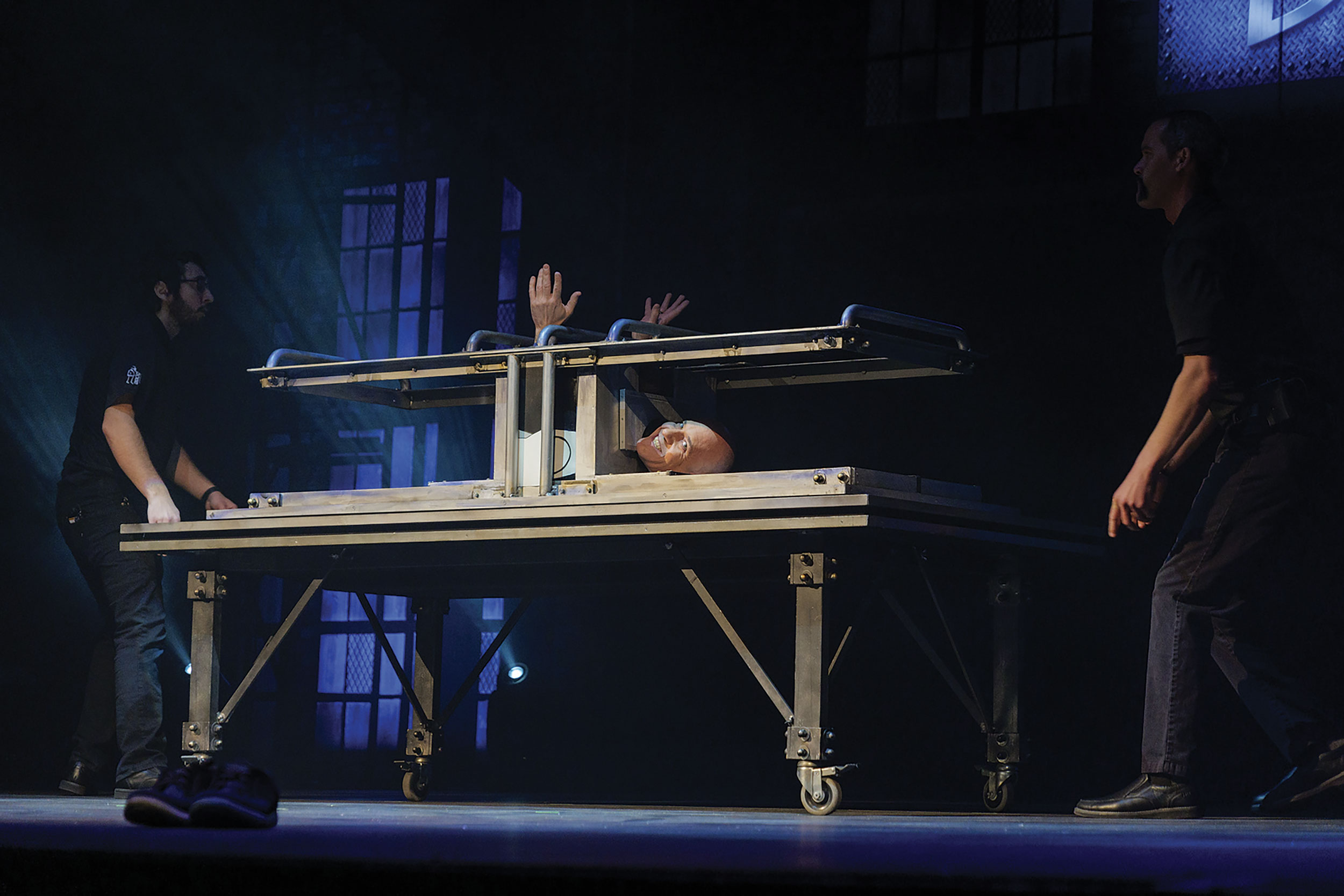
Ka-boom! There was a blinding flash of light, and the cube was empty. The spotlights searched the stage, then swept over the audience to the back of the theater. There were gasps and murmurs of astonishment as the crowd turned to look. Blagg stood back there, seconds after disappearing. As the room filled with applause, he strolled down the aisle back to the stage. It seemed impossible.
Blagg had saved the best for last – a tip he got from his great-grandfather, himself an amateur magician.
“The last letter I got from him, he gave me a piece of advice – always end your show with your best trick, because it’s going to be the last moment your audience spends with you,” Blagg says later.
Like any good magician, Blagg left his audience that night with a burning question:
How on earth did he do it?
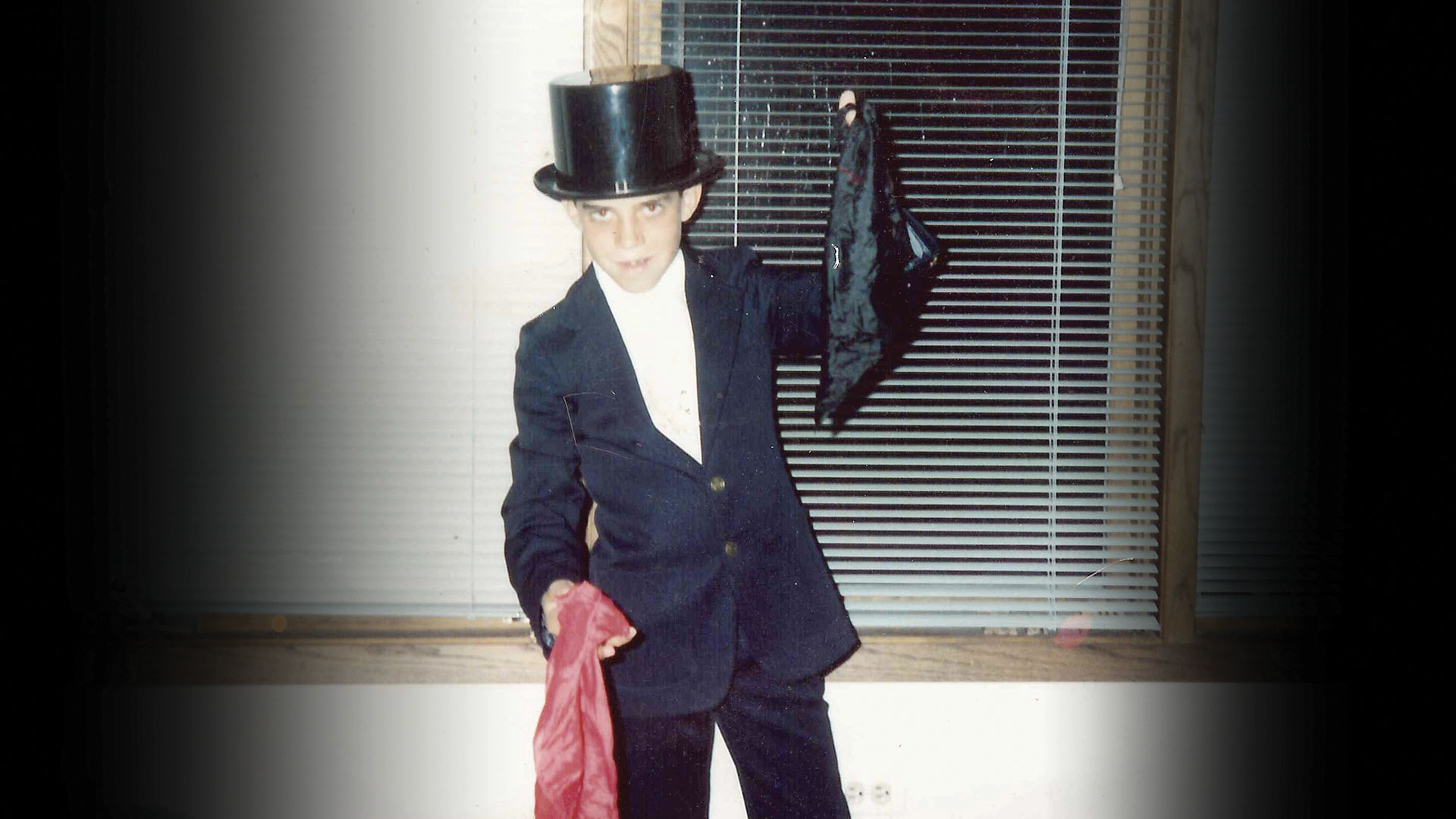
BLAGG, NOW 45 and a resident of Pleasant Prairie, was introduced to his future career when he received a magic kit for Christmas as a 6-year-old growing up in northern Illinois.
He delved in and quickly mastered his first trick, making a quarter disappear. The genuine surprise on his father’s face gave him the spark that started it all. He learned more tricks from the kit and showed them off to classmates and his sisters.
“For my 8th birthday, my dad gave me a choice: ‘You can have a birthday party with your friends, or I found a magic shop in Chicago. I’ll give you $20 to buy magic tricks.’” Young Bill chose the store, Magic Inc., and was awestruck at the magical world of props and instruction manuals piled on its shelves.
Bill’s mother would often write to his great-grandfather, who lived in California, and mentioned that her son had developed a keen interest in magic. Great-grandfather wrote back, saying he had performed magic back in the day at parties.
For Bill’s 10th birthday, the onetime amateur magician sent him his well-worn copies of the first three volumes of Tarbell Course in Magic, classic books of instruction written by Harlan Tarbell in the 1920s. Bill absorbed every page.
Blagg’s fall tour will include a home state performance on Sept. 17 at the Marcus Center’s Vogel Hall. This will be his new show, “Family Magic,” created to be an all-ages show with a shorter runtime that was inspired by Blagg becoming a parent.
“Those books completely changed everything,” Blagg says. He still has them on a shelf in his home office. “They didn’t just teach you magic tricks. Tarbell talked a lot about what it means to do a show, a routine – dialogue and how to make the show unique to you. I found that equally important to the techniques of the magic itself.”
One of the tricks he learned was “Tarbell’s Equally Unequal Ropes,” a classic that he still performs today. In it, three ropes of seemingly different lengths appear to transform sizes with a wave of the hand.
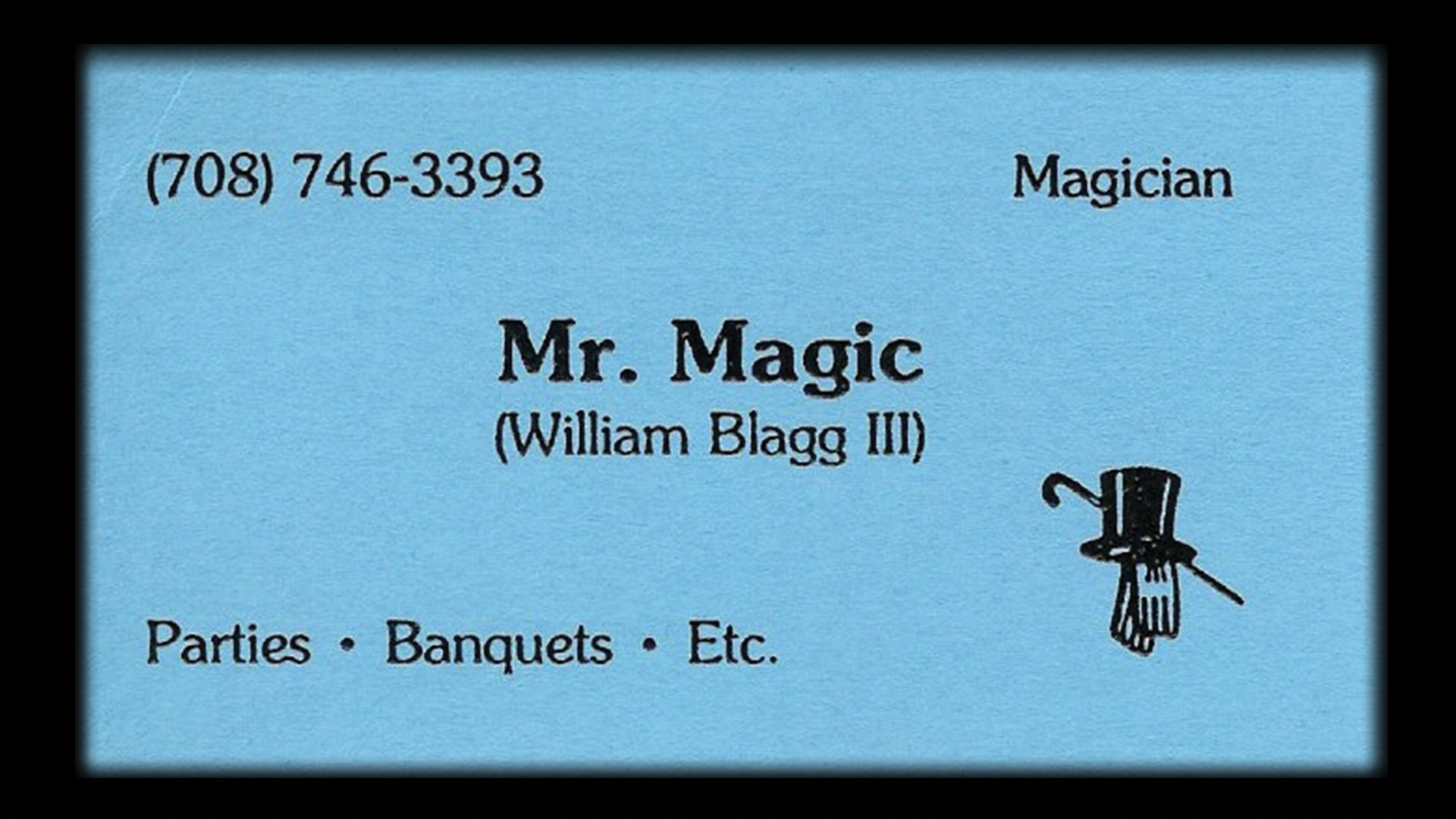
Bill’s first public performance was at Beulah Park Elementary School in Zion, Illinois. His fifth-grade teacher used colored chalk to announce on the board that there would be a show at recess the next day starring “Mr. Magic,” the slightly-on-the-nose stage name he had come up with. The recess bell rang, and to Bill’s surprise, several classmates decided to sit transfixed watching his show rather than playing tag outside.
Bill’s dad (who is also named Bill) worked for his father (also named Bill) at his HVAC company, Blagg Heating and Sheet Metals, and did woodworking on the side. He built his son his first magic table, equipped with secret compartments.
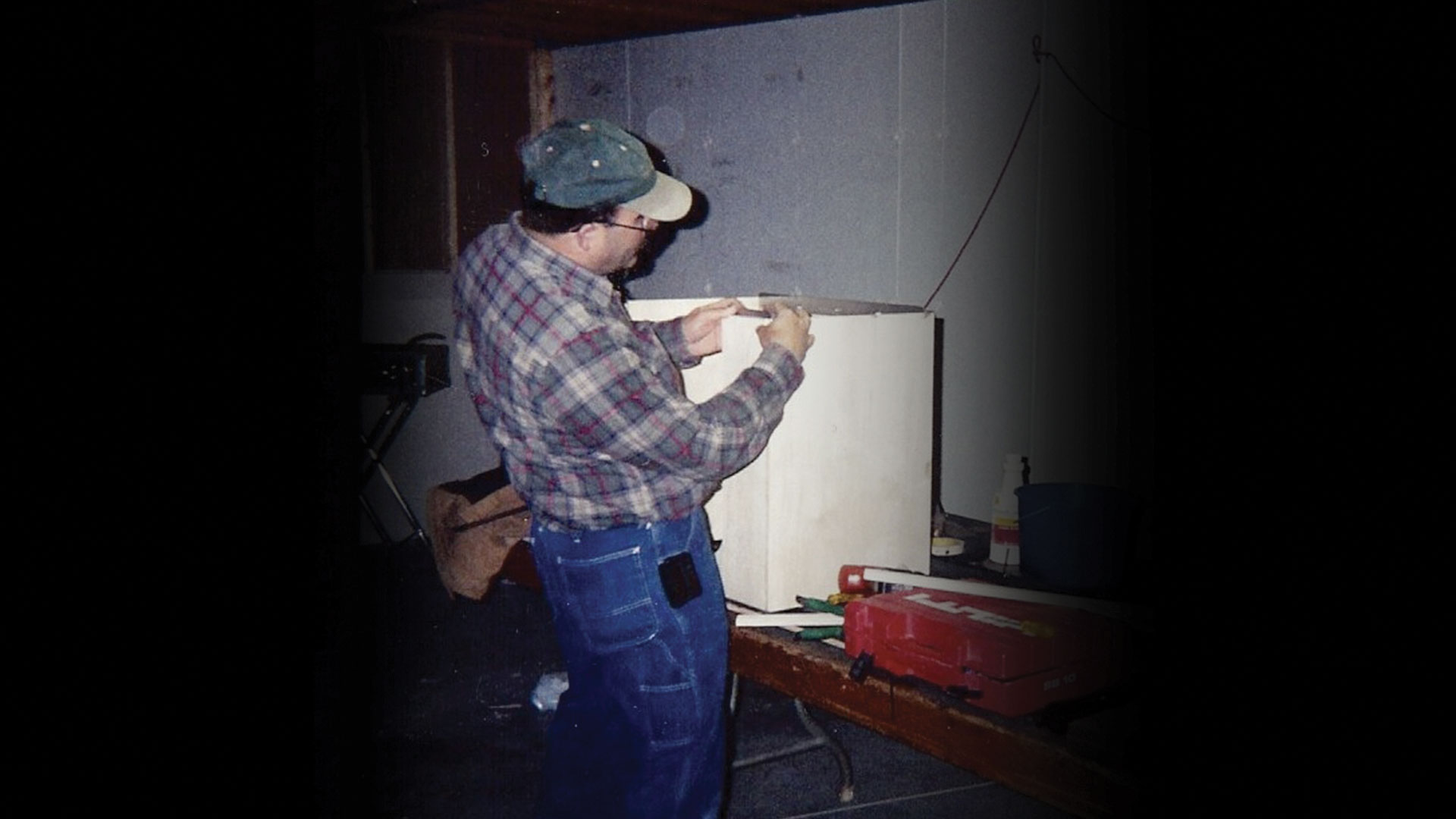
That table became the centerpiece for a show Bill performed at birthday parties, Boy Scout banquets and other small events. Blagg’s father still helps build and maintain his son’s illusions out of his workshop in Union Grove. Blagg refers to his dad’s fabricating skills as his “secret weapon.”
While still a teenager, Blagg was contacted by the village of Beach Park, Illinois. They wanted to hire him to create a 40-minute show they’d title “Put the Magic Back in Your Valentine’s Day,” to be performed in the basement meeting room of the village hall.
Blagg agreed, and a blurb about the show was placed in a local paper. A few days later, they called. The show had sold out, could he do a second one? A week later, another call – the second show had also sold out, could they move it to a bigger auditorium?
He soon realized that the new room was too big to do tricks like a “pick a card, any card” routine or making a quarter disappear. Determined to scramble together a new show, Blagg made another trip to Magic Inc. to get books on stage illusions, and his dad helped build them.
Show night arrived. “It was exciting and scary at the same time,” Blagg laughs. The auditorium was filled with about 500 people. His opening illusion featured a tall wooden box, one side open so you could see it was empty, another side covered with Valentine’s Day decorations made of pink and red paper.
His assistants – friends and one of his sisters – spun the box around to show it was empty. Then he burst through the paper decorations to a round of applause. His magic career had taken a leap forward. Around this same time, Blagg applied to enter a competition to prove he was not just a kid with a quirky hobby but a magician’s magician.
COLON, MICHIGAN, is a village of just under 1,200 people, but it’s known as The Magic Capital of the World. Every summer, the population doubles for a weekend as magicians from around the world flock there for Abbott’s Magic Get-Together, a convention by and for magicians that’s been around since 1934.
Packs of magicians walk down the streets of Colon together, sometimes performing random acts of street magic on the corners. Why Colon? It was home to one of America’s most famous families in magic history.
Harry Blackstone and his son, Harry Blackstone Jr., both had lengthy careers in the business. They cemented the stereotypical image of a magician with a goatee and vintage suit, waving a wand with gloved hands around the rim of a top hat, and presto change-o, pulling out a white rabbit. The senior Blackstone co-founded a magic supply company based out of Colon with magician Percy Abbott, who later started Abbott Magic Co.
“They would manufacture all the magic apparatus for magicians across the globe. From big illusions to small tricks, it was Abbott’s,” Blagg explains.
The Get-Together was originally just a way to show off the latest company stock, but it evolved to include guest performances, lectures and an annual talent competition. Blagg, encouraged by his well-received shows, applied to be a contestant. Initially denied because he was a minor, Blagg successfully argued that his 18th birthday would roll around before the contest.
Learn a Trick (or 375) from Bill
Much like a successful athlete will have their own signature sneaker, a crowd-dazzling magician shows that they’ve made it by endorsing their own magic set. Blagg worked with a factory that designs sets to make The Magic of Bill Blagg Professional Magic Kit, with all the tricks approved by Blagg and based on his experiences with his first magic sets as a kid. The set is available at his show or via Amazon ($40).
The day of the competition, Blagg took the stage and engaged the audience in some “patter” (aka stage talk). “It goes back to the Tarbell books,” Blagg explains. “He talked about how the audience wants to get to know you.” The other contestants were not as crowd-savvy, and the judges took note. Blagg told the audience he was going to perform “Dancing Hanky.”
This is an old trick – the Blackstones had performed it – in which a handkerchief, at the magician’s command, appears to slowly come to life in their pocket, moving up and down by itself, then walking across the magician’s arm and wand before floating in the air. Is it done with well-placed strings and wires and some quick, subtle hand movements? We’ll never tell.
Blagg, though, gave the trick a contemporary makeover. After he yelled “hit it,’ the speakers began to blare C+C Music Factory’s ubiquitous 1990 hit “Gonna Make You Sweat (Everybody Dance Now).” Blagg put on a pair of shades and brought out a handkerchief – also wearing doll-sized sunglasses.
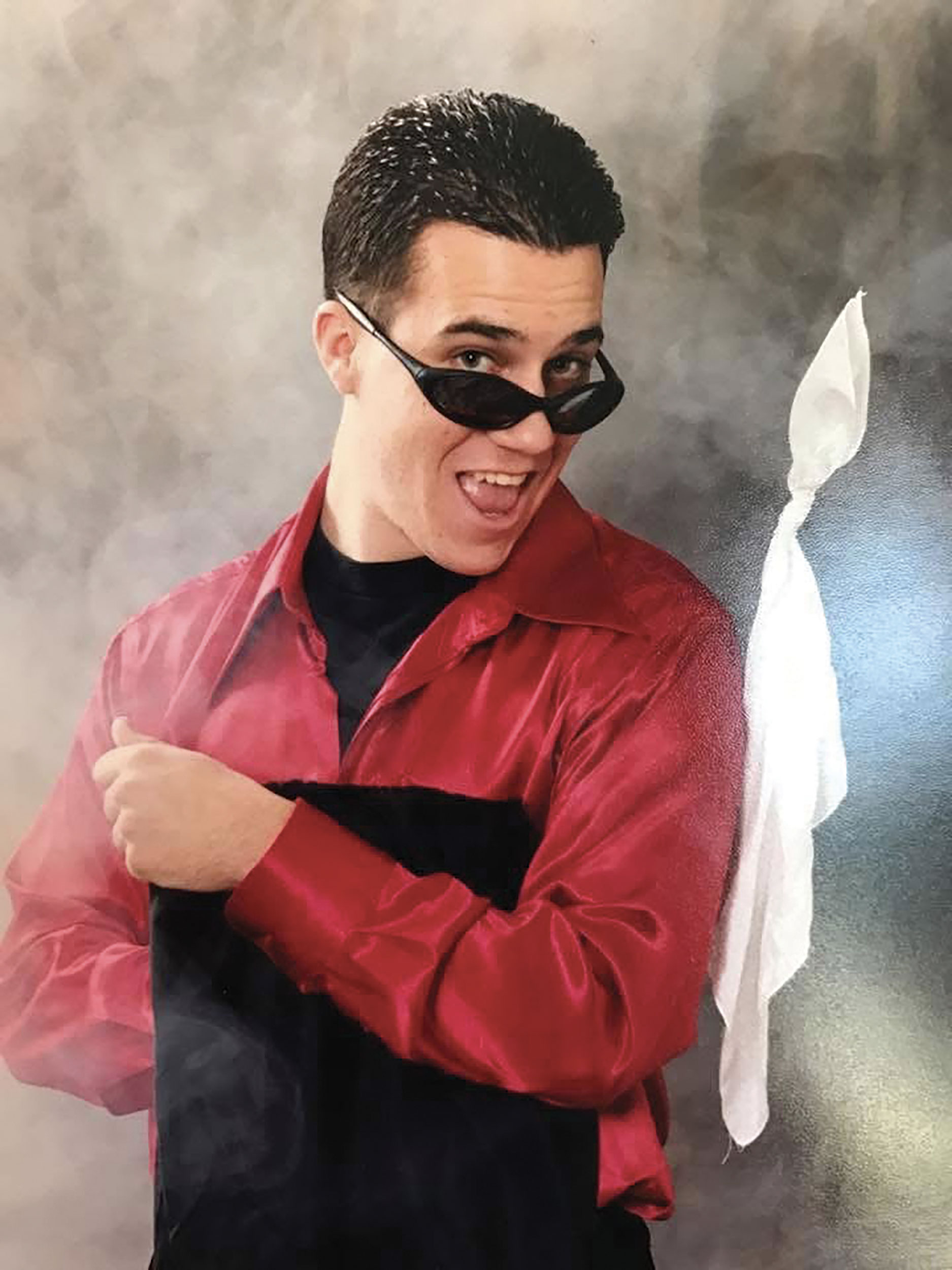
The hanky began to jerk and sway and soon the two began, as the song goes, to dance and jump to the rhythm, jump jump to the rhythm, with the cheeky handkerchief sometimes upstaging Blagg. It was a fun, physical and energetic performance – a new coat of paint on an old trick. Blagg still holds the record for the contest’s youngest winner.
“AMPED” BY HIS WIN in Colon, Blagg decided he would put together a show and go pro. He had enrolled in Carthage College in Kenosha and, needing a senior project for his marketing and communications degree, petitioned the board to create his own curriculum called Show Production and Management, which would focus on his illusion show.
The self-driven curriculum ended with a packed show at a Kenosha high school auditorium, four years after his win in Colon. “I was like, all right, here we go,” Blagg says.
Encouraged by the success, he decided to take his show on the road. He secured an investor who co-signed a $25,000 loan with which Blagg bought supplies. His dad helped him build the props and set, and he booked venues around the Midwest. “Thing is, those [audience members in Kenosha] were my friends and family and their friends.”
Outside of his home turf, ticket sales were painfully slow. “No one was showing up,” Blagg says, shaking his head. “When it was all said and done, poof, the money was gone.” This was not the type of disappearing act Blagg had in mind. His loan had to be paid back, with interest.
“This time was extremely challenging. You’re following your dream, now here comes reality,” Blagg says, smacking his fist into his palm for emphasis. “There was some soul searching for a number of years trying to figure it out. Every success has a story behind it that I guarantee you includes a lot of failure – people just don’t like to talk about it.”

tickets. Photo by Carla Villalobos, courtesy of Bill Blagg.
BLAGG DIDN’T QUIT magic entirely. He still practiced tricks and performed at parties, but he shelved the idea of being a professional stage magician. Living in Kenosha, he got a job at Uline and used his gift of patter to climb the corporate ladder, starting from the bottom rung in customer service.
He began to pay off his loan and, after that, saved enough for a house. One day, a co-worker named Kristin Miller caught his eye in the hallway, and he asked if she’d go out to lunch with him. It took a couple tries, but eventually his magic worked, and she said yes. They married in 2010 and now have two kids, ages 5 and 9 months.
Blagg had found a decent job and a relationship, but something was missing. He kept thinking of his magician dreams and decided to give it a second chance, determined to answer the questions still haunting him from his first attempt.
“I still didn’t have an understanding of what went wrong,” Blagg says. “Is this ever going to work? Is this a viable career path?” He didn’t want to be a celebrity mega-star like David Copperfield or Criss Angel, but he still dreamed of touring the country and performing for a living. Blagg began a “quest for information,” in which he sought advice from a counsel of master magicians. They weren’t household names, but the wizards who make the magic happen from behind the scenes.
Blagg talked to Jim Steinmeyer, a master of the craft who created illusions for everyone from Siegfried & Roy to Alice Cooper. He spoke to Don Wayne, who worked closely with David Copperfield as his illusion director, creating (among many others), the illusion in which Copperfield appeared to walk through the Great Wall of China. There was Jay Owenhouse, master of tigers and straitjacket escapes, who told Blagg to read a book, The Illusion Show Business by Stan Kramien. Known onstage as “The Great Kramien,” the legendary performer later offered Blagg a paid consultation. Bit by bit, Blagg was collecting pieces of the puzzle.
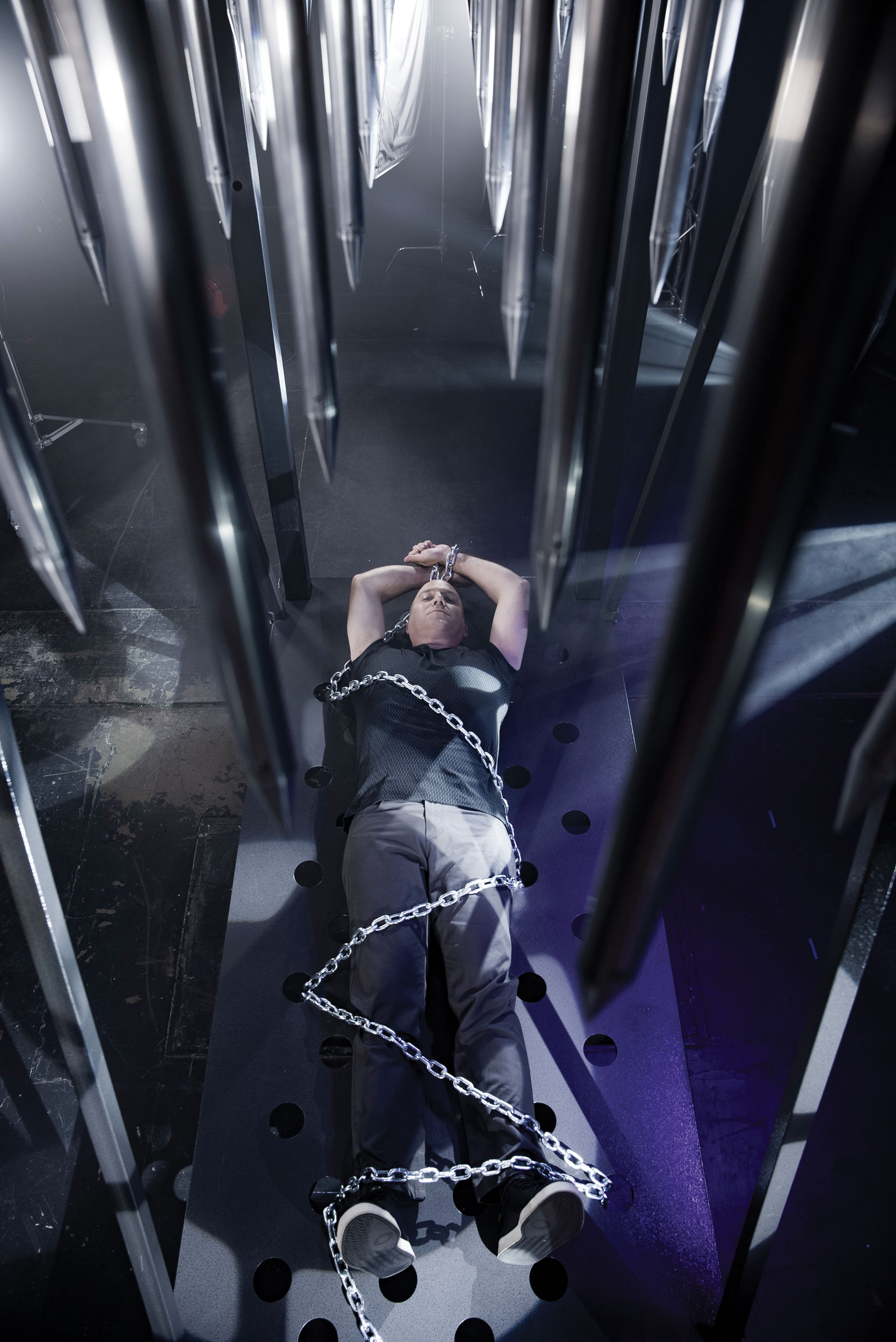
One suggestion Blagg received was to get the ball rolling by working with civic organizations looking to do fundraising events – athletic booster clubs, police and fire organizations, and groups like the Lions Club. Blagg could provide them with an entertaining event and split ticket proceeds. His first foray into this idea was a successful show that raised money for Union Grove’s high school band trip to Disney World, at the school’s performing arts center.
Another of Blagg’s advisors was magician David Charvet, who lives near Portland, Oregon, and has been a performing illusionist for just over 50 years. Blagg had first approached him as a teenager, getting a loan from his mom to buy one of Charvet’s trunk escape illusions. Now, he returned to ask for strategic advice.
Charvet was “a wealth of information,” Blagg says. “I wouldn’t be where I am today without him.” Charvet suggested to Blagg that he make a 50-mile circle around where he lived and find all of the venues that might work for a magic show, then expand to a 100-mile radius, taking detailed notes along the way. Blagg eventually switched from fundraisers to selling his own tickets, setting up an 800 number routed to his cell phone to facilitate. Charvet says he knew Blagg would make it.
“He had the fire in him, and the devotion,” Charvet says. “Magic, like any performing art, has to be an obsession if you’re going to do it.” While many magicians are great technical performers, mastering the mechanics and sleight of hand, they fall short on stage presence.
“They can fool you, but are they entertaining? The public is the ultimate arbiter on that. Some people do it better than others, and Bill does it really well,” Charvet says.
He adds that after years of work, Blagg has mastered the other important ingredient for success. “In show business, the bigger and more important of the two words is business. A lot of performers are talented, but they fail because they don’t have business sense.”
BLAGG EASED INTO HIS RETURN to magic. He began performing again in 2008 but kept his day job until 2015, making sure he was on solid ground. Blagg’s hard work has paid off: He’s now able to support his family and has a staff of eight people touring across the country in a bus, with a semi-truck full of tricks, just like he dreamed when he was younger.
His main show is called “The Magic of Bill Blagg Live” (abbreviated as MOBB), but he’s diversified by creating other programs that are entertaining and educational. “The Science of Magic” and “Magic in Motion” are geared toward school field trips where he demonstrates physics and optical illusions. His most recent creation, inspired by becoming a parent, is “Family Magic,” an affordable show with a shorter run time that’s marketed as a fun family outing.
A decade into his full-time magic career, Blagg’s show isn’t glitzy like something you’d see in Las Vegas – no scantily clad dancers, no white tigers. It’s focused on Blagg, usually with just one or two assistants. Charvet thinks that Blagg has “stayed true to himself” and that has been key in his success.
Part of being a master illusionist is keeping your methods well-guarded. Blagg says that can be a big challenge in the social media age, where it seems like nothing stays secret.
“There’s a rapid amount of exposure of magic and illusions on social media, just for the purpose of clicks. I understand people get paid by clicks and views, but to me it seems like a very cheap way to do it,” Blagg says. He seems more disappointed than angry. “I’m surprised at some of the stuff that is being revealed and the lengths they’re going to do that.”
Blagg’s illusions are honed in secret, in a studio he calls the MOBB Shop that he built on his property in Pleasant Prairie. The industrial garage-like building features a 1,000-square-foot stage with a full lighting rig on which he can practice.
As annoying as it can be to see a magic secret revealed on TikTok, Blagg says the key is to stay a step ahead with new innovations. He says he has six new illusions he hasn’t performed that he’s been developing over the last 10 years and is “super thankful” those tricks are still up his sleeve.
“I know I’m not going to find them on some video out there,” Blagg says. “If someone can figure out how some of this new stuff is done and they can do it successfully, then bravo to them because it’s taken us years to sort it all out.”
“Bill is a very honest individual, and I mean that in the sense of honesty in his image to the audience. Bill is Bill, and he’s a guy who is in love with magic,” Charvet says. “His enthusiasm is huge because if [the audience] get a sense that the person onstage enjoys what they’re doing, they will come along for the ride and enjoy it with you.” He adds that performers can get jaded over time, but “Bill keeps it fresh.”
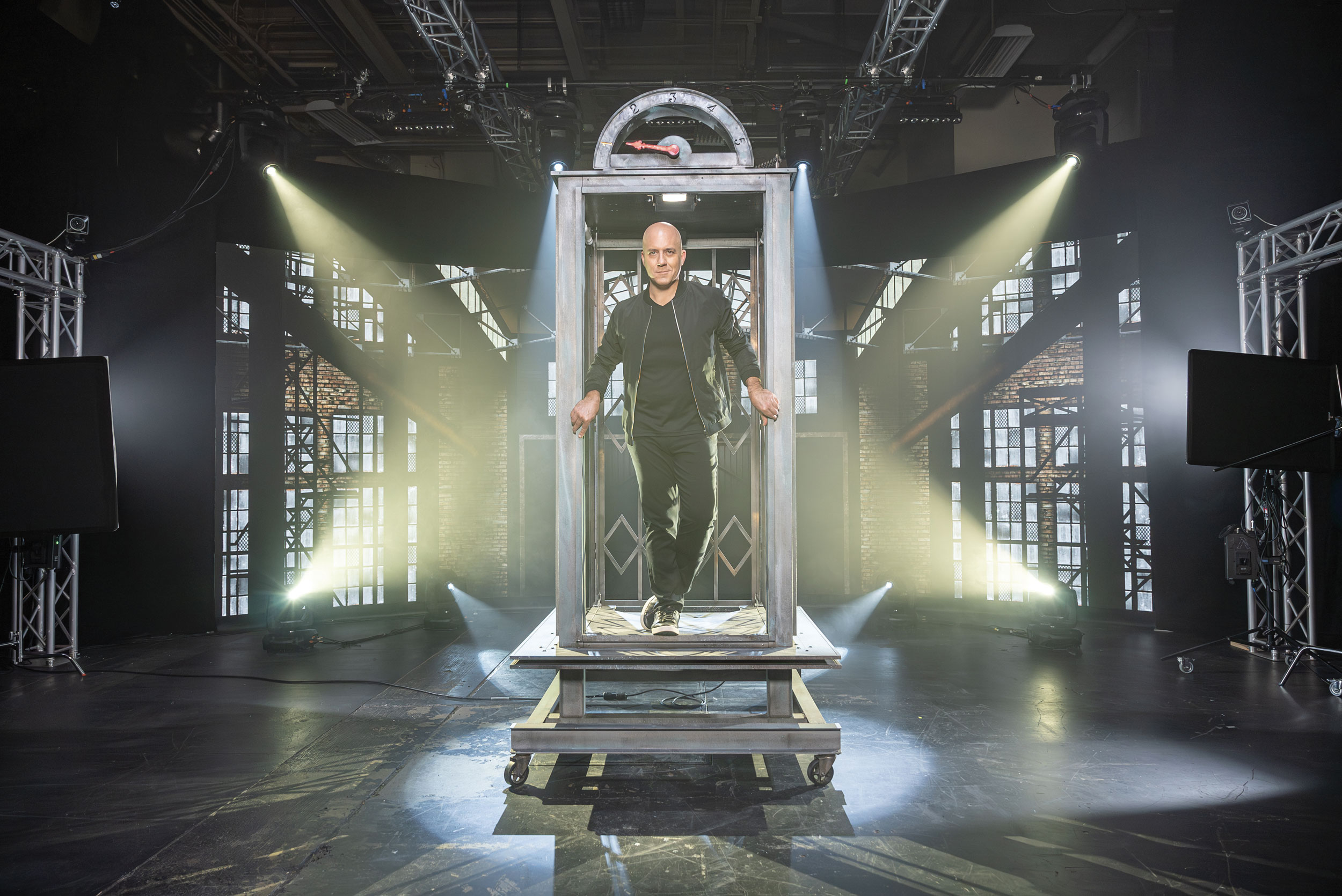
Between his four shows, Blagg does about 150-175 performances a year, generally touring from the second week of January through mid- or late May. He takes a break over the summer with just a few scattered performances, then ends the year touring September through early December before a holiday break.
After his show at the Marcus Center last year, he was on the road to a four-day stint in Cleveland, then Arkansas, Tennessee, Mississippi and beyond. Blagg says the motivation for his career has never been the money, but the passion he has for performing and his “love of entertaining and bringing wonder to people’s lives.”
When he has a few days off, he’ll park the tour bus somewhere and fly back to Pleasant Prairie to visit his family. It’s a life that Blagg says is full of figuring out “creative logistics.” But if anyone can pull that out of a hat, it’s Bill Blagg.