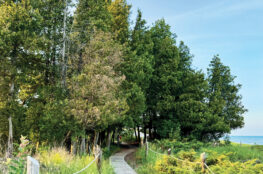


Being plugged in all the time – with work, our digital lives, and social and family obligations – just wears us down. The best remedy for that, according to a mindfulness practice rooted in nature, is to take a walk in the woods. Not a fitness hike – in fact, the goal of forest bathing, as it is called, is to bring your heart rate down by walking slowly, breathing deeply and mindfully engaging (that’s the “bathing” part) with nature. While some proponents may find a spiritual dimension to this practice, it’s rooted in science.
Forest bathing began in modern-day East Asia. Japanese culture has had a strong connection to nature for centuries, from Shinto and Buddhist spiritual elements to artwork and haiku themes. But in the 1980s, Japan was dealing with rapid urbanization and a die-at-your-desk work culture (seriously, they have a word for it: karōshi means death from overwork). To address the alarming amount of stress, the government began promoting, and designating trails for, what they dubbed shinrin-yoku – forest bathing. Research discovered that time in natural spaces reduced stress and anxiety, lowered blood pressure and even boosted the immune system.

Celebrate this year’s winners of the Betty Awards!
Kate Bast of Shinrin-yoku Madison is one of nearly 3,000 guides worldwide certified by the Association of Nature and Forest Therapy Guides and Programs. Bast recommends 20 minutes of forest bathing per day. “When we tend nature, it tends us back,” she says. More than engaging the classic five senses, forest bathing stimulates our senses of playfulness, wonder and awe.
Bast’s goal is to help people be with themselves, silently spending time noticing, collecting things, seeing details. She offers mindfulness prompts when it helps, but what resonates is personal: “There’s no right or wrong, and that takes the edge off for people to just make it a gentle, lovely, welcoming practice that you can do on your own.” Or with others. The point is to silently engage, however, not spend time conversing about the world outside the woods.
“Come to the woods, for rest. There is no repose like that of the green deep woods. Sleep in forgetfulness of all ill.” – John Muir
While fall’s canopies of fiery colors make the season particularly engaging, you can still forest bathe in the rain or while crunching through snow listening to whispering wind in the pines. Bast sometimes has clients take off their shoes to walk through grass, mud or trickling streams. She ends her sessions with a reflective sit and a tea service. “Not everything has to be a big, metaphorical, life-changing noticing,” she says. It can be as simple as having the phone off and looking up to notice an amazing blue sky. You’re going slow, she says, “and you get to the end and you’re thinking, ‘OK, I did that and I feel good.’”
While even trees in your backyard may work, ideally you want to seek out the wildest, least trafficked natural places – perhaps Seven Bridges Trail in South Milwaukee’s Grant Park, or an Ice Age Trail segment in the Kettle Moraine. For more formal instruction, both Schlitz Audubon Nature Center and Wehr Nature Center offer guided forest-bathing workshops for a fee. Specialists like EatMoveMKE, offer forest therapy walks throughout the city. And in July, the Tara Lila Forest Bathing Trail opened in Eagle River.