
Cause a Stir
A properly made risotto flows. It’s thick, but it moves across the plate, a savory porridge you could and maybe should eat with a spoon. Northern Italy is where risotto originates, and Milan is known for a version with saffron that’s served traditionally alongside osso buco.
READ MORE FROM OUR 2026 “THAT’S ITALIAN” FEATURE
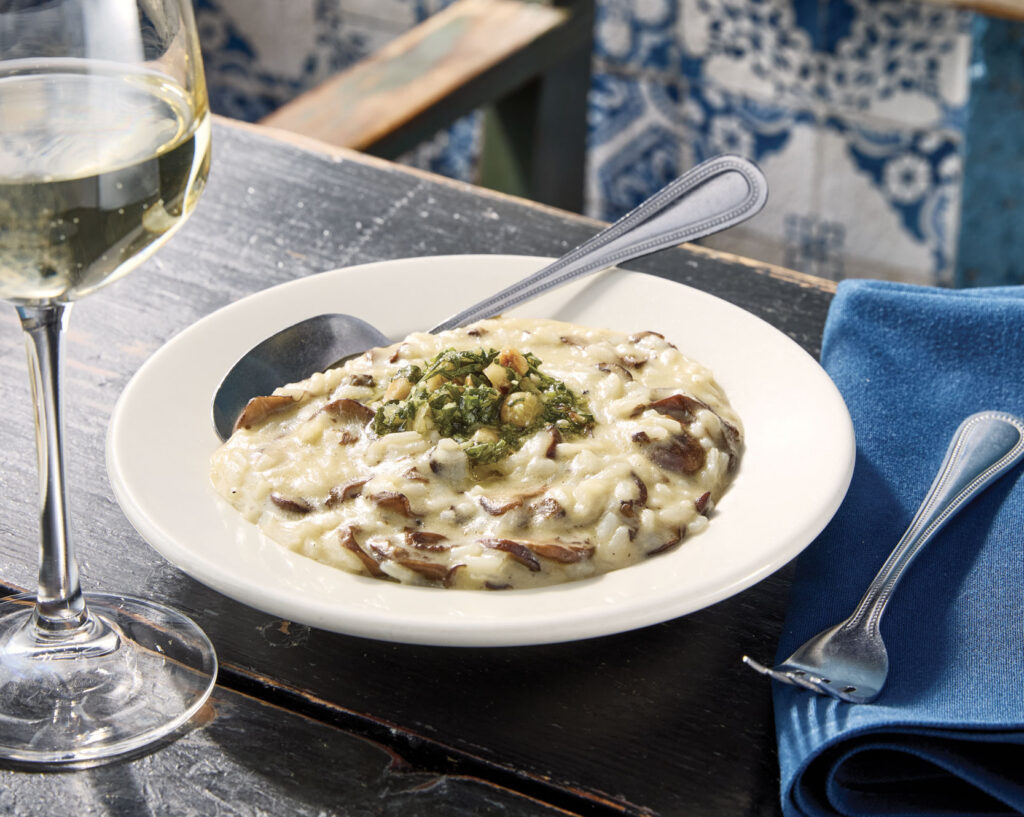
For as often as it appears on menus as a side dish, it is rarely made correctly. One of the few risottos that stands out – because the arborio grains are appropriately al dente but creamy, the whole creation the consistency of hot lava – is served at La Merenda. The Walker’s Point small plates restaurant has served risotto on its menu of international tapas for as long as I can remember. And everything about the classic mushroom version feels right – the textural flow, the farm-raised fungi, and the gremolata topping – an Italian condiment typically of herbs and lemon zest but slightly modernized here with chopped hazelnuts. 125 E. National Ave.

Check out the City Guide!
The Lore of Carbonara
Carbonara just rolls off the tongue, doesn’t it? The word is close to carbonaro, Italian for coal burner. Did it start as a dish for and among the working class? It may have. Another story traces it to American soldiers stationed in Italy during WWII – a combo of Uncle Sam’s mess hall fare (eggs, bacon) and Italian cooks’ pasta. Traditionally, the sauce is made from egg yolks, pasta water, pecorino cheese, black pepper and fatty, rich guanciale (cured pork jowl), but most restaurants do not try very hard to resemble the original. Bacon or ham might sub for guanciale, parmesan for pecorino. Sometimes there’s added cream and no egg at all, which turns it into a kind of alfredo sauce.
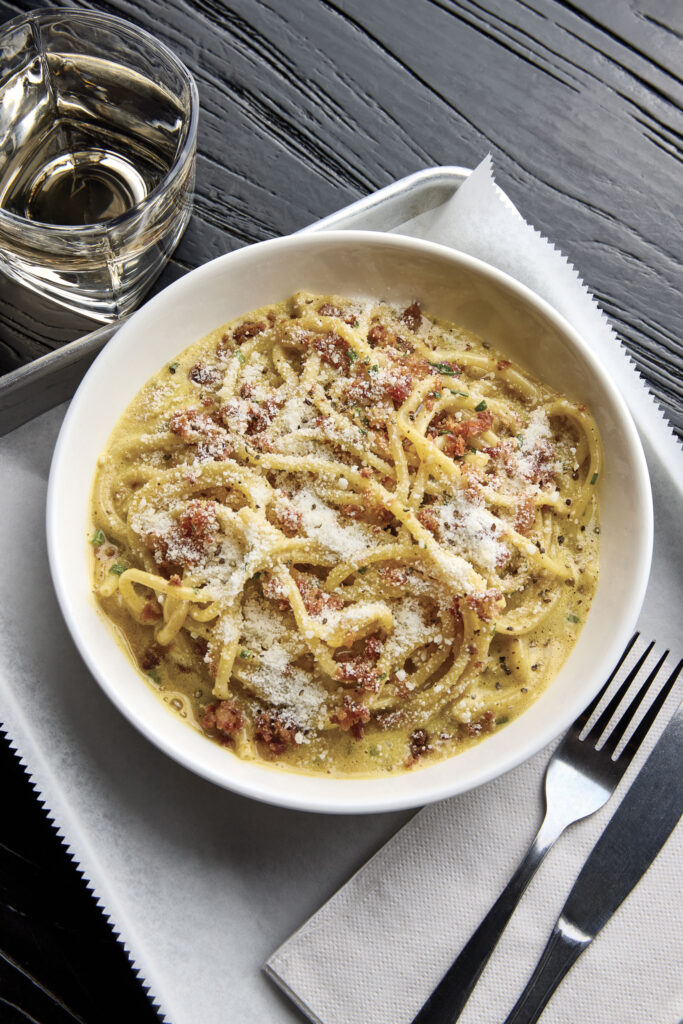
My search for a good carbonara led me to the only pasta bar in the city, Bay View’s Egg & Flour. Its carbonara, while not a completely faithful rendition, is a good dupe – bacon and parm are the two substitutions this version uses. It takes finesse to get that perfect velvety texture to the sauce. The egg/cheese mixture must be quickly but carefully incorporated with the hot pasta without curdling the egg. Egg & Flour makes its carbonara with bucatini and finishes it off with chopped chives for flavor, color and texture. This is a dish to be eaten immediately. “It’s the only food that I try to eat as fast as possible – that’s the way it’s meant to be eaten,” says Adam Pawlak, Egg & Flour founder and chief recipe tinkerer. 2273 S. Howell Ave.
Will Brake for Spumoni
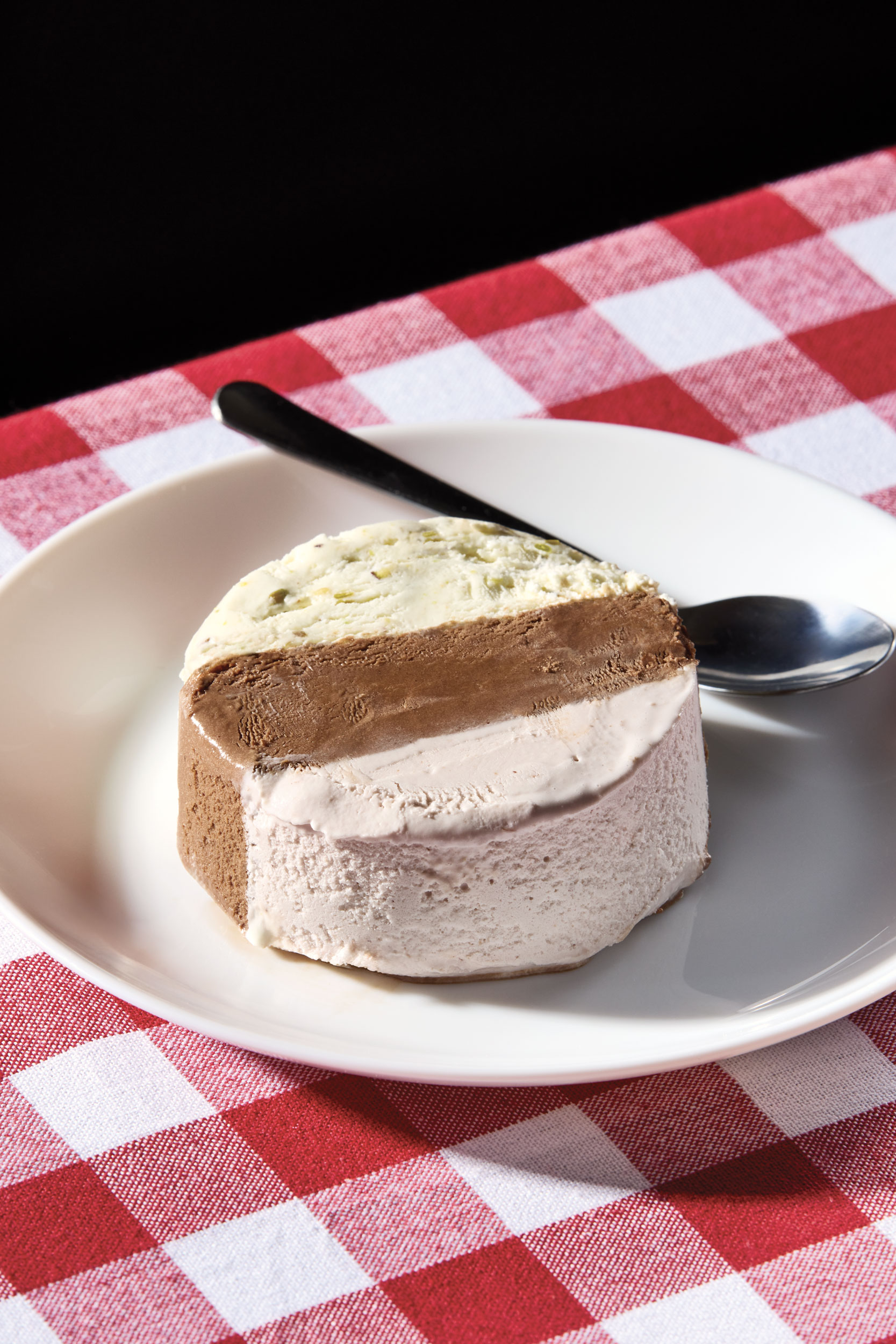
Some old-school Italian American joints serve spumoni ice cream for dessert, but it’s not as popular as it used to be. Spuma is the Italian word for foam, and the traditional spumoni first made in Naples, Italy is a molded mousse-like gelato dessert featuring three distinct flavors set in layers: chocolate, pistachio and cherry.
It’s customarily cut into slices so you see the layers and the chopped nuts and candied fruit within them. Neapolitan – with its layers of chocolate, vanilla and strawberry ice cream – is a variation of spumoni. Milwaukee’s Purple Door Ice Cream makes a spumoni flavor occasionally, selling it in its scoop shops. It’s worth waiting for – in fact, the rarity makes this spumoni better. Its richer, deeper flavors elevate this underappreciated classic.
Garlic Meets Breads
Garlic bread – likely a descendent of bruschetta – is part and parcel of an Italian American restaurant menu. The gold standard is crisp, thick blocks almost like Texas toast soaked through with butter but never soggy, and a strong but not overwhelming hit of garlic (more likely, garlic salt). You can eat it by itself, although a side of marinara is never wrong. Mama Mia’s, which used to dominate the local garlic bread conversation, has been supplanted. Barbiere’s is good (the garlic salt is balanced, and the suffusion of butter admirable), but Capri di Nuovo (8340 Beloit Rd., West Allis) has it perfected in its brick-shaped toast so crisp, buttery and excellently seasoned.
Layered Love Story
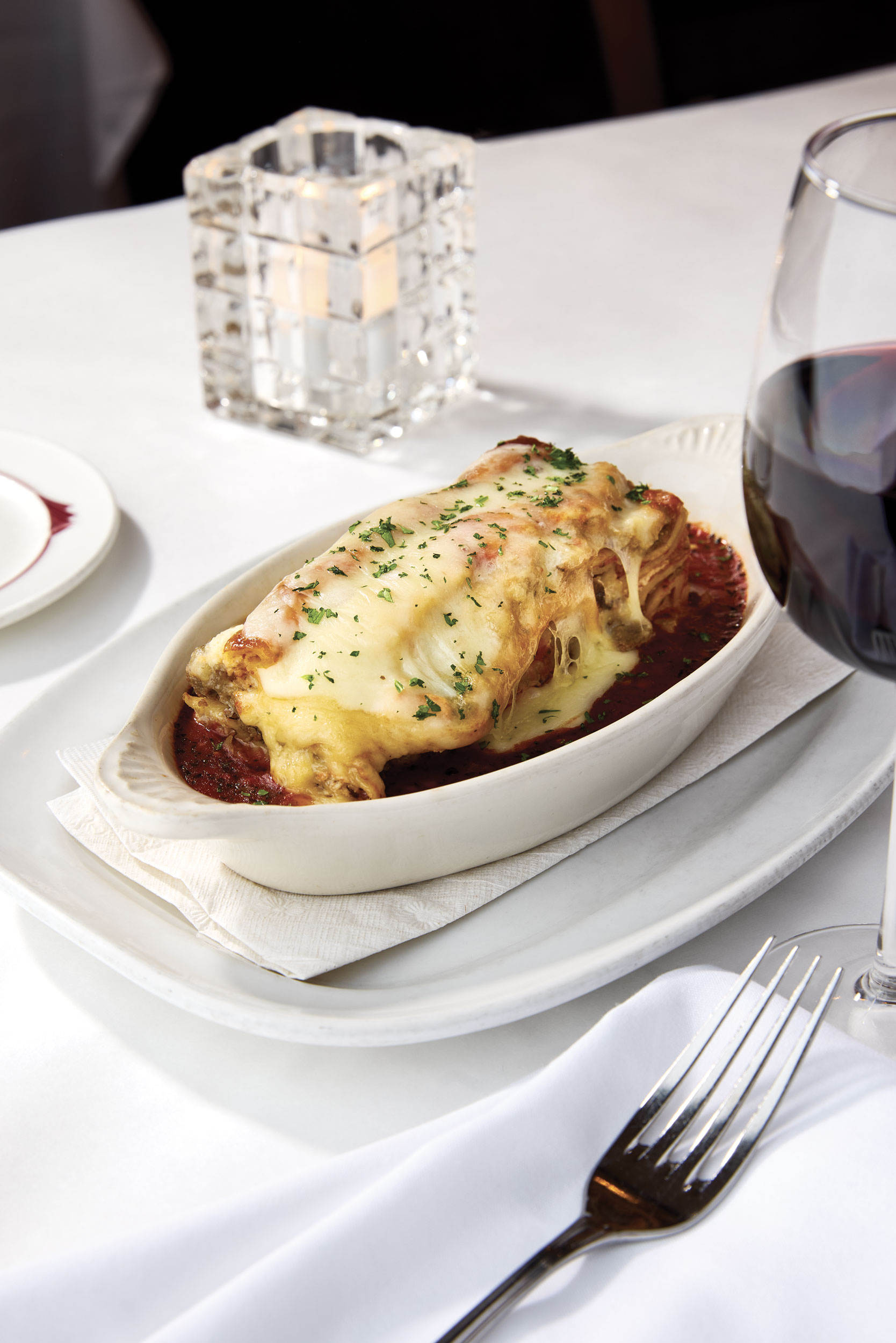
Lasagna is a well-traveled – and old – dish. It may have been born in ancient Greece but was adopted by Italy, which brought to the world lasagne Bolognese, defined by a refined meat ragu and béchamel sauce. It eventually made its way across the pond to Italian American restaurants, which have popularized the rich, beef-based Southern Italian lasagne di Carnevale, made with tomato sauce and ricotta and mozzarella cheeses instead of béchamel. Here are three good restaurant lasagnas:
- Balistreri’s Bluemound Inn: This old-school joint’s decadent beef lasagna is very cheesy, with plenty of ground beef and thick, balanced red sauce. Every hearty bite digs deep into slow-cooking nostalgia. $22. 6501 W. Bluemound Rd.
- Barbiere’s Inn: The meat sauce has very good, bright flavor, and this lasagna is baked so the edges get caramelized and the cheese and sauce are oozy – perfect for dunking the guilty-pleasure garlic bread. $10.25-$25. 5844 W. Bluemound Rd.
- Centro Cafe: The zucca butternut lasagna combines butternut squash (zucca is the Italian word for pumpkin), mushrooms and a rosemary-leek béchamel sauce in a noodle-less kind of casserole. Stupendo! $28. 808 E. Center St.