

Young artists bypass their family’s walls and refrigerator magnets each year to have their work critiqued by expert jurors at the Scholastic Art Awards, the nation’s oldest and largest art competition for teens.
The Milwaukee Art Museum started hosting the contest in 1976. Earlier this year, 44 years after the museum first put on the contest, a group of jurors decided which of the Wisconsin students who entered the competition – all in grades seven to 12 – would take home medals and scholarship packages.
On jurying day, one might expect to find a tight maze of easels, mannequins and high-gloss ceramics. Instead, flat-screen monitors were positioned around a glass-walled conference room overlooking Lake Michigan.
The jurors reviewed the 3,380 submissions for technique, originality and emerging point of view. They worked in panels of three over the course of six hours, winnowing down category submissions with the flip of their wooden paddles. In or out.


“We could be here all day debating merits, but we have to eliminate three-fourths of the submissions today,” said Graeme Reed, the Museum of Wisconsin Art’s director of exhibitions and collections. “They bring in experienced artists to go through the work quickly. We’ll have to be a little ruthless.”
The jurors agreed that age quickly faded from consideration. Still, their discussions allowed for inexperience and even overexuberance.
“This one, with its contours and choice of colors, feels like their voice and not just a piece that’s executed well,” mixed media artist Rosy Petri said as her panel discussed a piece teetering between winning a medal or an honorable mention. “I want to meet this kid. I hope they’re weird.”
A number of jurors recalled earning Scholastic medals in their younger years.
“I won silver and gold medals all through middle school but had no idea everything that went into choosing the winners until today,” said painter Vedale Hill. “I just remember catching the bus down here and having my mind blown at how huge the exhibit was.”
“I look for technical skills, any glaring issues and lastly, what they’re trying to tell me,” illustrator Dustin DuPree added. “Sometimes, what they’re trying to say is powerful enough to surpass steps one and two.”
Young people will always have something to say – about heartache, about joy, about the dog at the end of the block. The worlds they’re painting now hint at the one we could inhabit one day.
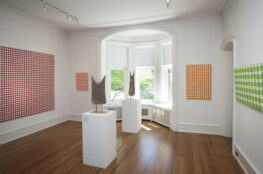
The winning selections – more than 400 total – are exhibited in one of the MAM’s galleries. The exhibit will remain on view through March 15.