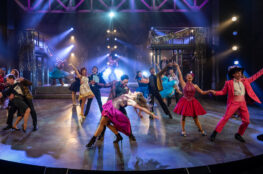


“You are here at the start of a moment,” says the opening number of Come From Away, and it’s true in more ways than one.
Come From Away is the Milwaukee Rep’s inaugural show in the renovated Ellen & Joe Checota Powerhouse Theater, situated inside the shiny new Associated Bank Theater Center. $80 million dollars later, it really is a stunner.
The new Powerhouse Theater feels like a dialed-up version of the old. Spacious yet intimate, with roomy seats and the peek of exposed brick walls, the details add up to an elevated audience experience.
To arrive at this moment, the Rep bested overwhelming odds, from a global pandemic to an historic flood that recently devastated their off-site production center. Because of the flood, the set of Come From Away was built at a scene shop in San Francisco. It’s a fitting lesson in perseverance and collaboration in the face of tragedy, as those are also themes in this 2017 Tony-nominated musical.

Celebrate this year’s winners of the Betty Awards!
Come From Away tells the true story of the small town of Gander, Newfoundland, in the days following Sept. 11, 2001. Due to the U.S. closing its airspace, this middle-of-nowhere town “on the edge of the world” went from 9,000 residents to 16,000 overnight as no fewer than 38 planes were diverted to the Gander airport.
The 7,000 people who landed in Newfoundland on 9/11 spent up to 28 hours on their planes, confused and without connection to loved ones or a hint of news. Remember, this was a time before cell phones were in every pocket.
Out of the darkness, the people of Gander were a light. They opened their homes to these displaced people – emptying store shelves, providing phones and clothing, cooking casseroles and cod au gratin to feed thousands. Theirs is an incredible example of kindness, compassion, the gift of dignity and “love thy neighbor.”
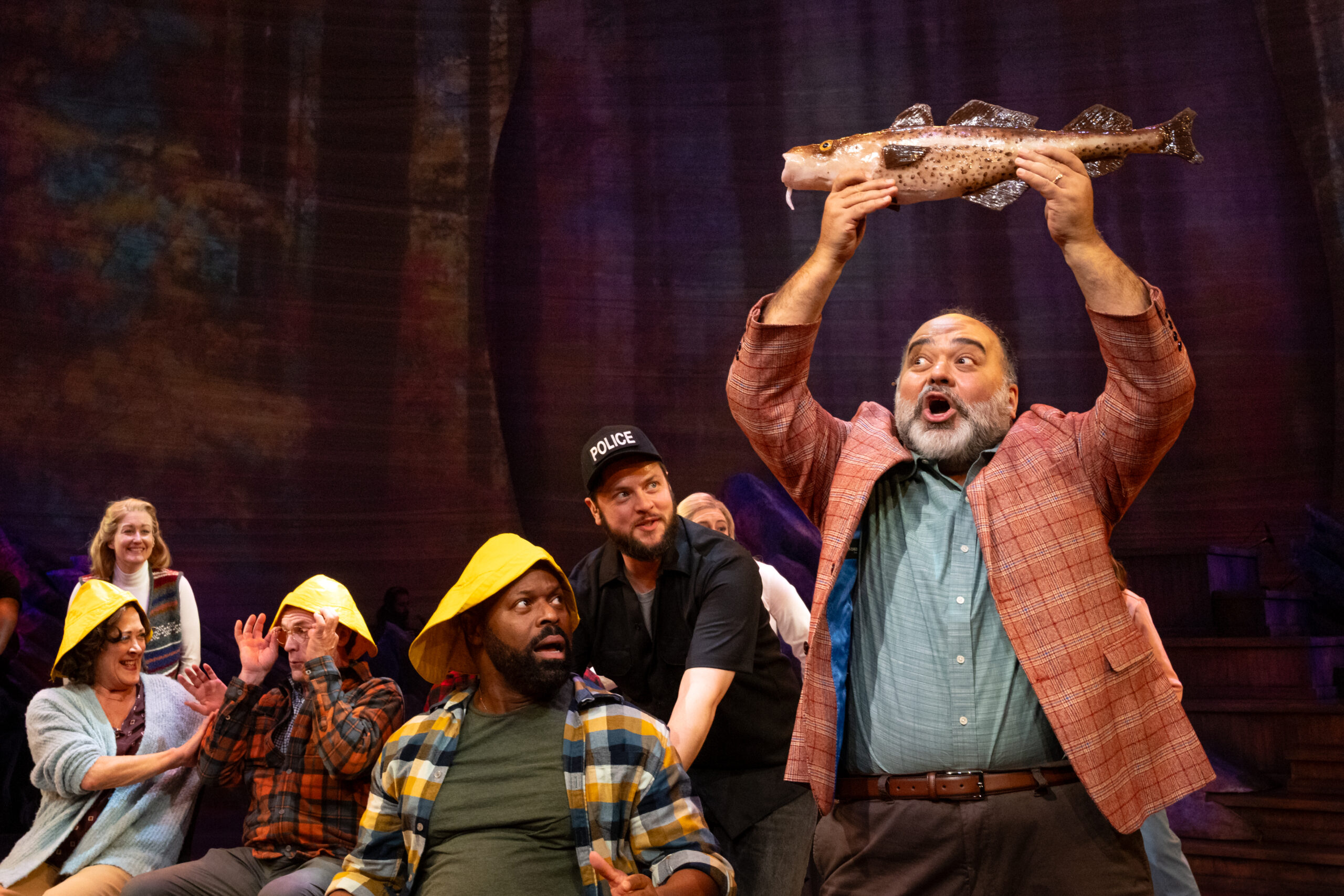
Irene Sankoff and David Hein wrote the book, music, and lyrics for Come From Away based on hours of interviews with Gander locals. Hein has said that every character is inspired by a real interview or several interviews. While many characters are an amalgam of several people, that doesn’t make them any less real.
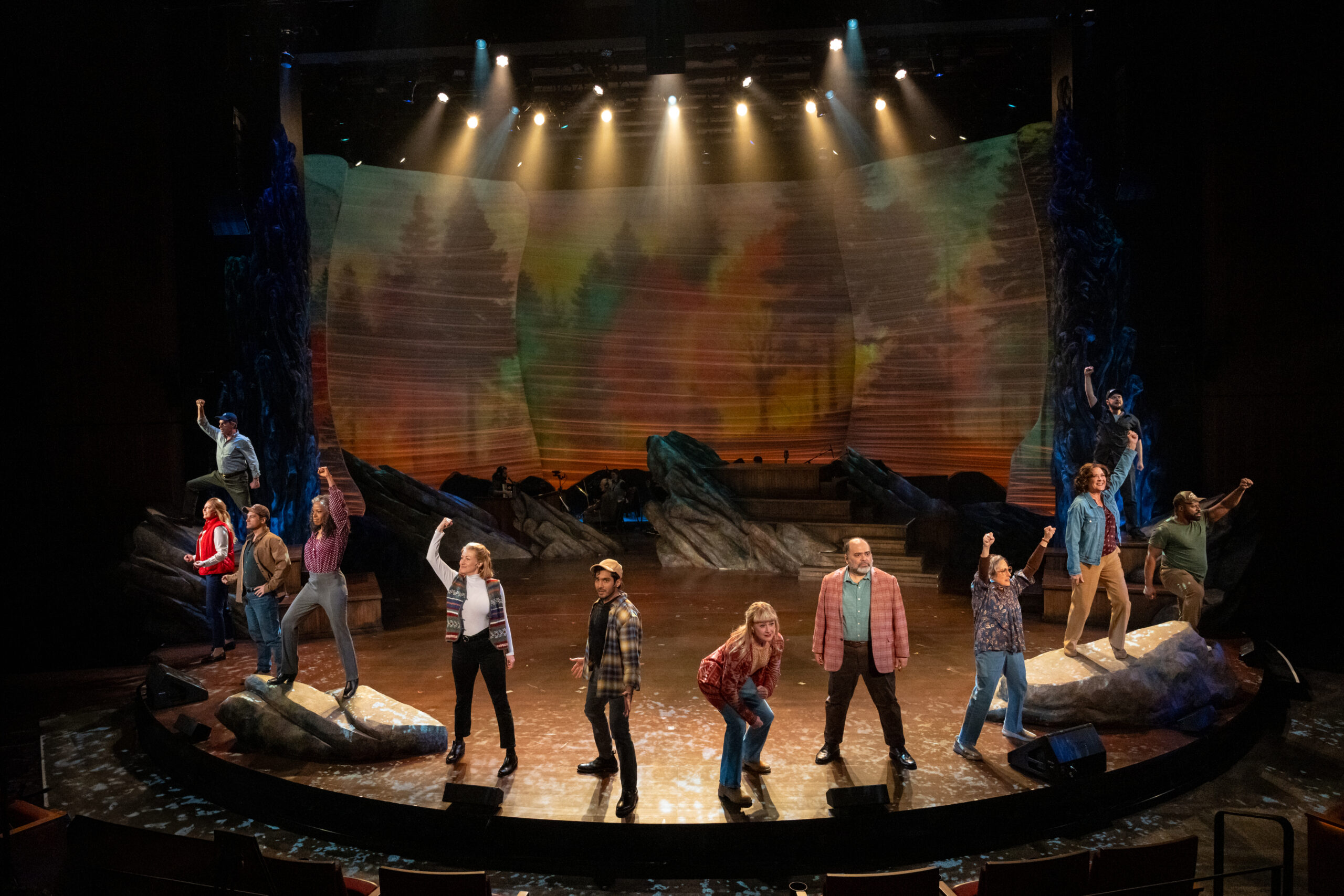
Part of what makes this folksy musical so special is the wide cast of characters. This Rep production features 12 brilliant actors, each playing multiple Gander townsfolk and “plane people.” The sheer volume of parts combined with the range of personalities and backgrounds is an impressive undertaking.
Let’s start the shout-outs with some Milwaukee Rep favorites: Kelley Faulkner is pitch-perfect casting as the swoony Annette and pilot Beverley Bass. It feels like Faulkner’s Milwaukee Rep run has been leading to her soaring rendition of “Me and the Sky.” Michael Doherty is a hoot as constable Oz, among other laugh-out-loud bit parts. Steven Koehler, known at the Rep for Guys on Ice, trades his Midwest accent for a British one in the part of Nick.
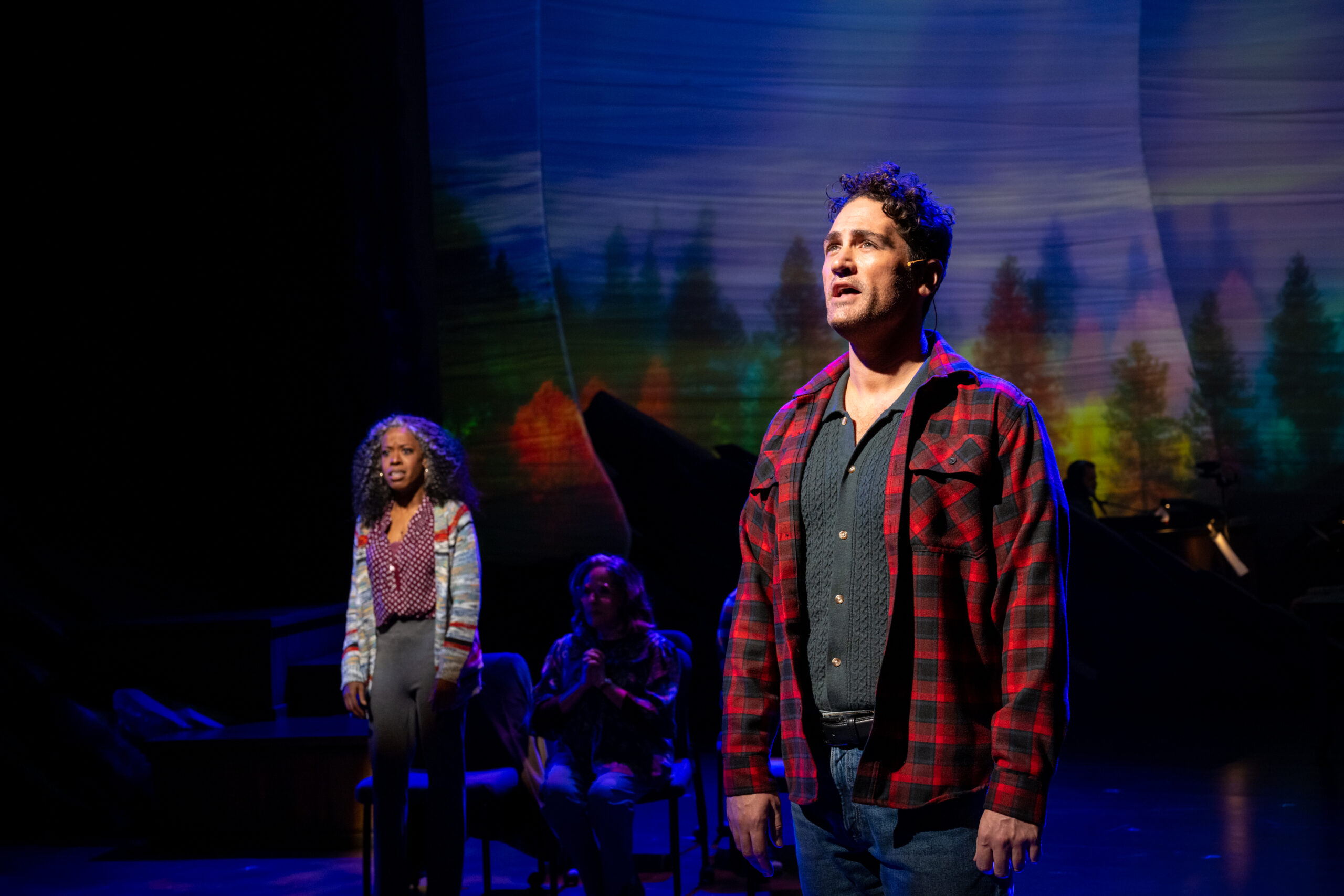
Most recently at the Rep in The Last Five Years, Grace Bobber is back as TV reporter Janice. She’s delightful, particularly when freaking out over Tom Brokaw. Megan Loomis, last seen in The Craic, is here as Bonnie, real-life manager of the Gander Animal Shelter. Bonnie cared for all of the animals on the diverted planes, including two bonobo chimpanzees (true story!). Gavin Gregory and Richard Ruiz Henry also return to the Rep – Gregory as New Yorker Bob, and Henry as Gander’s mayor, Claude Elliott. Both are stand-out performers, and it’s a pleasure to have them back.
New to the Rep: Dayna Jarae Dantzler is an easy favorite for her sweet voice and emotional performance. She plays Hannah, a worried mother awaiting news of her son, a firefighter in NYC. Joy Hermalyn brings fantastic heart and humor as Beulah, and Karen Ziemba totally charms as Diane. Lastly, Adam Rennie and Levin Valayil are perfectly paired as Kevin T and Kevin J, respectively. Rennie spotlights his lovely voice in “Prayer,” and Valayil serves buckets of charisma.
With so many players, a seamless production hinges greatly on the mics. My one real critique would be for the team to fine-tune certain mic transitions – but even so, mic issues were few and far between. From the precise flow of choreography (Jenn Rose) and scenic and prop design (Todd Edward Ivins), the mechanics of this production are tidy and exact. Costumes (Theresa Ham) also play a role in the logistics of the show, as a simple cardigan or hat communicates a character change. Lighting (Jason Fassl) and projection design (Mike Tutaj) deliver on mood and sense of place. Overall, this production Come From Away is a visually captivating, well-oiled machine – 100 nonstop minutes, no intermission.
And let’s not forget the musicians, whom the audience gets to enjoy on stage the entire time. The show I attended featured fiddle (Glenn Asch), whistle (Olivia Dobbs), guitar (Bob Monagle), drums (Patrick Morrow), bass (Michael Ritter), mandolin (Vidar Skrede) and percussion (Ben Yats). To me, any musical that showcases and celebrates its musicians wins points.
In the end, the themes and musicality of Come From Away remain timely and an all-around treat. Though the story is born of a national tragedy, it demonstrates that there is undeniable joy in coming together. Come From Away celebrates the best of humanity and how, in times of crisis, we carry the capacity to push forward as friends and neighbors above all else.