
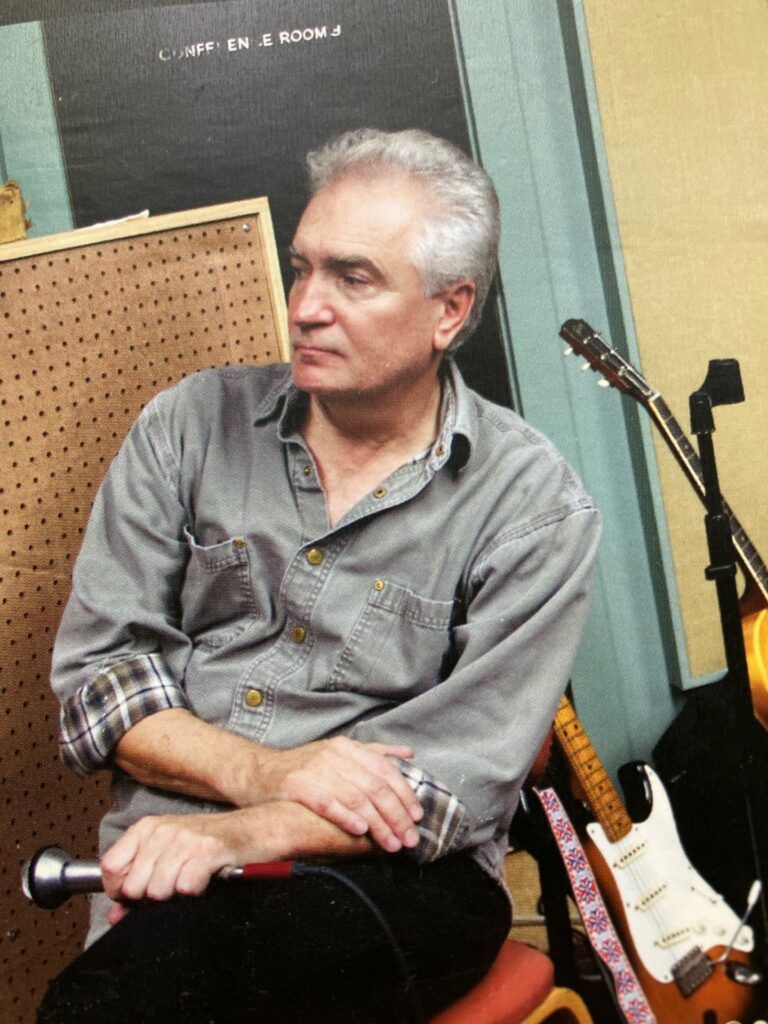
Jim Liban is a true master of blues harmonica. When I saw Liban and his band take to the tiny stage at Von Trier’s in 2019, the outside world faded away. The Milwaukee musician is the rare breed of performer who can hypnotize an audience. Some songs stretched out well past 10 minutes, and when he brought the band’s volume down to a whisper you could almost hear a pin drop.
Over his musical career of five decades, he has amassed a loyal fan base with a blues sound that, while reflecting his influences, is decidedly his own.
Liban grew up on the West Side of Milwaukee and began playing drums in elementary school. During junior high he was exposed to blues harmonica through the music of British bands like the Yardbirds and the Rolling Stones. Like for so many of his peers, these bands guided him back to the American origins of the music.

Check out the MilMag Mini!
When Liban and his family moved to Shorewood when he was 16, America was amid a folk music revival. Just a short bus ride south, the Avant Garde coffeehouse was hosting legendary folk and country blues performers. Liban saw Sleepy John Estes, Yank Rachell, Big Joe Williams, Son House and others, as well as electric bands like Magic Sam and Johnny Young.
He was able to sit in with many of these artists. “It’s part of the blues tradition,” Liban says. “Many of them sat in with older musicians when they were coming up. It’s a way of passing it forward.”
By the end of high school in 1966, Liban began to focus on harmonica and using a microphone and guitar amp a la Little Walter. He co-founded rock-blues band The Unit. At this time, he wasn’t singing much; in fact, he described his singing at that time as “pretty bad.”
In 1968, he left to join The New Blues. The band relocated to San Francisco, signed with Family Dog Productions, and performed concerts with the hottest bands of that era: The Grateful Dead, Jefferson Airplane and Pink Floyd. They changed their name to A.B. Skhy.
On a Friday night gig at the Whisky a Go Go in Los Angeles, Jimi Hendrix was in the audience. Hendrix must have been impressed, as he came back the next night with his guitar and asked to sit in. Guitarist Joel Paterson later wrote that Liban remembered “literally going eyeball to eyeball with the guitar icon while trading licks on Hoochie Coochie Man.” This encounter eventually got the band signed to MGM Records, and their single “Camel Back” cracked the Billboard Hot 100. However, unhappy with the direction the music was taking, Liban quit before the album was done.
In 1969, Liban returned to Milwaukee and formed the first version of Short Stuff. A steady gig at a club called Turning Point became a real turning point when Junior Brantley started sitting in and eventually joined the band. With Liban’s harmonica and Brantley’s superb singing and piano work, Short Stuff began a successful run that would last 15 years. During this time, they recorded two albums – 1976’s Short Stuff and 1980’s Talk Is Cheap – and three 7” singles.
The New York Times reviewed shows they did in New York in 1979 with praise. “Together, Mr. Liban and Mr. Brantley get an exceptionally rich and appealing vocal blend.” A decade of gigging had transformed Liban’s singing.
Short Stuff toured heavily, and alcohol and other chemicals became a hazard. By 1982, Liban checked himself into a six-month rehab program. He knew he couldn’t tour anymore, but he couldn’t entirely quit music either.
After contemplating a move to New York or Los Angeles, Liban picked Nashville. Over two years he played gigs with Tony Joe White and John Hiatt, sat in with Albert Collins, recorded with Webb Wilder and inked a publishing deal, but he missed the steady work playing blues he had at home. In 1987 he moved back to Milwaukee. Clubs like Harpo’s, the Up and Under, Steny’s, The Tamarack and Liquid Johnny’s were just a few regularly booking blues bands, as were summer festivals.
For most of 1987 through 2019, Liban maintained a working band. In the span of eight years, he put out three CDs, including on that featured Milwaukee blues stalwarts Hubert Sumlin and Stokes.
In 2014, Liban released I Say What I Mean with the Joel Paterson Trio. In a sense the record is a personal and professional reassertion by a man who’s gone through a dark time but still came out swinging. In “Thank You For The Dance,” Liban pays tribute to his late wife, Ann, whom he lost in 2008.
The list of legends Jim Liban has played with is extensive: Junior Wells, Buddy Guy, Jimmy Rodgers, Johnny Winter, Big Walter Horton, Otis Clay, James Solberg, the great Muddy Waters and many others. International artists who’ve recorded his songs include John Mayall, Johnny Winter and Lonnie Brooks.
Since the COVID shutdown, Liban has retired from performing but maintains a daily practice routine and enjoys going out to hear music. He still gets people asking him to play; he says that for the most part, it’s flattering, but for now he’s happy with his life.