
photo by Dan Bishop
Imagine Milwaukee 100 years ago. There were few cars, no freeways, and horse and buggies on the streets. Electricity and telephones were new and there were no televisions, no refrigerators, no such thing as air conditioning. There were few suburbs and most people lived in the city, where they traveled by bus or streetcar or on foot.
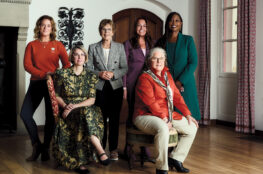
It’s all there to read about in books, but Claire Geisler, Alvin Rindfleisch, Bret Sears and Victoria Sporis don’t have to do that: They lived those days and still have enduring memories.
Geisler, 101, worked her way up from messenger to management at Northwestern Mutual Life and lived nearly a century in the same East Side home where she was born. Though failing eyesight prevents her from driving, she still maintains a valid driver’s license. “Wanna go for a ride?” laughs Geisler.
Rindfleisch, 105, also started as a messenger, at M&I Bank in 1920. After working in practically every single department at the bank, he retired as a vice president in 1970. Though his wife and eldest son have passed away, his youngest keeps him in touch with modern times: He’s only 73.
Sears, 102, was a pianist and piano teacher who played all over the globe. The New York Herald described a performance as “warmly applauded and recalled for many encores” and the Milwaukee Sentinel dubbed him “an artist of unusual accomplishments.” He and his wife, Elsbeth, molded Milwaukee’s piano students for several generations, and also brought the world back to Milwaukee in photographs and stories, conducting travelogues for as many as 100 people a week in their home. Last year, Sears conducted his last travelogue at Saint John’s on The Lake, and then donated more than 15,000 slides to UW-Milwaukee.
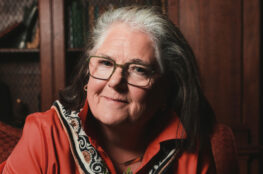
Sporis, 106, grew up on the South Side and spent almost her entire life in Bay View. Her father came over from Hamburg, Germany, and her mother was Polish. She married Charles Sporisz (they later dropped the z), and they had one daughter, Delores. After her husband died, she met Eddie, a man several years her junior. They traveled the country together and even purchased a home, spending decades in each other’s company. But after fixing up her house all day, Eddie would return home to a rooming house because they never married. Sporis worked as a cash girl at Chapman’s Department Store, as a Walgreens manager, as a leather inspector for a tannery, and even made soup for her husband’s family’s tavern, Sporisz Saloon, before and during Prohibition.
Horses & Streetcars
Geisler: I remember horse and buggies. Did you ever hear of Steinmeyer grocery, on 34th and something? They used to deliver groceries to the door. We hooked our sleds on to the back of their truck. Sometimes we’d get chased off; other times, they let us ride along.
Sporis: My grandpa had some horses. He used to deliver coal.
Sears: I can remember ice wagons that were drawn by horses. And milk wagons. You’d put your card out and the milkman would leave a bottle of milk on your porch.
Geisler: We had a milk box in our back door; it was kind of ritzy. When you’d take the milk out, you could see the cream on the top. You’d have to shake it just like we shake our orange juice now.
Sears: When I was a kid, we would take streetcars just for the fun of it. There used to be a viaduct on Wisconsin Avenue that was just for streetcars, and that was fun to ride across that viaduct.
Geisler: That was one of the big changes. Streetcars went out of business, and the buses took over, and the car barns were torn down. They were made into bus stops. One piece of history I recall, the first traffic light was installed on the corner of Newberry and Lake Drive. Of course, the traffic cops used to be at the four corners directing traffic. All gone now.
Sears: They used to have passenger boats between here and Chicago. A boat called Christopher Columbus, a whaleback steamer, would go everyday from here to Chicago. And there were boats that would go north to Green Bay. One summer I went up to Sturgeon Bay to pick cherries. A lot of people would go there to pick cherries. We took the boat.
Sporis: My dad had a car. My dad was a big shot. It was, I remember, a Buick.
Sears: On Hampshire and Hackett, there’s a fairly large duplex my father had built. In 1910. Well, my father was not foresighted enough to realize the day would be coming when everyone would own a car, so he built this duplex over the whole lot and we didn’t have room for a driveway, so we had to rent a garage.
Ethnic Culture
Sporis: My friend Elsie was a German girl and used to teach me German. I said, “I hate to speak it,” and she said, “You must speak German when you are with me.” I couldn’t speak German, but my dad taught me how to sing in German. He was No. 1 German – oh, was he strict. But I didn’t care about Germany. I still remember a German song. It was a song about a bird.
Sears: I was living on the East Side, and there weren’t too many Germans. The Third Ward, we used to call that Little Italy because so many Italians lived there. It was a pretty poor section of the city.
Sporis: My mother was Polish. She made homemade Polish sausage. I can speak Polish. And Slovenian, a little bit. They taught us in English at St. Josaphat’s School, and it was so hard for me.
Rindfleisch: Rindfleisch is just as German as can be. However, when my grandfather brought his family to this country, and my dad was a year old, Grandfather said, “Now we’re in the United States, no more talking German.” His English was a mixture, partly German and partly English, but it was what he called United States.
Keeping Cool
Sporis: No air conditioning. Nothing to do but sit and take it.
Geisler: You just suffocated. You suffocated with the windows open. It was pretty miserable.
Sears: We had electric fans.
Sporis: We used to swim in Lake Michigan. We had a house near the [Kinnickinnic] river, and I used to be in that river all the time. One day, Elsie and I, we skipped school and went to the river to swim.
Geisler: My mother made our swimsuits out of a pair of bloomers and a dress with a big, wide skirt. It was quite stylish. I don’t think anyone today would know what bloomers are. I’d put on a suit and walk out. I swam in the lake and in the river. I also ice skated on the river. It depends on your definition of clean, but we went in anyway.
Sporis: I remember the ice box. Well, half of it was where you would put a block of ice, and below you put the food.
Entertainment
Sears: There used to be six theaters on Wisconsin Avenue. The Alhambra was a magnificent theater. When I was a little kid, maybe 8, my folks took me to the Alhambra to see a movie called Huckleberry Finn and somehow we got separated on the way out. I got lost. I couldn’t find my parents. Here I was at night, an 8-year-old kid Downtown. Well, I walked all the way home. I found my way by following the street car line.
Rindfleisch: I remember the old Davidson Theater. They had legitimate actresses and actors.
Sears: There were three vaudeville theaters [Downtown]. The Palace was the biggest, right near Sixth Street. And the Miller, on Third Street, between Wisconsin and Wells. Then there was the Riverside.
Sporis: My husband owned a bar. Sporisz Saloon. He had it undercover [during Prohibition]. He was a smart, slick man. He used to go for that beer, to a little town, I don’t know the name of it. You couldn’t do nothing to him. Cops used to come by and drink beer. I didn’t like it because it was so bitter.
Sears: They had many concerts. A band played in different parks. On Monday night maybe it was Humboldt, Wednesday night maybe it was Washington. I think they were at Lake Park on Friday nights. They’d play all summer. It was the same program at all of the parks.
School to Work
Sears: My mother was a piano teacher and gave me lessons all the while I was in grade school. She wanted me to be another Horowitz. Then I went to Riverside High School and they gave me so much homework I would have hardly any time to practice. My mother had an idea, and she went to see the principal and asked if I could have a lighter load and take an extra year. So instead of the normal four subjects, I took three subjects a year and was in Riverside for five years. Then I went to Oberlin College.
Sporis: I used to go to Windlake Avenue School until eighth grade. My dad said eighth grade was enough. I had to go to work. I first worked in a cookie factory, putting them in boxes. The good ones went in the boxes, and the other ones I threw out.
Rindfleisch: I was a newspaper carrier until I graduated high school. For the Journal. Back in those days, you actually were the owner of the route. You had to buy it from the carrier. I was fortunate enough when I was 11, I found someone who wanted to sell, but he had only 33 customers. You didn’t make much money on a 33-customer route, so that’s when I went to business, really. I called on all the homes, and that area contained a lot of well-known people like Albert Trostel from Trostel Tannery. I convinced them instead of having father buy the paper Downtown, I would deliver to their homes, and their wives prevailed upon them. I built up to 180 customers, and then I was making $50 a month.
Sears: How did I get to Oberlin? Train. Of course, they were steam trains, run by coal. They had a coal car in the back of the engine. Oberlin was a very, very strict college. A girl would be expelled if she was caught smoking.
Rindfleisch: As a newspaper carrier, I did have an opportunity to meet some notable people. One was the governor, I think his name was E.L. Phillip [governor of Wisconsin from 1915 to 1921]. He lived on Hackett Avenue. Also on Hackett was a vice president of M&I Bank, and he lived with his two sisters. Those sisters knew I was going to graduate from high school. One of them said, “Why don’t you go down to the M&I Bank and ask after our brother,” and that’s how I got my first job. They always got their paper on time, and they thought I was pretty good. As a messenger, I started at $30 a month. I was making more money from my paper route. However, at M&I, I began to advance.
Sporis: I worked Pfister and Vogel. I knew how to check the leather. My dad showed me how. I was the only girl who could do that. You would touch and feel it – it was different weights. I could tell you if it was any good or not. It was a good- paying job. I worked there through the 1970s. When I retired, they used to call me and ask me to tell what grade it was.
Rindfleisch: Everything was done by hand. One day the manager said, “Say, I just love your handwriting, and from now on, no one else will be allowed to start the ledger sheet.” Among other things they were very careful as to correspondence. It wasn’t anybody who could send out mail and sign it representing the bank. In those days, everything was very formal, Mr. So-in-so or Miss So-in-so. No Mrs., because at that time, no married women were hired at any business.
Geisler: At Northwestern Mutual Life, I started as a messenger. They kept promoting me up. I was a typist. Then messenger typist, then secretary, and administrative manager, and finally the installation of the new word processing department, the division I established. In those days we had to retire at age 65, no matter where you were. I hated to quit.
Depression & War
Sears: I was offered a job at the Milwaukee Teacher’s College. A part-time job. I did teach for three years, and then in 1933, that was the worst year of the Depression. Banks failed here and everywhere, and well, anyhow, the legislature couldn’t even afford to pay me my meager part-time wage.
Rindfleisch: People were out of a job, and it was pretty tough. By that time I was getting between $90 and $100 a month. Wow, I was getting rich.
Sears: I remember gasoline rationing [during World War II]. You couldn’t drive. We were rationed two gallons a week.
Sporis: You couldn’t get a lot of things, and one thing was coffee. My dad was so smart, we always had coffee.
Sears: I was teaching private [piano] lessons, and I thought I’d get a job in a war plant. I got a job at Globe Union, on Keefe and Humboldt. It was a big factory, and they made batteries, and they converted it during the war to batteries for airplanes. They also made roller skates, but that was a different department.
Love & Marriage
Sporis: I met my husband through my girlfriend. I guess at school. Charles. At home I had two kinds of clothes, good ones and seconds, and I used to hate it. I would want this and my mom would say, “No, not this.” When I got married, my husband bought me lots of clothes.
Sears: I met my wife in a practice room at Milwaukee State Teacher’s College. I was going to give a program and had to have a Stanley concert grand, and I got there to practice. There were two pianos in the room and on the other was this girl. Well, anyway, there was this music magazine on the piano, and on the cover was a picture of Jose Iturbe, one of the greatest pianists in the world. I happened to mention I saw Iturbe three times in Paris, and that was the first conversation we had. Then afterward I would say hello to her, and I would ask her to dances. I lost my job in 1933, but I got married, and this duplex that my father had built, that was where my wife and I got started.
Rindfleisch: One day, the manager [at M&I] brought in a young lady named Evelyn Kaap. We worked side by side for a number of years. At the time, I wasn’t earning enough. Just a little over $40 a month. I didn’t have enough money to take a girl out for an evening. One day, one of the older persons in the department says, “I’m going to have a party, and I would like you to come. Bring your girlfriend.” I said, “Oh, I don’t have a girlfriend.” Then she said, “We’ll find out about it.” She came back a week later, and said, “It’s all set. I’ve got a girlfriend for you.” I said, “What?” And she said, “You’re going to be surprised. It’s Evelyn. I asked her if she would come to a party with you, and she didn’t hesitate a second.” That’s how it started. Several years later, in 1926, finally we were married.