

In 1803, Thomas Jefferson charged Meriwether Lewis with finding a waterway linking the Mississippi River to the Pacific. Thus began the famous 1804-06 Lewis & Clark Corps of Discovery Expedition. Along the way, Lewis documented and collected over 200 plant specimens, informed by Native guides such as Sacagawea. But the samples scattered when he died just a few years later.
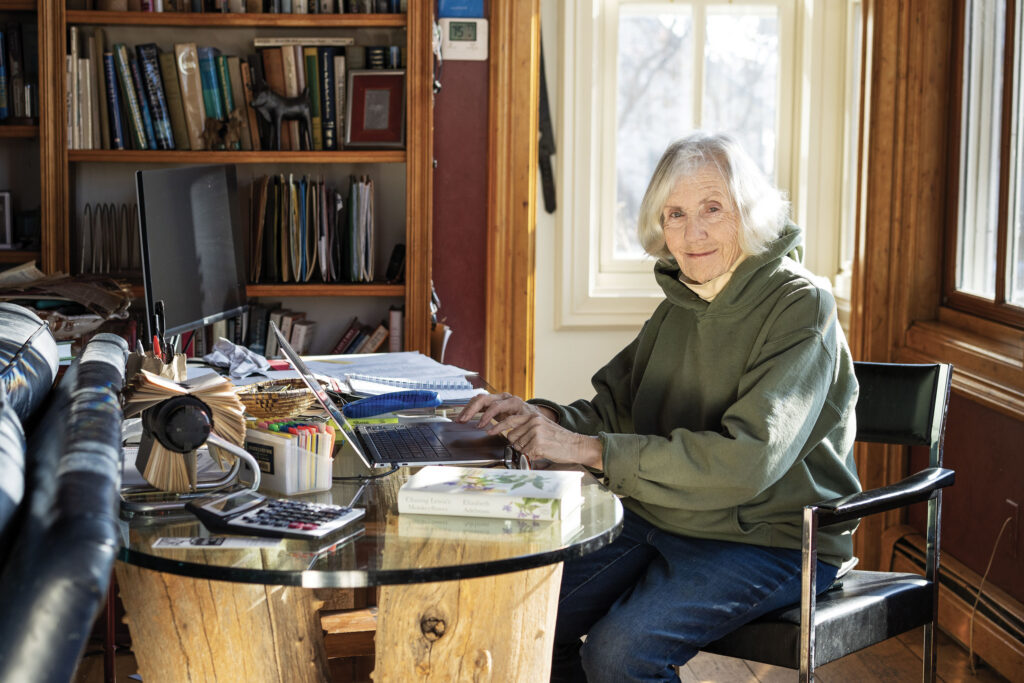
When a journalist friend gave Elizabeth Adelman, owner of Heritage Flower Farm in Mukwonago, a book telling the incomplete story about the fate of Lewis’ plants, she couldn’t resist the challenge of tracing America’s botanical inheritance. It took Adelman 12 winters to chronicle the plants in her new book, Chasing Lewis’s Monkeyflower.

Celebrate this year’s winners of the Betty Awards!
“The story is the most intriguing story of American plant history,” she says. “The name of the person who writes the description and identifies a plant is the name associated with that plant forever.” Botanist Frederick Pursh took credit for Lewis’ work and has the genus Purshia named after him; Adelman calls him “the thief.” But Pursh wasn’t the only one who derailed Jefferson and Lewis’ dream to publish the findings of the Lewis & Clark Expedition. Chasing Lewis’s Monkeyflower describes the complex web of the 19th-century international botanical elite who set the stage for the fight over Lewis’ plants.
Adelman traveled thousands of miles to seven archives, finding almost all of Lewis’ pressed native jewels. “The expedition’s journey became a journey for me,” she says.
A passion for horticulture has dominated Adelman’s life for decades. Her career as a municipal lawyer with meetings held mostly at night allowed her to garden during the day. In 1998, determined to find room for more vegetables and a dog, Adelman bought a 7-acre farm in Mukwonago with a 140-year-old house, previously owned by 93-year-old farmer Anne Patterson. Inspired by Patterson’s gardens filled with a variety of fruits and flowers, Adelman transformed the property into Heritage Flower Farm.
There, she grows the namesake type of plants – those at least 50 years old and never hybridized for large-scale growing – and keeps a website detailing their diverse Indigenous uses. She nurtures plants from across the globe, giving them refuge by growing them in soil, “as nature intended.” When asked which plant is her favorite of the more than 1,000 kinds that she’s grown, Adelman quips: “It depends on the season and whoever is in bloom.”
Adelman says many of the plants Lewis found can thrive in Wisconsin. “I hope gardeners will grow some of the 200-plus plants that Lewis collected and think about him when they see them grow.”