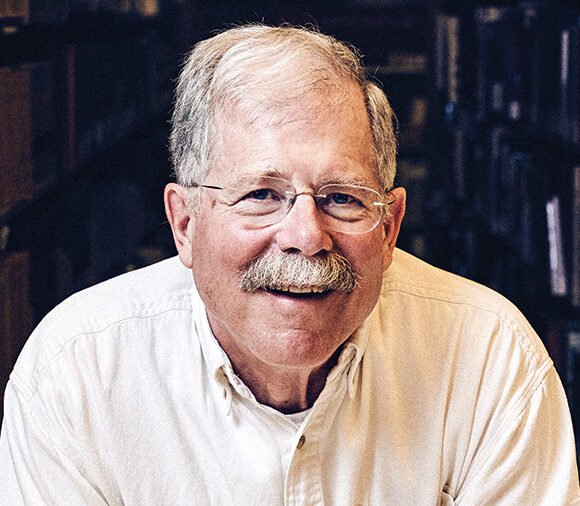


What’s the next best thing to a tour of Milwaukee led by renowned local historian John Gurda? The answer is John Gurda’s Milwaukee, a guidebook that packs 50 years of Gurda’s stories, facts and insights into a single tour you can explore on your own.
The route covers nearly 25 miles and takes a leisurely half-day to complete by car, but it can easily be broken into shorter segments for biking or walking. Here’s an excerpt from the book’s Walker’s Point leg.

If someone has inspired you through their service, leadership or dedication, the Unity Awards are your opportunity to recognize them!
1. In 1834, George Walker built his cabin on a narrow point of land near the south end of today’s Water Street bridge. His settlement was outdistanced by rivals across the river, but Walker’s Point became a major industrial center in the 19th century and a showcase for historic preservation in the 20th.
2. Artist’s lofts and designer apartments abound today, but the neighborhood’s industrial roots are never far below the surface. Colectivo Coffee, 170 S. First St., was a working foundry until 2003.
3. Although nothing hints at its past glory, the intersection of First and Florida Streets was nationally important. Within a two-block radius, an all-star cast of manufacturers came to life: Allis-Chalmers, Allen-Bradley, A.O. Smith and more. Walker’s Point was in some important ways the Silicon Valley of its era.
4. The early industries are largely gone, but many of the original houses remain, and so do the churches. The venerable brick structure across the field was built by German Catholics in 1850 as Holy Trinity, the first Catholic church on the South Side. It is
now Our Lady of Guadalupe, a Latino center of worship.
5. The concrete fortress at 710 S. Third St. was originally the home of Junior House, a popular women’s clothing line. The building became Junior House Lofts in 2013, featuring “Brooklyn style” apartments in an “industrial chic” setting.
6. Directly across the street is Bradley Technical and Trade School, the 2003 successor to Boys Tech as the public school system’s anchor for vocational education.
7. The 800 block of South Third is a restorationist’s showcase. No two homes are alike, and nearly all have been lovingly brought back to life.
8. Ethnically, too, Walker’s Point’s history is a study in diversity: northern European in the mid-1800s, eastern European in the early 1900s, and Latino today. Walker’s Point is the home of the largest Spanish-speaking community in Wisconsin. Built as a branch telephone exchange in 1899, the Guadalupe Center, 239 W. Washington St., offers programs for the community’s youngest Latinos.
9. The mammoth industrial complex around you is Rockwell Automation, founded in 1903 as the Allen-Bradley Co., a major manufacturer of industrial controls. Its crowning glory, completed in 1962, is a clock tower that for 50 years was the largest four-faced clock on earth. A bigger timepiece in Saudi Arabia now necessitates a new title: largest in the Western Hemisphere.
John Gurda’s Milwaukee is available online or on-site from the Milwaukee County Historical Society (910 N. Martin Luther King Dr., milwaukeehistory.net) and Boswell Book Co. (2559 N. Downer Ave., boswellbooks.com).