

Milwaukee-area communities dominated the first round of a new state aid program, but Milwaukee County landed less than one-quarter of the almost $900,000 it sought for scaling back its cultural spending.
Led by West Allis and Wauwatosa, local governments in the four-county area won nearly $55 million of the $72.1 million awarded in the first round of grants from a new state fund designed to encourage communities and counties to share or contract out programs, particularly for public safety and emergency services.
The $300 million Innovation Grant fund was created as part of the historic 2023 deal that overhauled local government finances statewide and authorized new sales tax powers for the city and county, while also imposing new restrictions on how they could spend their money. By contrast, innovation grant recipients can spend grant proceeds on whatever they need.
Statewide, the largest grants went to West Allis and Wauwatosa, which will split $45.8 million for merging their fire departments. Each city will receive $4.6 million a year for five years. Local officials say much of that money will be needed for costs related to the merger, but some could be used for other priorities, such as renovating or replacing the Wauwatosa Public Library and City Hall.

Check out the MilMag Mini!
One County Grant Successful
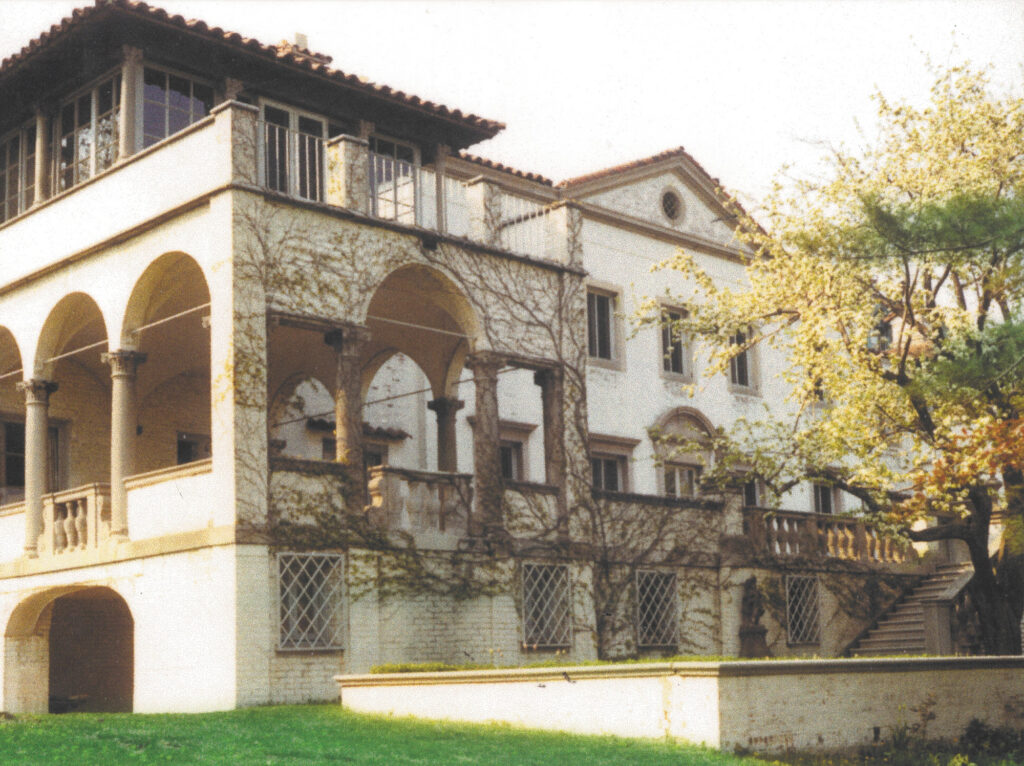
Milwaukee County will receive $217,389 for spinning off the Charles Allis and Villa Terrace art museums to nonprofit ownership. However, the county didn’t get the $678,380 it requested for its plans to wean the Marcus Center for the Performing Arts off from property tax support.
The two small art museums, both located in historic East Side mansions, had been owned by the county and jointly managed by a single nonprofit. But they faced major financial challenges, exacerbated by tensions between supporters of each institution, a 2022 Wisconsin Policy Forum report found.
Under one deal, the Friends of Villa Terrace are leasing their lakefront complex, 2220 N. Terrace Ave., for three years as a transition to full ownership. Separately, the original nonprofit overhauled its structure to focus on Charles Allis alone and took over ownership of that building, 1801 N. Prospect Ave., in April. Both institutions will continue to receive county aid through 2028.
In a written statement, County Executive David Crowley says the grant “will help preserve two of Milwaukee County’s most treasured cultural institutions” in a transition “that reduces long-term costs for taxpayers.”
The grant, to be paid out at $72,463 a year for three years, will help cover costs related to the transition, Crowley spokesman Jonathan Fera says.
County officials had hoped the Marcus Center also would be independent of taxpayer support by now. However, Marcus CEO Kevin Giglinto has said the performing arts hub’s revenue growth was slowed by the COVID-19 pandemic and the Milwaukee Symphony Orchestra’s move to the Bradley Symphony Center, while its plans to earn more from its parking garage were thwarted by the city’s ill-fated effort to sell and redevelop that site.
In response, the County Board voted last year to extend financial aid to the Marcus Center for another five years, while the center agreed to conduct a study of how it could transition to full independence.
Since that study has not been completed and the Marcus Center is not yet independent, the arrangement did not qualify for an innovation grant, said Jennifer Bacon, spokeswoman for the state Department of Revenue.
The Marcus Center, Charles Allis and Villa Terrace plans are all part of the county’s long-term strategy to phase out its financial commitments to most of the cultural institutions it has owned. While former County Executive Chris Abele failed to unload the Marcus Center on the Wisconsin Center District, the strategy has played out in different ways for the Milwaukee Public Museum, Mitchell Park Domes, Milwaukee Art Museum, War Memorial Center and most recently Trimborn Farm.
Merging for Dollars
Outgoing Assembly Speaker Robin Vos championed the innovation grant program, at one point called for appropriating $1 billion for it, according to legislative records.
The Legislature approved $300 million, but that sum remained unspent for more than two years, possibly because of a requirement for deals to realize at least a 10% cost reduction. Interest in the program perked up after the 2025-27 state budget dropped that requirement and replaced it with a 15% cap on cost increases.
In addition to Milwaukee County, West Allis and Wauwatosa, other Milwaukee-area governments receiving grants include:
- Lac La Belle, $5.8 million for its 2025 merger with the former Town of Oconomowoc.
- Brookfield and Butler, a total of $753,760 for their deal for Brookfield to provide fire and emergency medical services to Butler, starting in January.
- Kewaskum, $306,425 for its 2025 handover of emergency medical services to West Bend.
- A total of $2.1 million for various initiatives, for other local governments in Milwaukee, Waukesha and Washington counties. No Ozaukee County communities applied for grants.
The largest grant application rejected was from the city of Pewaukee, which sought $4.3 million for handing police duties over to the Waukesha County Sheriff’s Office. That arrangement began in 2010, and the innovation grants are supposed to reward more recent initiatives.
Also denied was Washington County’s application for $604,195 for its takeover of Germantown’s emergency services dispatching. Although the transfer took place in 2025, its 2023 approval was too early to qualify for a grant, Bacon said.
Last year, the Revenue Department awarded almost $3 million in planning grants from a separate fund to help communities put together their innovation grant applications. Milwaukee-area communities received $392,022 of those planning grants, including studies of three ideas that led to innovation grants: the Butler-Brookfield and Kewaskum-West Bend deals and a 2025 agreement for Bayside to take over information technology services for Whitefish Bay.
At least one more innovation grant application could be coming from Milwaukee County. The County Board has authorized the Crowley administration to apply for a grant for spinning off operation of the two Wil-o-Way recreational centers for people with disabilities. That deal was not completed before the March 31 application deadline for the first round of innovation grants.
However, in May, the board agreed to lease the Wil-o-Way centers in Grant and Underwood parks to Easterseals Southeast Wisconsin, which already provides some Wil-o-Way programming. Starting Jan. 1, the nonprofit will take over operations and building upgrades at both recreational centers.
With $228 million left to distribute, the Revenue Department plans to open applications for the next round of innovation grants sometime this fall.