
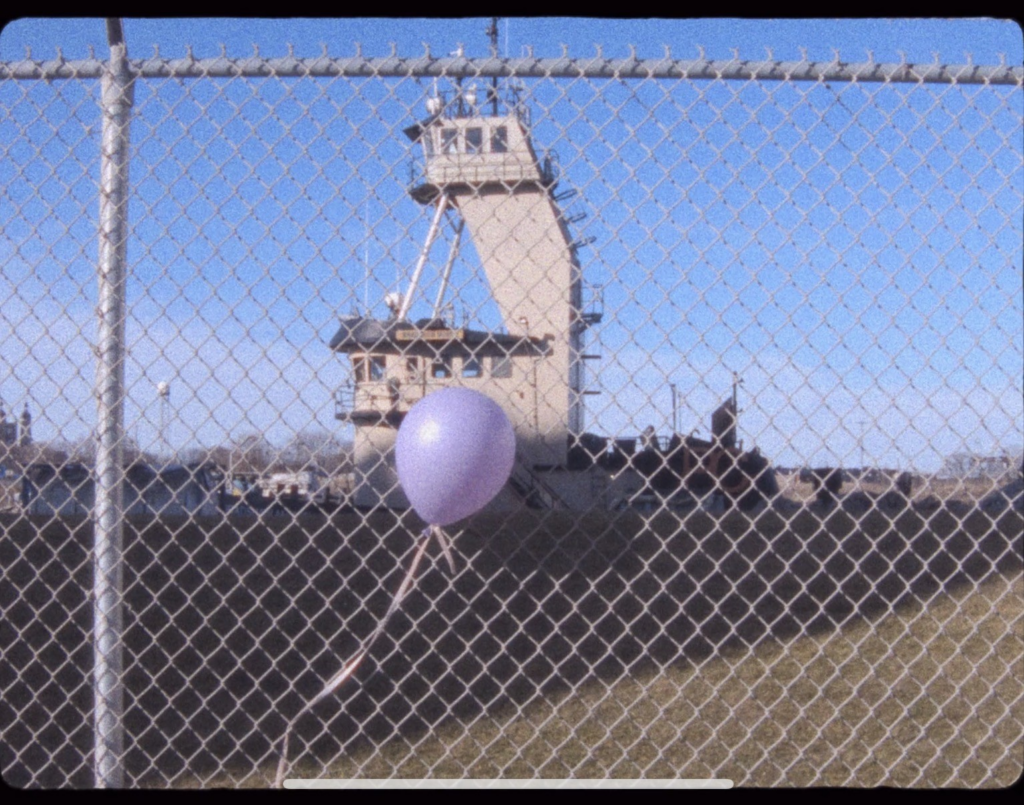
Cactus Club will be holding a screening of Alligator, Milwaukee filmmaker Nicholas Renee Smith’s newest film, centered on a balloon having a very bad day. The screening will be accompanied by a live score performed by local jazz outfit Thanks For The Accident, with a pre-show screening of shorts by another local filmmaker Britany Gunderson and an afterparty DJ set.
Tickets for the showing are priced at a sliding scale of $10-20, with the show starting at 7:00 p.m.
To get a better understanding of Alligator, we spoke with Smith about his influences and just why the main character is a balloon.

Celebrate this year’s winners of the Betty Awards!
You’re originally from Little Rock, Arkansas, so what brought you to Milwaukee?
I’ve lived in Milwaukee for 10 years now, but I have a deep fondness for the South. My dad still lives in Little Rock and my mom was from Louisiana. Cactus Club was one of the first places I ever went to when I moved here, as my friend got me a job and introduced me to so many people through the music scene. So, I’m really excited to have this show at Cactus because it feels like such a home away from home.
Speaking of your Southern roots, how would you say that influences the work you make now?
Where I grew up, I lived right next to a big forest and a lot of state parks. An hour away was this place called Pinnacle Mountain. There was always this sense of mystery, I didn’t really know what was out there. As a kid, that was captivating for me, these huge expansions of stuff I didn’t know anything about and It all felt so magical.
I would go out on these long walks into the forest to give my brain a lot of room to wonder. It was just so big in terms of being empty and devoid of energy from people.
When people talk about Twin Peaks and how mysterious its surroundings are, I felt the same way in the South instead.
You mentioned Twin Peaks. Are there any other stories and artists that heavily impacted your style?
There was this documentary that came out in 1976 called News From Home, that had a lot of shots of New York City, with someone narrating over it. When I first started Alligator, I just wanted to copy that style, it’s so moving and beautiful.
There’s also this movie by Agnès Varda, Cleo from 5 to 7. I love that film so much. With Alligator, it is such a magical concept, but I still wanted to ground it. That picture to me has a sense of realism and naturalism which was what I was attempting to pull from.
Another movie I saw when first started filming was called Night Shift made in 1982 by Ron Howard. It’s weird and kind of absurd, but it’s gorgeous to look at.
With the showing at Cactus Club, there’s going to be a live band playing alongside the film. Where did the idea come from and what can we expect?
I play in a band with the guy doing the score, Preston Carr. He is such an insanely talented musician, he plays the drums in our band, but he also knows piano on top of singing and writing his own music.
When I was trying to set up the screening, I really wanted to have a live score. I first brought it up to him, seeing if he wanted to do something completely off the cuff. He wasn’t super into that idea which was fair, instead he asked if he could write a whole composition to play. Which I’m really excited about.
Why the name Alligator for your film? What emotion or feeling do you hope to invoke by that title?
I just really liked the word alligator and have been wanting to use it for a long time. I don’t know why I was so attached to it. I was like, “that’s not enough,” I have to figure out some reason behind the title, besides me liking it.
I was reading about alligators and learned that they’re really protective and caring mothers. A lot of other reptiles are typically not as present for their young and that distinction resonated with me, because this whole project is about my mom in a way.
What was the process behind making this movie like? Were there any obstacles you encountered?
Yes, there were a lot. Many of the obstacles came from the fact we shot everything in January of this year. I didn’t take into account how much the wind would be a factor when shooting with a balloon. I thought it would be fine and that we could just stabilize it, which never ended up happening.
A lot of the sequences in the movie are not really what I was picturing in my head. Every day that I chose to film, the balloon was just flying all over the place and I couldn’t get the still shots I wanted. So, we just rolled with it, all of the scenes with the balloon moving around were completely in the moment. It was at first an obstacle, then we sort of used it to our advantage. I’m really happy with how it turned out. It would have gotten boring just sitting and watching a balloon do nothing for 40 minutes.