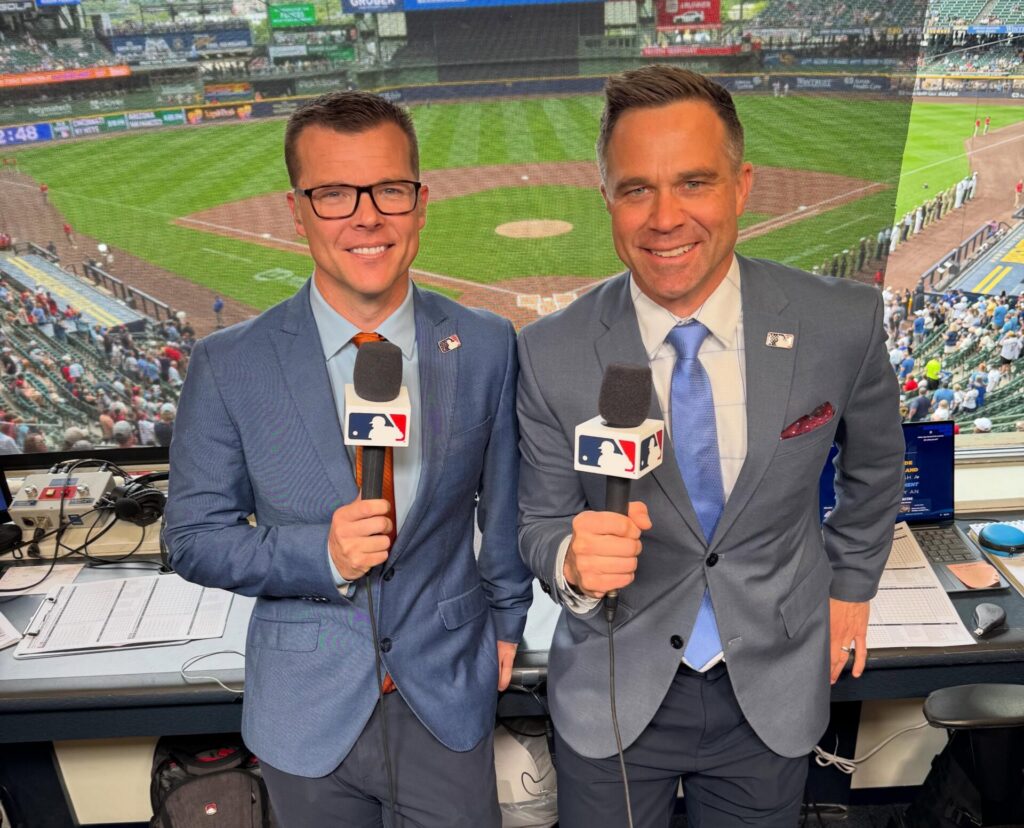
Vinny Rottino has lived the Wisconsin baseball dream. He traveled the world, playing professional baseball on several continents, making it to the big leagues with the Brewers for their breakthrough playoff season in 2008.
Having played in every conceivable environment throughout the world in between several stints in the majors, Vinny understands how difficult it is to succeed in America’s pastime. As a Brewer announcer, Rottino brings his hard-won wisdom to the TV broadcast, calling it as he sees it alongside play by play artists like Jeff Levering and Brian Anderson. Vinny and I chatted about his life in baseball and how Bob Uecker made everybody feel like the cleanup hitter in the lineup.

If someone has inspired you through their service, leadership or dedication, the Unity Awards are your opportunity to recognize them!
The Brewers broadcast team, much like the Brewers pitching staff, is deep. So much talent in the booth: Dillard, Sophia, B.A, Rock, Jeff, Lane, Maurer. What are some things you’ve learned from your team of broadcasters for the Brewers?
I feel like I am an absolute rookie at the job, and there’s so much to learn about it: just like the game, you never stop learning. Rock [former Brewer catcher and current announcer Bill Schroeder] is just an absolute master at getting in and out of comments, and then he provides that feel of like I’m watching this game at a bar with him right now. It’s an 80 grade [highest rating in baseball scout terms] team. I’m still a work in progress.
You are a Wisconsin guy, born and raised. Is that something that gives you a little extra as a Milwaukee Brewers announcer?
I grew up in Racine, and we live in Wind Point now: yeah, we love it here. This is our home. I love this state. I can intimately connect with the fan base, because I have been part of this fan base my entire life. Even though I played for a number of different organizations, I had the benefit of playing for the Brewers, which was a dream come true for me.
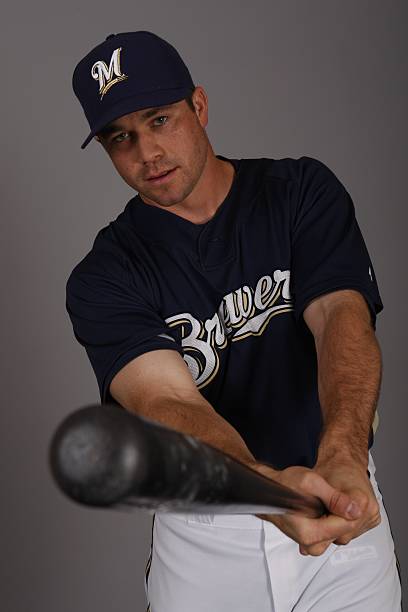
Right! And you got to play for the 2008 Brewers. That was the breakthrough year that got the Brew Crew back to the playoffs. Any fun memories from that season?
Yes, that was an incredible run that I was able to be part of. I was called up in September, as an extra catcher. I got one at bat and flew out to center, but that was okay by me, because that was such a fun thing to be a part of. Prince Fielder was not only the best player I’ve ever played with, but he had the most team-oriented, relentless winning mindset of a player I’ve ever seen. Everyone was rallying together, and that was such a fun thing to witness with CC Sabathia. I caught every single one of his bullpen sessions, that was a thrill for me: the tenacious mindset that CC had. He told the team, he’s going to go out and pitch whatever needed, short rest, no problem. It was the most selfless thing.
You played quite a bit of baseball all over the world, how has that helped as a broadcaster?
Yeah, playing at every level all over the world has helped me in the booth, to just understand: Okay, there’s a lot of different paths to getting to the big league level. I loved every single one of my baseball playing experiences in different countries.
I’m just going to list off some places where you hit a home run in 2012 through 2013. Cleveland and New York in the big leagues, Venezuelan Winter League, Japan Pacific League, Buffalo and Columbus in the minors, and Japan Western League. I thought that was pretty impressive.
Yeah, I mean, that’s a testament to the fact that I wasn’t good enough to stick in one spot for very long, I think [laughter]. I guess I did have a little bit of pop in the bat, so I was fortunate enough to hit a few homers over the course of my career, but that’s a good one.
Can you explain why you were perfect at stealing bases in the majors?
Well, it’s because I wasn’t up in the big league long enough to have a scouting report on me. [laughter] They didn’t know that I could run a little bit. First, they were surprised that I was on first base. Second, they didn’t pay any attention to me, so I just took off and ran.
Does that give you a better perspective for talking to guys like Tyler Black, guys who are fighting for a major league roster spot?
Yeah,100%. I lived that life for a long time, hanging on to the big leagues by my fingernails. Fans don’t really understand … there’s a lot of things going on underneath the surface: So when you see a guy get called up like Tyler Black, who is much more talented than I ever was … It’s the psychological game you play with yourself: in the back of your mind, it’s like, okay, if I don’t get hit, am I going to get set down [to the minors] tomorrow?. What’s so impressive about a guy like Jake Bauers … the unique mindset that he’s got this year, because he was a minor league player two years ago, and now he’s gotten his opportunity. The idea of not chasing the results, and just having your approach and your process.
What is one thing the average fan just couldn’t possibly understand in terms of how difficult it is to play baseball at the major league level.
Hitting a 90 mile an hour fastball, just making contact with it, is something that maybe 1% if less, of the population could do. It looks so easy on TV, and the old adage is the further away you get from home plate, the easier the game looks. It’s that difficult: round bat, round ball, you have four tenths of a second, not only to decide if it’s a strike or a ball, if you want to swing at it, but you have four tenths of a second to deliver the barrel to a point in time and space where you can or cannot make contact with it, let alone hit it hard and in fair territory.
Well, then moving on, back to the booth: does your bachelor’s degree in chemistry from UW-La Crosse come in handy as an announcer?
[Laughter] That’s actually a hilarious question. It does not apply. I picked chemistry because I was good at science and math in college, but all I cared about was going three for four in a game at UW-La Crosse, where I played. The chemistry degree got me into pharmacy school, but it doesn’t apply in the booth whatsoever, but that’s funny.
I know for announcers the score books are an important thing. How do you approach scoring the game or keeping track?
I just have a score sheet, and then after the series I actually don’t save them, I just do it on a score sheet, which kind of keeps me locked in that game. I learned that from Brian Anderson. The radio guys, they learned [how to keep score] from Ueck and it’s a massive scorebook. They call it Stonehenge … it weighs a lot. They have every single game from the season logged in there. And so that would be a great way to do it … so they will have a score book where they can then reference and recalibrate quicker as to what’s going on.
Is there a sort of code when it comes to criticizing ball players?
I’ve asked this question to Rock and he said he never gets on the guys unless they’re showing very little effort. It’s not burying a guy, it’s just pointing out what everyone’s seeing, because you don’t want to ignore what everyone’s seeing, because you gotta be truthful, right? They’re just ways to say things that are going to land without having to bury anybody.
Yeah, I gotcha. How did you approach Uribe’s maneuver at the end of the Cardinal game? [Brewer pitcher Abner Uribe stirred up controversy when he thrust thrice at the Cardinal dugout after a recent win]
What we saw, yeah, that was the weirdest thing ever. We kind of avoided it … it was a little bit of a gray area, because if you’re watching WWE, you see that kind of thing every event, but for a baseball game, how do you explain it to your children? There’s some things that you just allow the picture on the screen to show, and that’s plenty of detail that we don’t need to go back and revisit it.
You mentioned Ueck. You got any Bob Uecker stories you care to share?
So it’s just how he treated everybody. I’m in spring training with him and he’s [Uecker], like, “Hey, what’s going on, Vinny?” Ueck would just chat with me, as if I was the cleanup hitter on the team, when in reality I was the guy that’s hanging out by my fingernails to the roster. It didn’t matter who you were, Ueck was going to treat you like you were just one of the guys in the clubhouse. There were no pretensions about him. Everyone in that clubhouse felt like he was part of the team.