
The stage direction “darkness with stars” opens the script for Peter Pan & Wendy, adapted by Doug Rand. This classic tale of fairies and flying, pirates and crocodiles, Neverland and never-growing-up, has been further adapted by Jeff Frank for First Stage in Milwaukee and opens Feb. 20.
A First Stage adaptation means a shorter runtime (about 75 minutes plus intermission) and a bigger imagination. For director Jeff Frank, “darkness with stars” sparked the idea of delivering Peter Pan’s flight not with pulleys or ropes – as is tradition – but through the playful illusion and practical magic of kokens.

Celebrate this year’s winners of the Betty Awards!
Inspired by classical Japanese Kabuki theater, Frank, alongside scenic designer Sarah Hunt-Frank and lighting designer Jason Fassl, saw an opportunity to play with the “darkness.”
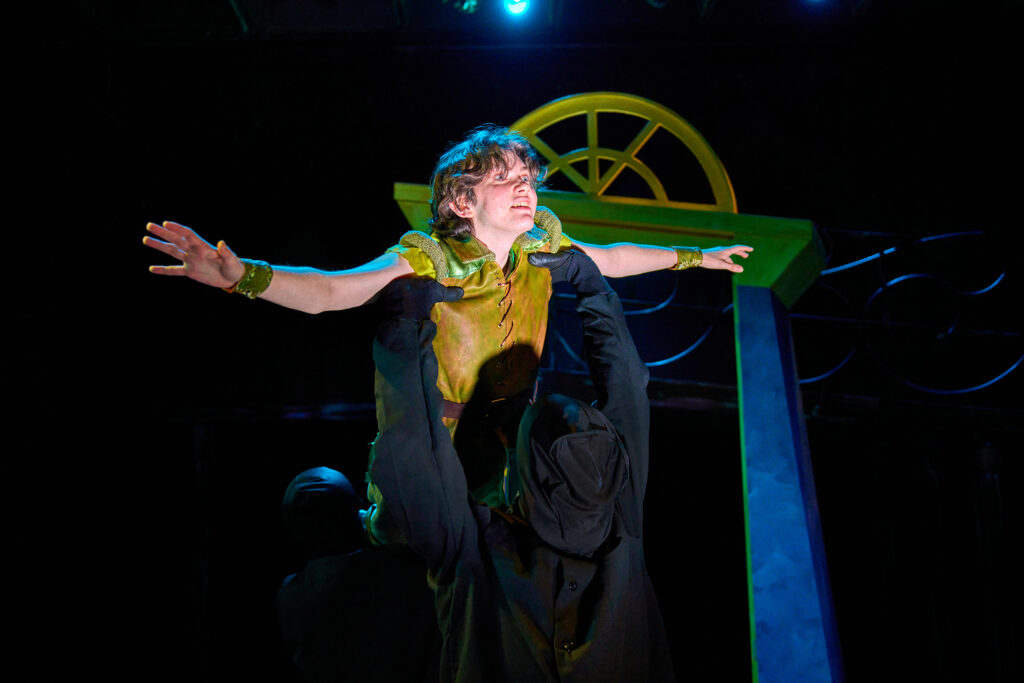
“In Kabuki theater, there are folks called kuroko,” Frank explains. “They wear black from head to toe, to imply that they’re invisible. They’re essentially a kind of running crew. They move scenery and props on stage, and sometimes they play roles of different animals or puppets.”
These on-stage assistants are called koken in Japanese Noh theater, and that’s the term First Stage has adopted for its crew in Peter Pan & Wendy. These kokens, along with flight captain Tim Linn, make it possible for Peter and the Darling children to soar.
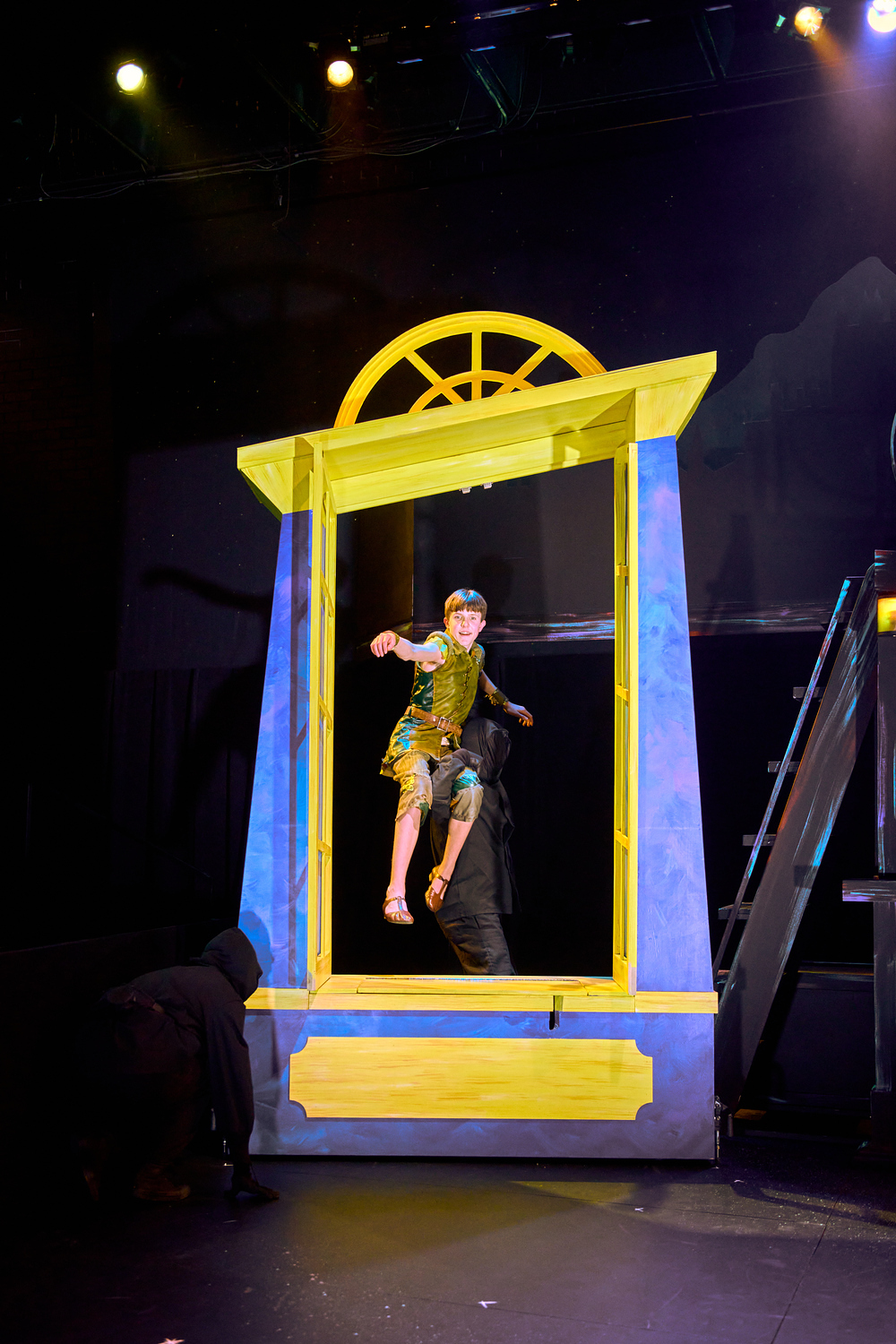
“Sometimes it’s one koken lifting an actor in space, and sometimes it’s multiple kokens,” Frank says. “The actors are in these vibrant and light-colored costumes designed by Jason Orlenko, giving separation from the black. Jason Fassl is lighting the actors from below, so the kokens fade into the dark void Sarah created.” There are 14 kokens (nine young performers, five adults) who bring various moments to life in Peter Pan & Wendy – disappearing into the darkness, then leaping to action.
Being a good koken means mastering stillness on stage until your moment arrives. Kokens and actors alike also need core strength. “It’s not only the kokens having the strength to lift the actors into the air, but for the actors to help create the illusion of flight,” says Frank. “So, they’re holding that core, having a sense of ‘lift’ in their body, considering their hands, eyes and focus. All of these things, every moment, we’ve worked to craft as much clarity and specificity as we can to tell the story of each individual moment.”
Balancing what’s seen and unseen is key to children’s theater. It’s encouraging a child’s imagination while giving the audience a visual spectacle. Frank believes the key question is: What is necessary? What needs to be there to illuminate the story, and what can be implied? Frank explains: “What separates theater from film is knowing that we can’t and shouldn’t try to build each and every environment completely. You give the audience just enough that they can see into the world and what we’re honoring, but they fill in the rest of the story in a lot of ways. As long as the storytelling is true and clear, the audience sees things that might not even be there.”

Frank views the finished whole of a production as a series of illuminated moments, and in Peter Pan & Wendy, the kokens are integral to the moments that shine through. “Our kokens allow us to be nimble in terms of how we address each moment we create. We can shift perspective for the audience. We can slow down or speed up. We can play with time or sensibility. We had so much fun finding ways to bring the story of Peter Pan to life in that inventive sort of way.”
What Frank hopes audiences experience through “Peter Pan & Wendy” is an intergenerational story that spurs conversations about growing up. “First Stage has always been a place where generations come together,” he says. “This show in particular, it’s a chance for young people and adults to talk about what it means to be a grown-up or child. It reminds young folks to hold on to the joy of childhood, imagination and play. For adults, it might help us remember the power of believing in fairies once again.”
Peter Pan & Wendy runs from Feb. 20-March 22 at Marcus Center’s Todd Wehr Theater. Tickets and information at firststage.org.