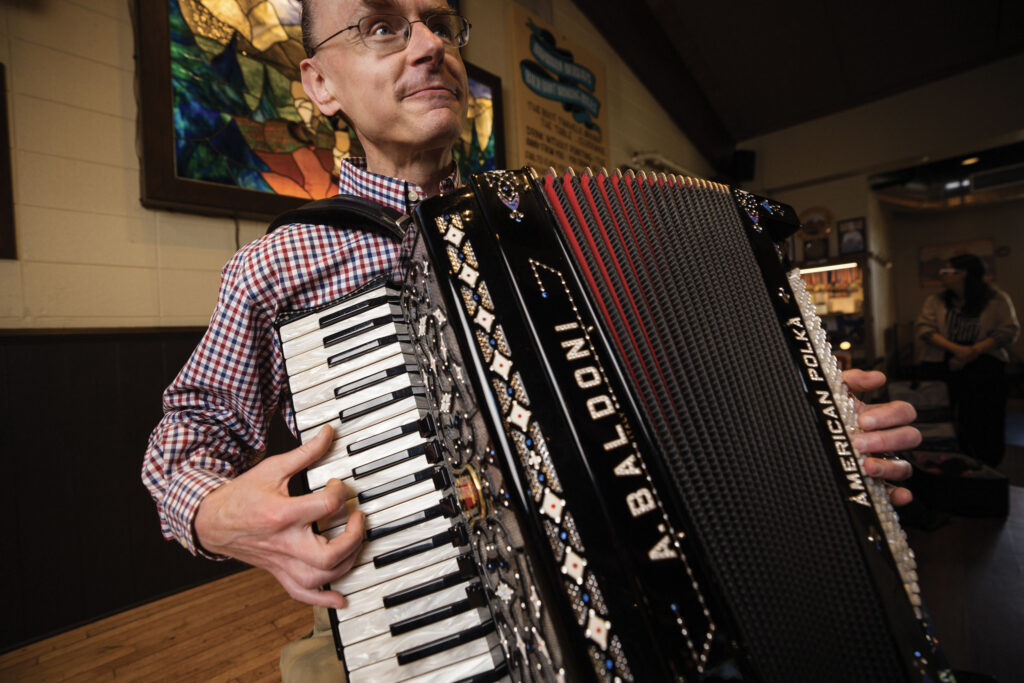
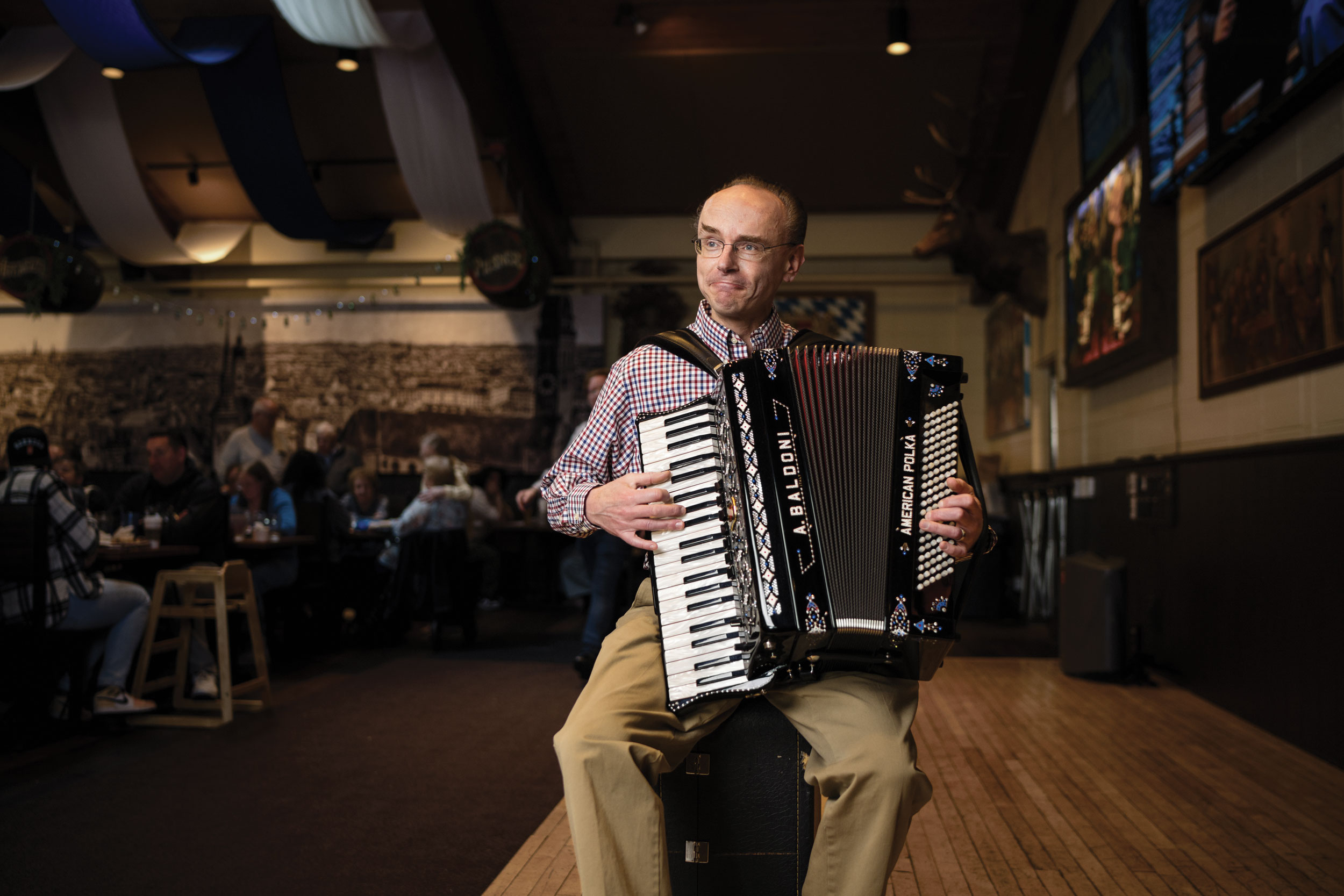
It’s as classic a Saturday night in Wisconsin as can be – the Bavarian Bierhaus in Glendale is filled with people enjoying liters of lager and giant pretzels, and on the stage of the beer hall, polka pro Mike Schneider is pumping away on an accordion, his fingers flying over the instrument’s keys.
READ MORE FROM OUR POLKA FEATURE HERE.
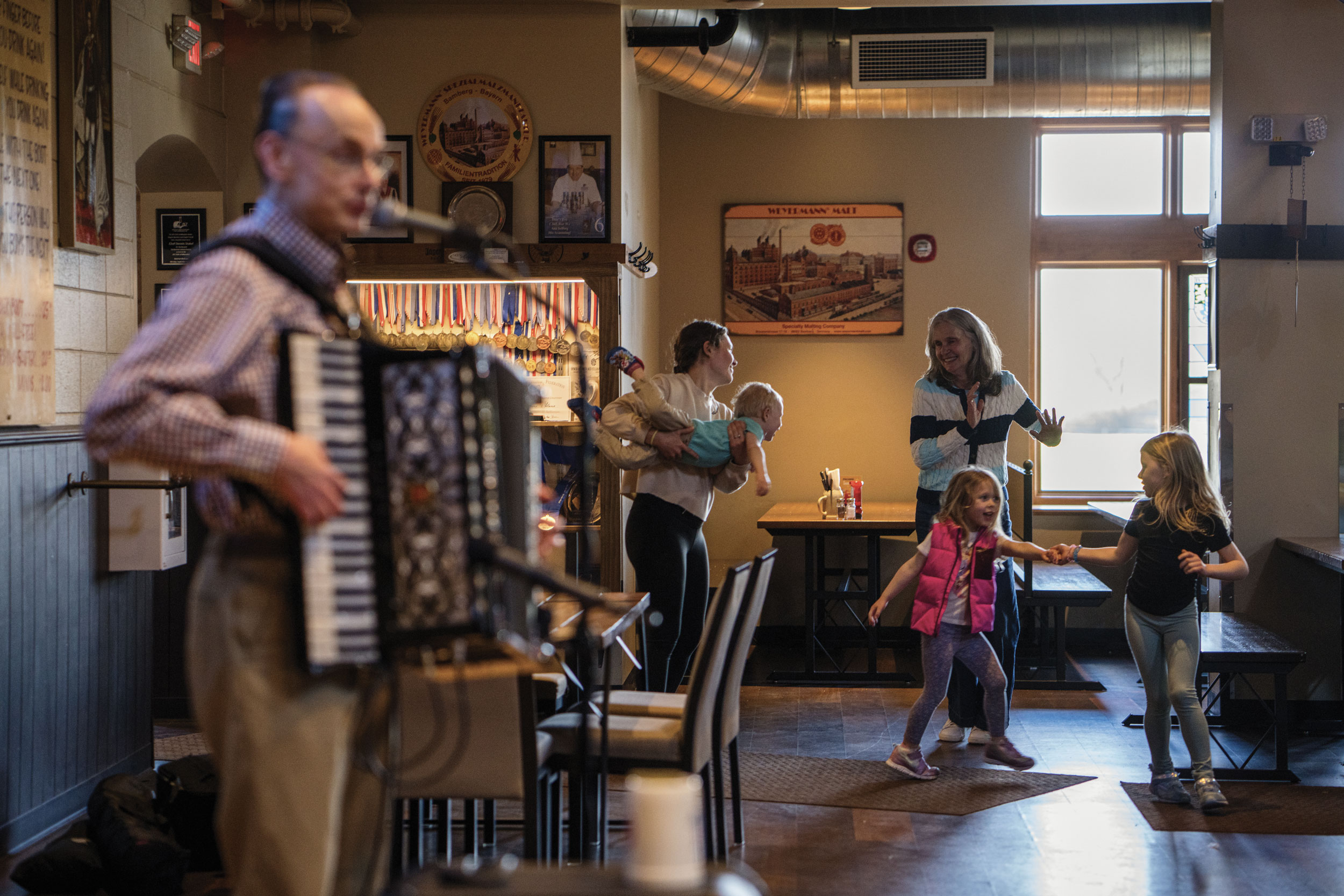
A crowd of about a dozen, ranging from kindergartners to senior citizens, are dancing an approximation of Wisconsin’s official state dance (both the genre of music and the dance are referred to as polka), bouncing up and down, back and forth to a sound almost universally described as “happy.” Schneider smiles to the crowd as he croons “Tick Tock Polka,” a classic by polka master Frankie Yankovic.

If someone has inspired you through their service, leadership or dedication, the Unity Awards are your opportunity to recognize them!
“You have the grandparents that were raised with it and now they’re bringing their grandkids. The circle repeated itself,” Schneider says of the crowd. Polka, a cherished part of Wisconsin culture with a long history, remains alive and well here.
“This is polka country, Milwaukee is its capital,” the Milwaukee Journal declared in 1948 in a report examining the “Mammoth Polka Festival” that took place that June at the Milwaukee Auditorium (now the Miller High Life Theatre). About 8,000 people, young and old, paid 85 cents that night to see an epic showdown between five acts vying for the title of “America’s Polka King.”
Polka originated in Bohemia in the early 1800s, and by mid-century it had become a cultural phenomenon, waltzing across Europe and over the sea to America. A century later, the innately jubilant genre had a revival, boosted by the end of World War II and a desire to roll out the barrel and celebrate.
Milwaukee, with its melting pot of German, Polish, Serbian and other European immigrants filling beer gardens and dance halls, became a mecca for the music. By the summer of 1948, the Journal reported, Milwaukee dance schools were “swamped by requests from the kids for polka lessons.”
Polka comes from the Czech word půlka, meaning half, in reference to the short steps used in the dance. The music and dance lent its name to polka dots, which emerged in the mid-1800s after mechanical weaving made such precise circles possible. It’s been reported that they were so named merely to be associated with the cultural craze of the era despite no more tangible connection.
At the Milwaukee Auditorium, the audience cast ballots for the contenders. Among them were two Milwaukee acts, Sammy Madden of Milwaukee’s North Side and his South Side rival, Louis Bashell, whose hit single “Silk Umbrella Polka” was flying off shelves that year.
Also throwing down were Fond du Lac’s Lawrence Duchow and his Red Ravens and the heavyweight contenders from New Ulm, Minnesota, The Six Fat Dutchmen. But after the votes were tallied, Mayor Frank Zeidler crowned Yankovic, a Slovenian American raised in Cleveland, as Polka King.
“Milwaukee was like his second home,” says Jeff Winard, a local polka musician who toured with Yankovic from the 1970s to shortly before his death in 1998. Yankovic would become the most successful polka musician of all, selling over 30 million records in his lifetime. “Milwaukee was bigger for him then than Cleveland was.”
Although polka no longer fills auditoriums, its impact on Wisconsin culture is deep. Polka is the soundtrack of fish fries, beer gardens and the seventh-inning stretch, and it still draws crowds at festivals across the state. Polka’s yodel echoes down the hall of history, a through line for civic and family celebrations spanning not just generations but centuries.
Polka is still alive and well in 2026, according to Winard and the many others keeping a torch burning for the traditional styles passed down from generation to generation. But as polka barrels toward its 200-year mark, part of the reason the sound is still alive is that it’s evolved to blend with genres like pop, mariachi and even hip-hop – a mix of old and newer beats.
“YOU’LL FIND OFTEN IT’S A FAMILY THING, and my case is no different,” Schneider, one of Southeastern Wisconsin’s hardest-working polka musicians, says as he takes a short break between sets at the Bavarian Bierhaus.
When he was just a toddler, Schneider, now 46, remembers his father getting his accordion out of the closet to pump out a few tunes. Then, when he was 5 years old, a life-defining moment – Schneider’s parents brought him to a parish festival at Our Lady Queen of Peace on the South Side to see the Polka King himself, Frankie Yankovic. One of his songs, “Happy Wanderer,” captivated him.
The Big Polka
Wisconsin’s biggest polka event is Pulaski Polka Days with four days of music, dancing and a parade. July 16-19.
“It made a mark,” Schneider says. “From that day forward, I just had to play the accordion.” He began taking lessons the following year. He built a schedule of steady gigs, but his polka career really took off in 2008, when his future wife, Heather, inspired by an article she read on the success of kids music sensation The Wiggles, suggested to Schneider that he record a polka album geared toward children. “I remembered reactions I’d get from kids when my band played church festivals,” Schneider says. “As soon as she said that, I thought, ‘Hey, that’s a really good idea.’”
The result, an album titled Pint Size Polkas, still provides him with steady work performing for children at libraries, schools and summer programs. But that’s just one type of show in his schedule. There’s the beer garden and Oktoberfest seasons, polka fests, regular gigs at venues like Bavarian Bierhaus and Old German Beer Hall. (Venues like those are key to keeping the music alive and in front of audiences, he says.) He now works full time as a polka musician, performing solo sometimes or bringing in two or three other musicians to play a total of 200-300 shows a year.
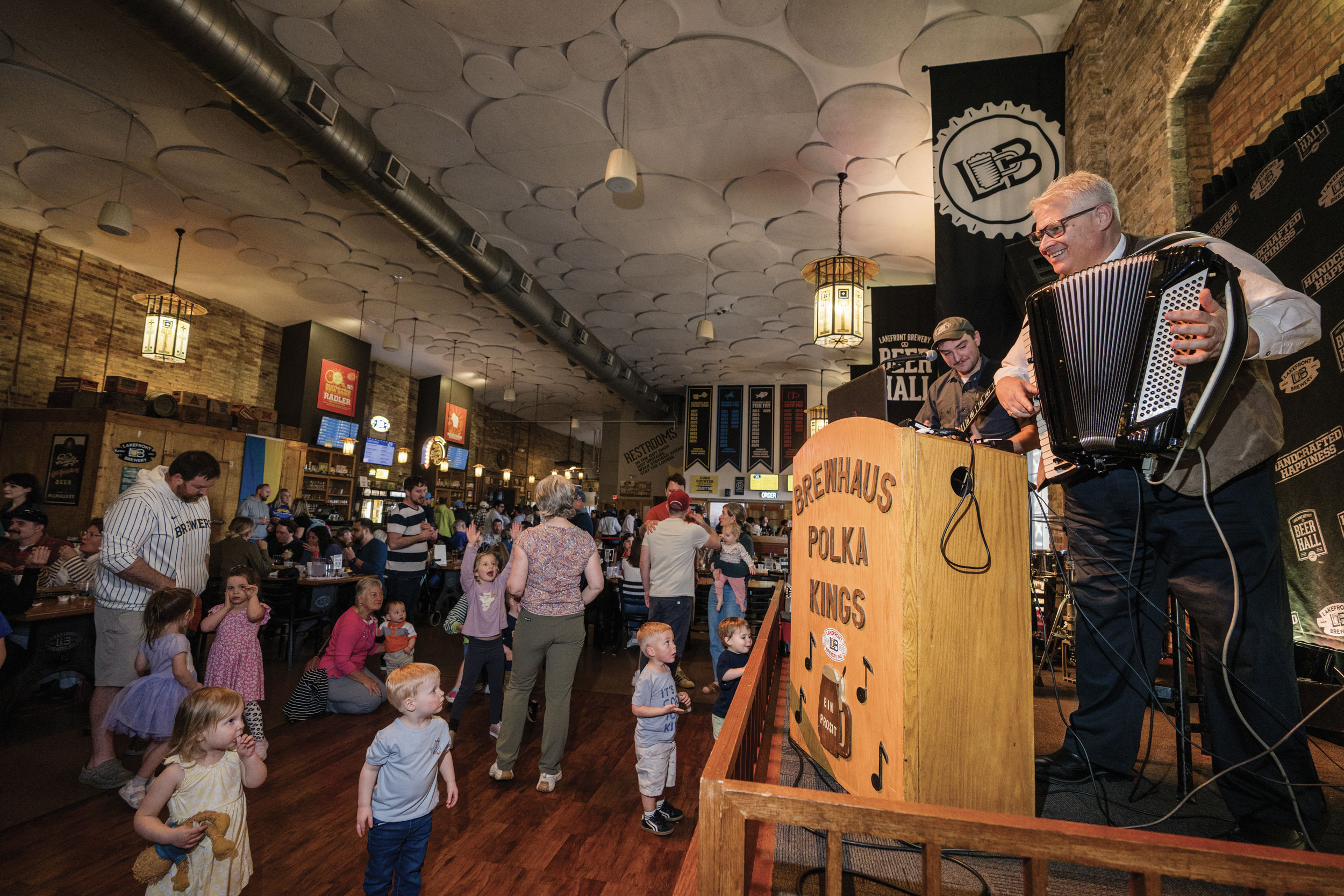
One of Schneider’s biggest captive audiences has come from a recent collaboration with the Milwaukee Brewers. Last year, he recorded a medley of “Take Me Out to the Ball Game” and “Beer Barrel Polka” for the seventh-inning stretch, as well as snippets of polka jams that are used between pitches. “It was kind of a surreal experience to hear 40,000 people respond to my music on the field,” Schneider says.
He says his devotion to polka is “a calling. I was put here to do this,” and that his inspiration is found in shows where he will “get this feeling onstage that everything is working. It doesn’t happen all the time – those are the moments that keep you coming back.”
Besides Schneider, there are many other locals keeping the beat thumping. The radio show “Polka Parade” on Milwaukee’s WJOI (1340 AM, 98.7 FM) has been a showcase for many of the musicians, offering four full hours of different polka styles since 1982.
The long-running TV show “Polka! Polka! Polka!” features footage from polka performances around the state and airs on The CW stations in Milwaukee and Green Bay. The Wisconsin Polka Boosters, a nonprofit headquartered in Germantown that hosts polka dance lessons, has a scholarship program and does whatever it can to “engage the interest and participation in this cultural and musical treasure.”
But many of these polka proponents are beginning to age out, so how will the genre survive?
“That’s the $10 million question,” Schneider says. He thinks for a moment. “Or maybe more like the $10,000 question; this is polka music, after all.” Schneider says the polka community has discussed their fate for decades.
“You talk to some people, and they say, ‘Oh, it’s going to die, it’s not going to stick around,’” Schneider frowns. “I’ve never been that big of a pessimist. I think the key is to put it in front of the young people and give a chance for those seeds to grow, just like it did with me.”
WHILE FAMILY TRADITIONS LOOM LARGE in the polka scene, there are other paths. Stacy Harbaugh didn’t hear much polka growing up in Indiana, but grad school in Mankato, Minnesota, planted her in a hotbed for the German-influenced Dutchmen style of polka. After moving to Wisconsin, she found polka was almost omnipresent at festivals she went to with family and friends. A passion began to grow.
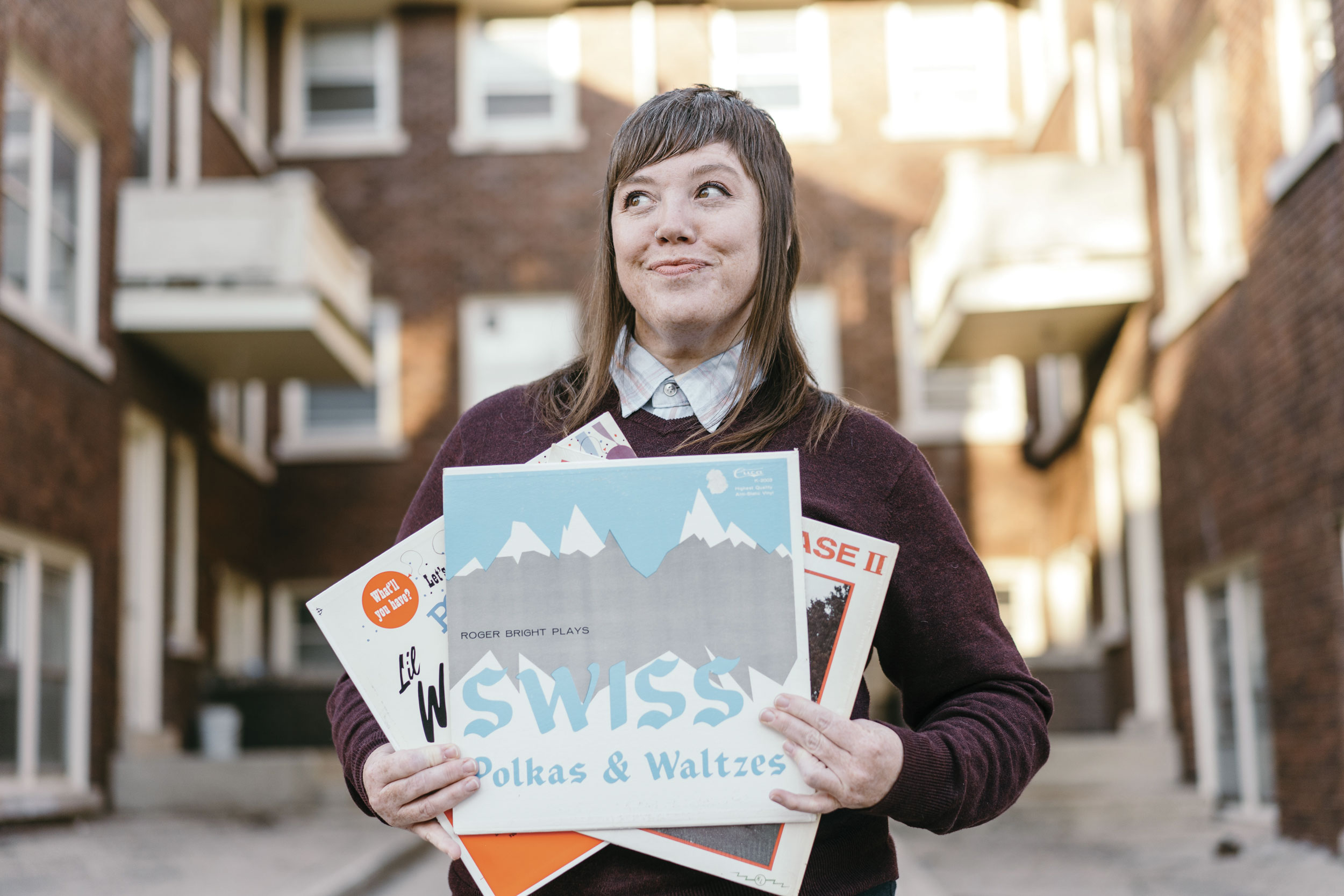
“That’s what helped deepen my appreciation for this music – there was a connection between polka and happy times at these festivals, parties and community-centered events,” the 49-year-old Madison resident says. Happy is the most frequent word cited when people are asked to describe polka’s vibe. “You don’t have the blues when you hear polka music,” Harbaugh notes. “The whole point is to get your heart rate up, inspire you to dance and smile. When times are rough, we can use some happiness, and polka is pure happy.”
Her polka passion gained a shape during one of those rough times. In 2020, as a pandemic project, she learned how to DJ, hooked up some turntables, dubbed herself DJ Shotski and began streaming polka classics from her home. Opportunity knocked when the host of Monona radio station WVMO’s “Down Home Dairyland” polka show announced his retirement. Harbaugh filled the void with “Polka Time with DJ Shotski,” an hourlong weekly show that now airs on seven community FM stations around the state.
As the pandemic subsided, Harbaugh began treasure hunting for polka records at antique and thrift stores – for “the thrill of the hunt” and to build her collection for the show. Listeners going through grandma’s attic often gifted her albums as well. Harbaugh began DJing events around the state at bars and festivals, sometimes pairing up with a Madison band, DB Polka Express, to offer an evening that includes polka dance lessons.
Harbaugh thinks big about polka. On Sept. 21, 2024, she attempted to make a Wisconsin milestone at Monroe Cheese Days. “The ideas you cook up while sitting on a porch with your friends, drinking beer,” Harbaugh laughs. “Hey, why don’t we try to break the world record for number of polka dancers?”
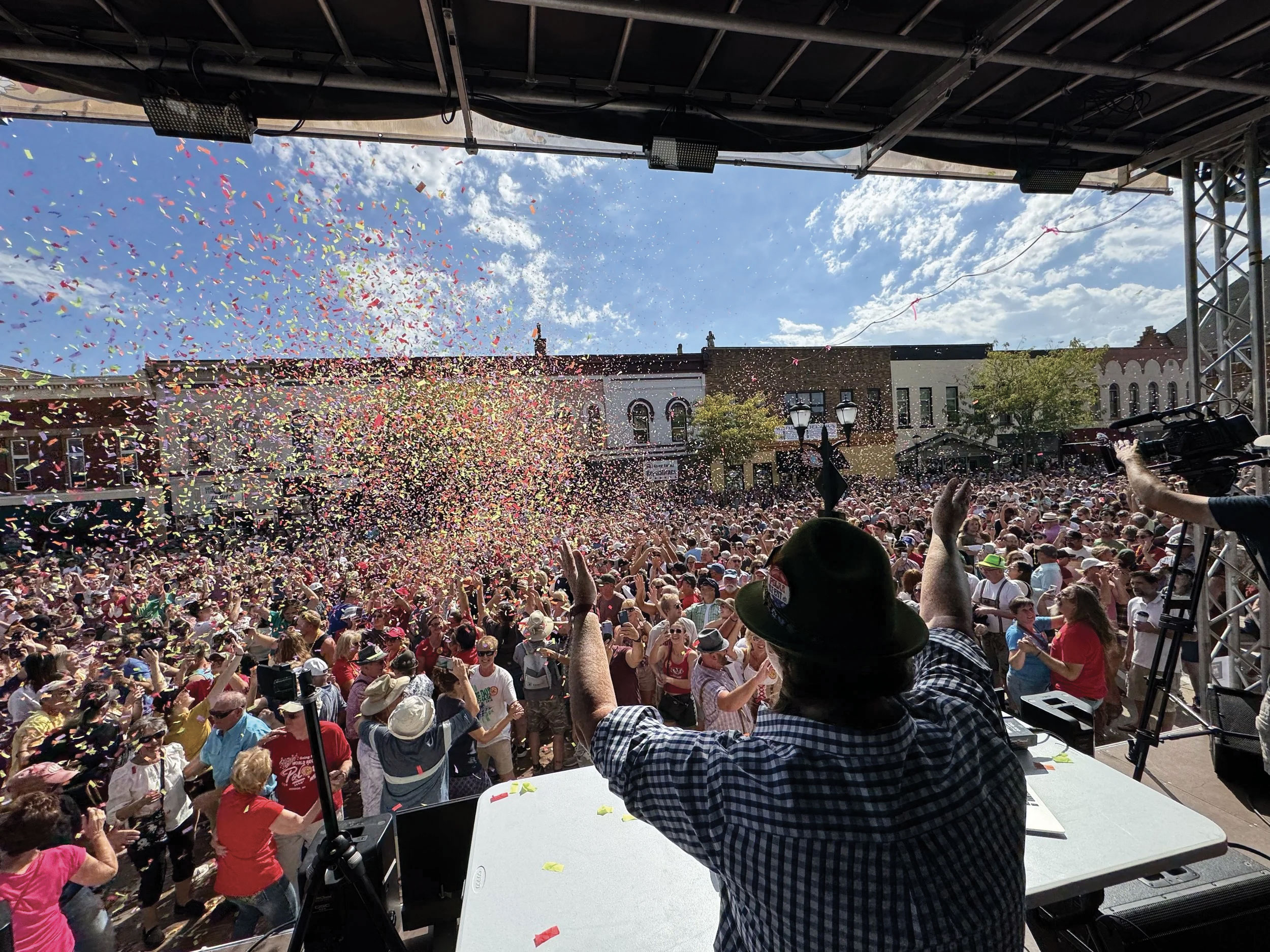
Over 4,000 dancers filled Monroe’s town square that year, as Harbaugh kicked things off with Yankovic’s “Pennsylvania Polka” blaring from both the stage and the town’s emergency loudspeakers. Harbaugh believes it was a record-smashing gathering but found a harsh reality: “Getting something into the Guinness Book is a lot more complicated than we anticipated,” due to needing to fly in a judge and other criteria. So the occasion of 4,000 people polka dancing in the center of a town of 10,000 remains momentous but unrecognized.
OVER ITS ALMOST 200 YEARS, polka has continuously evolved as it travels through time and from place to place. An untrained ear might just hear a bunch of tuba-booping, but an aficionado knows a Slovenian style from a Polish or German one. “Polka is a very large umbrella,” Harbaugh says. “It’s a big category like jazz – there’s all these subcategories with slightly different sounds.” They speak subtly in different ways.
Harbaugh admits she’s more enthusiast than expert. “I just know what I like and what I don’t like. I get goosebumps when I hear Dutchmen-style polka because I feel some special connection that I don’t feel when I hear a lot of the Polish music,” she says. Dutchmen polka is a plodding, oompah-full variant with a lot of heavy brass, such as tuba. Polish, in contrast, tends to be faster and driven more by higher pitches from trumpets and clarinets. “But I’m not going to turn down a Polish polka band,” Harbaugh adds. “Those guys know how to party.”
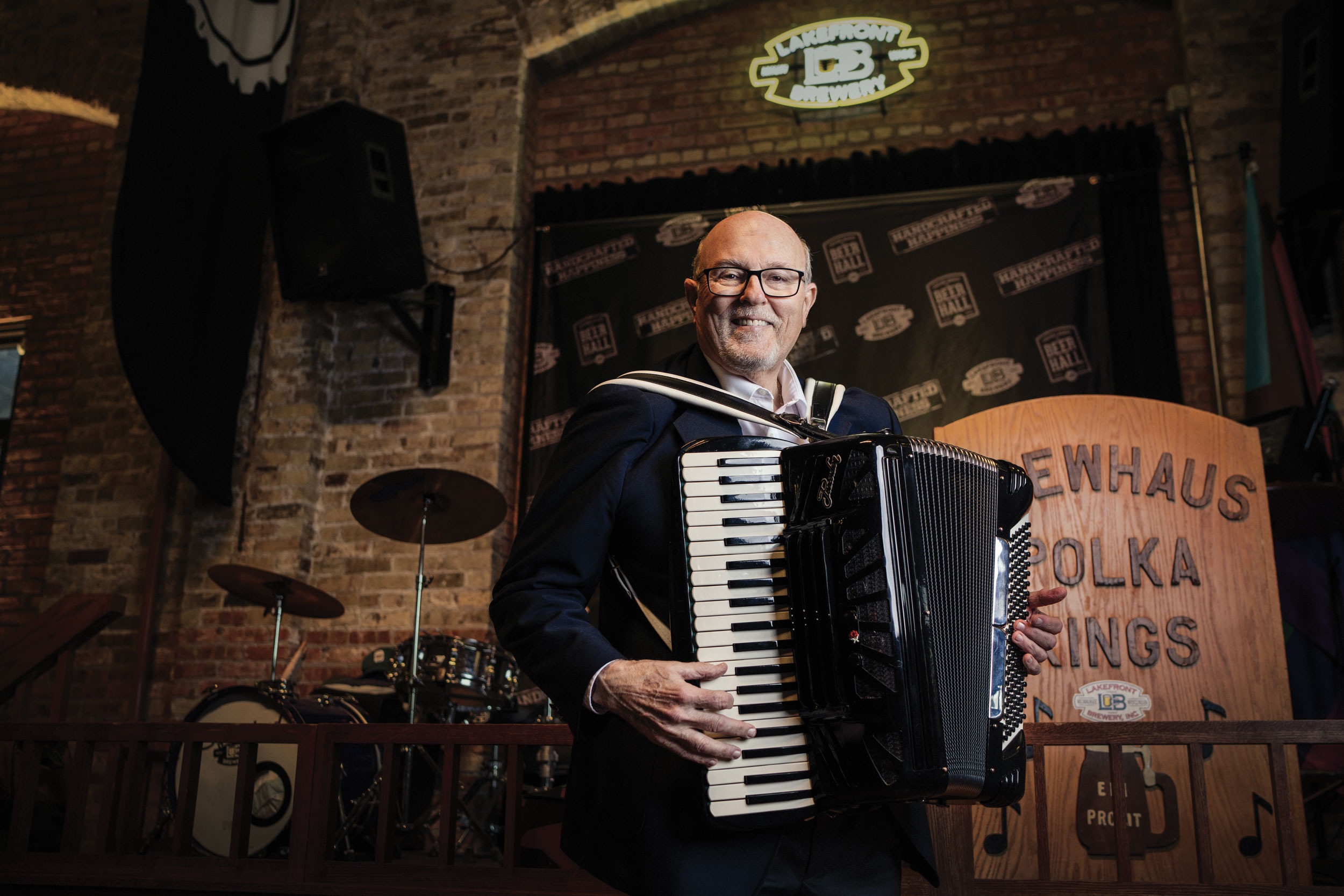
Winard, 72, began his polka life by listening to Yankovic 78 records and trying to play along on his sister’s accordion, and he still plays in the unique style of his mentor. Yankovic’s variant takes classic Slovenian songs, heavy on piano accordion, saxophone and clarinet, and “Americanizes” them, by translating them to English and giving the already lively tempo a peppier beat that made them “infectious,” Winard says. The crowd-pleasing style and Yankovic’s ability as a “showman, a tireless entertainer,” skyrocketed him to fame.
In Yankovic’s era, other musicians would play polka versions of country tunes and popular hits of the day to tap into changing times. New polka progressions continue to this day as bands around the world and here in Milwaukee mix polka with more modern genres. Copper Box, from Oshkosh, adds elements of rock and blues into their polka. Milwaukee’s Squeezettes reinterpret pop hits like “Sweet Dreams” by Eurythmics, and local hip-hop polka group The November Criminals produce their own annual “alternative polka” fest called Polka Riot. A popular form of Mexican-style polka, norteño, mixes elements of polka and mariachi and has a following with local bands like Afecto Norteño.
AS WINARD PREPARES TO PLAY A SET at Lakefront Brewery’s weekly polka-powered Friday fish fry, one of his most prized possessions is sitting on the table next to him – a shiny, pristine black 1949 PANcordion Baton, what Winard calls the “Stradivarius of accordions.” He’s reflecting on the future of polka.
“I’ve seen more and more people gravitating back toward this music, which is really encouraging to someone who’s been doing it for so long,” Winard says. “We did some weddings last year for couples in their 20s that insisted that they wanted traditional polka, and it went over wonderfully.” He adds that three of the musicians he works with regularly are also in their 20s and “passionate” about it. “They’re trying to learn and figure it out, and I can give them what Frank gave me,” meaning polka biz advice, Winard says.
Although the polka classics will remain, the polka renaissance might be propelled by new genre-mixing takes. “I think if polka is going to make its 100-year cycle comeback, we’re ready for it,” Harbaugh says. “We need to welcome all forms of polka, make space and support all of it, although it’s OK to like what you like. I’m hoping to prepare people for the next wave, and I think that is ready to pop.”
After all, polka is more than a style of music. It’s also an important part of Wisconsin culture’s destiny. “Our grandparents met at polka dances. We are here because our ancestors polkaed,” Harbaugh laughs. “So we have to keep dancing together.”
Places to Catch Polka
Lakefront Brewery
1872 N. COMMERCE ST.
The soundtrack to this popular Friday night fish fry for the last 25 years has been provided by the Brewhaus Polka Kings, led by Grant Kozera and Jeff Winard.
Kochanski’s Concertina Beer Hall
1920 S. 37TH ST.
If you’re an aspiring polka musician, the place to be Wednesday nights is Kochanski’s, where an open jam for novices or accomplished players starts at 6 p.m.
Old German Beer Hall and Bavarian Bierhaus
1009 N. DR. MARTIN LUTHER KING JR. DRIVE | 700 W. LEXINGTON BLVD., GLENDALE
Both have weekly lineups, with regular performers including The Squeezettes and Mike Schneider.
“Polka! Polka! Polka!”: Armed with a Sconnie accent and a couple of cameras, host Colleen Van Ells captures performances at supper clubs, dance halls and festivals. CW18, Saturdays, 9 p.m.
“Polka Parade”:
On air since 1982, “Polka Parade” features four hours broken down to focus on German, Polish, Slovenian and a mix of styles. WJOI 1340 AM, 98.7 FM, Saturdays 9 a.m.-1 p.m.
WRJQ Goodtime Radio:
If four hours of polka isn’t enough, good news – WRJQ in Appleton is an internet-only station that keeps the barrel of fun rolling 24-hours a day. Tune into “Gary Kuchenbecker’s Old Lager Oompah Show,” among others.