
A blank piece of leather can become an impressive piece of armor in an hour, and you – yes, you – can make it.
At The Local Makery in Wauwatosa, a hands-on craft workshop space and wine bar, offers embroidery, candle-making and leather crafting workshops taught by co-owners Tim Walsh and Khaula Kai. If you’re looking to accentuate your Renaissance Faire attire, attend one of their final leather bracer workshops to craft your own piece of gear.
“Some people come in, and the first thing they say is ‘I’m not artistic,’ It’s amazing to see how quickly they go from that to walking out with something they’ve made and can be proud of,” said Walsh. “I want to be a knowledgeable cheerleader, rather than a critical coach, it’s about making sure that they go home with a win.”

Check out the City Guide!
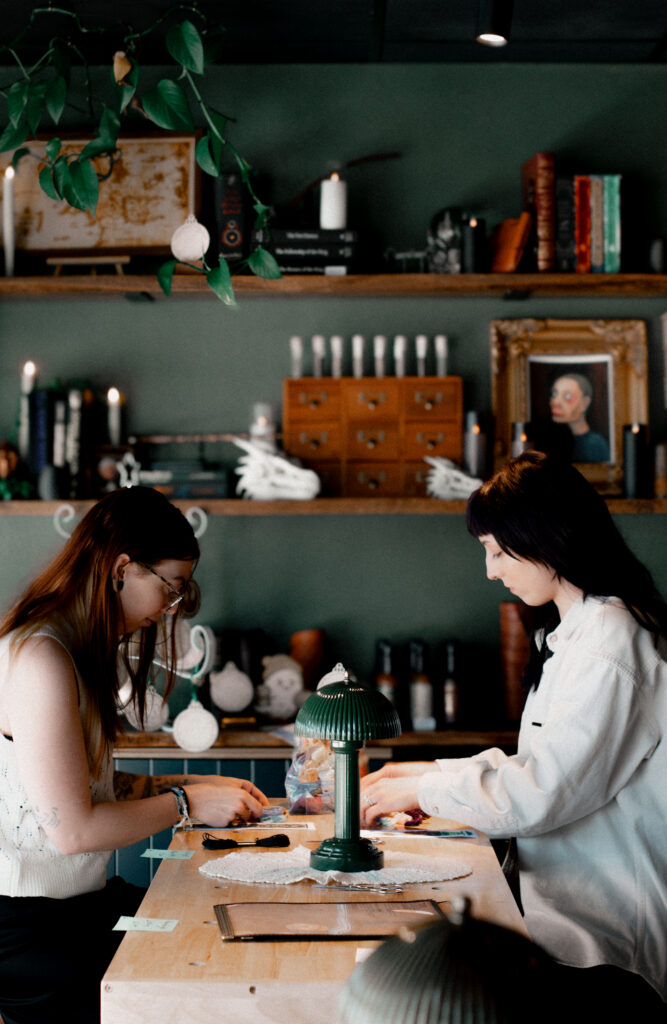
With the shop’s hands-on philosophy, as well as work tables surrounded by fantastical curiosities, it’s apt that Walsh and Kai embraced the spirit of the nearby Bristol Renaissance Faire, with its ornate costumes and artsy crowd.
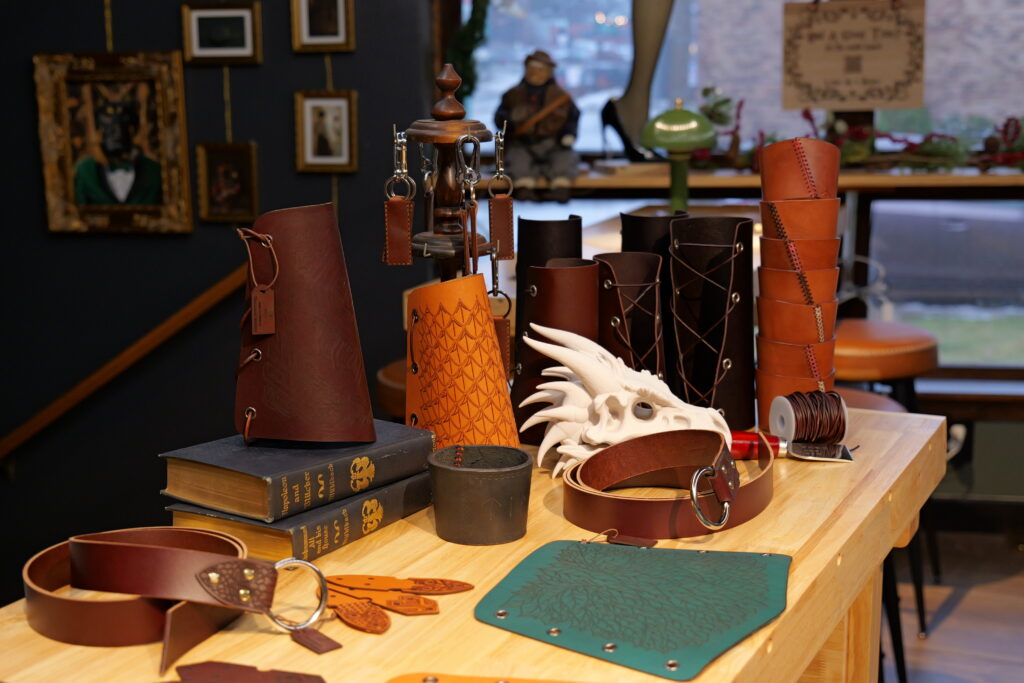
The Faire-favorite leather bracer – a lace-up lower arm adornment – stuck out as an “approachable” yet worthwhile project to both elevate outfits and teach a new skill. The class is offered during the summer leading up to Labor Day weekend on Saturdays before the Faire, crafters make fully finished products with all recommended materials included.
“Teaching people to make the parts of their own costumes lets them enjoy themselves at the Faire and be able to be proud they made it,” Walsh said. “A lot of equipment or bracers sold at Faires these days is not unique or handmade by folks selling it and it can be out of peoples’ price comfort zones, but it doesn’t have to be; people here can make it themselves, and better.”
Instead of buying the finishing touch to a knight, ranger or princess ensemble, faire-goers can turn raw materials into something that enhances any look. Walsh says the concept of adding bracers mirrors the free spirit of expression at the Faire.
“I think one of the draws for leather is it’s this middle ground of making something look fancier and at the same time, making things feel more rustic and natural,” Walsh said. “That’s part of the vibe at the Ren Faire – rustic and comfortable, but it’s fun and slightly elevated.”
Rather than leaving it at a piece of wearable maker’s pride, the workshop gives participants transferable skills – even if they simply came in with the goal of the final bracer product. While it may draw a crowd excited for their elevated Faire look, it’s simultaneously a “primer” on cutting thick materials, pattern making and leather-working.
“When you try to think of an outfit that you could put together for something like Renaissance Faire, one of the first things people can do that’s an actually approachable project is a leather bracer,” Walsh says. “But if you sell a workshop based on pattern making and how to cut things, no one wants that, people want a workshop based around something that draws their interest and then it also helps them learn.”

The instructors walk participants through the process in full, as they do with all offered Local Makery workshops. Crafters start with a piece of basic printer paper, take their personal measurements, make the pattern and transfer it to the leather. They learn consistent measuring and cutting without the rough edges common to the “untrained leatherworker.” From there, the instructors teach them to insert metal grommets and laces, with tips on how to smooth them so as not to leave an unfinished look or irritate the skin.
In an ever-digitizing age, the beauty of hands-on learning becomes increasingly important. As Kai says, when people are “tired of screens,” the remedy is to make something tangible. At the bracer workshop, the alternative is something participants can hold, where the process of making something your own never truly stops.
“It looks a little more generic to start off with, but they’re going to break in over time, so as you wear it, you’re going to get creases and lighter spots and darker spots; if you get scuffed by something, you’re just adding a patina that makes it more unique over time,” Walsh said.
The important part of any course is leaving people with an urge to keep practicing, he says. Meaning instructors make sure these “simple concepts” are applicable to other classes or further endeavors. This involves course-specific class sizes in order to let instructors be fully present for tips and help through every step – something people cannot find in online tutorials or beginner books.
“More often than not, we aim for you to go home with a finished project so that you have the full experience of starting, learning and finishing something,” said Walsh. “Even if it’s not complete in the duration, you have that technical skill, and you’re dangerous enough to continue that at home.”
If a project is unfinished by the end of a session, participants are encouraged to drop by the wine bar any day for crafting advice, or for extra playtime with the beloved store cats.