
There’s a buzz in Home Court as I enter with a group of eager visitors. We move through security and into the bright, contemporary athletic facility, where light pours through ceiling-high windows and a familiar beat rumbles somewhere in the distance.
Groups of folks smile and look around, taking it all in. There is chatting, laughter, stories being told. Visitors pull one another into photos. T-shirts bear campaign slogans. One guest walks through the doors wearing a shirt that reads simply, “Nah,” attributed to Rosa Parks. The vibes are high – Akon is playing over the sound system.
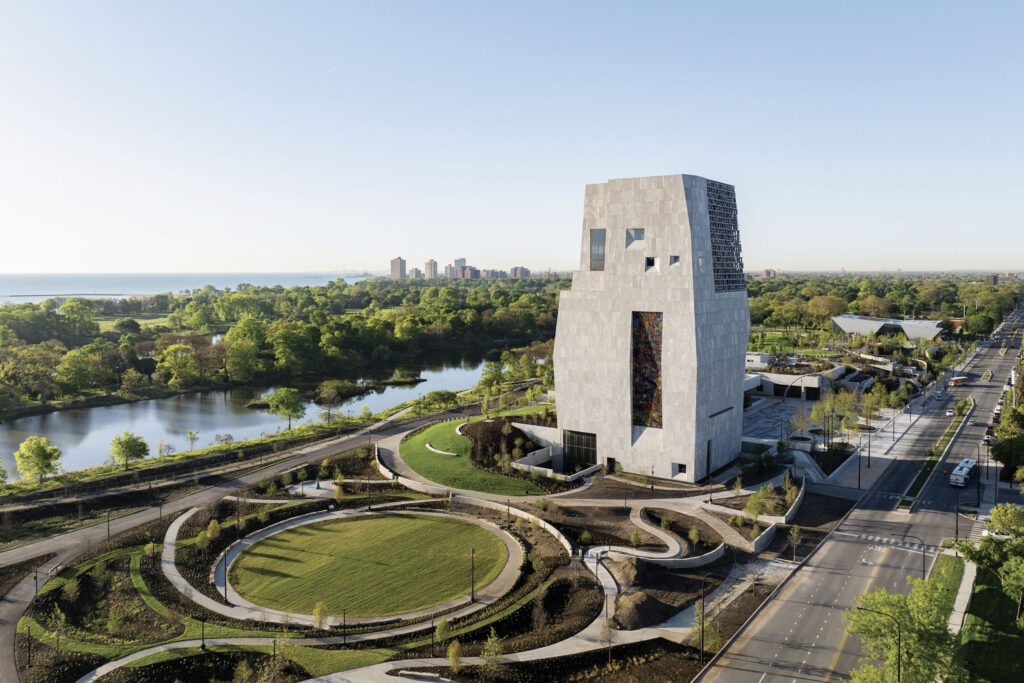
Home Court is my final stop on an impactful tour of the Obama Presidential Center, which opened in Chicago in June. I’ve already spent hours inside the museum, listening, observing, taking photos and video, then following the winding paths between the campus’s remaining buildings: The Forum (a community gathering space) and a new branch of the Chicago Public Library. Together, the four structures sit within 19.3 acres of Chicago’s historic Jackson Park, surrounded by expansive grounds that include a sledding hill (yes, you can use it!).

Subscribe Today!
It’s a Saturday, and I’m looking for somewhere to sit and reflect. Up a flight of stairs, I find a window-fronted workstation. Outside, kids of all ages dart here and there on the nearby playgrounds. Bouncy ground; balancing beams and rope swings; a giant dragonfly you can climb aboard. It’s imaginative and fun, while the museum rises up beyond.
Then it hits me: I don’t want to leave. While I’d budgeted a few hours to tour the museum, the whole visit continued at the same clip, spilling out of the doors and keeping me exploring the surrounding ecosystem. There’s a camaraderie among visitors and docents. We all seem to leave with a fresh battery, inspired to contribute, emboldened to create change.
If you can secure a coveted ticket (it’s booked months in advance due to high demand), the museum is a natural place to start – four immersive floors tracing the Obama presidency and the stories surrounding it. Lighter moments make guests smile along the way: Barack and Michelle appearing on late-night shows, Michelle stopping by “Sesame Street.” In one interview, they talk about how they first met. Visitors huddle around the screen, tilting their heads and smiling. To end, Michelle makes clear they’re far from retirement. “There is still climbing in us,” she says.
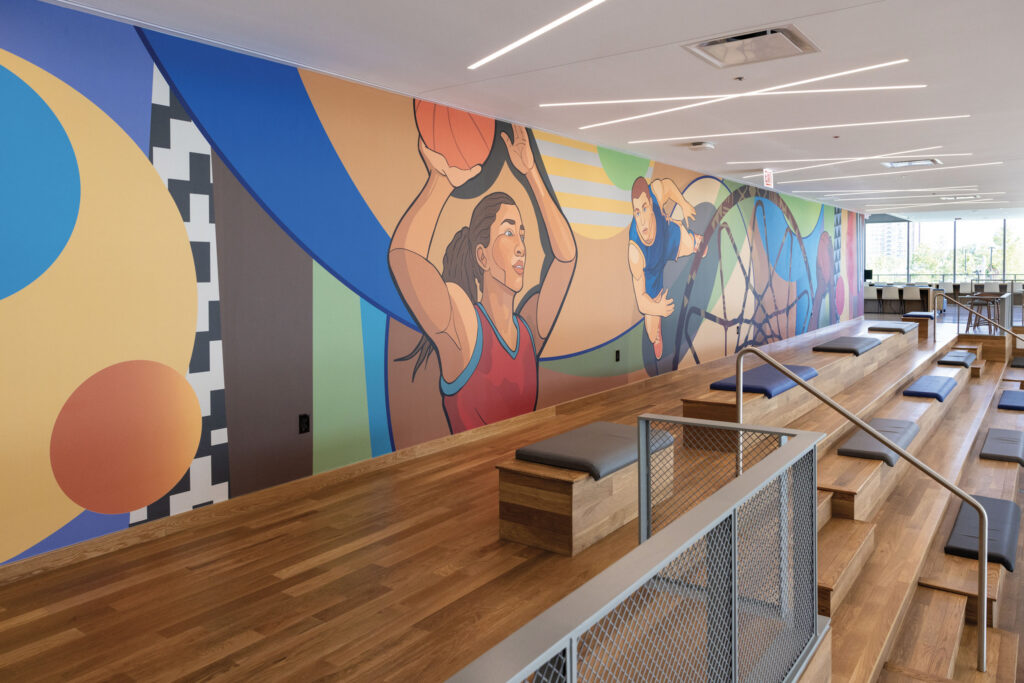
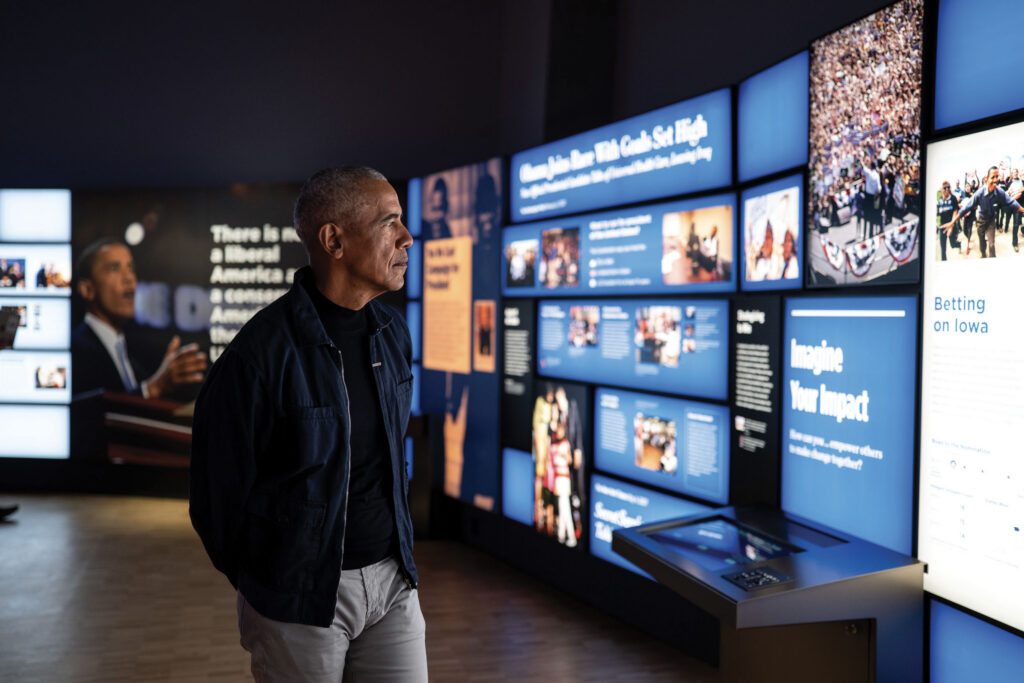
When the president’s voice comes through one of the installations, filling the room, the crowd collectively hushes and slows its pace. We know it’s a recording, but for a moment, everyone is listening together, as if he’s standing here in the room, talking to us.
The tour starts on the first floor and culminates in the Nelson Mandela Sky Room, where sweeping views of Chicago offer a grand finale.
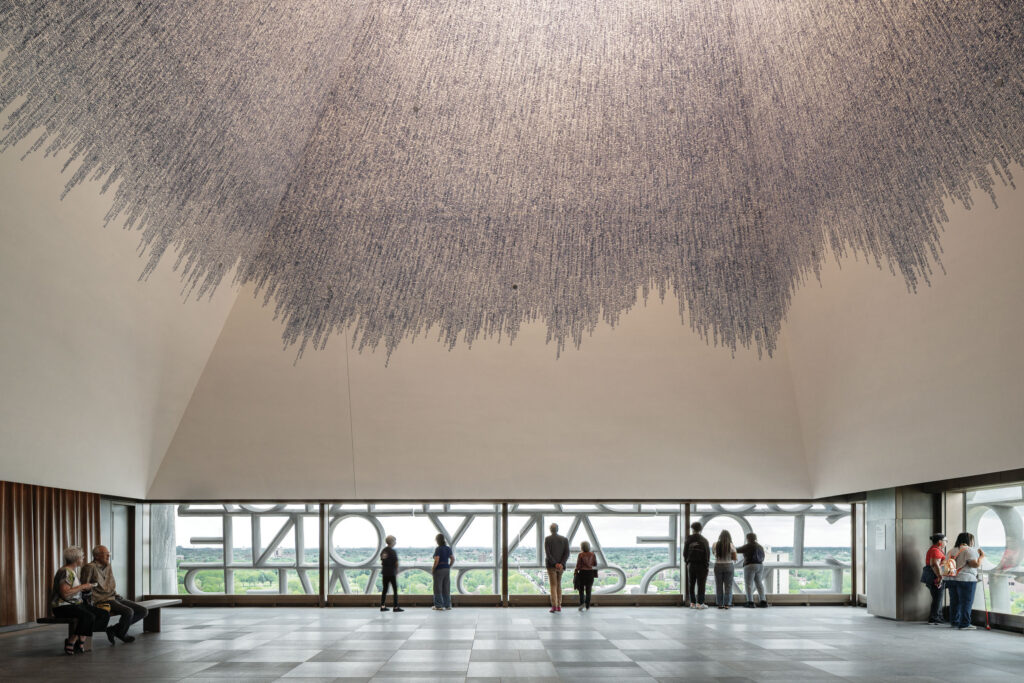
Back in Home Court, I find myself wishing I could shoot a few free throws, and that my kids were here. They would love this.
Visitors gather to photograph the regulation-size court, noticing the words along its edges. Borrowed from Obama’s campaign slogans, they take on new meaning here: words that once rallied voters now read like instructions for athletes. “Fired Up, Ready to Go” stretches across one baseline; “Yes We Can” lines the other.
The sideline nearest to me has a message too, but I can’t quite make it out. So I step down to the final bleacher and peer over the edge so the words are revealed: “No one does big things alone.”
It feels like a confirmation of everything the center has been asking visitors to consider all afternoon. Here, inside a basketball court, the message lands differently. No player wins alone. No team succeeds alone. Your contribution matters. Twenty-eight commissioned works across the campus invite visitors to consider how they might create positive change in their own communities. Maybe that’s the invitation of Home Court, too: There is always another play, another person waiting to step onto the court and lead.
Obama Presidential Center, 6001 S. Stony Island Ave., Chicago; 773-900-0044. Check obama.org for ticket availability. The center offers convenient underground parking.
The Colors of Change
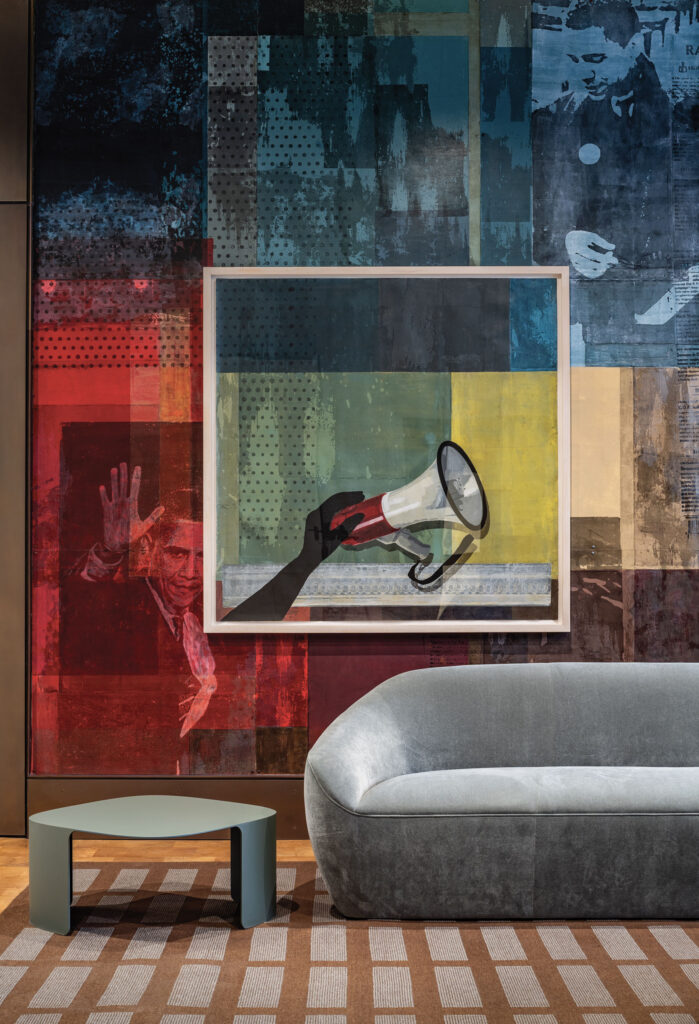
Visit The Forum building to see artwork by Tyanna Buie, who grew up in Milwaukee and Chicago and earned her MFA from UW-Madison. For her one-of-a-kind screen-printed installation, she was asked to interpret the theme “fired up for change” and make something colorful.
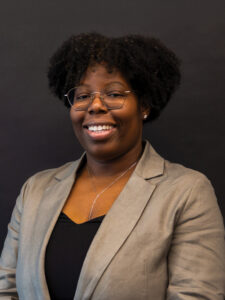
She responded with vibrant blues, teals, greens and rich reds, layering newspapers and photographs from Obama’s 2008 presidential campaign into the work. Created over two years, the piece – titled Be the Change! – explores collective action. Its message is ultimately about inspiring participation: voting, volunteering, speaking up. Now installed permanently in The Forum, the artwork has become a piece of the center’s visual identity – and of presidential history. Buie is still feeling the excitement from the opening ceremony. “I have to remind myself, I’m a part of that.”